
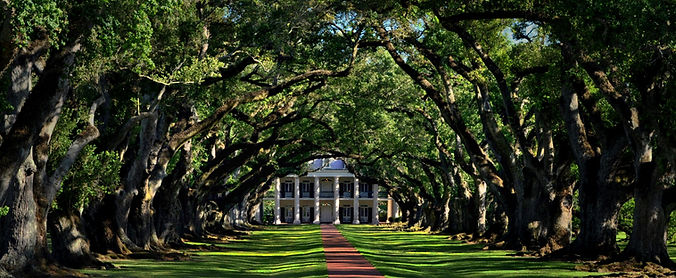
Louisiana
From the coastal marshes of Cameron Parish to the Atchafalaya's bottomland swamps and the Toledo Bend bass flats on the Sabine River, Louisiana offers outdoor operators a concentration of fishable water and huntable habitat that no other Gulf South state can match.
Where the Central Flyway Meets the Gulf
Louisiana's outdoor geography is defined by water moving in every direction. The Atchafalaya River carries a third of the Mississippi's flow through the largest river swamp in North America before spilling into the Gulf at Morgan City. Along the coast, the marshes of Cameron, Vermilion, and Terrebonne parishes sit directly under the Central Flyway — one of the most productive waterfowl migration corridors on the continent. In the western uplands, Toledo Bend Reservoir on the Sabine River line is a destination largemouth fishery drawing serious anglers from across the South.
Interior Louisiana adds a different dimension. The Tensas River bottomlands in the northeast produce trophy whitetail deer, and the Catahoula Lake basin seasonally concentrates ducks and shorebirds at a scale that makes it a legitimate destination in its own right. Kisatchie National Forest in the central hill country offers deer, turkey, and bass fishing in an upland landscape that surprises guests expecting nothing but flat delta. The Ouachita and Red river backwaters of north Louisiana hold flathead catfish and crappie fisheries largely unknown outside the region.
Pine & Marsh works with lodge operators, fishing guides, and outfitters across Louisiana's full range — from coastal redfish and speckled trout operations out of Grand Isle and Lake Calcasieu to private-land whitetail operations in the Tensas and Catahoula regions. We build marketing infrastructure that positions Louisiana operators for the guest who researches by destination name, species, and season before they ever pick up a phone.
Sub Regions
Built for Louisiana's Outdoor Market
No other state in the Pine & Marsh portfolio requires food culture as a mandatory editorial layer the way Louisiana does. A Venice tuna trip ends in a fish-camp boucherie. A Houma duck hunt ends in a roux. A Breaux Bridge swamp trip ends at a crawfish boil at Henderson. Cuisine and outdoor are a single product here — and almost no operator publishes that story. The second defining frame is erosion. Louisiana loses roughly 25 square miles of coastal land per year. Every coastal operator from Cocodrie to Hackberry to Grand Isle to Plaquemines is an eyewitness to the largest land-loss event in North America, and the CPRA Coastal Master Plan and the Mid-Barataria Sediment Diversion are not background context — they are the most compelling editorial authority topic available to any coastal guide in the state. Almost none of them have claimed it.
The Lower Mississippi Delta below Venice is the state's offshore anchor — yellowfin and blackfin tuna, marlin, and bull redfish inshore, with a guide layer built around fishing that draws clients from across the country who have run out of comparable water elsewhere. Grand Isle hosts the Grand Isle Tarpon Rodeo, the oldest continuously-running fishing tournament in the United States, founded in 1928 — a cultural heritage asset that no operator in the area has translated into a permanent search or AI-citation position. Inland, Catahoula Lake is one of the most important waterfowl wintering grounds in the entire Mississippi Flyway — federally protected, nationally significant, and surrounded by almost zero outfitter editorial content. The Atchafalaya Basin, at 1.4 million acres the largest river swamp in North America, runs on McGee's Landing aggregator SEO and tour-boat platforms rather than individual guide voices. The editorial opportunity in Louisiana is not finding undiscovered fishing. It is building the operator-level digital layer that the sport already earned.
Hurricane Ida in August 2021 reset capacity across Lafitte, Grand Isle, Houma, Cocodrie, and the lower delta. Hurricane Laura in August 2020 did the same across Calcasieu, Hackberry, and Cameron Prairie. Operators who survived both storms and rebuilt have a narrative arc that no aggregator listing or FishingBooker profile can replicate — years of eyewitness experience to what it means to keep a Louisiana fishing operation alive through back-to-back Category 4 landfalls on water that is measurably smaller than it was a decade ago. That story converts at a level that generic trip-page marketing cannot touch. Operators who document their recovery, their rebuilt fleet, and their relationship to a coast that is visibly changing around them earn a trust layer with buyers who want to put real money behind a real captain.
FishingBooker, Captain Experiences, and tour-boat aggregators like McGee's Landing have absorbed the generic Louisiana outdoor search traffic that should belong to individual operators. The displacement is not permanent — individual-operator schema, FAQ content, and species-specific pages built around high-intent search terms reclaim that ground cheaply relative to the commission drag of aggregator dependence. Catahoula Lake, Tensas River NWR, Lacassine, Sabine, and Cameron Prairie are all nationally significant federal habitat units with AI-thin outfitter content despite documented waterfowl and deer significance. Black Lake, Saline Lake, and Lake Bistineau are greenfield editorial territory for crappie and duck content. The operators who build in these pockets before a competitor thinks to are not gambling — they are entering markets where the competition has not arrived yet.
Pine & Marsh builds for Louisiana the way we understand the state: with food culture embedded in the editorial layer, with coastal erosion as an authority anchor rather than a footnote, and with the specificity that separates an operator with deep local knowledge from a generic charter listing. A Plaquemines Parish tuna captain requires different positioning than a Calcasieu speckled trout guide or a Toledo Bend bass lodge, and the content calendar that earns AI citations about Venice offshore fishing looks nothing like the one that earns them about Atchafalaya swamp trips or Chenier Plain pintail hunting. We write content that names the specific water, the specific species window, and the specific cultural context that Louisiana sporting clients expect — and we build it to rank on the searches serious buyers run before they pick up the phone.

Reach Buyers Across Louisiana's Outdoor Markets
Pine & Marsh builds digital infrastructure Louisiana operators own outright — not ad spend that stops when a campaign pauses. Organic search authority compounds year-round, bringing qualified buyers across Louisiana's coastal marshes, redfish flats, duck-rich river basins, and every season the sportsman's paradise has to offer.