

Tennessee
Where mountain trout streams, Cumberland Plateau hunting, and western Tennessee waterfowl flats define three distinct buyer markets for one of the South's most diverse outdoor states.
Tennessee's Three Outdoor Markets
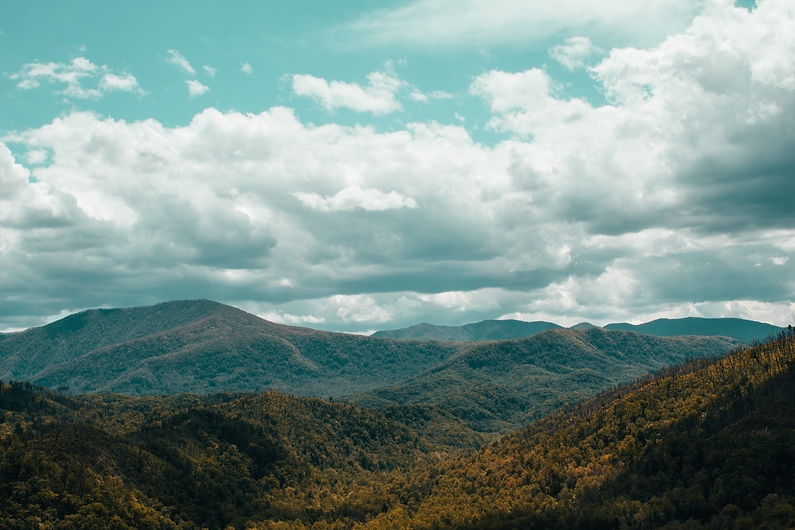
Tennessee runs nearly 500 miles from the Appalachian ridgelines of the Great Smoky Mountains to the cypress sloughs and bottomland hardwoods bordering the Mississippi River. That geography creates three fundamentally different outdoor buyer markets — each with its own season structure, target species, and lodge experience expectations.
East Tennessee centers on blue-ribbon trout fishing in the Hiwassee, Clinch, and tailwaters feeding out of Cherokee and Douglas reservoirs, alongside whitetail and black bear hunting in the Cherokee National Forest ridgelines. Middle Tennessee buyers hunt managed whitetail on private farms and timbered ridges across the Cumberland Plateau, with a growing market for turkey, dove, and coyote hunting on agriculture-edge properties. West Tennessee is defined by duck and goose hunting in flooded timber, green timber impoundments, and moist soil units across Dyer, Lake, and Obion counties — one of the premier waterfowl hunting corridors in the Mississippi Flyway.
Pine & Marsh builds the digital presence for Tennessee's guide operations, hunting lodges, and fishing outfitters — connecting serious outdoor buyers to the properties and experiences that match their specific expectations across each market corridor.
Sub Regions
Freelfoot Lake
A 15,000-acre natural lake in Lake and Obion counties formed by the New Madrid earthquakes of 1811–12 — productive crappie, bluegill, and bass fishing in cypress-lined shallows, plus early-season duck and goose hunting in flooded timber impoundments and state-managed moist soil units along the Mississippi Flyway.
Obion River Bottoms
Seasonally flooded bottomland hardwoods along the Obion River system in northwest Tennessee — a top destination for mallard and wood duck hunting over green-timber holes, plus spring turkey and whitetail deer in agricultural transition zones bordering private duck clubs and WMA managed impoundments.
Tennessee River Kentucky Lakes
The Tennessee River corridor and Kentucky Lake system form one of the Southeast's premier striper, catfish, and crappie fisheries, with boat ramps, guide services, and lodge infrastructure built around year-round access — plus productive waterfowl hunting in flooded backwaters and National Wildlife Refuge units along the flyway.
Cross Creeks NWR
A federal wildlife refuge on Barkley Lake in Stewart County managing 8,862 acres of bottomland hardwoods, cropland, and moist soil units for migratory waterfowl — a consistent producer for mallard, teal, and Canada goose hunters during peak fall migration, with quota-permit deer hunting on surrounding Corps of Engineers lands.
Cumberland River
The Cumberland River drains central and northern Tennessee into Kentucky Lake, offering year-round striped bass, catfish, and crappie fishing with a concentrated guide and charter boat market around Cordell Hull and Old Hickory reservoirs — plus waterfowl hunting in bottomland impoundments in Clay, Smith, and Macon counties.
Land Between the lakes
A 170,000-acre national recreation area between Kentucky Lake and Lake Barkley offering quota-permit whitetail deer and wild turkey hunting in hardwood ridges, multi-species fishing across both reservoirs, and strong outfitter infrastructure — one of the most recognizable outdoor destination brands in the Tennessee-Kentucky corridor.
Duck River
Tennessee's longest river at 284 miles, the Duck River offers some of the state's premier smallmouth bass fishing in free-flowing stretches through Maury, Lawrence, and Hickman counties, plus late-season duck hunting in agricultural bottoms and beaver-flooded bottomlands in the lower drainage near the Tennessee River confluence.
Elk River Watersheds
The Elk River below Tims Ford Dam in Franklin County produces one of Tennessee's top tailwater trout fisheries — brown and rainbow trout managed by TWRA in a 17-mile catch-and-release and delayed-harvest section — alongside warm-water bass and catfish in the lower drainage through Lincoln County toward the Alabama line.
Center Hill
Center Hill Lake on the Caney Fork River system is a clear-water reservoir known for trophy smallmouth bass, striped bass, and deep-structure largemouth — a favorite among Tennessee bass tournament anglers — with adjacent Edgar Evins State Park and TWRA walk-in land providing whitetail and turkey hunting on the surrounding plateau.
Caney Cork River
The Caney Fork River below Great Falls Dam near Rock Island is a nationally regarded tailwater trout fishery — brown and rainbow trout in a delayed-harvest and catch-and-release section managed by TWRA — with guide operations, fly shops, and lodging clustered around the White County and Smith County access points.
South Cumberland State Park
South Cumberland State Park covers over 25,000 acres across six tracts in Franklin, Grundy, Marion, and Sequatchie counties — offering backcountry turkey and deer hunting, waterfall-corridor trout streams, and technical whitewater on the Fiery Gizzard Trail, with primitive camping drawing year-round traffic to the plateau escarpment.
Natchez Trace WMA
The Natchez Trace Wildlife Management Area in McNairy and Chester counties offers 14,000 acres of timber and agricultural edge habitat for whitetail deer and wild turkey — with quota-permit archery and gun seasons, early-season dove fields, and spring turkey hunting across rolling hardwood terrain along the Tennessee Natchez Trace corridor.
Western Highlands
The Western Highlands in Benton, Carroll, Henry, and Weakley counties combine Kentucky Lake impoundment fishing with upland timber tracts and agricultural fields for deer and turkey — guide services, public boat ramps, and hunting access span a mix of TVA shoreline, WMA ground, and private lease land across upper West Tennessee.
Cherokee National Forest
Cherokee National Forest spans 640,000 acres across two units in northeast Tennessee's Unaka Mountains — offering elk hunting in Tellico and Citico wilderness areas, trophy trout in the Hiwassee and Ocoee tailwaters, and backcountry black bear and deer hunting, with outfitter operations around Etowah, Reliance, and the Polk County corridor.
Appalachian Highlands
The Appalachian Highlands in Carter, Johnson, Sullivan, Unicoi, and Washington counties anchor Tennessee's trout identity — wild brook trout in headwater streams, rainbows and browns in the Watauga and South Holston tailwaters, and grouse and turkey hunting on steep ridges, with Bristol, Johnson City, and Elizabethton as tri-cities base camps.
Percy Priest Lake
J. Percy Priest Lake, a 14,200-acre Army Corps reservoir southeast of Nashville, serves Middle Tennessee as a year-round fishing destination for largemouth bass, crappie, walleye, and striped bass — guide services are centered around Lavergne, Elm Hill, and Cook Recreation Areas, with deer and turkey hunting at adjacent state parks.
Built for Tennessee's Outdoor Market
Tennessee pulls the same structural trick as North Carolina — three distinct sporting identities stacked in one state line with almost no overlap in anchor species, operator class, or aggregator dynamics. West Tennessee carries the Mississippi Alluvial Plain identity: Reelfoot Lake, the Obion and Hatchie bottomlands, mature-buck whitetail genetics, and mallard hunting in a landscape shaped by the 1811 New Madrid earthquake sequence. Middle Tennessee runs the TVA and USACE reservoir mass-recreation economy — Kentucky Lake, Pickwick, Tims Ford, Center Hill, Dale Hollow, Percy Priest, Old Hickory — plus the Cumberland Plateau small-stream and gorge country that is simultaneously the highest editorial-arbitrage zone in the state and the most operator-invisible. East Tennessee carries the Smokies and Cherokee National Forest identity: the most-visited national park in America, the South Holston tailwater's sulfur hatch as the canonical Eastern mayfly event, the Ocoee River's 1996 Olympic whitewater legacy, and native-strain brook trout in Smokies headwaters that draw fly anglers from across the country.
The South Holston tailwater is magazine-anointed — the sulfur hatch is referenced in national fly fishing media as a benchmark Eastern event — but the guides who work it have not built the seasonal content structure that earns year-round search positions around it. The same gap runs wider across the Cumberland Plateau: USACE operates Center Hill, Dale Hollow, Cordell Hull, and Percy Priest; TVA operates Tims Ford, Watauga, and South Holston; both publish hourly generation schedules and pool-level forecasts that no Tennessee guide service has built the canonical release-schedule content around. The Caney Fork below Center Hill and the Elk River below Tims Ford are destination tailwaters on the same shelf as Arkansas's Bull Shoals — IGFA brown trout, year-round fly fishing, national press coverage — and both route discovery traffic to Trout Unlimited and TVA pages rather than to any working guide's website. Dam-rehabilitation cycles at Center Hill, Boone Lake, and Ocoee No. 2 have directly affected fishery access across multiple sub-regions; the operators who build release-schedule literacy content around these projects earn authority that outlasts any single season.
Reelfoot Lake in the northwestern corner of the state is one of the most geologically singular sporting waters in North America — created by the 1811-1812 New Madrid earthquake sequence, the largest seismic event in recorded North American history east of the Rockies, which caused the Mississippi River to run backward for several days. The result is a 15,000-acre cypress-draped shallow lake that produces some of the best crappie, bass, eagle watching, and winter duck hunting in the Mid-South. The heritage resorts — Blue Bank, Boyette's, Eagle Nest — are multi-generational family operations carrying decades of brand equity and websites that look like they were built a decade ago. The canvasback and redhead diving-duck story at Cross Creeks NWR on the Cumberland is equally real and equally unclaimed — Mid-South waterfowl content defaults to mallard by default, leaving the entire diving-duck narrative as uncontested editorial territory. Both Reelfoot and Cross Creeks are succession-cliff situations where the ecological story is nationally compelling, and the digital infrastructure is one generation-transfer from a domain-loss outcome.
The South Cumberland State Park gorge country — Foster Falls, Savage Gulf, Greeter Falls, the Fiery Gizzard Trail, the Tennessee Wall traditional climbing area — is Backpacker and Climbing magazine canon with essentially zero commercial operator content competing for the searches those publications generate. The canyoneering vertical in Tennessee is pure greenfield. The Duck River, the longest river in Tennessee and one of the most biodiverse river systems in North America by freshwater species count, supports smallmouth fishing, whose quality is directly tied to the biodiversity that protects the river — but TNC owns the conservation framing, and the operator voice is absent entirely. Nashville has reshaped the entry-level charter market on Percy Priest and Old Hickory: the bachelor-party pontoon charter economy is aggregator-driven and price-sensitive, and it occupies the same search real estate that serious sporting guides need to hold. Operators who build species-specific, season-specific striper and bass content on those reservoirs reclaim their share from below, not by competing on price.
Pine & Marsh builds for Tennessee the way we understand the three-belt structure: with the geological story of Reelfoot as a durable authority anchor, with the TVA and USACE dam-release schedules as the highest-ROI reference-content opportunity in the state, and with the South Cumberland gorge country as the editorial greenfield it is. A Reelfoot crappie guide requires different positioning than a South Holston tailwater fly shop or a Kentucky Lake tournament-pro guide service, and the content that earns AI citations about Tennessee waterfowl looks nothing like the content that earns them about Smokies native brook trout or Caney Fork brown trout. We build for the operators doing serious work in all three Tennessees — the ones the regional sporting press already knows, who haven't yet built the digital infrastructure that earns them the national buyers their water deserves.
Reach Buyers Across Tennessee's Outdoor Markets
Pine & Marsh builds digital infrastructure Tennessee operators own outright — not ad spend that stops when a campaign pauses. Organic search authority compounds year-round, bringing qualified buyers to Tennessee's mountain elk range, trophy whitetail farms, tailwater fisheries, and every corner of the state worth booking.