
Marketing a Lake Guntersville and Swan Creek Duck Guide in Alabama
Updated: Jun 12
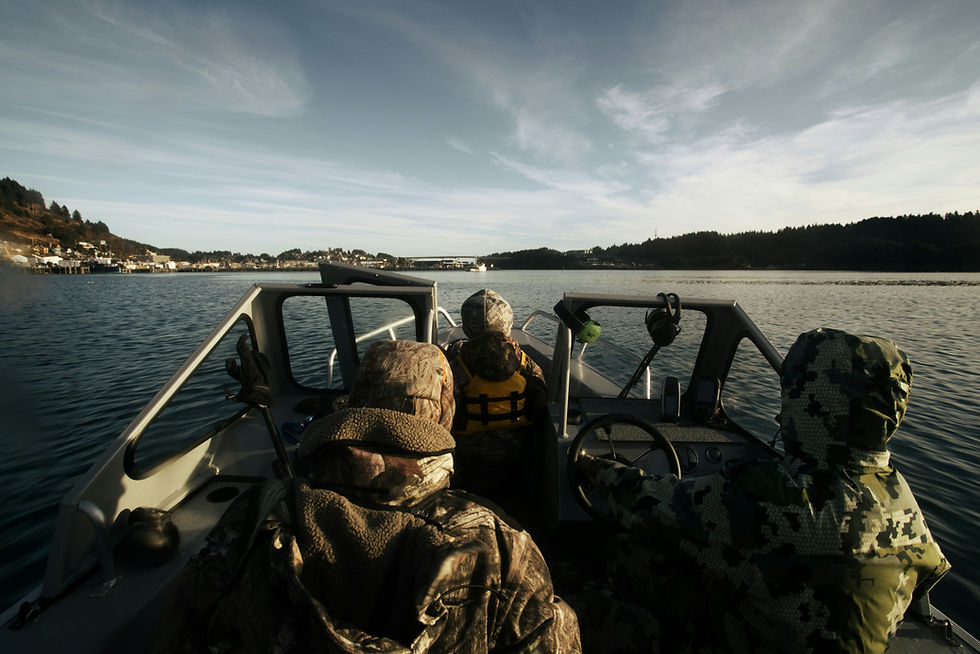
Type Wheeler duck hunting into a search bar, and you will hit a wall. The United States Fish and Wildlife Service states it plainly. Waterfowl may not be hunted at Wheeler National Wildlife Refuge. That single sentence sends thousands of North Alabama duck hunters back to square one every season.
Here is the part most operators miss. Those birds do not vanish when the refuge closes its gates. They spill out onto Lake Guntersville and Swan Creek, where the hunting is legal, and the guide demand is real. The gap between where hunters search and where they can actually shoot is the single best marketing wedge a Guntersville duck guide will ever own.
This guide is written for the outfitter, not the customer. If you run guided duck hunts in the Wheeler corridor, you sit on a positioning advantage that almost nobody in your market has bothered to claim. The hunters are confused. The refuge is closed. The birds are next door. Your job is to be the answer at the exact moment someone realizes their first plan fell through.
We will walk through the refuge-closure redirect play, the keyword you should own, the Swan Creek blind draw your clients keep asking about, the booking funnel that turns intercept traffic into deposits, and the local search work that makes you the default near-me result in North Alabama. Treat each section as a build instruction, not a theory.
Think of the corridor as a funnel that already exists in nature. The refuge concentrates the birds, the closures protect them, and the season pushes them onto huntable water where a guide can operate. Your marketing job is to build the matching funnel online, so the hunters who follow those birds find you first. The two funnels, the natural one and the digital one, are the same story told twice.
Everything that follows assumes you have already run a good hunt. Marketing cannot save a bad guide, and it does not need to here. The premise is the opposite. You run a genuinely good North Alabama duck operation, and the only thing standing between you and a full season is that the hunters searching for exactly what you offer cannot find you yet. This guide closes that gap.
Why Wheeler National Wildlife Refuge Sends Birds and Hunters Your Way
Wheeler National Wildlife Refuge anchors the Tennessee River corridor in north Alabama, and in winter, it holds one of the largest concentrations of waterfowl in the Southeast. The refuge exists to give those birds a place to rest. That is exactly why it is closed to waterfowl hunting. The USFWS hunting page allows deer, hog, squirrel, rabbit, raccoon, opossum, and quail, but it specifically excludes duck and goose hunting. Confirm current refuge regulations before you publish any of this, because federal rules change.
The closures run deeper than a blanket no-waterfowl rule. Garth Slough closes to all public entry from roughly mid-November through mid-January, and the refuge has been expanding sanctuary acreage with a newer parcel near Buckeye and Thorsen. Each new sanctuary is more water where birds sit safely and unbothered. For a hunter, that reads like bad news. For a guide on the huntable water nearby, it is the reason the spillover exists in the first place.
This is the story your market has not told. The refuge is not a competitor that takes your hunters. It is a giant feeder that pushes rested, well-fed birds onto Guntersville and Swan Creek when conditions move them. From sandbar to slough, the ducks trade off the refuge for huntable water, and the guide, who explains that movement looks like the only person in the corridor who actually understands the birds.
When you write about Wheeler, attribute the closure to USFWS and the season framework to the Alabama Department of Conservation and Natural Resources, and add a confirm-current caveat every time. You are not trying to outrank the federal government. You are trying to be the page a hunter lands on after the federal page tells them no. That intercept is the whole game.
Lake Guntersville and Swan Creek as a Marketable Duck Brand
Lake Guntersville is a sprawling Tennessee Valley Authority impoundment on the Tennessee River, and most of the world knows it as a bass lake. That bass fame is useful to you. It means the destination already has search authority, lodging, ramps, and a travel-ready audience. You are not building a Duck brand from nothing. You are attaching a duck product to a lake that millions of people already plan trips around.
Swan Creek Wildlife Management Area sits next door at roughly 8,870 acres of state-managed marsh, dewatering units, and small-game ground. It carries a structured public-access duck program that funnels hunters into the area every winter. That public traffic is a demand signal you can convert. People who research Swan Creek are already committed to hunting ducks in North Alabama. They just need a guide who can put them on birds without the lottery.
The species mix gives you a real story to sell. Editorial coverage of Alabama duck hunting points to gadwall as the bread-and-butter bird, with divers like canvasback, redhead, lesser scaup, and ringneck mixing in, plus dabblers such as mallard, wood duck, black duck, and pintail. A guide who can describe what the bag actually looks like in December versus late January sounds like an expert. A guide who just says we hunt ducks sounds like everyone else.
Brand the corridor, not just the lake. Guntersville, Swan Creek, and the Wheeler spillover form a single huntable system with one clean narrative. The refuge holds the birds. The lake and the WMA let you hunt them. You are the guide who knows where the trade happens. That is a brand a traveling hunter can repeat to a buddy, and repeatability is the whole point.
Owning the Guntersville Duck Hunting Guide Search
Your primary keyword is Guntersville duck hunting guide. It is specific, carries booking intent, and, right now, no single content brand owns it in depth. The page-one results are a scatter of editorial features from Realtree and Dive Bomb, state WMA pages, a Guidefitter listing, and duck-forum threads where hunters literally ask strangers for guide recommendations. That is not competition. That is an opening.
Build out the keyword family around the primary term. Lake Guntersville duck hunting, Swan Creek WMA duck hunting, North Alabama duck guide, Tennessee River duck hunting Alabama, gadwall hunting Guntersville, diver duck hunting Alabama, and guided duck hunt North Alabama all deserve their own depth. Each one is a query a real hunter types. Each one is a page or a section you can own before anyone else bothers.
The killer long-tail is the confusion query itself. Phrases like "can you hunt ducks at Wheeler refuge" and "Wheeler NWR duck hunting" are searched by people who do not yet know the refuge is closed. When your page answers that question honestly and then points to where they can hunt, you capture a hunter at the exact moment their plan falls apart. That is the highest-intent traffic in the whole corridor.
To rank, you have to outdo the thin pages already there. A forum thread answers one question badly. A WMA page lists regulations with no booking path. You publish the definitive corridor guide, with species timing, access explanations, the Wheeler clarification, and a clear way to book. Google rewards the page that fully resolves the searcher's query, and right now, nobody in North Alabama has built that page.
Capturing Misdirected Wheeler Search Traffic
The intercept play deserves its own dedicated piece of content because it is the most reliable top-of-funnel magnet you will build. Picture the hunter. They heard Wheeler holds incredible duck numbers, they searched for how to hunt it, and they ran into the federal no. They are frustrated and looking for an alternative right now. You want to be that alternative.
Write the page that says it straight. Wheeler is closed to waterfowl; here is the USFWS language, here is why the refuge is managed that way, and here is exactly where those birds go when they leave the sanctuary. Then transition cleanly into your guided hunts at Guntersville and Swan Creek. Honesty builds trust, and trust is what converts a confused searcher into a booked client.
This content also does quiet authority work. When you accurately explain a federal closure and a state season in the same breath, you signal to both readers and search engines that you actually know the corridor. AI answer engines increasingly pull from the page that cleanly resolves a question, and a Wheeler-closed explainer with a real redirect is exactly the kind of source they cite. That is free visibility most guides never earn.
Keep the regulatory claims caveated and sourced. Attribute the closure to USFWS, the season dates and bag limits to ADCNR, and add confirm-current language so you are never caught publishing a stale rule. The goal is to be the trustworthy redirect, not the outdated one. A hunter who catches you with a wrong date will not book, no matter how good the spillover story sounds.
Explaining the Swan Creek Blind Draw to Your Clients
Swan Creek runs a dewatering-unit duck-blind drawing, a lottery that assigns blind sites to hunters who are drawn during the season. Your clients hear about it, apply, and most of them are not drawn. That disappointment is a booking opportunity if you are the guide who explained the process and offered the backup plan before they ever lost the draw.
Build a plain-language explainer of how the Swan Creek draw works, who is eligible, when it runs, and what the realistic odds feel like with thousands of hopeful applicants chasing a limited set of blind sites. Verify the current process and dates against Outdoor Alabama before you publish, as state lottery mechanics are subject to change. The hunter who reads your honest breakdown trusts you more than the agency page that just lists rules.
Then position your guided hunt as the answer to the draw that did not come through. Did not get drawn at Swan Creek? You still hunt north Alabama ducks, on water your guide has already scouted, with the decoys and the dog handled. That is a clean conversion line, and it works because the frustration is genuine and the timing is predictable every single season.
This is the same intercept logic as the Wheeler redirect, applied to a state program instead of a federal one. Public-access frustration is a renewable resource in this corridor. Two structured access bottlenecks, the refuge closure and the WMA lottery, both push committed hunters toward a guided alternative. Your content should sit at both bottlenecks and quietly route the overflow to your booking page.
Pricing and the Day-Hunt Booking Funnel
Guntersville guided duck hunts have traded at accessible day-hunt price points, with public listings in the rough range of $175 to $250 per hunter. Do not anchor your whole brand on a number that shifts year to year, but do treat the accessible price as a feature. North Alabama is a place where a hunter can book a real guided duck hunt without the destination-lodge premium, and that affordability widens your market.
Your funnel should move a confused searcher to a paid deposit in as few clean steps as possible. The clarity article or the Wheeler explainer brings them in. A clear hunts-and-pricing section tells them what a day costs and what is included. An inquiry or booking form captures them. A deposit locks the date. Every step that asks a hunter to call you instead of clicking is a step where you lose the impatient ones.
Spell out what the price includes, because vague pricing kills bookings. Decoys, blinds, calling, the retriever, and the local knowledge are the products. A hunter comparing you to a forum stranger needs to see that your day-hunt is a complete, guided experience, not just a ride to the water. Transparency here also pre-empts the awkward money conversation that makes first-time bookers hesitate.
Capture deposits online, and you change the business. A deposit is a commitment; it reduces no-shows and lets you fill a season rather than chase it. Pair the booking form with an automated confirmation and a short pre-hunt email, and you look more professional than ninety percent of the corridor, which still books entirely by phone and text. The funnel is as much of a differentiator as hunting is.
Google Business Profile and Local SEO for North Alabama
When a hunter searches Guntersville duck hunting near me, Google leans on the local map pack, and the map pack runs on Google Business Profile. If you do not have a complete, verified profile, you are invisible in the exact moment a nearby hunter is ready to book. Claim it, verify it, and treat it as a primary booking channel, not an afterthought.
Load the profile with everything a hunter needs. Accurate service area across the Guntersville and Swan Creek corridor, a clear category, real photos of real hunts, your season hours, and a booking link straight into your funnel. Post seasonal updates as the migration progresses to keep the profile active. A stale profile signals a stale operation, and hunters notice.
Reviews are the currency of local search and the currency of trust at once. After every successful hunt, ask the client to leave a review and mention Guntersville, Swan Creek, or the species they shot. Those keyword-rich reviews feed your local ranking and give the next searcher the social proof that converts. A guide with twenty specific reviews beats a guide with two generic ones every time.
Round out the local footprint with consistent business information everywhere your name appears and a website that loads fast on a phone. The overwhelming majority of these searches occur on mobile, often from a truck, on the morning a plan falls through. A profile and a site that answer instantly on a phone are the difference between catching that hunter and watching them scroll to the next guide.
Building a Seasonal Content Calendar Around the Migration
Duck marketing is seasonal, and your content should breathe with the migration rather than sit flat all year. Alabama duck season has run roughly from late November into early February, with the late tail often stretching toward early February, longer than several neighboring states. Confirm the current dates with ADCNR each year, then build a calendar that publishes and refreshes content to match the season's rhythm.
In the early-fall pre-season window, publish the planning content. Season-preview pieces, the Swan Creek draw explainer, the Wheeler clarification, and the how-to-book guides should all be live and indexed before the first hunter starts researching. Search traffic for duck hunting climbs sharply in October and November, and content published the week before the season is content published too late.
During the season, publish proof. Short hunt recaps, species notes, and weather-driven updates show the birds are working and the guide is on them. This is also when you sell the late split. Because Alabama runs deep into the calendar, a January and early-February push lets you capture hunters whose home states have already closed and who are looking for one more trip. That late-season window is undermarketed and yours to claim.
In the off-season, do the durable work. Refresh the evergreen guides with the new-season dates, update species timing, and build rebooking emails to bring last year's hunters back. A simple annual cadence: plan in fall, prove in winter, refresh in spring, compounds. Each season, your corridor pages get deeper, your authority grows, and the Guntersville duck hunting guide search gets harder for anyone else to take from you.
Telling the North Alabama Story Better Than Anyone Else
Most operators in this corridor compete on price and availability, which is a race to the bottom. The guides who win compete on story, and North Alabama hands you a good one. The Tennessee River cuts through the heart of the state, the valley funnels migrating birds, and a chain of impoundments and refuges turns that flyway into a winter holding pattern. A hunter who understands geography books with more confidence.
Lean into the specifics that only a local knows. The way gadwall stack in the protected bays, the days a north wind pushes divers off the main lake, the difference between an early-December hunt and a late-January hunt when the small water has frozen and pushed birds to Guntersville's big open water. These details are the texture that makes a guide feel like the real thing, rather than just a phone number in a listing.
Photography carries this story when words run out. A picture of a real gadwall in hand over a Guntersville spread at first light does more selling than any paragraph. Build a library of honest, dated, location-true images and use them across your site, your profile, and your social posts. Stock photos of mallards in a flooded Arkansas timber hole do not sell a north Alabama big-water hunt, and savvy hunters can tell the difference.
The story also future-proofs the brand. When the founder of an operation can articulate why the corporation hunts the way it does, that knowledge becomes a marketable asset that survives a handoff to the next generation. Many legacy guides in the Southeast carry decades of this knowledge entirely in their heads, undocumented and at risk. Turning it into content is both a marketing move and a succession plan.
Why the Corridor's Operators Stay Invisible Online
The reason this opportunity exists is that most North Alabama duck guides are nearly invisible in search. They run strong products on great water and compete almost entirely on Facebook and word of mouth, with no real website, no structured data, and no booking funnel. The forum threads where hunters beg for Guntersville guide recommendations are the clearest proof. Demand is loud, and supply is silent.
Alabama as a whole lags the region in digital health. The state sits near the bottom of the Southeast for outfitter online presence, and a large majority of operators across its corridors carry no structured data beyond their platform defaults and have no FAQ page at all. That means the schema, the answer-engine optimization, and the FAQ coverage that AI search now rewards are simply absent. The bar to beat is low.
Operator density in the corridor compounds the problem. North Alabama has a thin guide presence relative to the quality of the water, far thinner than the Southeast average of roughly one guide per six to eight miles of comparable corridor. A scarce, undermarketed supply meeting a loud, searching demand is the textbook setup for a single operator to dominate the digital surface and capture an outsized share of bookings.
Aggregator drift is the quiet tax on all of this. When a guide has no owned web presence, platforms like GuideFitter and Mallard Bay become the only place the operation appears, and those platforms keep the customer relationship, the data, and a cut. That drift is medium-risk here and entirely fixable. An owned site, a booking funnel, and a content moat pull the relationship back to the guide where it belongs.
Turning the Playbook Into a Ninety-Day Build
A plan that never ships is worthless, so compress this into a ninety-day build. In the first thirty days, claim and fully complete the Google Business Profile, stand up a fast mobile site with a real booking and inquiry form, and publish the cornerstone Wheeler-is-closed redirect piece. Those three moves alone put you ahead of most of the corridor.
In the second thirty days, build the depth. Publish the Swan Creek blind-draw explainer, the species-and-season timing guide, and a clear hunts-and-pricing page that states what a day costs and what it includes. Wire each page to the booking form so every visitor has a one-click path to a deposit. Start asking every past client for a keyword-rich review to feed local search.
In the final thirty days, build the engine that keeps running. Set up the seasonal content calendar, draft the in-season recap template, and write the rebooking email sequence that brings this year's hunters back next year. By day ninety, you do not just have pages. You have a system that captures intercepted traffic, converts it to deposits, and compounds season over season.
Measure what matters as you go. Track which queries bring traffic, how many inquiries the funnel produces, and how many deposits close. The Guntersville duck hunting guide search, the Wheeler confusion queries, and the Swan Creek draw traffic are your leading indicators. When those climb and the booking form fills, you will know the redirect wedge is working and that the corridor's quietest advantage has finally been claimed.
Building a Content Moat Around the Wheeler Redirect
A single good page can be copied, but a content moat is hard to take. The goal is not one Wheeler-redirect article but a connected cluster of pages that together cover every question a North Alabama duck hunter could ask. The redirect explainer, the species timing guide, the Swan Creek draw breakdown, the pricing page, and the booking funnel all link to one another and reinforce a single topical authority.
Search engines and AI answer engines reward that kind of depth. When one site answers the refuge, season, access, and booking questions in a tightly linked cluster, it reads as the definitive source on the corridor. Competitors who publish a single thin page cannot dislodge a cluster, because the cluster wins on completeness, not just on any one keyword.
Internal linking is the cheap, durable work that ties the moat together. Every corridor page should point to the others, so a hunter who lands on the Wheeler piece can flow to pricing, and a hunter on the pricing page can flow to the Swan Creek explainer. This keeps visitors on your site, deepens engagement signals, and gives search engines a clear map of your authority on North Alabama duck hunting.
Once the moat is built, it compounds. Each season you add fresh recaps and refresh the dates, the cluster gets deeper, and the gap between you and the next guide widens. The operator who builds this first does not just rank today. They make it progressively harder for anyone else to ever own the Guntersville duck hunting guide search, which is exactly the position you want to hold.
Rebooking and the Lifetime Value of a North Alabama Hunter
The cheapest booking you will ever make is the one from a hunter who has already hunted with you. A first-time client who had a good day on Guntersville is far easier to bring back than a stranger is to convince. Yet most corridor guides do nothing between seasons, letting last year's hunters drift back into the general search pool where a competitor can catch them.
A simple rebooking sequence fixes this. Capture every client's email at booking, send a thank-you and a photo after the hunt, and reach out before the next season opens with first-pick dates. A hunter who feels remembered books early and brings friends, and friends are the highest-quality referrals in the outdoor world. The lifetime value of a single satisfied hunter, rebooked year over year and multiplied by referrals, dwarfs the cost of a one-time ad.
Off-season touchpoints keep the relationship warm. A short note when the season dates are announced, a photo from last year's best hunt, or a quick update on how the birds are shaping up keeps you top of mind without being pushy. This is the kind of relationship work that aggregators cannot do for you because they own the customer, not you. Owning the email list is owning the future of the business.
Standing Out in a Forum-Driven Demand Market
The clearest demand signal in this corridor lives on the duck forums, where hunters repeatedly post asking for a Guntersville-area guide. Those threads are gold, because they prove the market is searching and not finding. Every unanswered request is a booking that went nowhere. The guide who shows up as the obvious, well-documented answer to that question captures intent that is already at a fever pitch.
You do not win those hunters by posting in the thread once. You win them by building a web presence that ranks when they search for the recommendation they were given or the corridor they were pointed to. Word of mouth and search work together. A buddy says try Guntersville, the hunter searches it, and your corridor cluster is waiting to convert the referral into a deposit.
Reputation compounds in a small market. North Alabama duck hunting is a tight community, and a guide with documented hunts, real reviews, and a professional booking experience becomes the name people repeat. Build the presence that makes you findable, back it with a genuinely good day on the water, and the forum demand that currently goes unanswered starts flowing to you by default.
That is the whole thesis of this guide in one line. The birds are next door to a closed refuge; the hunters are searching but not finding; and the corridor's guides are nearly invisible online. Build the redirect, own the keyword, explain the access, and run a real funnel, and you become the default answer to a question thousands of North Alabama hunters ask every winter.
Frequently Asked Questions
Can you hunt ducks at Wheeler National Wildlife Refuge?
No. The United States Fish and Wildlife Service states that waterfowl may not be hunted at Wheeler National Wildlife Refuge. The refuge allows certain other game such as deer, hog, squirrel, rabbit, and quail, but duck and goose hunting are excluded. Always confirm current refuge regulations with USFWS before planning a hunt, because federal rules can change.
Where do Wheeler's ducks go when the refuge is closed to hunting?
Wheeler serves as a sanctuary that holds large concentrations of wintering waterfowl, and those birds spill out onto nearby huntable water. Lake Guntersville and Swan Creek WMA sit in the same Tennessee River corridor and receive that spillover, which is exactly why a guide on this water can legally put hunters on refuge-fed birds.
When is duck season in Alabama?
Alabama duck season has typically run from late November into early February, often with a longer late-season tail than neighboring states. Daily limits and exact dates are set annually by the Alabama Department of Conservation and Natural Resources. Confirm current season dates and bag limits with ADCNR before every hunt.
What ducks can you hunt on Lake Guntersville and Swan Creek?
The corridor offers a mix of dabblers and divers. Gadwall is widely described as the bread-and-butter bird, with mallard, wood duck, black duck, and pintail among the dabblers, and canvasback, redhead, lesser scaup, and ringneck among the divers. The exact mix shifts through the season with weather and migration.
How does the Swan Creek WMA blind drawing work?
Swan Creek runs a dewatering-unit duck-blind drawing, a state-managed lottery that assigns blind sites to drawn hunters across roughly 8,870 acres. Many more hunters apply than get drawn. Verify the current application process, eligibility, and dates with Outdoor Alabama, since state lottery mechanics are adjusted periodically.
What licenses and permits does an Alabama duck hunt require?
Hunters generally need an Alabama hunting license, an Alabama duck stamp or waterfowl privilege, Harvest Information Program registration, and a federal duck stamp. Some public areas require an additional permit or map. Confirm the current license and stamp requirements with ADCNR and USFWS before hunting.
How much does a guided Guntersville duck hunt cost?
Guided day hunts in the corridor have traded at accessible price points, with public listings in the rough range of 175 to 250 dollars per hunter. Pricing varies by guide, group size, and what is included, so treat any figure as a benchmark and confirm directly with the operator.
What is included in a guided day hunt?
A complete guided day hunt typically includes the blind, the decoy spread, calling, a trained retriever, and the guide's local scouting and knowledge of where birds are working. The local knowledge is often the most valuable part, because it is what separates a guided hunt from simply having access to the water.
Why is Lake Guntersville a good duck destination?
Guntersville is a large Tennessee Valley Authority impoundment on the Tennessee River with broad shorelines, flats, and protected bays that hold ducks. It also carries strong destination infrastructure from its bass-fishing fame, including lodging and ramps, which makes it an easy place for traveling hunters to plan a trip around.
Is the late season worth hunting in north Alabama?
Yes. Because Alabama's season often runs deeper into the calendar than several neighboring states, the January and early-February window can be productive and is less crowded with out-of-state competition. Hunters whose home seasons have closed often look to Alabama for one more trip during this late split.
What is the difference between hunting Guntersville and hunting Swan Creek?
Lake Guntersville is open big water with broad access and a destination feel, while Swan Creek WMA is state-managed marsh and dewatering units with a structured lottery blind draw. A guide gives you scouted access on the lake without the draw, while Swan Creek offers public access for those who get drawn.
Can a guide help if I did not get drawn at Swan Creek?
Yes, and that is one of the clearest reasons to book a guide in this corridor. Hunters who miss the Swan Creek draw still have full access to guided hunts on Lake Guntersville and surrounding water, where a guide has already scouted birds and handles the decoys, blind, and dog.
Do I have to hunt with a guide, or can I hunt this area on my own?
You can hunt public areas like Swan Creek through the draw and other public access, but a guide removes the lottery uncertainty and the scouting burden. For traveling hunters with limited days, a guided hunt on Guntersville is often the higher-percentage way to get on north Alabama birds.
How does a guide capture hunters searching for Wheeler refuge hunting?
By publishing an honest page that explains the USFWS waterfowl closure and then redirects to where those birds can be legally hunted on Lake Guntersville and Swan Creek. That single explainer intercepts high-intent searchers at the exact moment their refuge plan falls through and routes them to a guided alternative.
What is the primary keyword a Guntersville duck guide should target?
Guntersville duck hunting guide is the core term, supported by Lake Guntersville duck hunting, Swan Creek WMA duck hunting, north Alabama duck guide, and the confusion queries around hunting Wheeler refuge. No single content brand currently owns this family with any depth, which makes it winnable.
Why is the Swan Creek blind draw a marketing opportunity?
Far more hunters apply for the Swan Creek dewatering-unit blind drawing than get drawn, which produces a predictable wave of disappointed hunters every season. A guide who explains the draw honestly and offers a scouted guided hunt as the backup converts that frustration into bookings.
How important is Google Business Profile for a duck guide?
It is essential. Near-me searches for duck hunting lean on the local map pack, which runs on Google Business Profile. A complete, verified profile with real photos, accurate service area, season hours, and a booking link is often the difference between catching a ready-to-book hunter and being invisible to them.
When should a duck guide publish seasonal content?
Publish planning content like season previews and the Wheeler and Swan Creek explainers in early fall before research traffic climbs, publish hunt proof during the season, and push the late split in January and early February. Refresh the evergreen guides with new dates in the off-season.
What makes Alabama's late duck season a marketing advantage?
Alabama's season often runs deeper into the calendar than several neighboring states, frequently into early February. That late tail lets a North Alabama guide capture traveling hunters whose home seasons have already closed and who are looking for one more trip, a window that is largely undermarketed.
Why are most North Alabama duck guides hard to find online?
Many run strong products but compete entirely on social media and word of mouth, with no real website, no structured data, and no booking funnel. Alabama also lags the Southeast in outfitter digital health, so the competitive bar for owning search in the corridor is unusually low.
How does aggregator drift hurt a duck guide's brand?
When a guide has no owned web presence, platforms like GuideFitter and Mallard Bay become the only places where the operation appears, and they retain the customer relationship, the booking data, and a cut of revenue. An owned site, funnel, and content moat pull that relationship back to the guide.
What should a guided day-hunt price include?
A complete guided day hunt typically covers the blind, decoy spread, calling, a trained retriever, and the guide's scouting and local knowledge. Stating clearly what is included pre-empts the awkward money conversation and helps a hunter see the day as a full guided experience rather than just water access.
What is the fastest first step for a guide who wants to own this market?
Claim and fully complete the Google Business Profile, stand up a fast mobile site with a real booking form, and publish the cornerstone Wheeler-is-closed redirect piece. Those three moves in the first thirty days put a guide ahead of nearly the entire corridor.
Work with Pine and Marsh
Pine and Marsh is a small, owner-operated marketing agency built specifically for outdoor operators across the eleven-state Southeast. We have audited more than 2,000 outfitters, guides, and lodges, and we maintain a dedicated field brief on waterfowl markets such as the Guntersville and Wheeler corridor. We do not arrive with a generic playbook. We arrive already knowing the ground you hunt and the searches your hunters type.
Our work starts with a corridor-specific audit. We map where you stand on AI answer surfaces, how deep your Google Business Profile really is, what structured data and FAQ coverage you have versus the editorial sites and forum threads ranking ahead of you, and how your publishing cadence compares to the BassWhacker-style listings and Guidefitter and Mallard Bay distribution already in your market. The output is a prioritized 90-day publishing plan, a 12- to 18-month pillar build, and a list of inbound link targets to chase.
The audit always surfaces whitespace, and in this corridor, the gaps are wide. The definitive Wheeler-is-closed-here-is-where-the-birds-go explainer does not exist on any operator domain, and it is a category-owning position for whoever claims it first. A real Swan Creek blind-draw guide for hunters who did not get drawn does not exist either. Neither does a north Alabama gadwall-and-diver timing guide, or a Guntersville day-hunt booking page built to capture mobile near-me search. Each one is sitting open.
That window is narrowing. Aggregators and listing platforms like GuideFitter, Mallard Bay, and BookYourHunt are happy to capture your bookings and keep your brand thin, and every season you stay invisible in search is a season that intercepts traffic flows to someone else or to nobody. The Wheeler redirect is leverage that compounds for the operator who builds it and evaporates as a wedge once a competitor does. Legend-tier local knowledge sitting idle online is equity you are leaving on the water.
We work on the property, not from a slide deck. We come to the corridor, ride the boat, sit in the blind, and photograph the real water, the real spread, and the real birds in hand. Our engagements are owner-operated, deliberately capped so the work stays personal, and built to compound season over season. The pages, photos, and funnels we build are designed to accompany your operation through the next handoff, not just this winter.
If you would like a direct read on where your Guntersville and Swan Creek operations sit against this playbook, the conversation is just a short call away. We will show you the exact searches you are missing, the intercepted traffic the refuge is sending nowhere, and the handful of pages that would make you the default answer in North Alabama duck hunting.


Comments