Photography & Videography
We travel to the property. Real photography of the actual operation — dove fields at shooting light, guides working dogs, captains running flats — replacing the stock and AI imagery your competition is leaning on.
Real photography on your property
The fastest tell that an outdoor brand isn’t real anymore is the photography. Stock dove fields, AI-generated bird dogs, over-saturated sunrises, and glossy gear shots that look like they came from a catalog — these are the images that immediately signal “marketing” instead of authenticity. Prospects can smell it from the homepage, and so can search engines and AI platforms that increasingly favor genuine, first-party visual content.
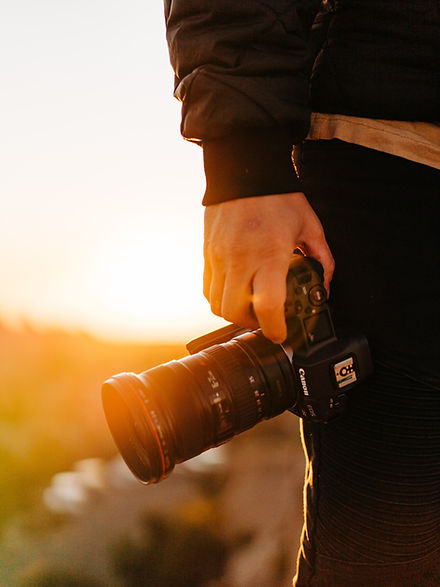
Pine & Marsh does it differently. We travel to your property on your actual trip days in your real conditions. Jacob and Thomas are on the ground with cameras — shooting guides working dogs at shooting light, a captain poling the flats at low tide, the quiet moments in a skinning shed at the end of a deer-camp morning, or the unscripted energy of a corporate quail hunt. We capture the truth of your operation: the light, the mud, the dogs, the boats, the people, and the land exactly as they are. No staging. No stock. No artificial perfection.
The resulting library is then edited with restraint — naturally lit, color-true, filmic but honest, never over-processed. You receive full-resolution files with complete usage rights. Use them on your website, in ads, on social media, in sales decks, at trade-show booths, or in printed collateral. This is your visual asset library — built once, valuable for years — that tells your story with the same integrity you bring to every hunt and every trip.
Our process
Phase 01
Pre-trip planning — Shot list built around your highest-revenue trips and the gaps in your current asset library. We schedule around your real season — dove openers, peak rut weeks, tarpon runs — not whenever it's convenient.
Phase 02
On-property shoot — One to four days on the property, depending on scope. Stills, video, behind-the-scenes — captured by photographers and videographers who hunt and fish themselves and know how to stay out of the way of the trip.
Phase 03
Edit & deliver — Color-graded stills, edited reels, raw files, and a usage-ready library you own forever. Delivered with naming conventions and folder structure that makes them easy to use across your site, ads, and sales materials.
Why having on-location authentic photo and video content matters
Every outfitter is competing against operations that look identical online — the same stock dove fields, the same staged grip-and-grin, the same AI-rendered waterfowl sunrise. The outfitters who break through are the ones with real photography: your dogs, your blinds, your guides at work on opening day. Authentic on-location content performs measurably better in paid ads, earns more clicks in Google search, and converts better on landing pages. A guest who can see exactly where they’re going, who they’re hunting with, and what success looks like on your property is a guest who books with confidence — and who comes back.

17.2% Have High AI Visibility
Only 17.2% of the 2,206 outfitters we audited had high AI search visibility — meaning AI platforms like ChatGPT and Perplexity confidently recommend them. The single biggest factor separating that 17.2% from the rest is content depth paired with authentic imagery. AI engines cite outfitters whose pages include real, place-specific photography alongside detailed species, season, and location copy. A lodge with 40 photos of actual waters, named guides, and specific gear reads as authoritative. One with stock shots and generic descriptions does not. On the Photography & Videography side, we build visual libraries that AI engines can parse — properly titled, alt-tagged, and embedded in the pages most likely to earn citation. If you want to be in the 17.2%, start with content and imagery that proves you know your waters better than anyone else.
82.4% Have a Claimed GBP
82.4% of outfitters have claimed their Google Business Profile — but claimed is not the same as optimized. Of the 2,206 operations we audited, the vast majority had bare-bones listings: a phone number, a few reviews, and no photos that could drive a booking. The GBP listings earning local search traction are the ones with real photography — guides on the water, lodges at golden hour, fish in hand before release. Google surfaces photo-rich listings more prominently in local results, and searchers convert on them at higher rates. For outfitters, the GBP photo section is one of the most underdeveloped trust-building assets in the business. We pair every photography engagement with a GBP content strategy so your images do double duty: they live on your site and populate the local listing that customers see before they ever click through.
12.2% Have a Dedicated FAQ Page
Only 12.2% of outfitters in our 2,206-operation audit had a dedicated FAQ page — and the ones that did convert browsers at a meaningfully higher rate. A visual FAQ page outperforms a text-only one for the same reason a lodge with photos outperforms one without: trust is built by showing, not just telling. When FAQ answers include images of the species, the lodge, the guide team, or the water, users stay longer, trust the answers more, and submit inquiries instead of bouncing. For our Photography & Videography clients, we build a visual content library that can be repurposed directly into FAQ pages — matching the exact question a searcher typed with a real photograph that makes the answer concrete. It’s one of the highest-leverage combinations in outfitter digital marketing, and fewer than one in eight operations is doing it.
20.4% Use Schema Beyond Default
Just 20.4% of outfitters in our 2,206-operation audit implement schema markup beyond the Wix or WordPress default. Image schema is one of the most overlooked opportunities in that gap. Properly structured image markup — including ImageObject schema with caption, description, and geo-location data — increases the likelihood that your photos appear in Google’s rich image results, Google Discover, and AI-generated visual summaries. For outfitters, that means a photo of a bull redfish at the Laguna Madre, captioned and schema-tagged correctly, can appear when someone searches “Texas bay fishing” without ever reaching your site directly. We build image schema into every photography deliverable — ensuring the content we shoot doesn’t just live on your pages but competes actively in the 20.4% of the market doing structured data right.
38.7% Have Active Email Programs
38.7% of the 2,206 outfitters we audited had an active email program — but the ones converting past browsers into repeat clients are the ones whose emails include compelling photography. An email with a real image of a sunrise duck hunt on the Chesapeake, or a grip-and-grin shot from last week’s bay trip, performs at a categorically different level than one with stock photos or no images at all. Open rates go up. Click-throughs go up. Re-booking rates go up. Photography content is email content. Every shoot we execute for a client produces assets that plug directly into their email sequences, seasonal promotions, and trip report newsletters. If you’re in the 38.7% already running email, better photography makes it more effective. If you’re not, great photography gives you something worth sending.
5.57 / 10 Mean Digital Health Score
The mean digital health score across 2,206 outfitters we audited was 5.57 out of 10. Visual assets are one of the most reliable ways to raise that number. Sites with strong photography score higher on engagement metrics like time-on-page and bounce rate — two signals that directly affect SEO rankings. They also score higher on conversion metrics like inquiry rate and booking initiation. When we look at the operations in our audit sitting above 7.5 out of 10, the common thread is almost always a site that looks and feels like a premium experience — and premium visual content is what gets them there. A 5.57 average means the outfitter above you probably isn’t that far ahead. Professional photography is one of the fastest ways to close that gap, and one of the few investments that improves your digital health score across every category at once.