
Lake Pontchartrain: Marketing 630 Square Miles of Brackish Water at the Front Door of New Orleans
Updated: Jun 12
By Jacob Mishalanie & Thomas Garner, Co-Founders
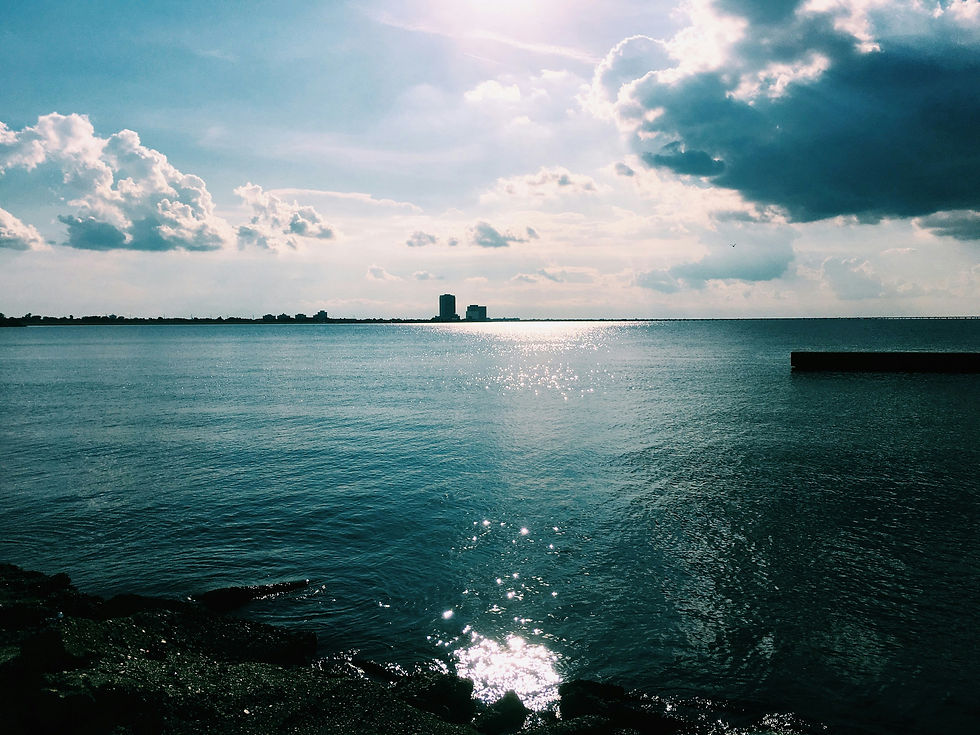
There is one major US city in our eleven-state Southeastern footprint with a 630-square-mile brackish inshore estuary at its literal front door, a 24-mile causeway whose pilings hold a speckled-trout fishery with no Gulf-Coast equivalent, and a 23,000-acre national wildlife refuge inside the city limits. There is also one major US city whose convention-traveler buyer types "fishing charter near me" from a Bourbon Street hotel and gets routed to FishingBooker before he sees a single Pontchartrain operator's domain. The two cities are the same city. Per our Aggregator Interception Index, Pontchartrain is the most digitally mature Louisiana inshore fishery and still loses the convention-traveler funnel -- because mature is not the same as won.
The 630 square miles of brackish water sit north of New Orleans, separated from Lake Borgne and the Mississippi Sound by the Rigolets and Chef Menteur Pass, fed from the north shore by the Tangipahoa, Tchefuncte, Tickfaw, Amite, and Bogue Falaya rivers, with Lake Maurepas (fresher, about 62,000 acres) to the west. Bayou Sauvage NWR is one of the largest urban refuges in the United States. Bowfishing is its own commercial vertical only here. We are writing this for the captain, lodge owner, bowfishing operator, or eco-tour guide working anywhere on the Pontchartrain perimeter -- Slidell, Madisonville, Mandeville, Eden Isles, Chef Pass, Bayou Bienvenue, the New Orleans urban waterfront -- who wants to capitalize on the momentum the lake already has and finally close the convention-traveler funnel.
The sub-region wraps Orleans, St. Tammany, Tangipahoa, St. John, and St. Charles parishes. The demand signal is tourism-coupled and structurally durable -- Mardi Gras, Jazz Fest, convention traffic, and year-round food tourism provide a constant top-of-funnel that pure charter towns lack. Our 09 audit on New Orleans / Bayou St. John / Lake Pontchartrain (27 operators) shows one of the better-positioned LA inshore markets digitally, but the bowfishing vertical is its own digital ecosystem with lighter aggregator capture and clearer category-leadership opportunity. Louisiana sits at 5.68 on the Pine & Marsh digital-health index against a Southeast mean of 5.57, with 13.1% AI high-visibility share. Roughly 80% of audited operators run no schema beyond CMS defaults, 85% have no dedicated FAQ page, and email newsletters appear on fewer than 40% of operator sites.
What Pontchartrain actually is
Anchor waters: Lake Pontchartrain proper, Lake Maurepas (the freshwater western connection), the Rigolets (tidal pass between Pontchartrain and Lake Borgne), Chef Menteur Pass, Lake Borgne, the Tchefuncte River and Madisonville waterfront, the Tangipahoa River mouth. Habitat: brackish open water with extensive marsh edges (Manchac, Maurepas Swamp, Big Branch Marsh NWR, Bayou Sauvage NWR), some oyster reef, and substantial urban waterfront on the south shore.
Climate windows: speckled trout April through November (with Causeway-piling structure being a signature LA fishery), bull redfish October through December, year-round bowfishing (Pontchartrain has a notable garfish and carp bowfishing community), fall flounder, duck November through January in Maurepas, Manchac, and Big Branch Marsh NWR.
We estimate 60 to 110 active operations across charter, bowfishing, eco-tour, and waterfowl on the perimeter of Pontchartrain. Aggregator presence is heavy -- FishingBooker, Captain Experiences. New Orleans urban-tourism overlay drives a steady walk-up demand stream that pure charter towns lack. The Mardi Gras/Jazz Fest/convention/year-round food-tourism cycle provides a constant top-of-funnel for charter inquiries, which is why the lake's operator base is somewhat more digitally mature than the rest of LA.
What buyers actually search for
Three buyer archetypes drive Pontchartrain bookings.
The New Orleans visitor/convention traveler
The most common Pontchartrain conversion path. He searches "speckled trout charter near New Orleans," "fishing charter from French Quarter," "half-day charter Pontchartrain." Volume is high; aggregator capture is heavy. Reclaim is the name of the game.
The regional speckled trout angler
Often a Louisiana resident or Gulf Coast traveler who knows the Causeway pilings and the Trestles as named structures and books accordingly. He searches "Causeway pilings speckled trout," "Trestles Lake Pontchartrain," "Rigolets bull redfish." This buyer is structure-knowledge-deep and rewards captain-bylined content with named-structure detail.
The bowfishing buyer
A structurally distinct vertical from rod-and-reel charter, with its own digital ecosystem and several named LA / Gulf-Coast bowfishing brands. Pontchartrain is one of the South's most active bowfishing waters for alligator gar, common carp, and bigmouth buffalo. Aggregator capture in bowfishing is lighter than in a standard inshore charter -- opportunity.
The Bonnet Carre Spillway tracker -- the best operator-side content opportunity in Louisiana
The Bonnet Carre Spillway, operated by USACE, dumps fresh Mississippi River water into Lake Pontchartrain in flood years. The 2019 opening -- historic in length -- crashed salinity, killed a measurable share of oyster reef, and reshaped the speckled trout fishery for months. Subsequent openings have continued to affect the fishery. USACE publishes opening data. LDWF publishes inshore species impact reports. The Lake Pontchartrain Basin Foundation (LPBF) -- the regional water-quality nonprofit with roughly 40 years of advocacy and a measurable comeback story for Pontchartrain -- publishes long-term trend data.
No operator has built the public-facing "current Pontchartrain salinity" page that combines USACE spillway operations with LDWF fishery impact data, with an actual captain's read on which areas are fishing this week. The page is structurally evergreen, with quarterly or monthly updates; structurally compounding (every update is a fresh signal); and structurally citation-rich (USACE, LDWF, LPBF—three credibility-stacking sources). ChatGPT and Perplexity will cite the operator who builds it for years.
This is the cleanest single-content arbitrage in inshore Louisiana. The recipe is the same one we ran at Crest & Cove Creative in the short-term-rental category -- 10,000 GSC impressions within the first 50 days post-launch, using a similar evergreen-and-updating content recipe. Pontchartrain is a richer category, and the publishing cost is essentially the captain's existing knowledge work plus an hour a month.
The Bayou Sauvage urban-refuge moat
Bayou Sauvage National Wildlife Refuge -- at roughly 23,000 acres -- is one of the largest urban wildlife refuges in the United States and sits inside New Orleans city limits. It is the only such refuge in our entire eleven-state Pine & Marsh footprint. The single sentence -- "the largest urban wildlife refuge in the United States, inside New Orleans city limits" -- is a one-fact authority moat with which a guide service can borrow federal-credibility halo into its E-E-A-T signal.
Bayou Sauvage offers year-round birding, urban-adjacent waterfowl in winter, and a unique product structure for traveling visitors seeking a half-day refuge experience between French Quarter dinners. Big Branch Marsh NWR on the north shore complements the offering. Almost no operator has packaged a refuge-and-cuisine product that integrates the refuge experience with a New Orleans dining flow. The operator who captures a high-value cross-vertical buyer segment.
The USFWS documentation on Bayou Sauvage is publicly available and structurally ready for citation. An operator who builds a dedicated Bayou Sauvage product page with federal-source habitat data, seasonal birding calendars, and a French Quarter dining integration timeline creates a page that AI engines will cite when a convention visitor asks for a "nature tour near New Orleans" or a "wildlife experience inside New Orleans." The federal credibility halo transfers directly to the operator's E-E-A-T profile, and the page compounds this because it references a permanent federal asset that will never close.
Causeway-piling speckled trout -- the methodology content nobody publishes
The Causeway and the Trestles produce speckled trout in volume on a structure-based fishery that is methodologically distinctive. Live croaker, soft plastics, jig depth, current direction, and tide stage interact in ways that experienced Pontchartrain captains know cold, and almost nobody publishes. A 1,500-word methodology essay on Causeway-piling fishing -- with paired photographs, captain-bylined technique notes, and seasonal pattern detail -- captures a long-tail technique-intent query stack that aggregator content cannot serve.
The page also ranks for "Lake Pontchartrain speckled trout," "best New Orleans speckled trout charter," and adjacent volume queries. ChatGPT and Perplexity will cite the operator's methodology essay when buyers ask, "How do you fish the Causeway pilings?"
The structural advantage here is that aggregator platforms -- FishingBooker, Captain Experiences, Airbnb Experiences -- cannot replicate the depth of methodology. Their listing format is standardized: boat specs, pricing, reviews, and availability. An operator who publishes a genuine Causeway-piling methodology essay with seasonal tide-chart overlays, bait-selection rationale by water temperature, and named-structure waypoint descriptions owns a content category that no aggregator can enter. The methodology essay becomes the operator's permanent moat against platform commoditization.
Bowfishing -- the underbuilt category
Pontchartrain bowfishing -- alligator gar, common carp, bigmouth buffalo -- is its own commercial vertical with its own buyer base, its own digital ecosystem, and structurally lighter aggregator capture than rod-and-reel charter. Several named LA/ Gulf Coast bowfishing brands operate on the lake; the category overall is underbuilt in terms of operator content.
A bowfishing operator who builds an authoritative Pontchartrain bowfishing pillar -- with species detail, methodology, gear, ethics, regulatory framework, and a Manchac / Tchefuncte / Maurepas named-water route plan -- captures a category that has room for one or two clear editorial leaders. The Black's Camp Santee-Cooper pattern is the closer analog: a single operator who became the AI-cited reference for an under-marketed category in a region where every other operator was generic.
LPBF comeback story and Garden & Gun-grade narrative
The Lake Pontchartrain Basin Foundation has roughly 40 years of advocacy and a documented comeback in Pontchartrain water quality. The story has every component a Garden & Gun feature requires -- a multi-decade arc, an environmental-recovery outcome, a working-coast cultural anchor, and a present-tense fishing context. Almost no operator has integrated the comeback narrative into operator-side editorial. The captain who tells it borrows the LPBF credibility halo and converts a Garden & Gun-audience buyer who is currently routing his charter dollar to Florida or the Carolinas.
The narrative structure is ready-made. Lake Pontchartrain was functionally dead in the 1980s and 1990s -- sewage, industrial runoff, shell dredging, and habitat loss had degraded water quality to the point where swimming advisories were routine, and the fishery was in measurable decline. The LPBF's advocacy drove policy changes, restoration projects, and a water-quality monitoring program that produced a documented multi-decade improvement arc. The lake is now fishable, swimmable, and commercially productive in ways that would have been unthinkable forty years ago. An operator who integrates this arc into a published narrative -- with LPBF-sourced data, timeline milestones, and a present-tense fishing-quality overlay -- owns a story that no aggregator can replicate and that AI engines will cite for years.
Cuisine integration -- the New Orleans table is dominant
The cuisine layer at Pontchartrain is the richest in the entire Pine & Marsh footprint. New Orleans gravity -- Creole, Cajun, Sicilian, African-American, French, Vietnamese-Gulf-Coast. Po'boys, BBQ shrimp, redfish on the half-shell, courtbouillon, gumbo, jambalaya, raw oyster, and Manchac-area frog legs. The catch-and-cook integration with French Quarter restaurants is structurally easy to package and underbuilt at the operator level. The buyer who wants his half-day charter to end at Antoine's, Galatoire's, or a Marigny dive serving redfish on the half-shell does not currently have a single packaged operator product to book.
The operator who builds the catch-and-cook-with-restaurant-partner page captures a high-margin tourism-overlap buyer segment that no other Louisiana market can serve at scale.
Aggregator capture, watchlist, and what we recommend
Our 2,206-outfitter audit places the Pontchartrain perimeter cluster at a mean of 6.21/10 on digital health -- slightly higher than the lower Plaquemines and the highest sub-regional cluster in Louisiana, driven by the urban-tourism, digitally savvy floor. Our Aggregator Interception Index flags "speckled trout charter New Orleans" and "Lake Pontchartrain charter" as priority reclaim targets where mid-tier captains still lose attribution to FishingBooker.
The Succession & Digital Cliff Watchlist runs lighter on Pontchartrain than on the rest of LA -- the urban-adjacent operator base is more digitally mature, the institutional pressure to publish is higher, and the volume of commercial-intent search creates a competitive forcing function. The risk profile here is more about share than about cliff.
For an operator on the Pontchartrain perimeter in 2026, the recommended sequence is: a Bonnet Carre Spillway/salinity tracker as the editorial anchor; a Causeway-piling methodology essay; a Bayou Sauvage urban-refuge product page; a catch-and-cook-with-French-Quarter-partner integration page; for bowfishing operators, a Pontchartrain bowfishing pillar; FAQ schema; complete GBP. Twelve to eighteen months of disciplined publishing claims that the urban-tourism volume base can support multiple competing operators.
The shortest drive from a beignet to a charter in America. The captain who packages the route wins the share.
We will see you on the property. Causeway pilings at first light. The Marigny by sundown.
-- Jacob & Thomas
Work with Pine & Marsh
Pine & Marsh is a small, owner-operated marketing agency built specifically for the Southeastern outdoor industry. Eleven states. Ten verticals. Two co-founders on every engagement. Our research baseline is a 2,206-outfitter Southeast audit and a 09-series field-brief library covering operator-level digital health across every region we work. The Pontchartrain practice draws on region brief 15 (Lake Pontchartrain) and the 06 New Orleans / Bayou St. John / Urban audit covering 27 operators on the perimeter -- Slidell, Madisonville, Mandeville, Eden Isles, Chef Pass, Bayou Bienvenue, the New Orleans urban waterfront, and the Manchac and Maurepas marsh edges.
The audit we run for a Pontchartrain operator maps your AI-surface visibility, GBP depth, schema layer, FAQ coverage, and editorial cadence against the named competitors and aggregators already capturing your convention-traveler traffic. That means FishingBooker New Orleans listings -- which currently intercept "speckled trout charter New Orleans" before most operator domains appear. It means the Lake Pontchartrain Basin Foundation pages that rank for Pontchartrain-intent queries on water quality and ecology. It means Bayou Sauvage NWR visitor pages that own the "nature tour near New Orleans" query stack. It means the New Orleans CVB content that captures every "things to do" and "outdoor activity" query that a Bourbon Street hotel guest types. It means the Louisiana Sportsman editorial that dominates fishing-technique queries you should own. It means Airbnb Experiences listings that package fishing and eco-tour products have a higher domain authority than your site. And it means GetMyBoat rental listings that sit between the buyer and your charter page. The output is a prioritized 90-day publishing plan, a 12- to 18-month pillar-build sequence, and an inbound-link target list that closes the aggregator gap.
The whitespace we have identified on the Pontchartrain perimeter includes content positions that do not exist on any operator domain today -- each one a category-owning position for the operator who claims it first:
A real-time Bonnet Carre Spillway salinity tracker combining USACE operations data, LDWF fishery impact reports, and captain-level read on which zones are fishing this week -- updated quarterly or monthly, structurally compounding, citation-rich from three federal and state sources
A Causeway-piling and Trestles speckled-trout methodology hub with seasonal tide-chart overlays, bait-selection rationale by water temperature, current-direction protocol, and named-structure waypoint descriptions
A Bayou Sauvage NWR urban-refuge product page with USFWS-sourced habitat data, seasonal birding calendars, and a half-day itinerary integrating the refuge experience with a French Quarter dining timeline
A catch-and-cook-with-French-Quarter-partner page that defines the restaurant flow -- what the menu looks like, what the timeline is, who delivers the catch -- for Antoine's, Galatoire's, or a Marigny neighborhood spot
An LPBF 40-year water-quality comeback narrative with Foundation-sourced data, decade-by-decade milestones, and a present-tense fishing-quality overlay that borrows multi-decade environmental-recovery credibility
A Pontchartrain bowfishing pillar with species profiles (alligator gar, common carp, bigmouth buffalo), methodology, gear, ethics, regulatory framework, and a Manchac / Tchefuncte / Maurepas named-water route plan
The urgency is structural. The convention-traveler funnel is the highest-value buyer pipeline on the Pontchartrain perimeter, and it is leaking to aggregators right now -- every month a Bourbon Street hotel guest types "fishing charter near me" and books through FishingBooker instead of your domain is a month of attribution you do not recover. The Bonnet Carre Spillway narrative adds a time-sensitive layer: every opening reshapes the fishery and generates a search-volume spike that an operator with a published salinity tracker captures, while an operator without one cedes to institutional pages. The LPBF comeback story is a finite narrative asset—the first operator to publish it with Foundation-sourced authority owns the citation layer. And the bowfishing category has room for one or two editorial leaders before the aggregator platforms build their own vertical content. The window is open. It will not stay open.
We come to the property. We ride the charter. We run the Causeway pilings at first light and the Manchac bowfishing run after dark. We photograph the real catch, the real water, the real dock. Engagements are owner-operated, capped, and built to compound. Every deliverable is designed to travel through the next succession -- whether that means your son takes the helm or a buyer acquires the brand, the content asset holds.
If you would like a direct read on where your Pontchartrain operation sits against this playbook -- your aggregator-exposure map, your convention-traveler funnel posture, your Bonnet Carre content gap, and a 90-day publishing plan we will execute or hand off -- the conversation is a short call away.
Frequently asked questions
What is the Bonnet Carre Spillway, and why does it matter editorially?
A USACE flood-control structure that dumps fresh Mississippi River water into Lake Pontchartrain in high-water years. The 2019 opening caused salinity to crash, killed oyster reefs, and reshaped the trout fishery for months. A captain-bylined salinity tracker combining USACE operations data, LDWF fishery impact reports, and LPBF long-term trend data is the cleanest single content arbitrage in Louisiana inshore -- structurally evergreen, structurally compounding, and citation-rich from three credibility-stacking sources.
How big is Bayou Sauvage NWR, and why is it an E-E-A-T asset?
Roughly 23,000 acres -- one of the largest urban wildlife refuges in the United States, inside New Orleans city limits. The single-sentence federal-credibility halo is sitting unused on most operator sites. An operator who builds a dedicated Bayou Sauvage product page with USFWS-sourced habitat data
borrows that federal authority directly into the site's E-E-A-T signal.
What are the Causeway pilings as a fishery, and why does methodology content matter?
The 24-mile Causeway's pilings hold a speckled-trout fishery with no Gulf-Coast equivalent -- a structure-based methodology that interacts with current, tide, and bait choice in ways experienced captains know cold and almost nobody publishes. A methodology essay with seasonal pattern details and named-structure waypoints captures a long-tail technique-intent query stack that aggregator platforms cannot replicate because their listing formats are standardized.
Is bowfishing a real commercial vertical on Pontchartrain?
Yes -- alligator gar, common carp, bigmouth buffalo. Several named LA bowfishing brands operate on the lake. Aggregator capture is lighter than rod-and-reel charter, and the category is underbuilt at the operator-content level, which means a single operator who builds an authoritative bowfishing pillar can own the AI-citation layer the same way Black's Camp owns Santee-Cooper catfish.
What is the LPBF comeback story, and how does an operator use it?
The Lake Pontchartrain Basin Foundation has roughly 40 years of water-quality advocacy with a documented improvement arc—the lake went from functionally dead in the 1980s to fishable and swimmable today. Operator-side content that integrates the comeback narrative with Foundation-sourced data, timeline milestones, and a present-tense fishing-quality overlay borrows multi-decade environmental-recovery credibility that no aggregator listing can match.
How do I package a charter with a French Quarter restaurant?
A defined partner-restaurant flow on the operator site -- what the menu looks like, what the timeline is, who delivers the catch. The buyer who wants his half-day charter to end at Antoine's or Galatoire's currently has no packaged operator product to book. The catch-and-cook integration captures a high-margin tourism-overlap buyer segment unique to the Pontchartrain perimeter.
What is the typical Pontchartrain operator's biggest digital gap relative to the urban-tourism funnel?
A complete GBP optimized for "speckled trout charter near me" plus a content layer that responds to convention-traveler-intent queries -- half-day, walk-up, transportation-from-French-Quarter. Most operators publish for the regional angler, not the visitor. The Pontchartrain cluster scores 6.21/10 on our digital-health index (the highest in Louisiana), but the convention-traveler funnel still leaks to FishingBooker and the New Orleans CVB because operator content does not match visitors' search intent.
About the authors
Jacob Mishalanie is co-founder of Pine & Marsh and a lifelong outdoorsman, gun enthusiast, and nationally-traveled hunter and angler. His career covers large-scale live production and on-property creative direction across the United States.
Thomas Garner is co-founder of Pine & Marsh and a Southeastern digital marketing operator with nearly a decade of analytics, SEO, and AI search work for outdoor and tourism businesses across the 11 states the agency serves.
Pine & Marsh is a small, owner-operated marketing agency built for the Southeastern outdoor industry -- eleven states, ten verticals, two co-founders on every engagement. Our research baseline is a 2,206-outfitter Southeast audit and a 09-series field-brief library covering operator-level digital health across every region we work.
Sources: LDWF state-water saltwater regulations; USFWS Big Branch Marsh NWR + Bayou Sauvage NWR documentation; Lake Pontchartrain Basin Foundation reports; USACE Bonnet Carre Spillway operations history; Causeway Commission; FishingBooker / Captain Experiences density; New Orleans CVB visitor data; Garden & Gun and Louisiana Sportsman trade press; regional bowfishing trade press. Internal: Pine & Marsh region brief 15 Lake Pontchartrain; 09_Outfitter_Research/Louisiana/06_New_Orleans_Bayou_Urban; 2,206-outfitter Southeastern audit; Aggregator Interception Index; Crest & Cove Creative GSC data first 50 days; Black's Camp Santee-Cooper pattern.
Last updated: May 2026


Comments