
Marketing Kiawah, Edisto, and the Sea Islands: Resort-Adjacent Inshore Guide Services
- Jun 1
- 16 min read
Updated: Jun 12
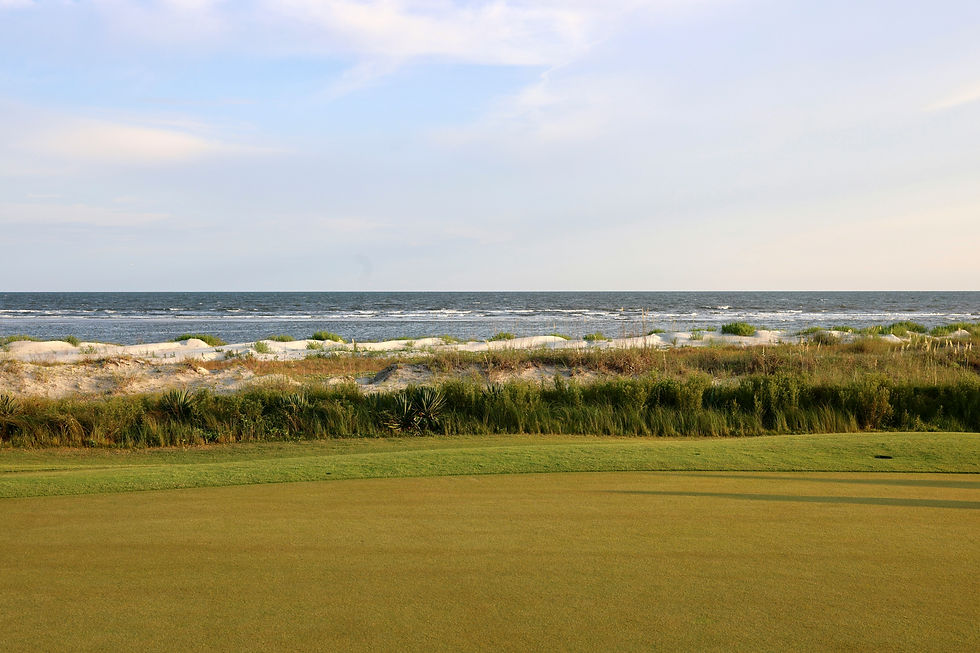
The South Carolina Sea Islands stretch south from Charleston Harbor in a chain of barrier islands, tidal marshes, and deepwater rivers that create one of the most productive inshore fisheries on the Atlantic coast. Kiawah Island, Seabrook Island, Edisto Island, Wadmalaw Island, and Johns Island -- each connected by saltwater creeks and separated by vast expanses of Spartina grass -- hold populations of redfish, spotted seatrout, flounder, sheepshead, and black drum that sustain a growing fleet of inshore fishing guides year-round.
What makes this stretch of coastline different from other southeastern fisheries is not the fish. Redfish tail on mud flats from Savannah to Beaufort. Spotted seatrout stack up in creek mouths from Hilton Head to Pawleys Island. The difference is the client base. Kiawah Island Resort draws hundreds of thousands of visitors annually. Seabrook Island operates as a gated residential resort community. Edisto Beach fills with vacation renters from April through October. And Charleston -- consistently ranked among the top tourist destinations in the United States -- sends overflow tourism down Highway 17 and onto the Sea Islands every weekend of the year.
For inshore fishing guides operating in this geography, the opportunity is enormous. The client pool is wealthy, vacation-minded, and already spending money on experiences. But the competition is fierce, the aggregator threat is real, and most guides in the market are leaving significant digital visibility on the table.
This post breaks down the geography, the fishery, the resort-adjacent business model, the competitive landscape, and the digital marketing gaps that Pine and Marsh have identified across the Sea Islands guide fleet. If you run a charter or guide service between Charleston Harbor and St. Helena Sound, this analysis is built for you.
Kiawah Island: The Barrier Island Resort at the Center of the Fishery
Kiawah Island is a 10-mile barrier island located approximately 25 miles south of downtown Charleston. It is accessed by a single road -- Betsy Kerrison Parkway -- that crosses Johns Island and the Kiawah River before reaching the island's guarded gate. The island is dominated by Kiawah Island Resort, which operates multiple golf courses, a luxury hotel (The Sanctuary), and hundreds of rental villas and private homes available through the resort's property management program.
The fishing geography around Kiawah is defined by the Kiawah River to the north, Captain Sams Inlet to the south (separating Kiawah from Seabrook Island), and thousands of acres of tidal marsh that extend inland behind both islands. The Kiawah River system connects to Bohicket Creek and eventually to the Stono River, creating a network of navigable waterways that hold fish at every stage of the tide.
Captain Sams Inlet is a dynamic inlet that has migrated significantly over the decades. The shoals and sand flats around the inlet create staging areas for redfish, flounder, and sheepshead. During warmer months, tarpon cruise the inlet on incoming tides, and cobia push through on their annual migration up the coast.
For guides, Kiawah's significance is not just ecological—it is economic. The resort guest who books a half-day inshore trip is often spending $500-800 per night on accommodations, dining at resort restaurants, and playing $300+ rounds of golf. Fishing is an experience add-on to an already premium vacation. These clients are not price-sensitive in the way that a local angler booking a weekend trip might be. They expect professional service, reliable equipment, and a curated experience.
Edisto Island and Edisto Beach: The Less Developed Alternative
Edisto Island sits approximately 15 miles south of Kiawah as the crow flies, though the drive takes closer to 45 minutes via Highway 174. Unlike Kiawah, Edisto has never been developed as a gated resort community. Edisto Beach -- the small town at the island's southern tip -- operates on a vacation rental model. Rows of beachfront and marsh-front homes fill with families from Columbia, Greenville, Atlanta, and Charlotte throughout the warm season.
The fishing geography around Edisto is arguably more diverse than that around Kiawah. The Edisto River -- one of the longest free-flowing blackwater rivers in North America -- meets the ocean just north of Edisto Beach. The North Edisto River wraps around the island's northern shore. To the south, Big Bay Creek and the waters around Otter Island provide access to St. Helena Sound, one of the largest and most productive estuarine systems on the East Coast.
St. Helena Sound is the confluence of the Edisto, Ashepoo, and Combahee rivers -- the three rivers that define the ACE Basin, a 350,000-acre conservation area that protects some of the most pristine saltwater habitat remaining on the Atlantic coast. Guides who launch from Edisto can fish the ACE Basin's interior creeks on high tides, work the sound's oyster bars and grass flats on lower water, and run offshore to artificial reefs and live bottom within 20 miles of the inlet.
The Edisto client is often slightly different from the Kiawah client. Edisto attracts families who return year after year, second-home owners who know the area well, and a younger demographic drawn to the island's laid-back character. Price sensitivity is moderate -- Edisto renters are spending real money on vacation homes, but they are not operating at the Kiawah Resort price tier. Guides who serve this market effectively often build repeat client relationships that span years.
The Sea Islands Chain: A Connected Inshore Fishery
The term 'Sea Islands' refers to the chain of barrier islands and associated lowcountry terrain stretching from Charleston south through Beaufort and beyond. For the purposes of this analysis, we focus on the northern Sea Islands -- Kiawah, Seabrook, Edisto, Wadmalaw, and Johns Island -- which form a connected fishing territory accessible from multiple launch points.
John's Island is the largest of the group and serves as the mainland hub. Bohicket Marina, located on Johns Island near the Kiawah River bridge, is the primary marina for guides serving the Kiawah and Seabrook market. Rockville, a small community on the southern tip of Wadmalaw Island, provides access to Bohicket Creek and the North Edisto River. Cherry Point boat landing on Wadmalaw offers access to Church Creek and the interior marsh system.
Seabrook Island, adjacent to Kiawah and separated by Captain Sams Inlet, operates as a private residential community with its own equestrian center, golf course, and beach club. Seabrook residents represent a reliable client base for guides -- many are retirees or second-home owners with disposable income and flexible schedules. The island does not have its own marina, so Seabrook clients typically meet guides at Bohicket Marina or the Kiawah River public landing.
The interconnected nature of these waterways means that a guide launching from Bohicket Marina can reach productive fishing from Captain Sams Inlet south to the North Edisto River in a single half-day trip. A guide launching from Edisto can fish north toward Seabrook or south into St. Helena Sound. The fishery does not respect island boundaries, and the guides who succeed are those who read tides, seasons, and conditions across the full system.
The Inshore Fishery: Species, Seasons, and Signature Experiences
Redfish are the marquee species across the entire Sea Islands inshore fishery. Slot-sized reds (15-23 inches under South Carolina regulations) hold in the marsh grass, along oyster bars, and on mud flats year-round. During fall, large schools of bull redfish -- fish exceeding 30 inches and 15 pounds -- push into the sounds and inlets, creating a sight-casting opportunity that draws anglers from across the Southeast.
Spotted seatrout are the second pillar of the fishery. Trout stack up in creek mouths, around dock structures, and over sand-mud transitions. The spring and fall runs produce the best numbers, while winter trout fishing in deeper holes along the Kiawah and North Edisto rivers can yield trophy-class fish exceeding five pounds.
Flounder occupy sandy bottoms near inlets, channel edges, and areas where current sweeps baitfish across ambush points. Captain Sam's Inlet and the mouth of Big Bay Creek on Edisto are reliable flounder producers. Sheepshead congregate around bridge pilings, dock structures, and rocky substrate -- the dock systems along Bohicket Creek and the Kiawah River hold sheepshead year-round. Black drum, often overlooked by visiting anglers, feed in schools on mud flats and respond well to sight-casting techniques.
Seasonal tarpon represent the premium tier of the fishery. From late May through August, juvenile and adult tarpon enter the inlets and cruise the beachfront. Guides who target tarpon on fly or light tackle command the highest per-trip rates in the market, and a successful tarpon hookup creates the kind of client experience that generates referrals, social media content, and five-star reviews.
Fly Fishing on the Flats: The Premium Price Tier
Sight-casting to redfish on shallow flats with a fly rod is the highest-value guided experience in the Sea Islands fishery. The mechanics are straightforward -- a guide poles a flats skiff across ankle-deep water while the angler stands on the bow, scanning for tailing or cruising redfish. When a fish is spotted, the guide calls the shot, and the angler delivers a fly to a precise location.
The reality is more demanding than the description suggests. Fly-fishing flats guides need specialized equipment (poling skiffs, push poles, fly-specific tackle), advanced fish-finding skills, and the ability to coach clients with limited fly-casting ability. The guide must read wind, light conditions, and tide stage simultaneously. A blown cast or a poorly timed strip can send a school of redfish off the flat for the rest of the tide.
Guides who offer fly-fishing in the Sea Islands typically charge a 15-25% premium over conventional inshore rates. A standard half-day inshore trip might run $500-650, while a fly fishing-specific trip on the flats might command $650-800 or more. The client who books a fly fishing trip is often a dedicated angler -- someone who has fly fished for bonefish in the Bahamas, permit in the Keys, or steelhead in the Pacific Northwest. This client values the experience, understands the difficulty, and is willing to pay for a guide who can deliver.
The marketing implications are significant. Fly fishing clients search differently from general inshore clients. They search for 'Kiawah Island fly fishing guide,' 'sight casting redfish South Carolina,' and 'Lowcountry flats fishing.' They read fly-fishing publications, follow fly-fishing accounts on social media, and trust recommendations from fly shops. Guides who want to capture this market need dedicated fly fishing content on their websites -- not a single paragraph buried in a general services page.
The Resort-Adjacent Guide Model: High-Value Clients, High Competition
The business model for inshore guides operating near Kiawah, Seabrook, and Edisto is fundamentally different from that of guides operating in less tourist-driven markets. In a typical fishing destination, the guide's primary marketing challenge is convincing anglers to travel there. In the Sea Islands, the clients are already there. They arrived at the resort, the beach, the golf, or the wedding. Fishing is an add-on activity.
This dynamic creates several advantages. First, the sales cycle is short. A resort guest decides on Tuesday that they want to fish on Thursday. The guide who appears in that Tuesday evening Google search -- or who is recommended by the resort concierge -- gets the booking. Second, the client's willingness to pay is already established. Someone spending $3,000-5,000 on a four-night Kiawah stay is not going to balk at a $600 fishing trip. Third, the experience expectation is high. These clients are accustomed to professional service, clean equipment, and knowledgeable staff. Guides who meet that standard earn reviews that compound their visibility over time.
The disadvantages are equally significant. The resort-adjacent market is seasonal in a way that year-round fisheries are not. Kiawah Resort occupancy peaks from April through October and drops meaningfully in winter. Edisto Beach rentals follow a similar pattern. Guides who depend entirely on resort traffic face lean months from November through February. The successful operators diversify -- targeting local anglers, corporate groups, and destination fishing clients during the off-season.
The concierge channel is both an opportunity and a risk. Resort concierge desks maintain preferred vendor lists, and getting on that list can guarantee a steady stream of bookings during peak season. But concierge programs often take commissions of 10-20%, and the guide has limited control over how the service is presented or sold. If the concierge switches to a competitor, the bookings disappear overnight.
The Charleston Tourism Overlay: 7 Million Visitors and Growing
Charleston consistently ranks among the top tourist destinations in the United States, drawing more than 7 million visitors annually, according to the Charleston Area Convention and Visitors Bureau. The city's appeal -- historic architecture, acclaimed restaurants, cultural attractions, and coastal access -- creates a tourism economy that radiates outward to the surrounding islands.
For Sea Islands fishing guides, the Charleston tourism overlay is a force multiplier. Many Kiawah and Seabrook visitors spend part of their trip in downtown Charleston before retreating to the island for beach and resort time. Edisto visitors pass through Charleston on their way to and from the island. The sheer volume of visitors in the greater Charleston area means that the potential client pool for a guided fishing experience extends well beyond island-specific traffic.
This creates a search landscape where guides must compete not only for island-specific queries ('Kiawah Island fishing guide') but also for Charleston-area queries ('Charleston fishing charter,' 'fishing near Charleston SC'). The competition for Charleston-branded fishing queries is intense -- guides from Isle of Palms, Sullivans Island, Mount Pleasant, Folly Beach, and the Sea Islands all target the same keyword family. Differentiation requires geographic specificity, species-specific content, and a website that clearly communicates which waters the guide fishes.
Guide Fleet Competition: A Crowded Market Near a Major City
The Charleston metro area is home to one of the densest concentrations of inshore fishing guides on the East Coast. Between the harbor, the Wando River, Shem Creek, the ICW, Folly Beach, and the Sea Islands, there are dozens of licensed captains offering inshore trips within a 30-mile radius. Many of these guides compete for the same Google searches, resort referrals, and aggregator listings.
Differentiation in this market requires clarity of positioning. Guides who try to be everything to everyone -- inshore, offshore, nearshore, shark, dolphin tours -- dilute their messaging and confuse search engines. The guides who gain traction are those who stake a clear geographic and species claim: 'Kiawah Island redfish guide,' 'Edisto Island inshore fishing,' 'Sea Islands fly fishing.' Specificity wins in both organic search and in the client's decision-making process.
Fleet size also matters. Solo operators compete against multi-boat operations with dedicated booking staff, larger advertising budgets, and the ability to absorb last-minute cancellations. Multi-boat fleets can invest in website development, Google Ads, and content marketing at a scale that individual captains cannot match. Solo guides must be more strategic—focusing on a niche (fly fishing, light-tackle, kayak fishing) or a specific geography (Kiawah marsh, ACE Basin, Edisto flats) to carve out a defensible market position.
Current Digital Marketing Gaps Across the Sea Islands Fleet
Pine and Marsh has audited guide service websites across the Sea Islands and the greater Charleston market. The findings are consistent with what we observe across the southeastern charter industry, but the gap between current performance and available opportunity is particularly wide in this market, given the volume of tourism.
The average audit score across Sea Islands guide websites is 5.57 out of 10. This reflects a fleet that has functional websites -- most can be found online, and most have booking capabilities -- but underperforms in technical SEO, content depth, and structured data implementation that drive organic visibility and AI search inclusion.
Key findings from the audit:
80% of audited guide websites have no structured data markup of any kind -- no FAQ schema, no LocalBusiness schema, no Service schema
85% have no FAQ content on their websites, missing the single most effective content format for AI search engine visibility
Most sites have thin service pages -- 200-400 words describing trip types without geographic detail, seasonal patterns, or species-specific information
Few guides maintain active blogs or resource content that would build topical authority around their target fishery
Mobile performance is inconsistent -- several sites load slowly on cellular connections, which is exactly how a resort guest searches from a beach chair
Local SEO signals (Google Business Profile optimization, consistent NAP data, review management) are underutilized relative to the opportunity
These gaps represent a direct opportunity for guides who invest in correcting them. In a market where the client pool is enormous and actively searching, the guide who shows up with a complete, well-structured website captures bookings that competitors leave on the table.
SEO Opportunities: The Keywords That Drive Bookings
The keyword landscape for Sea Islands fishing guides spans three tiers of search intent, each requiring different content strategies.
Tier 1 -- High-Intent Booking Queries: These are the searches that directly precede a booking decision. 'Kiawah Island fishing guide,' 'Edisto Island inshore fishing charter,' 'Sea Islands redfish guide,' 'Charleston area fly fishing guide.' These queries have clear commercial intent, and the guide who ranks on page one captures the click. Winning these queries requires optimized service pages with geographic specificity, strong title tags, meta descriptions that include the target location, and supporting content that builds topical relevance.
Tier 2 -- Research and Planning Queries: These searches happen earlier in the decision process. 'Best time to fish Kiawah Island,' 'what fish can you catch near Edisto Beach,' 'fly fishing near Charleston SC.' The searcher is not yet ready to book but is gathering information. Blog content, seasonal fishing reports, and species guides capture this traffic and build the guide's authority. When the searcher converts to a booking query, the guide who educated them has a significant advantage in trust.
Tier 3 -- AI Search and Answer Engine Queries: These are the questions being asked of ChatGPT, Google AI Overviews, Perplexity, and other AI-powered search tools. 'Where should I go fishing near Kiawah Island?' 'Is there good redfish fishing near Charleston?' 'What is the best time of year for inshore fishing on the South Carolina coast?' AI search engines pull answers from websites with structured data, FAQ content, and comprehensive topical coverage. Guides without FAQ schema and detailed content are invisible to this rapidly growing search channel.
Aggregator Interception: The Threat to Direct Bookings
The Sea Islands market faces a particularly acute aggregator-interception problem due to the resort-tourism model. When a Kiawah Resort guest searches for a fishing guide, they encounter multiple layers of intermediaries before they might reach a guide's own website.
The first layer is the resort itself. Kiawah Island Resort maintains a concierge program that steers guests toward preferred vendors. Seabrook Island has a similar system. These programs guarantee bookings but extract commissions and remove the guide from the direct client relationship.
The second layer is online aggregators. FishingBooker, GetMyBoat, and similar platforms rank aggressively for queries like 'fishing charters near Kiawah Island' and 'Edisto Island fishing trips.' These platforms invest heavily in SEO and paid search, capturing the click before the individual guide's website ever appears in the results. The guide then pays a booking fee -- typically 10-15% -- for a client they could have acquired directly.
The third layer is tourism content sites. Charleston tourism websites, travel blogs, and 'best of' listicles rank for informational queries and funnel readers toward aggregator links or sponsored listings. The guide's own content is buried beneath layers of third-party pages that exist to monetize the guide's service.
Defending against aggregator interception requires a multi-pronged approach: owning page-one rankings for your core geographic and species keywords, building direct-booking capabilities that eliminate the need for aggregator platforms, maintaining an email list and social media presence that drive repeat bookings, and creating content that outranks the aggregators for long-tail queries.
Content Gaps Operators Should Fill
Based on Pine and Marsh's analysis of the Sea Islands guide market, the following content categories represent the highest-impact opportunities for guides who want to improve their organic visibility and defend against aggregator interception.
Geographic landing pages: Dedicated pages for each island or waterway you fish. A page for 'Kiawah Island Fishing,' a page for 'Edisto Island Inshore Fishing,' a page for 'ACE Basin Fishing Charters.' Each page should be 800-1500 words with specific geographic detail, seasonal patterns, and target species.
Species guides: Comprehensive pages for each target species -- redfish, spotted seatrout, flounder, sheepshead, tarpon. Include seasonal calendars, preferred techniques, tackle recommendations, and regulations. These pages build topical authority and capture research-phase searches.
Seasonal fishing reports: Monthly or bi-monthly reports on current conditions, recent catches, and upcoming patterns. This content signals freshness to search engines and gives clients a reason to return to your website.
FAQ pages with schema markup: A minimum of 15-20 frequently asked questions covering trip logistics, species availability, seasonal timing, what to bring, and booking policies. Implement FAQ schema markup so these answers are eligible for Google's rich results and AI search citations.
Fly fishing-specific content: If you offer fly fishing trips, create a dedicated fly fishing page with its own set of FAQs, species targets, and seasonal information. Fly fishing clients search differently and expect dedicated content.
Local knowledge content: Restaurant recommendations near the marina, best times to avoid traffic on Betsy Kerrison Parkway, what to do if your trip is weathered out. This content builds trust, demonstrates local expertise, and captures long-tail searches that competitors ignore.
Work with Pine and Marsh
Pine and Marsh is a digital marketing agency built specifically for outdoor recreation businesses across the Southeast. We work with inshore guides, offshore charter operations, fly-fishing outfitters, and hunting lodges to build the kind of online presence that drives direct bookings and defends against aggregator interception.
Our approach starts with a comprehensive audit of your current digital footprint -- website performance, SEO health, structured data implementation, content gaps, and competitive positioning. From there, we build a strategic plan tailored to your specific market, whether you are a solo guide running a flats skiff out of Bohicket Marina or a multi-boat fleet serving the entire Sea Islands chain.
If you operate a fishing guide service in the Kiawah, Edisto, or greater Sea Islands market and want to understand where you stand relative to the competition, reach out to Pine and Marsh for a no-obligation audit. We will show you exactly what is working, what is missing, and what it takes to own your market online.
Frequently Asked Questions
What makes the Sea Islands a strong inshore market?
Kiawah, Seabrook, and Edisto offer world-class inshore fishing for redfish, trout, and tarpon right beside luxury resorts and high-spending tourists, with the Charleston tourism overlay bringing millions of visitors. That high-value, resort-adjacent demand is a strong market for an operator who reaches it well.
How should a Sea Islands guide market to resort guests?
Position the operation as the premium inshore experience for resort and vacation guests already in the area, with marketing as polished as the clientele expects, so affluent visitors looking for something to do find and book a guided trip.
What is the premium price tier in this market?
Fly fishing on the flats is the premium tier, a specialized, technical experience that discerning anglers pay top dollar for, so an operation that offers it should market it distinctly to the fly audience rather than blending it into general charter content.
How does the Charleston tourism overlay help?
Charleston draws millions of visitors a year, a steady stream of potential clients near the Sea Islands, so connecting the operation to that visitor demand captures an audience already coming to the area.
Why is differentiation critical in this market?
The market is crowded near a major city, so being merely good is not enough. An operator must build a distinct brand and strong search presence to stand out among many guides and win the high-value resort-adjacent client.
How do aggregators threaten Sea Islands bookings?
Aggregators rank for these searches and intercept direct bookings, taking a cut and the relationship. Strong direct content, local SEO, and a complete profile let an operator capture those clicks and book the affluent client directly.


Comments