
Precision Rifle Training Marketing: How SE Instructors and Range Operators Can Fill Long Range Classes Year-Round
Updated: Jun 12
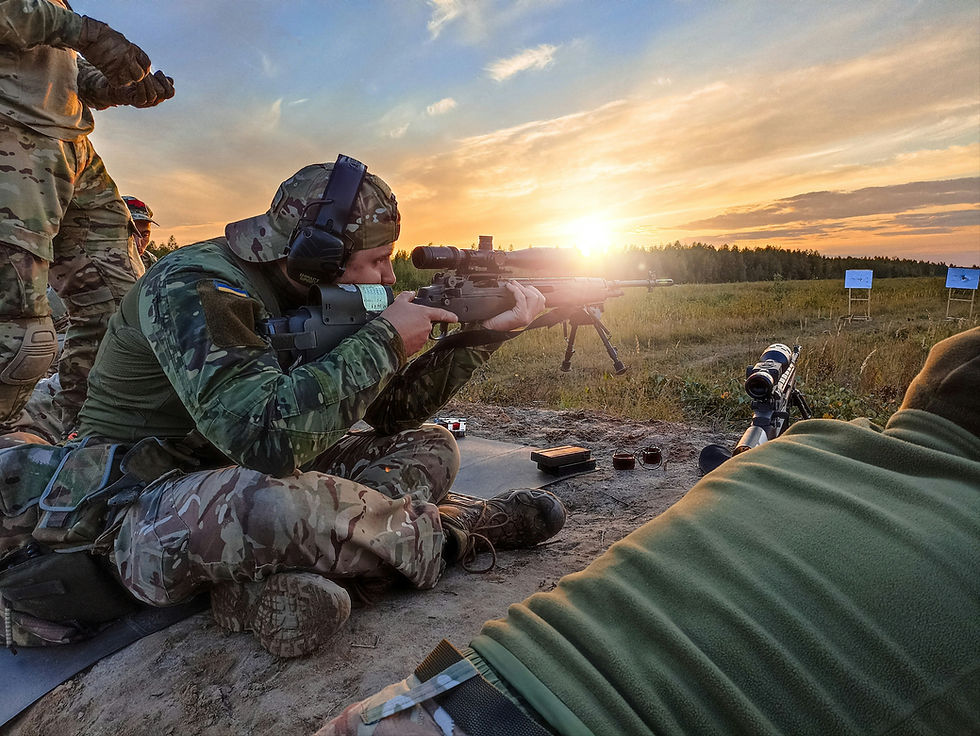
Precision rifle training is the fastest-growing revenue line in the southeastern shooting sports market -- and the operators who market it well are filling classes 60 days out while their competitors scramble to post last-minute discounts on social media. Long-range shooting has moved decisively beyond the military and law enforcement community into recreational sport, corporate team building, and competitive PRS circuits. The facilities that treat training as a core product line rather than an afterthought are capturing the margin that walk-in range fees and annual memberships alone cannot deliver.
This is not a niche. The Precision Rifle Series reported record match attendance in 2024. Civilian Marksmanship Program enrollment at Talladega Marksmanship Park has grown year over year since the facility expanded in 2015. Private instructors operating on leased land across Alabama, Georgia, Tennessee, and the Carolinas are booking out months in advance with nothing more than a Facebook page and word of mouth. The demand is real. The marketing infrastructure behind it is almost nonexistent.
Pine & Marsh audited 2,206 outdoor sporting operations across the 11-state Southeast footprint. The mean digital health score was 5.57 out of 10. Among shooting ranges, gun clubs, and training facilities specifically, the numbers are worse—closer to 4.2 out of 10 on average. Roughly 80% have no structured data beyond CMS defaults. Approximately 85% have no FAQ content indexed by Google. Fewer than 40% operate an email newsletter. For an industry where a single advanced precision rifle course generates $500 to $2,000 per student per day, the gap between demand and digital presence is extraordinary.
This post maps the precision rifle training marketing landscape across the Southeast—the revenue model, search demand, content gaps, and the specific playbook that instructors and range operators can use to fill long-range classes year-round.
The Training Revenue Model: Why Precision Rifle Instruction Is the Highest-Margin Service at Any Range
Walk-in range fees generate $15 to $40 per visit. Annual memberships bring in $150 to $600 per member per year. Neither model scales without significant capital investment in additional lanes, bays, or acreage. Training is different. A single instructor with a 600-yard rifle range, a half-dozen rental rifles, and a well-structured curriculum can generate $2,000 to $8,000 per class day with minimal incremental cost beyond ammunition and target steel.
The precision rifle training market breaks into five distinct revenue tiers, each with its own audience, price point, and marketing approach.
Beginner Long Range Classes
The entry-level offering -- typically a one-day course covering rifle fundamentals, scope zeroing, ballistic calculator use, wind reading basics, and live fire from 100 to 600 yards. Price range: $250 to $500 per student. Class size: 6 to 12 students. This is the highest-volume tier and the primary acquisition funnel for all other training products. The search queries driving this tier are "long range shooting class near me," "precision rifle course for beginners," and "learn to shoot long range [state]." These queries have clear commercial intent and almost zero competition from established content.
Advanced PRS Preparation Courses
For students who have completed a fundamentals course and want to compete in Precision Rifle Series matches. The curriculum covers positional shooting, barricade work, movers, unknown-distance targets, stage planning, and match-day equipment management. Price range: $500 to $1,200 per student for a two-day course. The audience is smaller but intensely loyal -- PRS competitors travel across state lines for quality instruction and will rebook annually. Marketing this tier requires video content that shows real match scenarios and instructor credentials demonstrating competitive results.
Law Enforcement and Military Sniper Courses
Specialized training for agency-funded students. Curriculum includes precision shooting at extended ranges, observation and reporting, construction of urban and rural hide sites, team movement, and shoot-no-shoot decision-making. Price range: $1,000 to $2,500 per student for three to five-day courses. This tier requires instructor credentials—typically from former military snipers or veteran LE marksmen with documented training pedigrees. The marketing channels are different: direct outreach to department training coordinators, GSA Schedule pricing, and relationships with state POST (Peace Officer Standards and Training) boards. But SEO still matters—training coordinators Google "precision rifle sniper course southeast" and "LE long range training [state]" before making budget requests.
Corporate and Team Building Events
The surprise revenue tier for many facilities. Corporate groups pay $150 to $400 per person for a half-day long-range experience that includes safety briefing, fundamentals instruction, and guided shooting at steel targets from 200 to 800 yards. A 20-person corporate group generates $3,000 to $8,000 in a single morning. The marketing approach is entirely different from individual training -- it requires a corporate event landing page, clear pricing, liability waiver infrastructure, and the ability to accommodate groups with zero firearms experience. Nashville Armory has demonstrated this model in the indoor space. The outdoor long-range version is underserved across the entire Southeast.
One-on-One Private Coaching
Premium instruction for serious shooters who want individualized attention on specific skills -- wind reading at 1,000+ yards, rifle and load development, competition preparation, or simply accelerated learning without the distraction of a group class. Price range: $500 to $1,500 per day. Margins are highest in this tier because overhead is minimal—one instructor, one student, one range. The marketing challenge is positioning the instructor as a credible authority worth the premium, which requires content: video, written credentials, testimonials, and documented student results.
Why Training Demand Is Outpacing Marketing Infrastructure in the Southeast
The growth of long-range shooting as a recreational sport -- distinct from hunting -- has accelerated since 2018. Several converging trends explain why demand for precision rifle training has outstripped the industry's ability to market it effectively.
First, the equipment barrier has dropped. Factory rifles from Bergara, Tikka, Howa, and Ruger now shoot sub-MOA out of the box for under $1,200. A decade ago, achieving consistent accuracy at 800 yards required a custom rifle costing $3,000 or more. Today, a new shooter can assemble a competition-capable setup for $2,500 total, including an optic, a bipod, and a rear bag. The democratization of equipment has created a massive pool of new rifle owners who have the hardware but lack the knowledge to use it effectively.
Second, content creators on YouTube and social media have popularized long-range shooting as entertainment. Channels dedicated to precision rifle content have collectively generated hundreds of millions of views. Viewers watch someone ring steel at 1,200 yards, then search for a class where they can try it themselves. The content-to-conversion pipeline exists—but the training facilities at the end of that pipeline rarely have a website capable of capturing that traffic.
Third, the competitive PRS circuit has grown from a niche military-adjacent pursuit into a legitimate recreational sport with regional matches across every southeastern state. Georgia, Alabama, Tennessee, and North Carolina all host multiple PRS-sanctioned matches annually. Every competitor at those matches is a potential training customer -- either for pre-match preparation courses or for skill-specific coaching between matches.
Fourth, the Southeast has a structural advantage in range infrastructure that most operators have not capitalized on. Land is available. Outdoor ranges with 600 to 1,000+ yard capabilities exist on private property across rural Alabama, Georgia, Mississippi, Tennessee, and the Carolinas. Many of these facilities were built for personal use or small club memberships and have never been marketed commercially for training. The physical infrastructure exists. The digital infrastructure does not.
Search Demand for Precision Rifle Training: What SE Instructors Are Missing
The search landscape for precision rifle training in the Southeast reveals a pattern Pine & Marsh has documented across every outdoor sporting vertical we have audited: real commercial demand with virtually no operator-owned content competing for it.
The primary queries driving training enrollment are geographic and intent-specific. "Long range shooting class near me" and its variants -- "precision rifle course [state]," "long range shooting school [city]," "learn to shoot long range [state]" -- represent direct commercial intent. The searcher has a credit card and wants a class. In most southeastern markets, the top results for these queries are aggregator directories, Yelp listings, Google Maps pack results with incomplete profiles, and occasionally a Reddit thread. Operator-owned content ranking in the top five organic positions is rare.
Secondary queries reveal an equally underserved layer of education. "How to shoot long range for beginners," "precision rifle fundamentals," "what do I need for long range shooting," and "best caliber for long range competition" are high-volume informational queries that training facilities should own. Every one of these queries represents a potential student in the research phase. The facility that provides the best answer -- and includes a clear path to class enrollment -- captures the student before they ever see a competitor.
The AI search layer compounds the opportunity. When a user asks ChatGPT or Perplexity "where can I take a long-range shooting class in Alabama," the AI response currently pulls from thin directory listings, a handful of national training company pages, and occasionally a YouTube video description. No southeastern facility we audited has structured FAQ content, schema markup, or pillar-level editorial depth sufficient to be cited as an authoritative source in AI-generated answers. The AI visibility share for shooting ranges and training facilities across the SE is below 20% -- meaning over 80% of these businesses are invisible to the fastest-growing search channel.
Aggregator interception is already underway. National training directories, Yelp, and Google Maps are capturing the search traffic that individual instructors and range operators should own. The pattern is identical to what Pine & Marsh have documented in fishing guides, hunting lodges, and outfitter operations: when operators do not create content, aggregators fill the void and charge rent on the traffic. For precision rifle training, the aggregator window is still early—there is no dominant national training directory equivalent to FishingBooker or Airbnb Experiences yet. That means the operator who builds content now owns the position before the aggregator tax arrives.
Marketing Precision Rifle Training Courses Online: The SEO Playbook
The SEO strategy for precision rifle training is a localized pillar-cluster model built around three content layers: transactional class pages, educational authority content, and geographic service area pages. Each layer serves a different search intent and a different stage of the enrollment funnel.
Transactional Class Pages
Every training course offered needs its own dedicated page—not a section on a single "Classes" page, but a standalone URL with a unique title tag, meta description, structured data, and conversion-focused copy. A beginner long-range course, an advanced PRS prep course, and a corporate team event are three different products with three different audiences searching three different queries. Combining them on one page dilutes the SEO signal for all three.
Each class page should include: a course description with specific learning outcomes, schedule and duration, price, class size limit, what students need to bring (rifle specs, ammunition requirements, gear list), instructor bio with credentials, location details with an embedded map, and a clear enrollment CTA. Schema markup should include the Course and Event schemas for each scheduled date. This is basic—and almost no SE training facility does it.
Educational Authority Content
The facility that publishes the best answer to "how to read wind for long range shooting," "what MOA means in rifle scopes," or "how to use a ballistic calculator" captures search traffic from prospective students months before they enroll. Educational content builds topical authority -- Google's mechanism for determining which domain is the most credible source on a subject. A training facility that publishes 15 to 20 well-structured articles on precision rifle fundamentals signals to Google that it is the authoritative voice in that space. When the same domain also has transactional class pages, those pages rank higher because the domain has earned topical credibility.
The content gaps are wide open. Pine & Marsh's audit found that fewer than 5% of shooting facilities in the Southeast publish any educational blog content. The facilities that do publish typically post match results or event announcements—useful for existing members but invisible to prospective students searching for instructional content. The opportunity to claim topical authority in precision rifle training is available to any operator willing to publish consistently.
Geographic Service Area Pages
A training facility in northern Alabama should have dedicated pages targeting "long range shooting class Huntsville," "precision rifle course Birmingham," and "long range training north Alabama" -- not because the facility physically exists in all three cities, but because students drive 60 to 120 miles for quality long range instruction. Geographic service area pages capture the search traffic from every metro area within driving range. The page content should describe the facility's location relative to that metro, driving time, what makes the facility suitable for training (range distance, terrain, weather patterns), and a clear enrollment path.
This is the same local SEO model that drives patient acquisition for medical practices and client acquisition for law firms. It works in precision rifle training because the search pattern is identical: "[service] near [city]." The difference is that almost no training facility has built these pages, so the competitive bar is low.
Email Sequences for Class Enrollment: The Retention Engine Most Instructors Ignore
Email marketing is the highest-ROI channel for filling precision rifle training classes -- and it is the channel most consistently ignored by southeastern instructors and range operators. Pine & Marsh's audit found that fewer than 40% of shooting facilities operate an email newsletter. Among those that do, the typical cadence is sporadic—one email every two to three months, usually a generic event announcement with no segmentation, personalization, or enrollment CTA.
The precision rifle training email strategy has three components: acquisition sequences for new leads, enrollment sequences for upcoming classes, and retention sequences for past students.
Acquisition Sequences
When a prospective student visits the website, downloads a gear checklist, or submits a contact form, they enter a five-to seven-email nurture sequence. The sequence educates them on what to expect in a long-range class, introduces the instructor's credentials, shares a student testimonial, and addresses common objections ("Do I need my own rifle?" "I have never shot past 100 yards -- am I ready?"). and closes with a specific class date and enrollment link. This sequence converts website visitors into paying students at rates between 8% and 15% when executed well -- dramatically higher than relying on the visitor to find the class page and self-enroll.
Enrollment Sequences
When a new class date is added to the calendar, the enrolled student list should receive a confirmation sequence that includes what to bring, how to prepare, the range location and logistics, and a pre-class survey to help the instructor tailor content to the group's experience level. This sequence reduces no-shows, improves the student experience, and generates the kind of positive word-of-mouth that fills the next class. It also provides a natural opportunity to upsell: "Add a private 30-minute coaching session after class for $150."
Retention Sequences
Past students are the most valuable audience in the training business. They have already paid, already trust the instructor, and are predisposed to buy again. A quarterly retention email highlighting new course offerings, advanced skill clinics, upcoming PRS matches, and alumni-only events keeps the facility top of mind and drives repeat enrollment. The lifetime value of a long-range student who takes a beginner class, returns for an advanced course, and brings two friends to a corporate event is $2,000 to $5,000 -- all from a single initial acquisition.
Retargeting past students for advanced courses is the single most underleveraged revenue strategy in the precision rifle training market. The data exists -- every student who enrolled left a name and email address. The sequences are simple to build. The operators who implement them will outperform their competitors in revenue per marketing dollar by a factor of 3 to 5.
Video Content That Fills Training Classes: Showing Students Hitting Steel at Distance
Video is the dominant content format for precision rifle marketing because the product is inherently visual. The sound of a rifle report followed by the ring of steel at 800 yards is visceral and shareable. The sight of a first-time student hitting a target at 600 yards -- and their reaction -- is the most powerful testimonial a training facility can produce.
The video content strategy for precision rifle training breaks into four categories, each serving a different marketing objective.
Course overview videos show the training environment, the range layout, the instructor teaching, and students progressing through the curriculum. These are the primary conversion tools for class pages -- a 60 to 90 second video embedded above the fold on a course page increases enrollment conversion rates measurably. The production quality does not need to be cinematic. A GoPro mounted on a spotting scope capturing a student's first hit at 500 yards, paired with clear audio of the instructor coaching, is more authentic and more effective than a polished commercial.
Student testimonial videos are the social proof engine. A 30-second clip of a student describing what they learned and recommending the course -- filmed immediately after class while the experience is fresh -- is worth more than any written review. These clips populate social media feeds, embed on class pages, and provide the AI-citable content that structured data alone cannot deliver.
Educational short-form videos address specific skills: how to adjust for wind, how to read a mirage, how to build a stable shooting position, how to use a Kestrel weather meter. Each video targets a specific search query and links back to the full course offering. This content performs on YouTube, Instagram Reels, and TikTok simultaneously -- and each platform drives a different demographic toward enrollment.
Match and event highlight videos document PRS matches, steel challenge events, and special clinics hosted at the facility. These videos serve the competitive community and position the facility as a hub for the sport -- not just a place to learn, but a place to compete and belong.
Testimonials, Social Proof, and Instructor Credentialing
In precision rifle training, the instructor IS the product. Students are not buying range time -- they are buying the instructor's expertise, methodology, and ability to transfer skill. Every marketing asset must reinforce the instructor's credibility.
Instructor credentials that matter to prospective students include: military service with specific MOS designations (0317 Scout Sniper, 11B with Sniper School, 18B Weapons Sergeant), law enforcement sniper team experience with years of service, NRA Range Safety Officer and instructor certifications, competition results (PRS rankings, NRL finishes, Steel Challenge classifications), and years of teaching experience with approximate student count. These credentials belong on every class page, every email sequence, and every video description -- not buried on a generic "About" page.
Testimonials should be specific and outcome-focused. "Great class!" is useless. "I came in unable to hit a 12-inch plate at 300 yards and left consistently hitting an 8-inch plate at 700" is a conversion driver. The best testimonials include the student's starting skill level, what they learned, and a specific result they achieved. Collecting these requires a post-class feedback process—a simple email sent 24 hours after class with three questions: What was your skill level before class? What did you learn? What can you do now that you could not do before?
K&M Precision has built one of the strongest credential-driven training brands in the industry by consistently publishing instructor bios, competition results, and student testimonials. Their content demonstrates what is possible when a training operation takes marketing seriously. Most southeastern instructors have equivalent credentials but zero published documentation of them.
Building a Training Calendar and Marketing Seasonal Offerings
Precision rifle training has a seasonality pattern that mirrors the Southeast's outdoor recreation calendar -- but with important differences that create year-round opportunity when marketed correctly.
Spring (March through May) is the primary season for beginner courses. Weather is mild, daylight is long, and new shooters who received rifles as holiday gifts have had time to fire a few rounds and realize they need instruction. Spring is also PRS match season across the Southeast, driving demand for pre-match preparation courses. Marketing spring classes should begin in January with email announcements and social media content targeting the post-holiday "new gun owner" audience.
Summer (June through August) is traditionally the slowest period for outdoor shooting in the Southeast due to heat. But this is exactly when corporate team-building events peak -- companies booking Q3 team activities look for unique outdoor experiences. Summer is also when law enforcement agencies spend remaining annual training budgets before the fiscal year ends in September. Marketing summer offerings requires pivoting the message from recreational to corporate and institutional audiences.
Fall (September through November) overlaps with hunting season, which is both a competitor for attention and a driver of demand. Hunters preparing for western elk or mule deer hunts -- shots at 400 to 600 yards across open terrain -- seek long-range training specifically for hunting applications. A "Long Range Hunting Prep" course marketed to southeastern hunters planning western trips is a distinct product that fills a genuine need. Fall PRS matches also drive enrollment in advanced courses.
Winter (December through February) is the sleeper season. Holiday gift certificates for training courses are an untapped revenue stream—a $300 gift certificate for a beginner long-range class is a premium gift that costs the facility nothing until redeemed. Post-holiday enrollment from gift certificate redemption fills January and February classes that would otherwise sit empty. Marketing the gift certificate requires a dedicated landing page with purchase functionality, launched no later than mid-November.
The operators who build a 12-month training calendar and market each season's distinct audience will generate 40% to 60% more annual training revenue than those who offer the same beginner course year-round and hope students find it.
The Growth of Long Range Shooting as a Recreational Sport Beyond Hunting
The cultural shift driving demand for precision rifle training is worth understanding because it shapes the marketing message. Long-range shooting has evolved from a military and hunting discipline into a standalone recreational sport with its own culture, community, and competitive infrastructure.
The Precision Rifle Series, founded in 2012, has been the primary catalyst. PRS created a standardized competitive framework that gave recreational shooters a reason to train, invest in equipment, and travel to matches. The southeastern PRS community is active and growing -- matches in Georgia, Alabama, Tennessee, North Carolina, and South Carolina draw competitors from across the region and beyond.
The Civilian Marksmanship Program's investment in Talladega Marksmanship Park -- a facility with firing points out to 600 yards, electronic targets, and a year-round clinic schedule -- has further legitimized precision rifle shooting as a participation sport. CMP clinics serve as an entry point for new shooters who then seek additional training from private instructors. The funnel from CMP participation to private training enrollment is real but untracked by most operators, representing a referral channel that costs nothing to establish.
Private facilities across the Southeast are responding to this demand with varying degrees of marketing sophistication. South River Gun Club in Georgia and Georgia Gun Club in Covington offer long-range shooting infrastructure but market primarily through word of mouth and member referrals. Nashville Armory area facilities serve the urban market with indoor tactical training, but have not expanded into the long-range outdoor segment. The gap between physical infrastructure and digital marketing capability is the defining characteristic of this market -- and the defining opportunity.
The recreational long range shooter is a different customer than the hunter or the law enforcement officer. They are typically 25 to 45 years old, comfortable with technology, research-driven, and willing to spend on quality instruction. They find training courses through Google search, YouTube, Instagram, Reddit's r/longrange community, and word of mouth at matches. Marketing to this audience requires content that demonstrates technical credibility, shows real training outcomes, and provides a frictionless enrollment path from first search to confirmed seat.
Structured Data, Schema Markup, and the Technical SEO Layer
The technical SEO gaps in the precision rifle training market are severe and represent the fastest path to competitive advantage for any operator willing to implement basic structured data.
Pine & Marsh's audit found that approximately 80% of southeastern shooting facilities have no structured data beyond whatever their CMS generates by default—typically a bare Organization schema with no Course, Event, FAQ, or LocalBusiness schema, and no fields specifying range type, operating hours, or service area. This means Google cannot understand what these businesses offer, when they offer it, or who they serve. The facilities are invisible to rich results, AI search engines, and the knowledge graph.
The schema stack for a precision rifle training operation should include: LocalBusiness schema (with shooting range classification, geo-coordinates, operating hours, and service area), Course schema for each training offering (with schedule, price, instructor, and prerequisite information), Event schema for each scheduled class date, FAQ schema built from the questions prospective students actually ask, and Article schema on all educational content. This stack takes a competent developer two to three days to implement and maintains itself through the CMS once configured.
The facilities that implement this stack will see measurable improvements in three areas: rich snippet appearance in Google SERPs (showing course dates, prices, and ratings directly in search results), increased citation frequency in AI-generated answers (ChatGPT, Perplexity, and Google AI Overviews reference structured data preferentially), and improved click-through rates from search results that display more information than competitors' bare blue links.
Content Gaps: Seven Publishable Assets No SE Training Facility Owns
Pine & Marsh's audit identified specific content positions that do not exist on any domain of a southeastern training facility. Each represents a category-owning opportunity for the operator who publishes first.
1. "The Complete Guide to Long Range Shooting Classes in [State]" -- A comprehensive state-level directory page listing every training facility, course type, price range, and instructor credential within a single state. This page targets the highest-volume geographic training query and does not exist for any southeastern state. The facility that publishes it owns the top organic position for every "long range class [state]" query variant.
2. "What to Expect at Your First Precision Rifle Course: A Student's Guide" -- An evergreen beginner-focused article answering every question a prospective student researches before enrolling. Content includes gear requirements, fitness expectations, what the day looks like hour by hour, common mistakes, and realistic skill outcomes. This article targets the informational queries that precede enrollment and does not exist in any SE training source.
3. "Precision Rifle Training for Hunters: Long Range Skills for Western Big Game" -- A bridge article connecting the southeastern hunting community to the long-range training market. Content covers why southeastern whitetail hunters need different skills for western elk, mule deer, and antelope hunts at 300 to 600 yards. This positions the training facility as the preparation step for a western hunting trip -- a decision point where the hunter is already spending thousands on tags, travel, and outfitter fees.
4. "Corporate Team Building at the Range: Planning a Long Range Shooting Event" -- A dedicated corporate event landing page with pricing tiers, group size options, safety protocols, and a booking form. This targets HR managers and event planners searching "unique corporate team building [city]" and "outdoor corporate event [state]." No southeastern long-range facility has a dedicated corporate page with clear pricing and online booking.
5. "PRS Match Preparation: How to Train for Your First Precision Rifle Series Competition" -- A comprehensive guide for the growing PRS competitor audience covering equipment selection, physical fitness requirements, match format explanation, stage strategy, and a 12-week training plan. This article targets the competitive community and positions the publishing facility as the go-to resource for preparing for every regional PRS match.
6. "Long Range Shooting in the Southeast: Range Finder and Facility Guide" -- A multi-state resource mapping every facility with 600+ yard capabilities, organized by state and sub-region. Content includes range features, maximum distance, amenities, and training availability. This is the definitive geographic resource for the sport in the region and does not exist in any form.
7. "Instructor Spotlight Series: Meet the Precision Rifle Trainers of the Southeast" -- A recurring content series profiling individual instructors with credentials, teaching philosophy, student results, and class offerings. Each profile targets the instructor's name as a search query and builds backlink-worthy content that other sites reference. No southeastern training operation publishes instructor profiles with sufficient depth to rank.
Work with Pine & Marsh
Pine & Marsh is a small, owner-operated marketing agency built exclusively for the southeastern outdoor sporting industry. Our baseline is a 2,206-operation audit spanning every guide service, lodge, outfitter, range, and training facility across the 11-state SE footprint. For precision rifle training and long-range shooting facilities specifically, we maintain a dedicated field brief that covers operator density, digital health scores, aggregator interception patterns, and content gap analysis at the state and sub-regional levels.
Our audit for precision rifle training facilities maps your AI search surface, Google Business Profile depth, schema implementation layer, FAQ coverage, and editorial cadence against every named competitor, aggregator directory, and institutional program in your specific market -- including CMP Talladega, K&M Precision, and the private instructor network operating across your state. The output is a prioritized 90-day publishing plan, a 12- to 18-month pillar content build, and a targeted inbound link acquisition strategy designed to establish your facility as the authoritative training source in your geographic area.
The whitespace in precision rifle training marketing is extraordinary. A state-level long-range class directory does not exist for any SE state -- that is a category-owning position for the first facility to publish it. A comprehensive "what to expect at your first precision rifle course" guide does not exist from any SE source -- that is an evergreen acquisition asset for the facility that claims it. A corporate team building landing page with clear pricing and online booking does not exist for any SE long-range facility -- that is a high-ticket conversion page waiting to be built. A PRS match preparation guide targeting the competitive community does not exist regionally -- that is a community-authority position for the facility that publishes first.
The aggregator window for precision rifle training is still early -- no dominant national directory has captured this vertical the way FishingBooker captured charter fishing or Airbnb Experiences captured guided hunts. But the window is narrowing. Google Maps and Yelp are already intercepting "long-range class near me" queries. National training brands with stronger websites are ranking in southeastern markets they do not physically serve. Every month without operator-owned content is a month where someone else builds equity on your search terms.
We come to the range. We shoot the course of fire. We photograph the real steel, the real students, the real instruction. Every engagement is owner-operated, capacity-capped, and built to compound. Our deliverables are designed to outlast any single marketing cycle -- the content we build today will drive enrollment three years from now because it is structured to earn search position and hold it.
If you would like a direct read on where your precision rifle training operation sits against this playbook, the conversation is a short call away.
Frequently Asked Questions
What is the average revenue per student for a precision rifle training class in the Southeast?
Beginner long-range courses in the Southeast typically generate $250 to $500 per student for a one-day class, with advanced PRS preparation courses running $500 to $1,200 for two-day formats. Corporate team events generate $150 to $400 per person. One-on-one private coaching commands $500 to $1,500 per day. A facility running two beginner classes per month at 8 students each generates $4,000 to $8,000 monthly from that tier alone, before factoring in advanced courses, corporate events, and private coaching -- making training the highest-margin service line at any range with 600+ yard capability.
Why do most southeastern precision rifle instructors rank poorly on Google despite strong reputations?
Pine & Marsh's 2,206-operation audit found that the mean digital health score across SE outdoor sporting operations is 5.57 out of 10, with shooting facilities averaging closer to 4.2. Approximately 80% have no structured data beyond CMS defaults, 85% have no indexed FAQ content, and fewer than 40% operate email newsletters. Most instructors built their reputations through word of mouth, match performance, and social media -- channels that generate no SEO equity. The result is that a highly credentialed instructor with 10 years of teaching experience is invisible to Google while Yelp and Google Maps listings with zero instructional content rank above them.
What search queries should a precision rifle training facility target first?
The highest-priority queries are geographic and transactional: "long range shooting class near me," "precision rifle course [state]," and "long range training [city]." These carry direct enrollment intent. Secondary targets are educational queries that feed the enrollment funnel: "how to shoot long range for beginners," "what to bring to a precision rifle class," and "best caliber for long range shooting." Tertiary targets are competitive queries: "PRS match preparation course" and "precision rifle competition training [state]." Most SE facilities rank for none of these because they have no dedicated pages targeting them.
How does the Precision Rifle Series growth affect training demand in the Southeast?
PRS match attendance has grown year over year since the series was founded in 2012, with southeastern states hosting an increasing share of sanctioned matches. Georgia, Alabama, Tennessee, North Carolina, and South Carolina all have active PRS match schedules. Every competitor at these matches represents a potential training customer -- either for pre-match preparation courses or skill-specific coaching between matches. The competitive community is also the most active referral network in the market: a single PRS competitor who has a positive training experience will recommend the instructor to their squad, their club, and their online community.
What role does CMP Talladega Marksmanship Park play in the SE training market?
Talladega Marksmanship Park serves as both an entry point and a referral source for the private training market. CMP clinics introduce new shooters to long-range fundamentals at subsidized prices through the federally chartered Civilian Marksmanship Program. Participants who complete a CMP clinic and want to continue developing their skills become prime prospects for private instruction at nearby facilities. The CMP-to-private-training funnel is real but untracked by most operators, representing a referral channel that requires nothing more than building relationships with CMP clinic coordinators and having a website capable of capturing the referral traffic.
What schema markup should a precision rifle training facility implement?
The minimum schema stack includes LocalBusiness (shooting range classification, geo-coordinates, hours, service area), Course (for each training offering with schedule, price, instructor, prerequisites), Event (for each scheduled class date), FAQPage (built from actual student questions), and Article (on all educational content). This stack takes two to three days for a competent developer to implement and dramatically improves rich snippet appearance in Google SERPs, citation frequency in AI-generated search answers, and click-through rates compared to competitors showing bare blue links with no structured data.
How should a training facility use email marketing to fill classes?
The email strategy has three components: acquisition sequences (five to seven emails nurturing new website leads through education and social proof toward enrollment), enrollment sequences (pre-class logistics, preparation tips, and upsell opportunities for confirmed students), and retention sequences (quarterly communications to past students promoting advanced courses, clinics, and alumni events). Past students convert at three to five times the rate of new leads, making the retention sequence the highest-ROI email investment. Fewer than 40% of SE facilities operate any email program, and those that do typically send sporadic announcements with no segmentation or conversion optimization.
What video content drives the most enrollment for precision rifle courses?
Course overview videos (60 to 90 seconds that show the range, the instructor teaching, and students progressing) are the primary conversion tool when embedded on class pages. Student testimonial clips filmed immediately after class provide the strongest social proof. Educational short-form videos targeting specific skills (wind reading, positional shooting, ballistic calculator use) drive YouTube and social media traffic back to enrollment pages. Match highlight videos position the facility within the competitive community. Production quality matters less than authenticity -- a GoPro on a spotting scope capturing a student's first hit at 600 yards outperforms polished commercial content.
Can precision rifle training fill classes year-round in the Southeast despite summer heat?
Yes, but the audience shifts by season. Spring is peak beginner enrollment season, driven by mild weather and new gun owners. Summer pivots to corporate team events (Q3 team activity budgets) and law enforcement courses (fiscal year training spend before September). Fall bridges hunting preparation (western big game long range skills) and PRS match season. Winter leverages gift certificate sales launched by mid-November and post-holiday redemption filling January and February classes. Facilities that market each season's distinct audience generate 40% to 60% more annual training revenue than those offering the same course year-round.
What instructor credentials matter most to prospective precision rifle students?
Prospective students evaluate instructor credibility through military MOS designations (0317 Scout Sniper, 11B with Sniper School, 18B Weapons Sergeant), law enforcement sniper team experience, NRA certifications (Range Safety Officer, instructor ratings), competitive results (PRS rankings, NRL finishes), and documented teaching history with student count. These credentials must appear on every class page, in every email sequence, and in every video description -- not buried on a generic About page. K&M Precision's instructor-credential-driven marketing model demonstrates the impact on conversion of prominently displaying verified training pedigrees.
How do aggregators intercept precision rifle training search traffic in the Southeast?
Google Maps, Yelp, and NRA Range Finder currently capture the majority of "long range class near me" search traffic because individual facilities have not built competing content. The pattern mirrors what Pine & Marsh has documented in fishing guides and hunting lodges: when operators do not create content, aggregators fill the void and tax the traffic. For precision rifle training, no dominant national training directory has yet emerged (unlike FishingBooker for charters), meaning operators who build content now own the position before the aggregator capture window closes. The intervention window is narrowing as national training brands with stronger websites rank in southeastern markets they do not physically serve.
What does a corporate team building package look like for a long range shooting facility?
A corporate long-range shooting event typically includes a safety briefing, rifle fundamentals instruction, guided shooting at steel targets from 200 to 800 yards, and debrief. Groups of 10 to 25 pay $150 to $400 per person for a half-day experience, generating $3,000 to $8,000 per event. The facility needs a dedicated corporate event landing page with pricing tiers, group-size options, liability-waiver infrastructure, and an online booking form. No southeastern long-range facility currently has a dedicated corporate page with clear pricing and booking capability -- this is the single fastest revenue addition available to any facility with the range infrastructure to support it.


Comments