
Rice Field vs Flooded Timber: Marketing the Two Arkansas Delta Duck Hunts
Updated: Jun 12
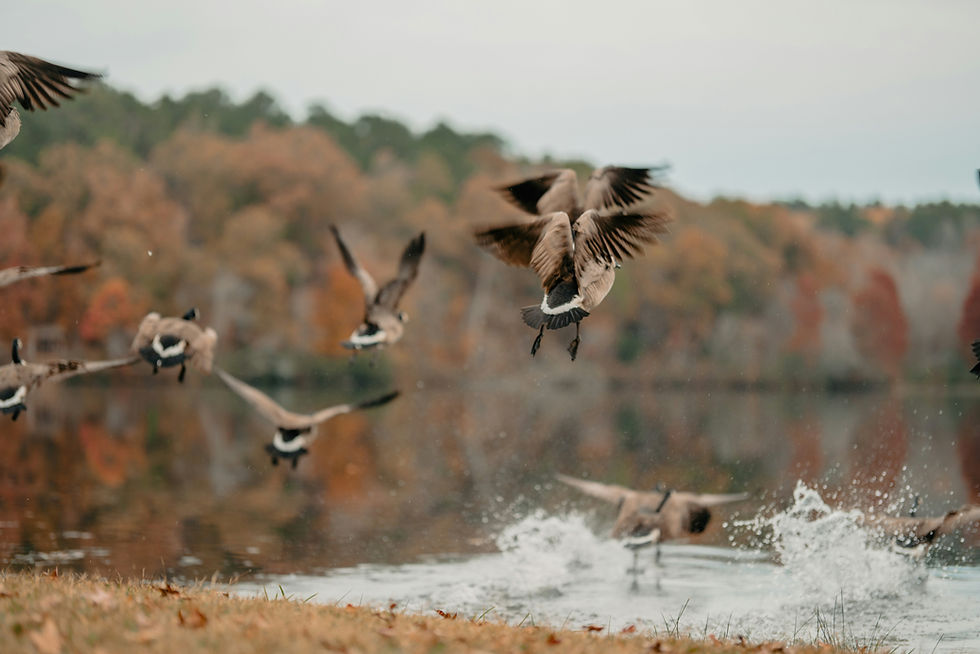
Two Arkansas Delta duck hunts wear the same state on their license plate and almost nothing else in common. One is the flooded green timber of the Grand Prairie country around Stuttgart, where mallards drop through bare oak limbs and finish in ankle-deep water that smells of acorns and decay. The other is the open agricultural field hunt, where buried pit blinds sit at the edge of flooded rice, and big decoy spreads pull birds across a wide, exposed sky. An outfitter who markets these two experiences as if they were interchangeable leaves money, bookings, and search traffic on the table.
This guide is written for hunting outfitters and lodges who run one or both of these hunts and need to position, package, photograph, price, and sell them distinctly. The comparison search intent here is real and underserved. Hunters type queries like rice field versus timber duck hunting, best Arkansas duck hunt, and green timber duck hunting Arkansas into Google and increasingly into AI answer engines, and most of the content they find is either a forum argument or a thin outfitter page that never actually decides anything. The operator who answers the comparison clearly owns the decision moment, and that's where the booking happens.
Throughout this piece, we attribute all seasons and limit specifics to the Arkansas Game and Fish Commission and the federal waterfowl framework, and we urge you to confirm current dates with AGFC before you publish any number on your own site. The federal aggregate is 6 ducks per day, with sub-limits within that total. Pintail sat at three per day for the most recent season we tracked, a change from prior years, and the early-September teal season ran for nine days flyway-wide. Green timber hunting depends on water management and oak health, an evergreen conservation reality we will return to because honesty about it is a marketing asset, not a liability.
The Two Experiences, Defined Without the Romance
Flooded green timber, in the Arkansas sense, means a stand of bottomland hardwoods that has been intentionally flooded in late fall, usually a greentree reservoir managed with low levees and water-control structures. The classic version sits in the red oak and Nuttall oak bottoms of the Grand Prairie and the larger public ground around Stuttgart and the White and Cache River corridors. Hunters wade or stand against trees; the spread is small, and the shot is overhead and close. The defining sound is the rush of wings funneling down through the canopy, and the defining image is a mallard hanging in a hole in the timber.
Rice-field and agricultural-field hunting is the open-country counterpart. The blind is typically a buried pit or a low-profile field blind set at the edge of harvested, flooded rice or a moist-soil unit. The decoy spread is large, often several hundred fakes, because the birds are reading the field from altitude and the spread has to look like a raft of feeding ducks from a quarter mile up. The shooting is at decoying birds over open water and stubble, the light is wide and dramatic, and the experience is built around the spectacle of big numbers working a big spread.
Both hunts target the same headline species, mallards and other puddle ducks, and both operate inside the same Arkansas three-segment season and six-duck framework. What differs is the entire sensory and logistical character of the morning. Timber is intimate, vertical, and weather-sensitive in a specific way tied to water timing and tree health. Field hunting is expansive, horizontal, and weather-sensitive in a different way, tied to migration pushes and feed patterns. When you write about them, resist the urge to flatten that difference into generic duck hunting copy, because the difference is precisely what the comparison searcher is trying to resolve.
It also helps to be precise about what is public and what is private, because the marketable product depends on it. Much of the iconic public timber sits on state wildlife management areas and federal refuge grounds where paid guiding is restricted or prohibited, and access requires permits and cutoff times. The legal, sellable timber product is usually private green tree ground or a guided hunt on managed private water. Field hunts are far more often a straightforward, private-land-guided product. Spell this out in your marketing so the searcher understands exactly what they are buying.
Geography matters to both stories. The flooded timber tradition is anchored in the Grand Prairie around Stuttgart and in the broader bottomland corridors of the White and Cache Rivers, where the right soils, the right oaks, and the right water history created the habitat the experience depends on. Rice and agricultural field hunting spread across the working farmland of the Delta, where harvested grain and managed water turn cropland into a feeding magnet. When you write about your operation, name your specific corner of this map, because place is part of what the buyer is buying.
One more distinction is worth setting early because it shapes everything downstream. Timber is a habitat you manage and a place you return to, while a field hunt is a setup you can stage where the birds are. That difference, place-bound versus mobile, runs underneath the pricing, the consistency, the weather story, and the marketing of each hunt, and keeping it in mind helps you explain to a buyer why the two experiences behave so differently across a season.
The Experiential Differences Hunters Actually Care About
Aesthetics come first because they drive the daydream that precedes the booking. Timber sells a cathedral feeling, the closeness of birds in the trees, the way light filters down through bare limbs onto black water. Field hunting sells scale and theater, the long horizon, the sunrise behind a spread, the sight of a tornado of ducks committing from the stratosphere. These are different fantasies, and a hunter usually knows which one is pulling at them. Your job is to make each fantasy vivid enough that the right hunter recognizes it as the trip they have been picturing.
Action profile differs in tempo and shot type. Timber tends to produce fast, close, overhead shooting in tight quarters, rewarding hunters who can shoot quickly in a window of sky framed by branches. Field hunting tends to produce longer build-ups as big groups circle and commit, with more decoying drama and a wider variety of shots. Neither is objectively better, but they reward different shooters and different temperaments, and saying so honestly helps a hunter self-select into the hunt they will enjoy and remember.
Accessibility and physical difficulty are real differentiators you should not hide. Timber often means wading in chest waders over an uneven flooded bottom, navigating to a hole in low light, and standing for hours. Field pit blinds are typically dry, seated, and far easier on older hunters, families, and anyone with mobility limits. If your timber hunt is physically demanding, market it to the hunters who want that and steer the rest toward the field hunt rather than letting them book the wrong morning and leave disappointed.
Weather dependence is the difference that most operators handle the worst. Timber huntability hinges on having the right amount of water at the right time, which depends on rainfall, river stage, and management decisions about when to flood and when to draw down for tree health. Field hunting hinges more on migration timing and cold fronts that push fresh birds and concentrate them on feed. A hunter who understands which variable governs which hunt is a hunter who books with realistic expectations, and realistic expectations are the foundation of good reviews and rebookings.
Finally, there is the matter of consistency across a season. Field hunts can often be moved from farm to farm as birds shift, giving the operator a lever to chase fresh ducks. Timber is more place-bound, tied to specific flooded stands, and can swing from spectacular to slow as water and bird mood change. Frame this candidly. The operator who explains why a slow timber morning is still the experience the hunter came for, and why the field option exists as a hedge, builds trust that survives a tough weather window.
Sound deserves its own mention because it is part of why hunters fall in love with timber. The acoustics under a flooded canopy are intimate and immediate: the whistle of wings overhead, the chuckle of a hen, the splash of a bird landing in your hole. Field hunting trades that intimacy for a wider, quieter expanse where the drama is visual rather than auditory. If you can capture and convey the soundscape of your timber in video, you are selling something that a still photograph and a competitor's adjective never can.
Dogs are part of the experience differential as well and are worth mentioning in your copy. A retrieve in flooded timber, a dog marking a bird through the trees and swimming back through black water, is a different spectacle from a long mark across open flooded rice. Buyers who love working dogs care about this, and showing your dogs working in each setting is both honest proof of the experience and a quietly powerful piece of marketing for the hunters most likely to rebook.
Who Each Hunt Is Right For, and How to Say So in Marketing
The timber hunt is right for the hunter chasing the iconic Arkansas experience, the bucket-list mallards-in-the-oaks morning they have seen in films and magazines. It suits able-bodied hunters comfortable wading, hunters who prize aesthetics and intimacy over sheer numbers, and repeat clients who want the version of duck hunting that feels like a pilgrimage. Your copy should name this hunter explicitly so they feel seen, using language about tradition, the classic green timber experience, and the close, overhead shooting that defines it.
The field hunt is right for groups, families, corporate parties, older hunters, first-timers, and anyone who values comfort, big spreads, and the spectacle of large flights working. It is a more forgiving introduction to Arkansas waterfowl and an easier sell to a mixed-ability group. Say this plainly in your marketing. Position the pit blind as the accessible, high-volume, photogenic option without ever implying it is the lesser hunt, because for a great many buyers it is genuinely the better fit.
Naming the right hunter is a conversion technique, not just a courtesy. When a reader sees a sentence that describes their exact situation, a father bringing two teenagers, a group of executives who want a comfortable morning and a good photo, a hardcore hunter who wants to wade timber at dawn, they experience recognition, and recognition shortens the path to inquiry. Write a short Who this hunt is for block for each experience and place it high on the relevant page.
Be equally clear about who each hunt is not for, because steering mismatched buyers away protects your reviews. Tell the hunter with a bad knee that the timber wade may not be comfortable. Tell the trophy-numbers hunter that timber is about quality of experience over body count on a slow day. This kind of honesty reads as expertise, and expertise is what AI answer engines and discerning buyers reward when they decide whom to trust.
Repeat buyers complicate the picture in a useful way. A hunter who came for the field experience and loved it is often ready, a season or two later, to graduate to the wade-in timber morning, and a timber regular may want to bring a parent or a child who needs the comfort of the pit. Marketing that acknowledges this progression, gently inviting buyers to try the other hunt when they are ready, turns a single fit into a lifetime of bookings across both experiences.
Positioning and Packaging Each Hunt Distinctly
Start by giving each experience its own dedicated page, rather than a single duck-hunting page that blends them. A comparison searcher needs a timber page and a field page, each optimized for its own keyword cluster, plus a third comparison page that helps them choose. This structure mirrors the way the buyer actually thinks and gives search engines and AI answer tools clean, distinct entities to surface for distinct queries.
Package the timber hunt around the experience and the tradition. Lean into its limited, intimate nature: smaller groups per hole, the classic setting, and a guide who knows the flooded stand and the water. Where it fits your operation, frame timber as the premium, experience-first product and let the packaging reflect that, with attention to the things that make a timber morning special rather than to raw bird counts.
Package the field hunt around comfort, capacity, and consistency. Highlight the dry pit blind, the room for a larger group, the big spread, and the ability to move to where the birds are feeding. This is the package that sells well to groups and to buyers who care about a comfortable, repeatable, photo-friendly morning. Make the logistics easy to picture, because the field hunt's appeal is partly that it removes friction.
For both, define what is included with the same clarity, guide, blind, decoys, retrieving dog, transport to and from the blind, and any lodging or meals, so the buyer can compare your offer to a competitor's without guessing. Vague packaging is where bookings die. The operator who itemizes the morning, names the species likely in the bag, and sets honest expectations for shooting and conditions wins the comparison against a competitor who only posts a price and a phone number.
Resist commoditized language. Almost every Arkansas duck page on the internet uses the same handful of phrases: world-class, unmatched, premier. Those words carry no information and no differentiation. Replace them with concrete, specific detail about your water, your stands, your farms, your dogs, and your guides, because specificity is both more persuasive to humans and more legible to the AI systems now mediating a growing share of discovery.
Naming conventions help search systems and buyers alike. Use consistent, descriptive labels for each product- a green timber morning, a flooded rice field hunt, and a combination trip- and use those same labels across your site, your booking flow, and your directory profiles. Consistency builds the topical authority that helps you rank for the experience-specific clusters and makes it easier for an AI assistant to understand exactly what you sell and to whom.
Think about the inquiry experience, not just the page. The buyer who reads your timber page should be able to inquire specifically about a timber hunt, with a form or contact path that captures the experience they want. Routing the inquiry by experience lets you respond with relevant detail and pricing immediately, which speeds the booking and signals the kind of organized professionalism that reassures a buyer spending real money on a trip.
Photography and Video That Sells Each Experience
The timber money shot is well known for a reason. It is the mallard hanging in a hole in the canopy, wings cupped, feet down, framed by bare oak limbs and reflected in black water below. Capturing it requires being ready for fast overhead action in low light, often at a wide aperture and a high ISO, and it rewards a photographer who anticipates the bird's commitment rather than reacting to it. A handful of these images, genuinely shot in your timber, will do more for your timber page than any amount of stock or adjective.
The field hunt's signature image is different and arguably easier to make dramatic. It is the pit blind at first light with a vast decoy spread fanning out toward a burning sunrise, ideally with a flight of birds working the spread in the frame. The wide horizon, the silhouettes, the scale of the spread, these are the assets that make a field page feel like the spectacle the hunt actually is. Shoot toward the light at sunrise and let the spread and the sky do the work.
Video should follow the same logic. For timber, capture the sound, the rush of wings and the calling, and the close, vertical drama of birds finishing in the trees. For the field, capture the build-up, the long circles, the commitment of a big group, and the wide sweep of the spread under a changing sky. Short, well-shot clips of real mornings outperform polished but generic footage and give you native material for social platforms, where outdoor buyers increasingly discover operators.
Across both, use real photography from your own operation. The Pine and Marsh photo standard is owner-shot imagery supplemented by stock where necessary, never artificially generated images. Buyers and search systems alike are getting better at detecting and discounting fabricated visuals, and an outfitter's credibility rests on the believability of the morning being depicted. A slightly imperfect real photograph of your timber beats a flawless image that did not happen on your water.
Build a small, deliberate library for each experience, a set of hero images, a set of supporting detail shots, dogs, hands on a banded bird, the blind, the lodge, and a few short clips. Tag and caption them with the specific location and species so the same assets can feed your timber page, your field page, your comparison page, your social channels, and any directory or aggregator profile where photos carry the listing.
Caption and context turn good images into ranking and converting assets. A timber photo captioned with the species, the setting, and an honest note about the morning does more work than the same image posted bare, because it gives both the buyer and the search system the context that makes the image credible and easier to find. Treat every strong photo as an opportunity to reinforce the distinct identity of the hunt it depicts.
Pricing and Packaging Considerations
Pricing should reflect the genuine cost and value structure of each hunt, rather than a single flat duck-hunting rate. Timber often carries higher per-hunter value because the experience is the draw, the groups per hole are smaller, and the product is scarcer and more weather-sensitive. Field hunts can support different economics because pit blinds accommodate more hunters per setup, and the operation can scale a morning across more buyers. Let your pricing tell that story instead of hiding it.
Be transparent about what drives the price. Lodging, meals, guide-to-hunter ratio, number of hunters per blind, and whether the hunt is a half-day or full morning all move the number. A buyer comparing two operators will reward the one whose pricing is legible and penalize the one whose pricing seems to materialize out of nowhere. You do not have to be the cheapest; you have to be the clearest, because clarity is what lets a buyer justify the spend to themselves and to whoever is coming with them.
Consider tiered or combination packaging where it fits. A two-morning trip that pairs a timber hunt with a field hunt lets a buyer sample both experiences, raises the total booking value, and hedges weather risk across two different hunt types. Market this combination explicitly as the best of both, and you turn the comparison question, timber or field, into an answer that books two mornings instead of one.
Whatever your structure, set expectations about variability inside the pricing conversation. Waterfowl is not a guaranteed-harvest product, and the operator who frames price around the experience, the guiding, the access, and the setting, rather than an implied number of birds, protects both the relationship and the review. Confirm the current season dates and limits with AGFC, and reference the federal six-duck framework so the buyer understands the regulatory ceiling for any single morning.
Deposits, cancellation terms, and weather policies also belong in the pricing conversation, especially for a weather-sensitive product. A clear, fair policy about what happens when conditions force a change reassures buyers who have heard horror stories about losing deposits to a frozen timber hole or a blown-out field. The operator who handles this transparently removes a major objection that quietly kills bookings for competitors who stay silent on it.
Marketing a Lodge That Offers Both
If your operation runs both timber and field, your greatest marketing asset is choice, and your greatest risk is confusion. The fix is architecture. Give each experience a clear home on your site, then build a parent layer that frames the two as complementary options under one roof, with the lodge as the constant. The message is simple: come to one place, choose your morning, or do both.
Use the dual offering to hedge weather and broaden your audience. When water timing hurts the timber, the field hunt is your fallback, and a hunter who booked timber can be moved without losing the trip. When a buyer's group spans abilities, you can put the wading hunters in the timber and the comfort-seekers in the pit, all from the same lodge. Market this flexibility directly, because for many groups it is the deciding reason to book a lodge that offers both over a single-experience competitor.
Sequence the experiences in your packages. A common and effective structure is to spend one morning of each day over a two-day trip, with the lodge anchoring the stay. This is easy to photograph, easy to describe, and easy to price, and it lets your comparison content resolve into a recommendation, why not both, that serves the buyer and your average booking value at the same time.
Keep the brand voice consistent even as the two experiences diverge. The lodge is the through-line, and the hospitality, the guides, the dogs, and the standards should read as one operation, no matter which morning a guest picks. A buyer should feel that they are choosing between two rooms in the same well-run house, not two unrelated products that happen to share a phone number.
Cross-sell deliberately between the two experiences. A first-time field-hunt buyer is a natural prospect for a future timber morning, and a timber loyalist may bring a mixed group that needs the field option. Build your follow-up and email rhythm so that every guest learns about the experience they did not book, turning one booking into a relationship that cycles through both hunts over multiple seasons.
The Comparison Search-Intent Opportunity and Keyword Map
Comparison intent is among the most valuable and least contested search territories in Arkansas waterfowl. A hunter typing rice field versus timber duck hunting is not idly browsing; they are mid-decision, and the page that resolves their decision earns the click that precedes the inquiry. Most operators ignore this query entirely because it does not map to a single product, which is exactly why it is open ground for the operator willing to write the honest comparison.
Map your keywords into three clusters. The timber cluster includes terms such as green timber duck hunting in Arkansas, flooded timber duck hunting, and green tree reservoir mallard hunting. The field cluster includes rice-field duck hunting in Arkansas, pit-blind duck hunting, and flooded rice-field hunting. The comparison and decision cluster includes rice field versus timber duck hunting, the best Arkansas duck hunt, and which Arkansas duck hunt I should book. Build a page intent for each cluster rather than cramming them into one.
The comparison page is the linchpin. It should fairly describe both hunts, name who each is for, address weather and accessibility, and end with a clear recommendation framework that points the reader toward the right experience, or toward booking both. Because it answers a question rather than just selling, it tends to earn links, dwell time, and citations in AI answers, all of which lift the timber and field pages it links to.
Think about how AI answer engines handle this query as well. When a buyer asks an assistant which Arkansas duck hunt to book, the assistant synthesizes information from sources that clearly distinguish the options and state which one suits best. An operator whose content makes those distinctions cleanly is far more likely to be the source the assistant draws from and names than one whose pages blur the two. Structuring your content for the comparison question is now a way to show up in the answer, not just the search results.
Long-tail and question-form queries are where comparison intent concentrates: phrases like "which is better for kids, rice field or timber?" or "do I need to wade in flooded timber?" These are low-competition, high-intent searches that map cleanly to sections of your comparison and FAQ content. Capturing them is less about volume and more about being the precise answer to a precise question at the exact moment a buyer is deciding.
Internal linking ties the cluster together and compounds its authority. Your comparison page should link out to the dedicated timber and field pages; those pages should link back to the comparison and to your booking and lodging pages, and your broader resource content should feed the cluster. This web of links signals to search systems that you have genuine topical depth on Arkansas duck hunting, which lifts every page in the cluster rather than just one.
Content That Answers: Which Should I Book
The single most useful piece of content you can publish is a decision guide that takes the buyer's situation as input and returns a recommendation. Frame it around the variables that actually decide the question: physical ability, group makeup, what the buyer wants to feel and photograph, tolerance for weather variability, and budget. Walk the reader through each, and let the recommendation emerge from their answers rather than asserting that one hunt is better.
Anticipate the real sub-questions buyers carry. Is timber harder physically? Yes, usually. Is the field hunt better for kids and older hunters? Generally, yes. Which is more weather-dependent, both, but in different ways. Which produces more birds? It depends on conditions and is the wrong question to optimize for. Answering these directly, in plain language, is what separates a trusted resource from a brochure, and trust is what converts.
Tie the decision content back to your packages without making it feel like a funnel. After helping the reader decide, offer the relevant hunt and, where it fits, the combination trip. The reader who arrived uncertain and leaves with a clear recommendation and an easy way to book it is a reader you have served well, and service is the most durable form of marketing in a category where word of mouth and reviews carry enormous weight.
Keep this content current. Season dates renew annually; limits can change; the pintail and teal specifics we noted shift from year to year; and water and habitat conditions evolve. Date your content, confirm regulatory specifics with AGFC each season, and revisit the comparison to keep it accurate. Freshness signals care to both readers and search systems, and in a regulated activity, it is also simply the responsible thing to do.
Format the decision content for both skimming and reading. Buyers in a hurry want a fast answer, so lead with a short, honest summary. Time for the classic experience if you can wade; field for comfort and groups; both if you can spare two mornings. Then let the deeper sections serve readers who want the full reasoning. Serving both the skimmer and the deep reader on one page broadens the audience to whom the content is relevant.
Testimonials, segmented by experience, make the decision content far more persuasive. A quote from a father whose teenagers loved the comfortable field morning speaks to the next family, and a quote from a hunter describing the timber morning of a lifetime speaks to the next pilgrim. Gather and organize real reviews by hunt type so your decision guide can show, not just tell, who each experience is right for.
Conservation and Flooding-Timing Honesty as a Trust Signal
Green timber hunting sits atop genuine conservation tensions, and pretending otherwise is both dishonest and a missed marketing opportunity. Greentree reservoirs are flooded artificially, and flooding the timber too early, too deep, or for too long can stress and kill the very red oaks whose acorns draw the mallards. Managers across the region have been adjusting flooding timing to protect tree health, sometimes flooding later or shallower than tradition prefers, and that affects when and how the timber hunts.
An operator who explains this earns credibility that a silent competitor cannot. When you tell a buyer that you flood with the trees' health in mind, that timing depends on conditions, and that protecting the oaks protects the hunt for the long term, you are signaling stewardship and expertise at once. Buyers in this category increasingly care about the resource, and those who care most are often the most loyal and most willing to pay for an operation that clearly does the right thing.
This honesty also manages expectations productively. A buyer who understands that the timber may not be flooded on a given date for sound conservation reasons, and that the field hunt exists partly as a result, is a buyer prepared for the reality of the season rather than disappointed by it. Frame conservation timing as part of why your operation is trustworthy, not as an excuse, and it becomes a reason to book rather than a caveat to hide.
Where it is true, reference your participation in conservation partnerships and habitat work, and connect that to the experience you sell. The link between healthy bottomland timber, well-managed water, and the quality of the hunt is real, and making it explicit turns your conservation posture into a differentiator. Just keep every such claim accurate and specific to your operation, because in this audience, a hollow conservation claim is worse than none.
Make the conservation story concrete to your own ground rather than generic. Describe, truthfully, how you decide when to flood, what you watch for in the oaks, and how those decisions sometimes shape the season. Specificity is what separates a credible stewardship claim from boilerplate, and in this audience, the operator who can speak knowledgeably about tree health and water timing reads as the real expert worth booking.
Booking Calendar Nuances Across the Season
Arkansas runs its regular duck season in segments rather than one continuous block, and the rhythm of the season shapes how the two hunts perform and how you should sell them. Early in the season, before hard cold pushes large numbers down the flyway, both hunts can be slower and more dependent on local birds. As fronts arrive and water spreads, timber and field each come into their own, and the operator who understands the cadence can guide buyers toward the right dates for the experience they want.
Different parts of the season favor different hunts. Cold fronts that freeze shallow sheet water can concentrate birds and make certain field setups exceptional, while a well-timed timber flood during a migration push can produce the classic morning the timber is famous for. Use your booking content to teach buyers about these windows so they choose dates with intent, and so your best dates fill with buyers who understand why those dates are special.
Be precise and up to date on the regulatory calendar without staking your reputation on dates that may change. State that Arkansas uses a multi-segment season and a six-duck framework, point buyers to AGFC for the exact current dates, and note that sub-limits such as pintail and the early teal window shift year to year. This protects you legally and positions you as the operator who keeps buyers correctly informed rather than the one quoting last year's dates.
Finally, use the calendar to drive rebookings and fill soft dates. The buyers who hunted your timber in a great window are your best prospects for next season, and your field hunt is an easy add for a returning group that now wants to try the other experience. Build a booking and follow-up rhythm around the season so that the calendar works as a marketing tool, not just an operational one.
Use the segmented season to shape distinct booking messages rather than one blanket call to book. Early-season dates can be sold honestly as quieter, often more affordable hunts for local birds, while peak migration windows can be positioned as the premium dates for the classic timber morning or the big-spread field spectacle. Matching the message to the segment helps buyers choose dates that will meet their expectations.
Holidays and weekends concentrate demand and deserve their own planning. The most coveted dates will sell first to the buyers who plan earliest, so use your content and email to help loyal clients lock peak windows while steering newer or more flexible buyers toward strong midweek and shoulder dates. Managing demand across the calendar this way fills more of your season at better economics than simply selling whatever date a buyer asks for.
Measuring ROI on Two Distinct Funnels
Because timber and field attract different buyers through different keywords, you should measure them as two funnels, not one. Track which pages and queries drive inquiries for each experience, which experience the comparison page sends buyers toward, and which combination of pages a booked buyer actually visited before inquiring. This tells you where to invest, whether the timber cluster, the field cluster, or the comparison content is doing the heavy lifting for your particular operation.
Attribute bookings to the content that earned them. If your comparison page consistently precedes inquiries, it deserves continued investment even though it sells nothing directly. If your timber photography page is the most common last touch before a high-value booking, that tells you where your best images and copy belong. Treat the two experiences as separate products with separate marketing returns, and your budget decisions get sharper.
Watch the downstream metrics that matter in a relationship business, not just the top-of-funnel clicks. Rebooking rate, group size, average booking value, and review sentiment by experience all reveal whether your positioning is working. If field buyers rebook at a higher rate but timber buyers spend more per trip, that is strategy-shaping information, and you only see it if you keep the two funnels distinct in your reporting.
Let the data refine the comparison itself. Over a season or two, you will learn which buyer descriptions resonate, which objections recur, and which recommendation framings convert. Feed that learning back into your decision guide and your experience pages so the comparison content compounds in accuracy and persuasiveness, becoming the asset that quietly routes every uncertain buyer to the right morning and the right booking.
Close the loop between marketing data and operational reality. The clicks and inquiries only matter if they convert into bookings; the operation can deliver well, so reconcile your funnel metrics against actual guide capacity, blind availability, and guest satisfaction by experience. The goal is not just more inquiries for whichever hunt, but the right mix of inquiries for the hunts you can deliver at the quality your reviews depend on.
Mistakes Operators Make Positioning These Hunts
The most common mistake is treating the two hunts as a single product on a generic duck-hunting page. This satisfies no comparison searcher, confuses AI answer engines, and forces the buyer to do the differentiation work the operator should have done. Splitting the experiences into distinct, well-optimized pages, plus a comparison page, is the highest-leverage fix available to most Arkansas waterfowl operators.
A second mistake is over-romanticizing timber to the point of misleading buyers about difficulty and variability. Timber is wonderful, and it is also a wade in the cold dark that can be slow when the water or the birds are not right. An operator who only shows the cathedral money shot and never mentions the wade or the weather sets up mismatched expectations that surface later as a lukewarm review. Honesty in the copy prevents disappointment on the water.
A third mistake is underselling the field hunt as the lesser option. For a large share of buyers, families, groups, older or less mobile hunters, the pit blind is genuinely the better experience, and copy that frames it as a consolation prize repels exactly the buyers it should attract. Sell the field hunt on its real strengths, comfort, capacity, spectacle, and consistency, with full confidence and it will out-book apologetic copy every time.
A fourth mistake is leaning on commoditized superlatives and fabricated specifics instead of concrete, verifiable detail. Invented records, borrowed photos, and adjectives like "world-class" do not differentiate and increasingly fail to withstand scrutiny by buyers or AI systems. Specific, true details about your water, your farms, your guides, and your dogs are what build the credibility that converts and the topical authority that ranks.
The final mistake is letting regulatory and conservation content go stale or vague. Quoting outdated season dates, glossing over the public-versus-private guiding reality, or ignoring the flooding-timing conservation story all erode trust with a sophisticated audience. Keep the regulatory specifics current and attributed to AGFC and the federal framework; be candid about access and conservation; and turn the parts of the story other operators avoid into reasons buyers choose you.
A subtler mistake is failing to update imagery as the operation changes. Pages that still show last decade's blinds, old spreads, or a stand that no longer floods quietly undermine credibility with returning buyers who notice. Refreshing your photography and copy to match the operation as it actually is today keeps the brand honest and keeps the experience pages selling the hunt the buyer will really get.
Finally, do not neglect mobile and load speed on the very pages that sell these hunts. Outdoor buyers research from trucks, blinds, and lodges on imperfect connections, and a slow, image-heavy timber page that will not load costs you the inquiry, no matter how good the copy is. Optimize your imagery and your pages for the real conditions your buyers browse in, because the best comparison content in the state earns nothing if the page never loads.
Building One Brand Around Two Distinct Hunts
The hardest balance an operator who runs both hunts has to strike is presenting two genuinely different experiences without fracturing into two confusing identities. The answer is to let the lodge or the operation be the brand, and to treat the hunts as products within it. A buyer should arrive at a clear, consistent brand, recognize the standards and the hospitality immediately, and then choose between a timber morning and a field morning the way a guest chooses between rooms in a house they already trust.
Practically, that means a shared visual identity, a shared voice, and shared proof: your guides, your dogs, your lodge, your conservation posture, running through every page, with the experience-specific detail layered on top. The timber page and the field page should feel like chapters of the same book, not two unrelated pamphlets. This is what lets you compete with single-experience specialists on each front while also winning over buyers who specifically want the flexibility of a single operation that does both well.
It also means resolving the comparison in your brand's favor rather than leaving the buyer to wander off and compare you against two different competitors. When your own comparison content fairly walks a buyer through the decision and then offers both hunts under one roof, the natural conclusion is to book with you for whichever experience fits, or for both. The brand that owns the comparison owns the buyer's decision, and owning the decision is the entire point of marketing two distinct hunts under one name.
Frequently Asked Questions
What is the difference between rice field and flooded timber duck hunting in Arkansas?
Flooded timber hunting takes place in intentionally flooded bottomland hardwoods, usually a green-tree reservoir, where hunters wade among oaks and shoot close, with overhead mallards finishing in the trees. Rice field hunting takes place from buried pits or low-profile blinds at the edge of flooded harvested rice, using large decoy spreads to pull birds across the open sky. Both target mallards and other puddle ducks under the same Arkansas season, but the experience, setting, and shooting are very different.
Which Arkansas duck hunt is better, timber or rice field?
Neither is objectively better; they suit different hunters. Timber is the iconic, intimate, physically demanding experience prized for aesthetics and tradition. Field hunting is more comfortable, accessible, and built around the spectacle of big flights over large spreads. The better choice depends on the hunter's physical ability, group makeup, and what they want from the morning. Many operators recommend booking both across a two-day trip.
Is flooded timber duck hunting harder than field hunting?
Generally yes. Timber usually involves wading in chest-high waders over uneven, flooded ground, navigating in low light, and standing for hours, whereas a field pit blind is typically dry and seated. For older hunters, families, or anyone with mobility concerns, the field hunt is usually the more comfortable and appropriate option.
What is a green tree reservoir?
A green tree reservoir is a stand of bottomland hardwood timber that is intentionally flooded with shallow water in late fall using low levees and water-control structures, creating the classic flooded timber duck habitat. The flooding draws mallards to feed on acorns from red and Nuttall oaks, but the timing of flooding must balance hunting with the long-term health of the trees.
Why does flooding timing matter for timber duck hunting?
Flooding the timber too early, too deep, or for too long can stress and kill the oaks whose acorns attract the ducks. Managers increasingly flood later or shallower to protect tree health, which affects when timber hunting is available. An operator who manages water with the trees in mind protects the resource and the hunt for the long term.
What ducks will I shoot on each hunt?
Both hunts feature mallards as the main target and include other puddle ducks. Arkansas operates under the federal six-duck daily aggregate with sub-limits inside that total. Confirm current sub-limits and season dates with the Arkansas Game and Fish Commission, as specifics such as the pintail limit and the early teal window change from year to year.
How big a decoy spread does field hunting use compared to timber?
Field hunting typically uses large spreads, often several hundred decoys, because birds read the field from high altitude and the spread must look like a feeding raft from far away. Timber hunting uses much smaller spreads, since birds are committing into a tight hole in the canopy at close range, and a few well-placed decoys are enough.
Can you provide legal guidance on Arkansas public timber?
Paid guiding is restricted or prohibited on many Arkansas public wildlife management areas and federal refuge grounds, and that ground also carries its own permits and time cutoffs. The legal, sellable timber product is generally a private green tree hunt or a guided hunt on managed private water. Operators should make the public-versus-private distinction explicit in their marketing.
Which hunt is better for a group or corporate trip?
The field hunt is usually the better fit for groups, corporate parties, and mixed-ability gatherings because pit blinds are comfortable, accommodate more hunters, and produce photogenic, high-volume action. Timber suits smaller groups of able-bodied hunters seeking the classic experience. A lodge offering both can split a mixed group across the two hunts.
How should an outfitter price timber versus field hunts?
Pricing should reflect each hunt's real value and cost structure. Timber often carries higher per-hunter value because the experience is the draw and groups per hole are small, while field hunts can support different economics because pit blinds accommodate more hunters per setup. The key is transparent pricing that itemizes what is included, so buyers can clearly compare offers.
Should a lodge that offers both market them together or separately?
Both. Give each experience its own optimized page, then add a parent layer and a comparison page that frame the two as complementary options under one lodge. This serves the comparison searcher, lets you hedge weather by moving buyers between hunts, and supports a high-value combination trip that books both mornings.
How do I market the comparison question to rank in search and AI answers?
Build a dedicated comparison page that fairly describes both hunts, names who each is for, and ends with a clear recommendation framework. Because it answers a decision rather than just selling, it earns links, dwell time, and citations in AI answers. Structuring content around the comparison question is now a way to be the source an AI assistant draws from when a buyer asks which Arkansas duck hunt to book.
How often should I update my Arkansas duck hunting content?
At least every season. Arkansas season dates renew annually, sub-limits such as pintail can change, the early teal window shifts, and water and habitat conditions evolve. Date your content, confirm regulatory specifics with the Arkansas Game and Fish Commission each year, and revisit your comparison to keep it accurate and continue signaling care to buyers and search systems.
Work with Pine and Marsh
Pine and Marsh is a southeastern outdoor-marketing agency built for operators like you, the duck outfitters and lodges who run timber, run fields, or run both, and need their marketing to reflect the real difference between those experiences. We help you split your offering into clear, distinct, search-ready pages, build comparison content that captures decision-stage buyers, and tell an honest story about access, conditions, and conservation that earns trust with a sophisticated audience.
Most of the operators we meet are leaving their best search territory uncontested. The comparison queries, the who-should-book questions, and the experience-specific keywords go unanswered while the operator runs a single generic duck hunting page. We fix that by giving each hunt its own home, building the decision guide that routes uncertain buyers to the right morning, and structuring your content so AI answer engines can find and cite you when a buyer asks which Arkansas duck hunt is right for them.
Photography and video are central to selling these hunts, and we build deliberate, honest libraries around the timber money shot and the field-spread sunrise, using real imagery from your operation rather than fabricated visuals. We help you organize those assets so the same hero images and clips feed your experience pages, your comparison content, your social channels, and the directory and aggregator profiles where outdoor buyers increasingly start their search.
We also understand the ecosystem you operate in. Aggregators and directories such as BookYourHunt and GuideFitter, along with your social presence, all play a role in how buyers discover and vet you, and we help you show up consistently across them without surrendering your brand to a marketplace listing. The goal is always to build assets you own, your site, your content, your audience, while using the directories and social channels as supporting channels rather than your only storefront.
If you run an Arkansas Delta duck operation, or any southeastern waterfowl operation wrestling with how to position two very different hunts, we would welcome a conversation about your specific water, your specific buyers, and the search and AI territory you could be owning. There is no pressure and no obligation, just a clear look at where your marketing stands and what the clearest path forward looks like for your operation.
When you are ready, reach out to Pine and Marsh, and we will start with your two hunts, your two funnels, and the comparison your buyers are already searching for. The operators who answer that comparison clearly are the ones who own the decision moment, and the decision moment is where the booking happens.


Comments