
Marketing Charleston Offshore and Nearshore: The Other Half of the Lowcountry's Fleet
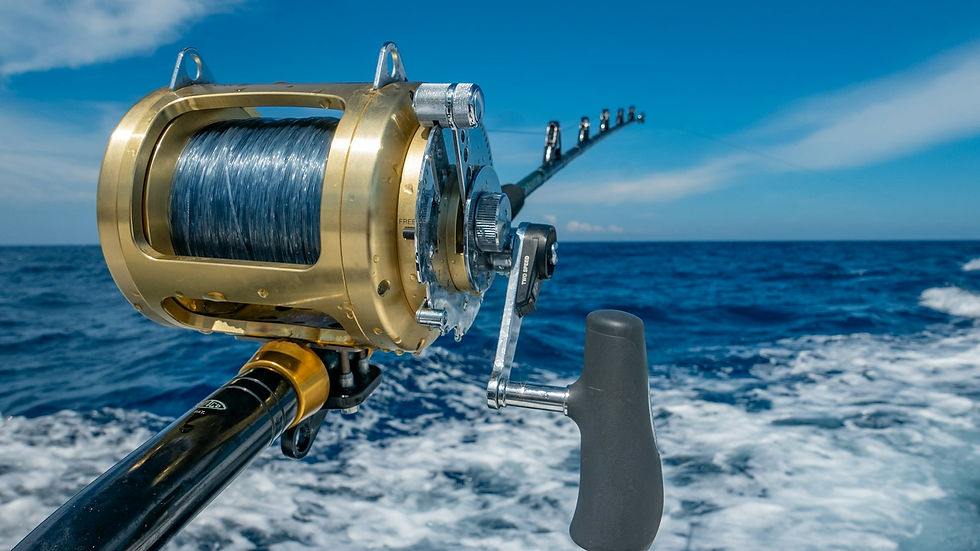
Type "Charleston fishing charter" into a search bar and you get a wall of redfish. Tailing fish on a flooded spartina flat, a guide poling a skiff along an oyster bar, a family holding up a slot red at the creek mouth. That picture is accurate, and it sells, which is exactly why it has eaten the search results. The inshore fishery is the heavily marketed half of Charleston's charter economy, and the aggregators have piled onto it. The other half of the fleet, the boats that clear the jetties and run to the reefs, the ledges, and the Gulf Stream, competes for a market that search engines barely seem to know exists.
That is the search shadow. People do want to fish offshore from Charleston, but the broad query resolves to inshore content so consistently that the specific searches describing the offshore product go half-served, with little editorial content about the nearshore reef day, the shark trip, or the long run to blue water.
This post is the market map for that other half. We already published a companion piece on competing with the aggregators in AI search, which covers answer-shaped pages, measurement, and how AI summaries pick sources; you can read it at Marketing Charleston Offshore Charters in the Age of AI Search. This one is about the fleet itself. Who runs what out of Charleston, how the nearshore and offshore businesses actually differ, what the distance to the Gulf Stream does to price and positioning, and how an operator turns that structure into a set of pages and listings that let each trip be found by the guest who wants it. And since we are writing in late October, with the summer pelagic peak behind us, it closes with what to do in the cooler months so the 2027 season does not start from zero.
The Search Shadow: Why the Broad Query Belongs to Inshore
The inshore fishery owns the generic Charleston search for reasons that have nothing to do with the quality of the offshore product. Inshore trips are cheaper, shorter, and suit almost anyone, so they generate far more bookings, reviews, and content. Multiply that across dozens of guides over many years and you get a search landscape that has learned, correctly, that most people asking about fishing in Charleston want the creeks. We documented that inshore market and its tide-driven booking logic in Marketing a Charleston Inshore Redfish and Trout Guide, and the field context in our Lowcountry Tidal Rivers Field Report.
Then the aggregators amplify it. Because they carry the most listings and reviews, they float to the top of broad queries and get cited by AI summaries, and their Charleston pages mix inshore, nearshore, and offshore boats into one list sorted by price or rating. That is fine for a guest who just wants to fish on Tuesday and useless for one deciding between a nearshore reef trip and a full day in blue water.
The practical consequence for an offshore or nearshore operator is simple. Stop treating "Charleston fishing charter" as your target. You will not out-review the inshore fleet on that phrase, and you do not want most of its searchers anyway. Your buyers search in narrower language: Gulf Stream fishing from Charleston, Charleston wahoo, nearshore reef fishing, shark fishing Charleston, deep sea fishing for a group. Those are smaller pools with far less editorial competition, and they line up with the product you sell.
Mapping the Fleet: Four Businesses That Share One Harbor
From the dock, every white boat with outriggers looks like the same business. It is not. Charleston's non-inshore fleet breaks into roughly four business models, each with a different guest and a different marketing problem.
The first is the crossover operator: a captain whose bay boat or mid-size center console fishes the marsh most days but can run to the nearshore reefs and ledges when the weather lays down. This is often the most common way a Charleston guest ends up nearshore, because the same captain who took them redfishing last year offers a reef or shark trip this year. The marketing problem here is dilution. A crossover operator's website usually leads with inshore, so the nearshore product sits on a sub-page, if it exists at all, with no real description of run time, species, or season.
The second is the dedicated nearshore boat, larger and more seaworthy, built to spend most of its days on the reefs and live bottom within a reasonable run of the inlets. Bottom fishing, sharks, cobia, and king mackerel are the core of the menu.
The third is the Gulf Stream sportfisher: a dedicated offshore vessel with the range, fuel capacity, and crew to run to blue water and troll for pelagics all day. This is the smallest slice of the fleet by boat count and the highest-ticket product in the harbor.
The fourth is the party or head boat, which sells individual seats rather than whole-boat charters and carries far more than six anglers at a time. It shares water with the nearshore charters but sells to an entirely different buyer, which we will come back to.
The regulatory structure reflects these divisions, and it is worth knowing because it shapes what each boat can legally offer and therefore what each can honestly market. South Carolina requires an annual charter vessel license for each vessel, and SCDNR's 2026-2027 Summary of Charter Fishing Laws sets the fee in three tiers by passenger capacity: six or fewer, seven to 49, and 50 or more, with separate resident and nonresident rates. The captain must present U.S. Coast Guard credentials to get the license, and licensed charter vessels must submit monthly trip logs to SCDNR, now done electronically through the VESL platform. Federal law adds its own layer. Under 46 U.S.C. 2101, a vessel under 100 gross tons carrying six or fewer passengers with at least one paying passenger is an uninspected passenger vessel, the classic six-pack charter, while a vessel carrying more than six passengers is a small passenger vessel, which falls under Coast Guard inspection. That is the legal line between a private charter and a party boat.
Then come the federal fishing permits, which matter the moment a boat crosses from state waters into federal waters. NOAA Fisheries lists separate open-access charter and headboat permits for South Atlantic snapper-grouper, for coastal migratory pelagics like king and Spanish mackerel, and for Atlantic dolphin and wahoo. Tunas, billfish, swordfish, and sharks fall under a separate Atlantic Highly Migratory Species Charter/Headboat permit, renewed annually, and fishing for sharks under it requires a shark endorsement. A boat that holds the full set can legally sell the whole offshore menu; a boat that holds only part of it should be describing only that part. Confirm current permit requirements with SCDNR and NOAA Fisheries before you print a trip description that depends on them.
For marketing purposes, the point of the map is that the four models should not sound the same online. A crossover captain who writes his nearshore page like a Gulf Stream sportfisher overpromises, and a party boat that markets like a private charter confuses guests about what a seat buys. Know which business you are, describe it plainly, and let the right guest self-select.
The Distance Problem: What the Gulf Stream Run Does to Price
Every offshore conversation in Charleston starts and ends with distance. SCDNR's description of South Carolina's offshore waters places the Gulf Stream about 75 miles offshore, flowing north out of the Florida Straits and averaging about 62 miles wide. The same page notes that the Charleston Bump, an irregular rise on the sea floor, breaks parts of the Stream into eddies, which is part of why the edge of good water is not in the same place every day. Compare that with the Outer Banks, where the Stream swings much closer to the beach, a contrast we covered in The Outer Banks Gulf Stream Run. Charleston captains do not get that shortcut.
That run structures the whole offshore product. A Gulf Stream day out of Charleston is a full-day commitment, with an early departure and a long ride each way. It needs a boat with real range and fuel capacity, a crew that can handle offshore conditions, and a weather window that holds for the whole day rather than a few hours. Fuel, the cost guests understand least, swings hardest with distance. The result is that a Gulf Stream charter costs several times what an inshore half-day does, and an operator who does not explain why will lose bookings to sticker shock.
The fix is to make the run visible. A strong Gulf Stream trip page tells the guest, in plain language, what time the boat leaves the dock, roughly how long the ride out takes, how much of the day is spent fishing versus running, what the boat and crew bring that a smaller boat cannot, and what happens if the weather turns. It explains that the price covers the whole boat, not a seat, and divides it by a full party so the per-person cost is visible. That transparency filters out the guest who would have been unhappy anyway and convinces the serious angler, who researches more than most buyers, that this crew knows what it is doing. Our Offshore Bluewater Ecology post is a useful primer on the pelagic habitat behind that product.
Nearshore: The Volume Product in the Middle
If the Gulf Stream trip is the flagship, nearshore is the engine: the trip that converts families, first-timers, and groups who want open water without a full-day commitment. Shorter runs, lower prices, and steady bottom-fish action make it the easiest offshore product to sell.
The fishery behind it is real and well documented. SCDNR's Marine Artificial Reef Program lists 13 permitted reef sites on its Central Coast, the stretch covering Charleston, Folly Beach, Kiawah, Seabrook, and Edisto, including the well-known Charleston 60' Reef. SCDNR notes that most of the state's offshore artificial reefs are federally protected as Special Management Zones, where fishing gear is limited to hand-held hook-and-line or spearfishing without powerheads. That is a useful detail for a trip page, because it tells guests what kind of fishing they will be doing and signals that the operator knows the rules. Beyond the artificial reefs sits natural live bottom, the ledges and hard-bottom patches that hold snapper, grouper, porgies, triggerfish, and black sea bass. SCDNR's summer fishing notes put the best black sea bass fishing on ledges in 50 to 70 feet, and the largest concentrations of snapper, porgies, triggerfish, and grouper in 90 to 180 feet of water.
That depth gradient is the nearshore product menu. A shorter trip fishes the closer reefs and ledges for sea bass and whatever else is biting. A longer trip pushes into deeper live bottom for bigger fish. A shark trip, often shorter still, sells excitement and a big pull on the rod rather than dinner, and appeals strongly to groups and teenagers. Seasonal cobia and king mackerel runs give nearshore boats a pelagic hook without the Gulf Stream run. Each of these is its own trip, and each deserves to be described as one.
Nearshore has a regulatory catch that operators need to market around carefully: the snapper-grouper rules change often, and some of the most recognizable species are closed for much of the year. Sell the experience and the fishery, not a specific fish: a page that says what is typically open each season and links to the current rules builds trust, while one that promises red snapper or gag year-round draws complaints.
The nearshore tier is also where the group and celebration market lives. Charleston is a heavy bachelor and bachelorette party destination, and most of the fishing content aimed at those groups is built around inshore trips. A nearshore shark or reef trip is a natural step up for a group that wants a bigger day on the water without the full Gulf Stream commitment, and a multi-day itinerary, marsh on day one and nearshore on day two, is a product almost nobody markets editorially. The same logic applies to corporate outings, which we explored in What Forty Miles Offshore Does to a Corporate Boardroom.
Party Boats Versus Private Charters: Two Different Buyers
The party boat is easy to mistake for a cheaper private charter. It is a different product sold to a different person. A private charter sells the whole boat. The guest picks the party, often a family, a group of friends, or a business client list, and the trip can be tailored to them: target species, pace, whether the kids get to drive the boat for a minute on the way home. The buying decision is usually made by one person on behalf of a group, often weeks ahead, and the deciding questions are about the captain, the boat, and whether the day will suit everyone. Private charter marketing should be built around trust in the crew and clarity about what a whole-boat day includes.
A party boat sells a seat, often to an individual, a couple, or a parent with one child. The decision comes later, sometimes the night before, and it turns on price, schedule, and logistics: where to park, what to bring, whether tackle and bait are included, what happens to the fish. Because party boats carry more than six passengers, they operate as inspected vessels under a different Coast Guard regime and a higher SCDNR license tier, and they hold their own federal headboat permits. Their marketing should feel more like a ticketed attraction than a guide service: a clear schedule, a simple booking flow, transparent per-person pricing, and practical first-timer information.
Tournaments as a Credibility Engine
Offshore buyers want evidence that a crew can find fish in blue water, and nothing provides that evidence more credibly than tournament fishing. Charleston sits inside one of the more established billfish tournament circuits on the South Atlantic coast, and the anchor is a public one: the South Carolina Governor's Cup Billfishing Series, which describes itself as an official program of SCDNR, run in cooperation with the South Carolina Department of Parks, Recreation and Tourism. The 2026 series ran five tournaments along the coast, three of them in the Charleston area, and the program places strong emphasis on conservation and tag-and-release.
For a charter operator, the value of the tournament scene is less about trophies and more about proof. A captain who fishes the series generates the material that convinces a skeptical buyer: release counts, billfish photos alongside the boat, and crew stories about finding fish in hard conditions. Most operators leave it on social media, where it scrolls away within a week. It belongs on the website, on a tournament page with dates, results, and context, linked from the Gulf Stream trip page.
The Guest Ladder and the Two-Market Lock
The most useful way to think about Charleston's fleet is as a ladder. The inshore marsh trip is the entry point: cheap enough to try, short enough to fit a vacation day, and accessible to any age. The nearshore reef or shark trip is the next rung, more ocean, bigger fish, a longer day. The Gulf Stream run is the top, the trip that serious anglers save for and celebration groups splurge on. Guests move up that ladder over years, and sometimes over a single week.
Most operators only market one rung, and most content only describes one. The inshore guide's site never mentions what comes next. The sportfisher's site never acknowledges that most of its future customers are currently fishing in the marsh. That leaves a gap that whoever fills it controls. An operator, or a group of operators who refer to each other, that holds the inshore, nearshore, and offshore conversations together owns the whole Charleston funnel: the guest who starts in the creeks is handed, deliberately, to the next tier when they are ready.
For a crossover operator with boats or partnerships across tiers, that means building pages for each rung and linking them in order, so a redfish guest finds the nearshore page and the nearshore guest finds the Gulf Stream page. For a dedicated offshore boat, it means building referral relationships with inshore guides you trust and saying so openly, because a guest asking an inshore guide where to go offshore is one of the warmest leads in the market. The same pattern plays out up and down the coast, from the northern crossover water we covered in Marketing Georgetown and Winyah Bay to the southern Lowcountry in Marketing Hilton Head Island Inshore.
Keyword Architecture: One Tier, One Page
The single most common structural mistake on Charleston offshore websites is the generic "Charters" page: one long page that lists inshore, nearshore, offshore, shark, and sunset cruise options in a row, with prices and a booking button. It feels efficient. It is the reason those sites do not rank for any of the specific searches their buyers make.
Search engines and AI tools match pages to questions. A guest asking about Gulf Stream fishing from Charleston wants run time, season, target species, boat details, and price for that trip. A nearshore reef guest wants something else, and a page that tries to answer both answers neither well. The fix is a page per tier, each built around its own cluster of language:
Offshore and Gulf Stream: Gulf Stream fishing Charleston, Charleston offshore fishing charter, mahi, wahoo, tuna, and billfish trips, full-day deep sea fishing.
Nearshore: nearshore fishing Charleston, reef fishing, bottom fishing, black sea bass, cobia and king mackerel trips, half-day ocean fishing.
Deep-drop and deep bottom: deep-drop fishing, deep bottom trips, the specialized end of the snapper-grouper menu, written for the dedicated angler.
Shark: shark fishing Charleston, family and group shark trips, catch-and-release framing.
Party boat, if you run one: per-person ocean fishing, schedule, what to bring.
Each page should carry its own run time, typical species by season, group size, what is included, a realistic description of the day, and a link to current regulations. Then link them to each other so a guest who lands on the wrong rung can step to the right one. A species page or two, wahoo and mahi in particular, can sit under the offshore page and pick up the narrower searches that single-species operators have shown can work.
Your Google Business Profile has to match this structure without breaking Google's rules. Google's guidelines call for one profile per business, a business name with no added keywords or taglines, a precise real-world address, and categories chosen as specifically and sparingly as possible. So no profile per trip type and no keywords in the name. Instead, choose the most accurate primary category, describe each trip tier in the profile's services and description, post seasonal updates, and point the profile to the right landing pages. Our Local SEO for Outfitters playbook walks through that setup.
The Calendar From Here: Fall Bottom Trips, the Off-Season Build, and 2027
Late October is the start of the offshore fleet's planning season. The summer pelagic peak is behind us; SCDNR's summer fishing notes describe summer as the time when wahoo, dolphin, and yellowfin tuna come closest to shore, with July and August the best sailfish months off South Carolina. What is ahead now is a cooler-month calendar of open bottom fishing, weather-window offshore days, and getting ready for spring.
The regulatory picture is unusually active. In May 2026 a federal court granted a preliminary injunction against the exempted fishing permits behind South Carolina's planned summer red snapper pilot season. SCDNR later received approval for a revised permit and ran a 14-day pilot season in federal waters from October 9 through October 22, 2026, with a one-fish daily bag limit, a 20-inch minimum size, a free experimental permit, mandatory trip reporting through the VESL app, and a required descending device. Local reporting notes there is no guarantee future seasons will follow the same format. Gag grouper is another: NOAA Fisheries set the 2026 South Atlantic recreational gag season from May 1 to August 2, 2026, and it is closed in federal waters until the 2027 season, which NOAA has announced is set to open May 1, 2027, unless otherwise specified. Dolphin and wahoo rules are also under review at the South Atlantic Fishery Management Council, with a pending regulatory amendment that could change bag and vessel limits. Confirm every one of these with SCDNR, NOAA Fisheries, and the Council before you put it in a trip description. Then turn the confusion into an asset: a dated, plain-language regulations page linked to the agencies is useful to guests, earns links, and is easy to keep fresh in the off-season.
The cooler months are when the real building happens. Between now and the spring warm-water reports, a Charleston offshore or nearshore operator should:
Build or rebuild separate pages for each trip tier, with run times, seasons, inclusions, and current regulation links.
Write a Gulf Stream rate explainer with the per-person math for a full party.
Update the Google Business Profile: category, services, photos, and seasonal posts.
Put this year's tournament results and release photos on a dated tournament page.
Publish spring and summer species pages so they are indexed before demand arrives.
Set up referral relationships with inshore guides and say so on the site.
Ask this season's best guests for reviews that mention the trip type.
The Atlantic hurricane season runs through November 30, per NOAA, so keep the website and booking system resilient, as we covered in Hurricane Season Is Also the Best Fishing of the Year. By the time the 2027 Governor's Cup series and the spring offshore bite come around, the boats that did this work in winter will be the ones that show up when guests start searching.
Work with Pine & Marsh
Pine & Marsh helps charter captains, fleets, and outdoor operators across the Southeast build websites, Google Business Profiles, and content that match how their guests actually search, from the marsh to the Gulf Stream. If you run nearshore or offshore trips out of Charleston and want your trip pages, profile, and seasonal content working before spring, we would be glad to talk.
Book a discovery call or ask for a free marketing check, and we will look at how your current site and listings handle each trip tier and where the easiest gains are.
Frequently Asked Questions
Why is it so hard for a Charleston offshore charter to show up in search?
Because the broad query, Charleston fishing charter, is dominated by inshore operators and booking aggregators. Search engines and AI answers have learned that most Charleston fishing intent is about redfish and the marsh, so an offshore boat competing on that phrase is fighting for a sliver of the results. Offshore and nearshore operators do better targeting the specific terms their buyers actually use, such as Gulf Stream, nearshore reef, wahoo, or shark trip, each on its own page.
How far is the Gulf Stream from Charleston?
SCDNR describes the Gulf Stream as lying about 75 miles off the South Carolina coast, and notes that the Charleston Bump, an irregular feature of the ocean floor, breaks parts of the current into eddies. In practice, captains run to wherever the warm water and structure set up on a given day, which is why a Gulf Stream trip is a full-day commitment. Tell guests the real run time rather than a best-case number.
What is the difference between a nearshore and an offshore charter in Charleston?
Nearshore trips fish the reefs, ledges, and live bottom within a manageable run of the inlets, targeting bottom fish, sharks, cobia, and mackerel. Offshore trips run to deeper water near the Gulf Stream for pelagics like mahi, wahoo, tuna, and billfish. They differ in run time, boat class, price, and the kind of guest they suit, so they should be sold and described as different products.
Do Charleston charter boats need special licenses?
Yes. South Carolina requires an annual charter vessel license for each vessel, priced in tiers by passenger capacity, and the captain must present U.S. Coast Guard credentials to get it. Federal for-hire permits apply when fishing federal waters for snapper-grouper, coastal migratory pelagics, dolphin and wahoo, or highly migratory species like tuna and billfish. Confirm current requirements with SCDNR and NOAA Fisheries.
What is the difference between a six-pack charter and a party boat?
A six-pack charter is an uninspected vessel carrying six or fewer paying passengers, operated under a Coast Guard license sized for that work. A party boat or head boat carries more than six passengers and must be a Coast Guard inspected small passenger vessel. They sell to different buyers: the private charter sells exclusivity and customization, the party boat sells an affordable seat.
Should an offshore charter have separate pages for offshore, nearshore, and deep-drop trips?
Yes. Each trip type answers a different search and a different guest question, and blending them into one charters page makes the page vague for all of them. Give each its own page with run time, target species, season, group size, and what is included, then link them together so guests can move between tiers.
Is there a red snapper season off South Carolina in 2026?
SCDNR ran a 14-day pilot season in federal waters from October 9 through October 22, 2026, with a one-fish bag limit, a 20-inch minimum, a free experimental permit, mandatory trip reporting, and a required descending device. The planned summer season was blocked by a federal court injunction. Future seasons are not guaranteed, so check SCDNR before promising red snapper on any trip.
When does gag grouper reopen in South Atlantic federal waters?
NOAA Fisheries set the 2026 recreational gag season from May 1 to August 2, 2026, and announced that harvest for the 2027 fishing year is set to open May 1, 2027, unless otherwise specified. Gag is closed in federal waters until then. Confirm with NOAA Fisheries before booking trips around it.
How should a Charleston offshore charter use tournaments in its marketing?
Treat tournament participation as proof, not decoration. Results, release photos, and crew stories from events like the SCDNR-run Governor's Cup Billfishing Series tell a serious angler that the boat and crew can find fish in blue water. Publish them on your own site with dates and context instead of leaving them on social media alone.
What should a Charleston offshore operator do between now and next spring?
Use the cooler months to build the pages and listings the busy season never leaves time for: separate trip-tier pages, an updated Google Business Profile, a clear rate and run-time explainer, and a regulations page you keep current. Fill the calendar with whatever bottom fishing is open, and have the spring and summer offshore pages live and indexed well before the first warm-water reports.
Sources
South Carolina Department of Natural Resources -- Offshore Waters (habitat description) -- https://www.dnr.sc.gov/marine/habitat/offshorewaters.html -- accessed October 2026
South Carolina Department of Natural Resources -- Summary of Charter Fishing Laws 2026-2027 -- https://dnr.sc.gov/licenses/pdf/CharterVesselSOL.pdf -- accessed October 2026
South Carolina Department of Natural Resources -- South Carolina Red Snapper (2026 recreational season) -- https://dnr.sc.gov/redsnapper/ -- accessed October 2026
South Carolina Department of Natural Resources -- Artificial Reefs of South Carolina -- https://www.dnr.sc.gov/artificialreefs/ -- accessed October 2026
South Carolina Department of Natural Resources -- Offshore Fishing in Summer (SeaScience) -- https://www.dnr.sc.gov/marine/pub/seascience/offshorefish.html -- accessed October 2026
South Carolina Department of Natural Resources -- Governor's Cup Billfishing Series -- https://govcup.dnr.sc.gov/ -- accessed October 2026
NOAA Fisheries -- South Atlantic Red Snapper State Data Collection and Management Exempted Fishing Permits -- https://www.fisheries.noaa.gov/southeast/recreational-fishing/south-atlantic-red-snapper-state-data-collection-and-management -- accessed October 2026
NOAA Fisheries -- NOAA Fisheries Announces 93-Day 2026 Recreational Fishing Season for Gag in the South Atlantic (FB26-016) -- https://www.fisheries.noaa.gov/bulletin/noaa-fisheries-announces-93-day-2026-recreational-fishing-season-gag-south-atlantic -- accessed October 2026
NOAA Fisheries -- Southeast Permits Information -- https://www.fisheries.noaa.gov/southeast/resources-fishing/southeast-permits-information -- accessed October 2026
NOAA Fisheries -- Atlantic Highly Migratory Species Charter/Headboat Permit (Open Access) -- https://www.fisheries.noaa.gov/permit/atlantic-highly-migratory-species-charter-headboat-permit-open-access -- accessed October 2026
NOAA National Hurricane Center -- Tropical Cyclone Climatology -- https://www.nhc.noaa.gov/climo/ -- accessed October 2026
South Atlantic Fishery Management Council -- Dolphin -- https://safmc.net/species/dolphin/ -- accessed October 2026
U.S. Code (Cornell Legal Information Institute) -- 46 U.S.C. 2101, Definitions -- https://www.law.cornell.edu/uscode/text/46/2101 -- accessed October 2026
Google Business Profile Help -- Guidelines for representing your business on Google -- https://support.google.com/business/answer/3038177 -- accessed October 2026
Live 5 News -- South Carolina red snapper season returns with new requirements (October 9, 2026) -- https://www.live5news.com/2026/10/09/south-carolina-red-snapper-season-returns-with-new-requirements/ -- accessed October 2026


Comments