
Chesapeake Tributaries Field Report: Striped Bass, Tidal Rivers, and Virginia's Bay-Fed Sporting Calendar
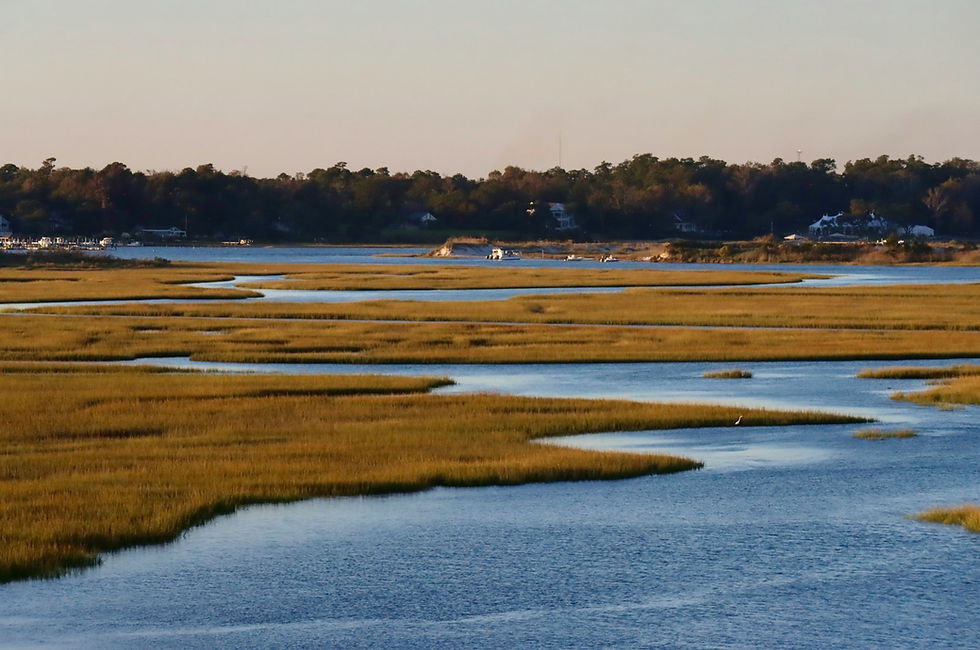
The Chesapeake runs on a calendar older than any fishing regulation. In March the rivers are still cold and brown with runoff, and the first hickory shad nose up the James toward the fall line at Richmond. By April the big female striped bass have pushed into the Rappahannock, the York's twin forks at the Pamunkey and Mattaponi, the James, and the Potomac, staging where tidal fresh water meets the first faint trace of salt. In summer the fish scatter toward deeper, cooler water and the lower Bay belongs to cobia, red drum, and the charter boats chasing them. And now, in mid-October, the marsh edges have gone bronze, the menhaden schools are working south, and the rockfish that define Virginia's tidewater identity are feeding hard in the river mouths again, with the fall harvest season open since October 4.
This is the Bay-fed sporting calendar: the James, York, Rappahannock, and Potomac rivers, the Mobjack Bay sub-estuary and the Piankatank River on the Middle Peninsula, the Northern Neck peninsula between the Rappahannock and Potomac, and the long tidal reach of the James from Hampton Roads up through Richmond's fall line and on to the smallmouth water toward Lynchburg. Watermen culture, colonial history, tribal history, and modern sportfishing share the same shorelines here.
The striped bass, shad, blue catfish, and smallmouth each tell a different story about what these rivers are, what they have lost, and what they still produce. Every season or limit here is a snapshot of the 2026 rules, not a promise. Confirm current regulations with the Virginia Marine Resources Commission (VMRC) for tidal waters, the Potomac River Fisheries Commission for the Potomac mainstem, and the Virginia Department of Wildlife Resources (VDWR) for freshwater before you fish.
An Ecology Snapshot: The Nation's Largest Estuary and Its Spawning Rivers
NOAA describes the Chesapeake Bay as the largest estuary in the United States, and NOAA Fisheries ranks it as the largest estuary in North America. Its watershed drains about 64,000 square miles across parts of Delaware, Maryland, New York, Pennsylvania, Virginia, West Virginia, and the District of Columbia. In Virginia, the western shore rivers do the heavy lifting: the Potomac along the Northern Neck's northern edge, the Rappahannock, the York (formed where the Pamunkey and Mattaponi meet at West Point), and the James. Each of these rivers is a salinity gradient laid out over dozens of miles, running from tidal fresh water near the fall line through brackish middle reaches and into saltier water at the river mouths.
That gradient is the engine of the whole system. Estuaries are productive because they mix nutrients washed off the land with the tidal energy of the ocean, and the Chesapeake's long, shallow tributaries spread that mixing across an enormous area. The result is a food web that supports blue crab (Callinectes sapidus), eastern oyster (Crassostrea virginica), Atlantic menhaden (Brevoortia tyrannus), and a year-round fishery that changes species with the seasons.
At the top of that web sits the striped bass (Morone saxatilis), the rockfish of Chesapeake tradition. Striped bass are anadromous: they spend most of their adult lives in salt and brackish water, then return to fresh or nearly fresh water to spawn. The Atlantic States Marine Fisheries Commission (ASMFC) puts the Bay's role plainly: the majority of the coastal migratory stock originates in Chesapeake Bay spawning areas, with significant contributions from the Hudson and Delaware rivers. In Virginia, spawning happens in the upper tidal reaches of the James, Pamunkey, Mattaponi, and Rappahannock, where moving fresh water keeps the semi-buoyant eggs suspended long enough to hatch. The spawn is a tidal-river event. Above the fall line, the upper James at Lynchburg is smallmouth country, not striped bass spawning water.
ASMFC's 2024 assessment update, which looked at 2023, found the stock overfished, with female spawning stock biomass of about 86,536 metric tons, just under the threshold, but not experiencing overfishing. The rebuilding deadline under discussion is still 2029.
The nursery role is measured every summer. The Batten School and Virginia Institute of Marine Science (VIMS) has run a juvenile striped bass seine survey for the Commonwealth since 1967, sampling index sites in the Rappahannock, York, and James systems. In 2024 the survey recorded a mean of 3.43 young-of-year fish per seine haul, significantly below the historic average of 7.77 and the second consecutive below-average year. In 2025 the mean rose to 5.12, which VIMS described as similar to the historic average and an average year class. Swings like that are normal for a species whose spawning success depends on spring flows and temperature, but weak years ripple forward into the fishery.
Two other stories shape the tributaries. The first is the blue catfish (Ictalurus furcatus), which VDWR stocked into the James and Rappahannock in 1974 and the York watershed in 1985 to build a sport fishery; as of 2023 the agency had documented it in all of Virginia's Bay tributaries and identifies it as invasive. The second is the long decline of American shad (Alosa sapidissima), now under a no-possession rule in Virginia.
What the Interface Creates
The interface that matters here is the line where fresh water meets salt, and where the tides meet the fall line. Along that line, four distinct fisheries emerge.
Rockfish concentration. Because most of the coastal migratory stock is born in the Chesapeake, the Bay and its rivers see a predictable seasonal concentration of striped bass. Large, mature females move into the tributaries in spring to spawn, and fish return to the lower Bay and river mouths in fall to feed on menhaden, bay anchovy, and spot. The largest spring fish are mostly females, and they carry a disproportionate share of the stock's spawning potential. That biology is why Virginia closed its spring trophy season in 2019, why the trophy sections of the code were repealed effective May 28, 2019, and why the conversation around the spring fishery has shifted toward catch and release when the biggest fish are in the rivers.
Blue catfish trophy potential. The upper tidal James, from Richmond down toward Hopewell, is where blue catfish found ideal conditions: deep channel bends, tidal current, and abundant gizzard shad and other prey. Blue catfish spread from there down the rivers and into brackish water. NOAA Fisheries lists the Chesapeake record as a 102-pound James River fish. The world and Virginia record, a 143-pound blue catfish from 2011, came from Buggs Island Lake, a reservoir on the Virginia-North Carolina border, not the Bay system. The paradox is real: a trophy fishery built on a species managers want to reduce, a tension a 2021 North American Journal of Fisheries Management paper by Fabrizio, Nepal, and Tuckey framed as competing objectives. VDWR encourages harvest of smaller blue catfish. On the James below the fall line, down to a line from Hog Point to the mouth of College Creek, the code (amended effective January 1, 2026) sets no daily limit except that only one fish longer than 32 inches may be kept per day. That rule applies to that reach of the James, not statewide, so confirm limits for your water with VDWR.
Shad, still in recovery. American shad once ran up the James, York, and Rappahannock in numbers that fed colonial Virginia. Overfishing, dams, and water quality changes collapsed those runs over the 20th century. Today American shad cannot be kept in Virginia: VDWR lists a statewide possession moratorium since January 1, 2019, with catch and immediate release permitted, and VMRC's 4VAC20-530-30 bars retaining them from the Bay outside a limited bycatch provision. The Rappahannock offers a bright spot. Embrey Dam at Fredericksburg came out in 2004, and VDWR reports that shad, herring, and striped bass now ascend past Fredericksburg. On the Pamunkey, the Pamunkey Indian Tribe has a long history of shad culture: the Tribe started an indoor hatchery in 1918, shut it down in the 1940s, restarted with tidal boxes in the 1950s with Marine Resources Commission help, and built a new indoor hatchery in 1989. Hickory shad (Alosa mediocris), which typically arrive a few weeks ahead of American shad, provide the most reliable spring light-tackle fishing at the fall lines and are managed under separate rules, so check VMRC before keeping any.
Smallmouth above the tide. The Chesapeake story does not stop at the fall line. Above Richmond, the James becomes one of the East's well-known smallmouth bass (Micropterus dolomieu) rivers, with float reaches from the Lynchburg area down through Scottsville and Howardsville toward Cartersville. The Rappahannock above Fredericksburg holds smallmouth too. These are freshwater fisheries under VDWR, but they are part of the same watershed, and the water that feeds them flows down to the rockfish and crabs below.
Layered on top of all four is the oyster. The Piankatank River, between the Rappahannock and Mobjack Bay, is home to 438 acres of oyster reef, and the Chesapeake Bay Program reported the river officially restored as of November 30, 2021. Restored reefs filter water and create structure that striped bass, red drum, speckled trout, and blue crab all use.
Migration and Timing Signals
The Bay-fed calendar is driven by water temperature, river flow, and day length. Here is how the major species move, and how the 2026 rules line up with those movements.
Striped bass, spring. Mature fish begin entering the tributaries in March and April as the rivers warm. Spawning generally peaks in April and can stretch into May in the upper tidal reaches, and heavy spring rain can shift or delay activity. After spawning, many large fish leave the Bay to migrate north along the coast. Spring is a catch-and-release window for the big fish in Virginia. Harvest of smaller fish in the Bay comes later: under 4VAC20-252-80, last amended effective April 1, 2024, the Chesapeake Bay and tributaries spring and summer recreational season runs May 16 through June 15 with a 19- to 24-inch slot and one fish per person. The need for a slot traces back to ASMFC's Addendum II in early 2024, but the Virginia slot in force is the 19- to 24-inch range in the current code, not the wider ranges printed in the addendum's tables. Confirm current seasons with VMRC.
Striped bass, summer. As Bay surface temperatures rise, the Chesapeake Bay Program describes a summer zone of low dissolved oxygen that forms in deeper water. Striped bass prefer cooler water, so warm surface water above and oxygen-poor water below can leave them with less comfortable habitat in midsummer. Summer fishing for rockfish is harder, and anglers should handle fish carefully, keep fight times short, and release fish quickly in warm water.
Striped bass, fall. As water cools in October, rockfish feed aggressively in river mouths, along channel edges, and under birds working bait. This is the main harvest window for most anglers. Under 4VAC20-252-90, last amended effective April 1, 2024, the Chesapeake Bay and tributaries fall recreational season runs October 4 through December 31, 19 to 24 inches, one fish per person per day. Confirm current regulations with VMRC.
The Potomac and the ocean side. The Potomac mainstem falls under the Potomac River Fisheries Commission, whose blue sheet revised September 1, 2026 lists catch and release January 1 through May 15, harvest May 16 through July 6 and August 21 through December 31, no targeting July 7 through August 20, 19 to 24 inches, one fish. Virginia's Potomac tributaries (4VAC20-252-100) track those harvest windows. Virginia's coastal area, east of Cape Henry and the seaside Eastern Shore, runs January 1 through March 31 and May 16 through December 31 with a 28- to 31-inch slot and one fish. Confirm each with the responsible agency.
A note on Maryland. Maryland's 2026 Bay calendar differs. Addendum III, approved by ASMFC in October 2025 without the proposed 12 percent reduction in removals, let Maryland change its season baseline, and Maryland DNR now lists harvest May 1 through July 31 and September 1 through December 5, a closed August, and catch and release the rest of the year, with a 19- to 24-inch slot and early-season spawning-area closures. Confirm with Maryland DNR.
American and hickory shad, spring. Hickory shad typically arrive first, often in March, with American shad following into April. The fall lines at Richmond and Fredericksburg are the classic shad spots. All American shad must be released.
Blue catfish, year-round. Blue catfish are catchable in every month. In winter they concentrate in deep channel holes, which creates some of the most predictable trophy fishing of the year. In spring they follow the shad and herring runs. Fall is a favored season for many anglers, with fish feeding heavily ahead of winter.
Smallmouth, summer and fall. Upper James and upper Rappahannock smallmouth fishing builds from late spring into summer, with fall often producing quality fish as water clears and cools. Low summer flows can make float trips slow and scrappy, so watch the USGS stream gauges before you launch.
Other signals. Cobia show up near the Bay mouth in late spring, red drum use the lower Bay from spring into fall, and speckled trout (Cynoscion nebulosus) in Mobjack Bay and the Piankatank are a fall favorite. These are general patterns, not agency-dated seasons, and each species has its own VMRC rules.
On the Ground: Mathews, Gloucester, Reedville, Tappahannock, Fredericksburg, and Richmond
Mathews. Mathews County sits at the tip of the Middle Peninsula with Mobjack Bay on one side and the open Chesapeake on the other. It is small, quiet, and on the water. New Point Comfort, at the southern tip, is a landmark for both anglers and birders. Mathews is the natural basecamp for Mobjack Bay's speckled trout, the Piankatank's restored reefs, and fall rockfish in the lower Bay.
Gloucester. Gloucester County frames the north bank of the York River and the western shore of Mobjack Bay. Gloucester Point, across from Yorktown, is home to VIMS. From Gloucester, anglers can reach the lower York, Mobjack Bay's creeks, and the Ware and Severn rivers. The York's upper forks at the Pamunkey and Mattaponi are within reach for those chasing shad and blue catfish. The Lower Pamunkey Indian Reservation sits on the Pamunkey River in King William County. The Pamunkey people's relationship with this river long predates the colony, and the Tribe's museum and hatchery history are worth learning about. The reservation is tribal land; contact the Tribe directly about any visit rather than assuming shoreline or fishing access.
Reedville. Reedville, in Northumberland County on the Northern Neck, is the historic home of the Chesapeake menhaden industry and a classic charter town. The Great Wicomico River, Ingram Bay, and Smith Point are all close. Reedville gives access to both the lower Potomac and the Bay. Nearby Lancaster County towns, including Kilmarnock and Irvington, cover the lower Rappahannock, while Westmoreland County, upriver along the Potomac, offers Westmoreland State Park and a quieter stretch of Northern Neck shoreline.
Tappahannock. Tappahannock, in Essex County, sits on the middle Rappahannock where the river widens into a tidal estuary. It is a practical base for exploring the Rappahannock River Valley National Wildlife Refuge, which the U.S. Fish and Wildlife Service began assembling with its first tract purchase in 1996 and which carries a stated goal of protecting 20,000 acres. The refuge's units in Essex, King George, Caroline, Richmond, and Westmoreland counties support bald eagles, wintering waterfowl, and tidal marsh and forest habitat. Public access varies by unit, so check the refuge's current visitor information.
Fredericksburg. Fredericksburg anchors the Rappahannock's fall line. Since Embrey Dam came out in 2004, the river runs free through town, and spring shad and striped bass push up to the rocks. Above the fall line, the Rappahannock offers smallmouth and a scenic float under VDWR rules, with easy I-95 access.
Richmond. Richmond is unusual among American cities: a tidal river and a whitewater river meet in its downtown. Below the fall line, the tidal James holds blue catfish, striped bass, and shad. Above it, the James River Park System offers urban access, and smallmouth water extends upstream toward Lynchburg. Richmond is the basecamp for trophy blue catfish trips on the upper tidal James and for day trips to the upper James floats.
Bridging it all, the Chesapeake Bay Bridge-Tunnel spans the mouth of the Bay, carrying US 13 from Virginia Beach and Norfolk to Virginia's Eastern Shore across 17.6 miles shore to shore. It marks the boundary where the Bay meets the Atlantic, and it is the line that separates Virginia's Bay striped bass rules from the coastal rules on the ocean side.
Planning Your Trip, Season by Season
The Chesapeake tributaries reward planning around tides, river flows, and regulations. The windows below describe general patterns and the 2026 rules; specific seasons and limits change, so confirm current regulations with VMRC, the Potomac River Fisheries Commission, and VDWR before every trip.
January and February. Deep-water blue catfish on the tidal James and other tributaries are at their most predictable. Striped bass in the Bay and its tributaries are outside Virginia's harvest seasons, so any fish caught must be released; the Potomac mainstem is catch and release only through May 15. Waterfowl hunting overlaps on tidal marshes; check VDWR's 2026-27 waterfowl seasons.
March. Hickory shad arrive at the fall lines in Richmond and Fredericksburg. Blue catfish begin to move. Striped bass start staging in the lower rivers.
April. Striped bass spawning runs peak in the upper tidal rivers. American shad join the hickory shad. This is prime time for catch-and-release fishing and for watching the spawning fishery in action. Handle large female rockfish carefully and keep them in the water.
May. Spawning winds down. Virginia's Bay and tributaries spring and summer season opens May 16 and runs through June 15, 19 to 24 inches, one fish; the Potomac mainstem and Virginia's Potomac tributaries also open May 16. Cobia begin to show near the Bay mouth.
June through August. Rockfish move to deeper, cooler water; fish early and late, and release fish quickly. On the Potomac mainstem, targeting striped bass is not allowed July 7 through August 20. Cobia, red drum, and spadefish carry the lower Bay. Upper James smallmouth floats are at their best in early summer, flows permitting.
September. The first cool nights bring rockfish back toward shallow structure. Blue catfish feed heavily. Speckled trout fishing in Mobjack Bay and the Piankatank begins to build.
October through December. The main fall striped bass harvest window, with the Bay and tributaries season running October 4 through December 31. Speckled trout are a fall highlight. Blue catfish fishing remains strong. Waterfowl seasons open on tidal marshes.
Tides. Tide timing varies along each river; a high tide at the Bay mouth arrives hours later at the fall line. Use NOAA tide predictions for the station closest to where you are fishing, and plan around moving water, which typically fishes better than slack.
Public versus private access. Public ramps are available across the Middle Peninsula, Northern Neck, and the tidal James, along with state parks such as Belle Isle on the Rappahannock, Westmoreland on the Potomac, and York River State Park. The Rappahannock River Valley NWR offers public access on certain units; check the refuge's current access information. Much of the shoreline is private, so stay on public land or water and respect landowners. Tribal land on the Pamunkey is not public access. Guided trips provide boats, local knowledge, and help reading the regulations.
Responsible practices. When fishing for striped bass with bait in Virginia waters, 4VAC20-252-50.B requires non-offset, corrodible, non-stainless steel circle hooks, and the Potomac River Fisheries Commission requires non-offset circle hooks with cut or whole natural bait on the mainstem; confirm current gear rules with both agencies. Keep large rockfish in the water during release, minimize fight times in warm water, and give spawning fish room in the most sensitive reaches. Report tagged fish to the agency listed on the tag. Do not move live blue catfish between waters. Clean, drain, and dry your boat to avoid spreading invasive species.
Key Takeaways
The Chesapeake is the largest estuary in the United States, and most of the coastal migratory striped bass stock originates in its spawning areas.
As of the 2023 data year, the stock is overfished but not experiencing overfishing; rebuilding by 2029 remains the target.
Virginia's juvenile index went from a below-average 3.43 in 2024 to an average 5.12 in 2025.
Virginia's 2026 Bay harvest seasons are May 16 through June 15 and October 4 through December 31, 19 to 24 inches, one fish; no spring trophy season since 2019. Confirm with VMRC.
American shad cannot be kept in Virginia; Embrey Dam's 2004 removal is a bright spot.
Blue catfish are invasive and a trophy fishery: the Chesapeake record is a 102-pound James River fish; the 143-pound world record came from Buggs Island Lake.
The Piankatank's 438 acres of restored reef show how habitat work shapes the fishing.
For the Operators
If you run a charter, guide service, or lodge on the Chesapeake tributaries, you already know this fishery better than any search engine does. The question is who tells that story when a prospective client opens a search box or asks an AI assistant where to fish for rockfish on the Rappahannock in October.
Right now, much of that conversation is shaped by booking aggregators, regional fishing media, and general travel content. Aggregator listings are part of the market context for the Tidewater charter fleet, and they sit between some searchers and the individual captains who actually run the trips. The opportunity is to own the questions that aggregators cannot answer well: how the spring spawning run actually works, what the current slot means for a client's trip, why a catch-and-release spring outing is still worth booking, how blue catfish ended up in the James and why biologists want the smaller ones harvested, and what the shad story looks like from the fall line.
Regulatory clarity is a competitive advantage. Virginia, the Potomac, and Maryland now run different calendars, and the next assessment may bring more changes. Captains who publish a clear, caveated explainer each season, and talk openly about release practices, earn trust from the most loyal clients.
On the Northern Neck especially, many charter operations carry decades of local knowledge and long client relationships. When those businesses change hands or a captain steps back, the reputation can disappear if it lives only in word of mouth and a phone number. Documenting that knowledge, building a durable online presence, and capturing client relationships in a way that can be passed on protects the value of what has been built.
There is also clear whitespace upriver. The upper tidal James blue catfish fishery and the upper James smallmouth floats draw steady interest, yet comparatively little editorial coverage comes from the operators who actually run trips there. The ecology is a compelling story, and organizations like the Chesapeake Bay Foundation, VIMS, and the Chesapeake Bay Program give the region an unusually rich body of science and conservation work to connect to.
What you've built deserves to be found.
Frequently Asked Questions
When is the best time to fish for striped bass in Virginia's Chesapeake tributaries?
Fall is the main harvest window. Under Virginia Marine Resources Commission rules last amended effective April 1, 2024, the Chesapeake Bay and tributaries fall season runs October 4 through December 31 with a 19- to 24-inch slot and one fish per person. Spring brings the big spawning fish into the rivers, but Virginia's spring trophy season was closed in 2019, so spring is mostly a catch-and-release story. Confirm current seasons with VMRC before every trip.
Are Atlantic striped bass overfished, or is overfishing still happening?
The Atlantic States Marine Fisheries Commission's 2024 stock assessment update, covering 2023, found the stock overfished but not experiencing overfishing. In October 2025 ASMFC approved Addendum III without the proposed 12 percent reduction in fishery removals, and rebuilding by 2029 remains the target under discussion. Chesapeake recruitment has been uneven, so expect management to keep evolving.
Can you still fish a spring trophy striped bass season in Virginia?
No. The Marine Resources Commission voted for an emergency closure of the spring trophy season on April 23, 2019, and the trophy sections of the Virginia code were repealed effective May 28, 2019. The current Bay spring and summer season, May 16 through June 15, uses the same 19- to 24-inch slot as the fall. Confirm current rules with VMRC.
Are the Potomac mainstem and Virginia's Potomac creeks the same rule?
They are managed by different bodies. The Potomac River Fisheries Commission sets rules on the mainstem, while VMRC sets rules for Virginia's Potomac River tributaries, and the Virginia code says its tributary season shall correspond to the commission's mainstem season. For 2026 both list harvest from May 16 through July 6 and August 21 through December 31, 19 to 24 inches, one fish. Confirm with both agencies before you fish.
Can I keep American shad in Virginia?
No. The Virginia Department of Wildlife Resources lists a statewide possession moratorium on American shad in effect since January 1, 2019, with catch and immediate release permitted, and VMRC regulations make it unlawful to catch and retain American shad from the Chesapeake Bay outside a limited bycatch provision. Confirm current rules with VDWR and VMRC.
Where is the blue catfish world record, and where is the Chesapeake record?
The world and Virginia record is a 143-pound blue catfish from Buggs Island Lake in 2011, according to VDWR. NOAA Fisheries lists the Chesapeake record as a 102-pound fish from the James River. The tidal James is a serious trophy fishery, but the record fish came from a reservoir on the Virginia-North Carolina line.
Which agency sets tidal striped bass rules in Virginia?
The Virginia Marine Resources Commission sets striped bass rules for the Bay and its tidal tributaries, including the James, York, and Rappahannock, under chapter 4VAC20-252. The Virginia Department of Wildlife Resources manages freshwater fisheries above the fall line, such as the upper James smallmouth water. A single trip on the James or Rappahannock can cross that line, so check both agencies.
Citations and Sources
Atlantic States Marine Fisheries Commission -- 2024 Atlantic Striped Bass Stock Assessment Update -- https://asmfc.org/wp-content/uploads/2025/01/2024_AtlStripedBassAssessmentUpdate.pdf -- accessed October 2026
Atlantic States Marine Fisheries Commission -- Atlantic Striped Bass Stock Assessment Overview, November 2024 -- https://asmfc.org/wp-content/uploads/2024/11/AtlStripedBassStockAssessmentOverview_2024.pdf -- accessed October 2026
Atlantic States Marine Fisheries Commission -- Atlantic Striped Bass species page -- https://asmfc.org/species/atlantic-striped-bass/ -- accessed October 2026
Atlantic States Marine Fisheries Commission -- Atlantic Striped Bass Board Approves Addendum III Without Reductions in Fishery Removals -- https://asmfc.org/news/press-releases/asmfc-atlantic-striped-bass-board-approves-addendum-iii-without-reductions-in-fishery-removals/ -- accessed October 2026
Atlantic States Marine Fisheries Commission -- Addendum II to Amendment 7, January 2024 -- https://asmfc.org/wp-content/uploads/2025/01/AtlStripedBass_AddendumII_Am7_Jan2024-1.pdf -- accessed October 2026
Virginia Marine Resources Commission -- Striped bass news release, April 23, 2019 -- https://mrc.virginia.gov/news_releases/2019/MRC_Striped_Bass_PR%20FINAL_4.23.2019.pdf -- accessed October 2026
Virginia Administrative Code -- 4VAC20-252, Pertaining to Striped Bass -- https://law.lis.virginia.gov/admincodefull/title4/agency20/chapter252/ -- accessed October 2026
Virginia Administrative Code -- 4VAC20-530-30, American shad -- https://law.lis.virginia.gov/admincode/title4/agency20/chapter530/section30/ -- accessed October 2026
Virginia Administrative Code -- 4VAC15-320-25, Creel and length limits -- https://law.lis.virginia.gov/admincode/title4/agency15/chapter320/section25/ -- accessed October 2026
Virginia Department of Wildlife Resources -- Fishing Regulations -- https://dwr.virginia.gov/fishing/regulations/ -- accessed October 2026
Virginia Department of Wildlife Resources -- Blue Catfish fact file -- https://dwr.virginia.gov/wildlife/information/blue-catfish -- accessed October 2026
Virginia Department of Wildlife Resources -- Rappahannock River (Upper) -- https://dwr.virginia.gov/waterbody/rappahannock-river-upper -- accessed October 2026
Potomac River Fisheries Commission -- Recreational regulations blue sheet, revised September 1, 2026 -- https://prfc.us/pdfs/BLUE-SHEET.pdf -- accessed October 2026
Maryland Department of Natural Resources -- Maryland's 2026 striped bass season opens for catch-and-release fishing in April -- https://news.maryland.gov/dnr/2026/03/31/marylands-2026-striped-bass-season-opens-for-catch-and-release-fishing-in-april/ -- accessed October 2026
Maryland Department of Natural Resources -- Striped bass recreational seasons sheet -- https://dnr.maryland.gov/fisheries/Documents/Reg_Changes/DNR-FS-2025-3_StripedBass_RecreationalSeasons.pdf -- accessed October 2026
NOAA Ocean Service -- What is the largest estuary in the United States? -- https://oceanservice.noaa.gov/facts/chesapeake.html -- accessed October 2026
NOAA Fisheries -- Northeast U.S. Shelf regional ecosystem -- https://www.fisheries.noaa.gov/new-england-mid-atlantic/ecosystems/northeast-us-shelf-regional-ecosystem -- accessed October 2026
NOAA Fisheries -- Blue Catfish species page -- https://www.fisheries.noaa.gov/species/blue-catfish -- accessed October 2026
U.S. Fish and Wildlife Service -- Rappahannock River Valley National Wildlife Refuge -- https://www.fws.gov/refuge/rappahannock-river-valley -- accessed October 2026
U.S. Fish and Wildlife Service -- Rappahannock River Valley NWR, About Us -- https://www.fws.gov/refuge/rappahannock-river-valley/about-us -- accessed October 2026
U.S. Fish and Wildlife Service -- Director applauds removal of Embrey Dam on the Rappahannock River -- https://www.fws.gov/story/2004-02/fish-and-wildlife-service-director-applauds-removal-embrey-dam-rappahannock-river -- accessed October 2026
Chesapeake Bay Program -- Piankatank River oyster restoration completed -- https://www.chesapeakebay.net/news/blog/the-worlds-largest-oyster-restoration-project-is-completed-in-virginia -- accessed October 2026
Chesapeake Bay Program -- Dissolved Oxygen -- https://www.chesapeakebay.net/discover/ecosystem/dissolved-oxygen -- accessed October 2026
U.S. Geological Survey -- Chesapeake Bay Activities -- https://www.usgs.gov/centers/chesapeake-bay-activities -- accessed October 2026
Batten School and Virginia Institute of Marine Science -- An average year for juvenile striped bass in Virginia waters in 2025 -- https://www.vims.edu/newsandevents/topstories/2025/2025-striped-bass.php -- accessed October 2026
Batten School and Virginia Institute of Marine Science -- A poor year for juvenile striped bass in Virginia waters in 2024 -- https://www.vims.edu/newsandevents/topstories/2024/juvenile-striped-bass-survey.php -- accessed October 2026
Fabrizio, Nepal, and Tuckey -- North American Journal of Fisheries Management 41 (S1): S156-S166, 2021 -- https://doi.org/10.1002/nafm.10552 -- accessed October 2026
Pamunkey Indian Tribe -- Natural Resources -- https://pamunkey.org/natural-resource -- accessed October 2026
Chesapeake Bay Bridge-Tunnel Commission -- Explore the Bridge-Tunnel -- https://www.cbbt.com/explore-old/ -- accessed October 2026
Chesapeake Bay Foundation -- Fisheries -- https://www.cbf.org/issues/fisheries/ -- accessed October 2026
The Nature Conservancy in Virginia -- https://www.nature.org/en-us/about-us/where-we-work/united-states/virginia/ -- accessed October 2026
Coastal Conservation Association Virginia -- https://ccavirginia.org/ -- accessed October 2026

Comments