
The Chesapeake Bay Tributaries and Mobjack Bay's Speckled Trout
Updated: Jun 12
By Jacob Mishalanie and Thomas Garner, Co-Founders of Pine and Marsh
Mobjack Bay is the most under-marketed destination for saltwater products in the Mid-Atlantic. That is not an editorial opinion. It is a data-backed conclusion drawn from the 2,206-outfitter Southeastern competitive audit that Pine and Marsh completed across eleven states and ten outdoor verticals. We logged the Middle Peninsula charter cohort against comparable speckled-trout fisheries from the South Carolina Lowcountry to Mosquito Lagoon in Florida and found the same pattern in every cell of the dataset: comparable fishery quality, comparable seasonal predictability, and a fraction of the operator-published technical content.
Mobjack speckled trout in the fall produces grass-bed sight-fishing on par with anything south of Pamlico Sound. The captains running it are mostly fishing on referrals because the search result page for their fishery has almost nothing on it. The editorial gap is real, the demand signal is measurable, and the aggregator surface above the operator class is growing while the operators themselves remain silent.
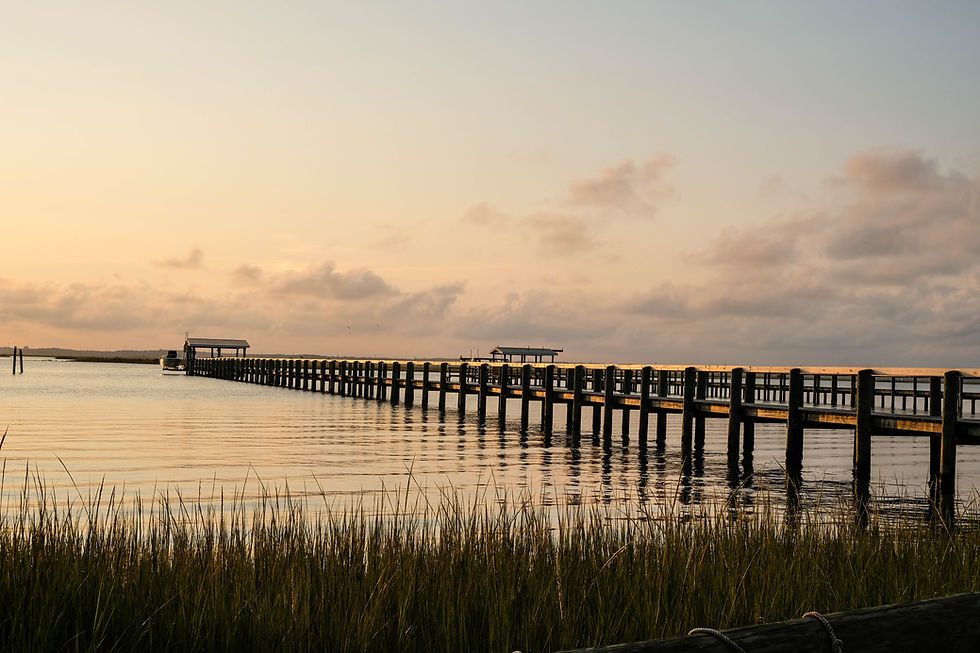
Four major rivers and one of the largest estuaries on the planet meet inside this Virginia sub-region. The Potomac on the south side, the Rappahannock, the York with its Mattaponi and Pamunkey forks, and the estuarine reach of the James all converge across the Middle Peninsula axis. Mobjack Bay and the smaller Piankatank, Severn, and Ware tributaries add flats geometry that no other Virginia sub-region can match. The Middle Peninsula counties of Mathews, Gloucester, and Middlesex anchor the geographic pivot at Deltaville. The fishery is here. The content authority is not.
The Structural Advantage of the Bay Tributaries
Salinity gradients drive the productivity of this corridor. Brackish-to-polyhaline water, with salinity shifting across the seasons in ways that push different species into different reaches at different times of year. The result is a remarkably productive overlap zone where striped bass, speckled trout, red drum, cobia, croaker, spot, flounder, bluefish, and weakfish all stack depending on month, tide, and tributary mile.
The Bay tributaries cluster contains four distinct fishery characters within a one-day drive. The Potomac mouth carries its own rockfish calendar. The Rappahannock estuary produces a different seasonal pattern. The York River and the upper Mattaponi and Pamunkey forks deliver tidal freshwater, with brackish species overlapping. The lower James estuary runs its own largemouth and striper program. And Mobjack Bay produces a fifth fishery character that is entirely its own.
The habitat reads as a layered map most operators have never published. Belle Isle State Park on the Rappahannock. New Point Comfort on the Mathews coastline. York River State Park on the York. Plum Tree Island NWR (USFWS, restricted-access). Tangier Island in Virginia and Smith Island in Maryland function as one ecosystem. Presquile NWR and James River NWR on the lower-James reach. Newport News Park adds urban-adjacent freshwater. The public-land footprint runs from Smith Point south to Hampton Roads.
The Seasonal Calendar
Spring trophy rockfish open the year on the main Bay and the Rappahannock. The striped bass run draws anglers from across the Mid-Atlantic and fills charter calendars from March through May. As water temperatures climb, the cobia migration arrives at the Bay mouth through June and July. Summer red drum overlap the cobia window with sight-casting on the flats.
Fall is the crown season. Speckled trout stack on the Mobjack grass beds from September through early December. October and November are the peak weeks. Year-round bay species, including croaker, spot, flounder, and bluefish, fill the gaps and keep the charter fleet working twelve months.
ASMFC Atlantic Striped Bass Addendum II, adopted January 2024, and coastwide cobia FMP changes are tightening recreational regulation. The Chesapeake Bay TMDL water-quality program is rebuilding submerged aquatic vegetation, directly supporting speckled-trout habitat and cobia structure simultaneously.
Mobjack Bay Speckled Trout: The Unclaimed Editorial
Mobjack Speckled Trout in October
Speckled trout fishing on Mobjack grass beds peaks in the fall. The season runs September through early December, with October and November as the canonical weeks. The grass beds (submerged aquatic vegetation, SAV) have been recovering under the Chesapeake Bay TMDL water-quality program. That recovery is the structural reason the fishery has been strengthening over the past decade.
Trout stage on the grass edges, ambush mullet and shrimp, and respond to the same topwater and soft-plastic protocols that work on the Carolina sounds. But the Mobjack fishery carries regional flavor from the brackish-Bay forage base and the submerged-grass cover. Water clarity, driven by SAV recovery, creates sight-fishing opportunities that did not exist a generation ago.
The Editorial Gap
Saltwater Sportsman, Chesapeake Bay Magazine, and Virginia Sportsman have all run features on Mobjack speckled trout intermittently. The magazine editors know the story. But operator-published content describing the season, the bite timing, launch points, tackle, and the SAV-recovery story is mostly missing from the search landscape.
If Pine and Marsh were building a content runway for a Mobjack speckled-trout guide tomorrow, the speckled-trout pillar piece would be first. High search-volume potential against a thin operator field. A category that benefits from technical content. And a credibility hook tied to the Chesapeake Bay TMDL and SAV regrowth that no aggregator listing will articulate.
Why the Mobjack Grass-Bed Fishery Rivals the Lowcountry
Comparable fishery quality and seasonal predictability, with a fraction of the operator-published technical content. The grass-bed structure and the SAV-recovery story give Bay-tributaries operators a credibility hook that Lowcountry operators lack. The Lowcountry trout content market is saturated. The Mobjack market is not.
The fall window on Mobjack runs tighter than the Lowcountry season, meaning per-week booking density is higher during peak. Captains who publish the right content before September own the search result page for the entire fall run. Those who do not publish hand that traffic to FishingBooker, Captain Experiences, and the Virginia Charter Boat Association directory.
Tackle and Technique on the Mobjack Grass Beds
The Mobjack grass-bed trout bite rewards light tackle and precision casting. Spinning gear in the medium-light range, braided line to fluorocarbon leader, topwater walking baits, and soft-plastic jigs cover the standard approach. Topwater lures produce explosive strikes at first light along the grass edges. Soft-plastic paddle tails on jig heads worked along SAV margins take over as the sun climbs.
The forage base differs from the Lowcountry pattern. Mullet, menhaden, and grass shrimp dominate the menu. Natural colors in green-back and silver patterns outperform brighter Lowcountry selections. Water clarity improved by SAV recovery means trout see presentations at greater distance, rewarding
longer casts and more subtle retrieves.
Tidal James and the Bassmaster History
The tidal James largemouth fishery is real Bassmaster-circuit-cited venue territory. Tournament events have visited the tidal James multiple times, and the results are in the public record. The fishery overlaps with the lower-James eagle concentration on Hog Island WMA and James River NWR, carrying some of the densest documented winter bald-eagle concentrations on the East Coast.
The tournament-history content asset is operator-thin and of national class. A piece combining tidal James largemouth history, what Bassmaster taught, and what the local guide knows is sitting unwritten. Most tidal-James guides run phone-first or Facebook-only operations. The first to build integrated tournament-history-plus-current-guidance content owns a defensible search-result page.
The freshwater bass overlay, under the same SEO ceiling as the saltwater charter fleet, creates a dual-vertical opportunity that almost no Bay-tributaries operator is exploiting. A captain guiding both tidal-James largemouth and Mobjack speckled trout has two pillar pieces, two booking windows, and two search-result pages of their own.
Tangier Island and the Disappearing-Shoreline Narrative
Tangier Island sits in the middle of Tangier Sound, the only inhabited Virginia island in the Bay, with a few hundred residents and a documented shoreline-erosion trajectory that has made it one of the most-cited sea-level-rise stories in American journalism. National Geographic, Garden and Gun, and Chesapeake Bay Magazine return on a regular editorial cycle. The USACE breakwater project remains live. The resident watermen population is thinning generationally. The day-trip ferry economy from Reedville and Crisfield, Maryland, keeps the visitor base coming.
The Tangier identity is one of the most AI-famous storylines on the Bay. AI summary engines surface it readily. Operators who guide on Tangier Sound or run charter trips into surrounding cobia-and-rockfish water rarely appear in those summaries. The integrated piece connecting Tangier's history, watermen's culture, the disappearing shoreline, and the fishery is left unwritten by the operator class.
The captains and guides who deliver the trip have not written it. The AI-summary layer is owned by journalism and tourism-board content, not by operators who could convert that traffic into bookings.
The Ferry Economy and Tourism Board Dependency
The Tangier day-trip ferry operates from Reedville and Crisfield. Ferry traffic flows through chamber pages and ferry-operator listings, not through captain pages that ought to be converting fishing-trip demand. A charter captain on Tangier Sound who builds content around ferry logistics, the fishing calendar, and the day-trip-to-charter conversion path captures traffic that currently dead-ends on tourism board pages.
Striped Bass, ASMFC Addendum II, and the Regulatory Current
VMRC sets state tidal saltwater regulations for the Bay tributaries. ASMFC adopted Atlantic Striped Bass Addendum II in January 2024, tightening slot limits coastwide. Cobia FMP changes through 2024 and 2025 reshape the summer Bay-mouth fishery. The Chesapeake Bay TMDL water-quality work directly affects speckled-trout grass-bed habitat and cobia structure.
Each regulatory cycle produces explainer-style content that the operator base mostly fails to meet. A current-cycle slot-limit explainer is one of the highest-trust content types a charter operator can publish. The captain who maintains that page wins trust. The one who does not is one search away from a buyer who cannot tell whether the operation is current on the rules.
Regulatory clarity is a trust signal in a category where most operator content focuses on the catch, and almost none focuses on the rules. The operator who publishes the ASMFC Addendum II explainer, the VMRC slot-limit table, and the cobia FMP update on a single integrated page builds a trust asset that compounds with each regulatory cycle.
The 09-Series Session-4 Audit
Pine and Marsh completed a 2,206-outfitter Southeastern competitive audit. Mean digital-health score for the Southeast: 5.57 out of 10. Virginia sits at 6.31, the highest in the dataset, yet Virginia AI's high-visibility share is only 5.0 percent, the lowest. The tributaries demonstrate the paradox: functional websites but invisible AI footprints.
Session 4 logged 26 records across the Bay, Deltaville, and Northern Neck axis. The cluster shows four to six anchor charter operations with real digital authority, a mid-tier of 25 to 40 captains with functional websites, and a long tail of phone-first or Facebook-only operations.
The aggregator pattern repeats. FishingBooker, Captain Experiences, Visit Virginia Chesapeake Bay destination pages, and the Virginia Charter Boat Association directory capture the mid-tier and long tail. Aggregator Interception Index reads MEDIUM for the Bay-tributaries operator class.
80% of audited operators use no schema beyond CMS defaults. Eighty-five percent have no dedicated FAQ page. Newsletter penetration below 40 percent. The AI summary layer is owned by the Tangier Island disappearing-shoreline narrative, not by the captains who run the trips.
The Succession Problem and the Digital Cliff
The Black Camp Santee-Cooper analog: the multi-generation operation with deep clientele and real cultural authority that has not yet built the digital architecture to survive the next succession. Reedville and Smith Point are the rockfish version. Mobjack Bay speckled-trout guide cohort is the trout version. Several long-running guides are aging without a clean digital handoff. The clientele is loyal. The website is mostly not.
Pine and Marsh succession-and-digital-cliff watchlist flags the Chesapeake Bay legacy charter fleet directly. Multi-generation captain families with thinning generational depth and websites untouched in a regulatory cycle. The Myrtlewood domain-loss case is the cautionary tale every Deltaville principal should be reading.
The playbook: schema markup for the captain, a Google Business Profile that posts regulatory updates, an FAQ answering slot-limit and tackle questions before the call comes, a topical content cluster denser than the aggregator surface, and a succession story showing the next-generation captain learning from the previous one. That last piece is editorial gold and almost no Bay-tributaries operator has published it.
The Middle Peninsula Charter Fleet
Deltaville anchors the Middle Peninsula charter fleet. The harbor complex serves as the staging point for captains running rockfish, trout, cobia, and red drum trips across the lower Rappahannock, the Piankatank, and the Mobjack Bay complex. The fleet ranges from single-captain inshore operations to multi-boat charter businesses with a tournament pedigree.
Gloucester and Mathews counties add their own captain clusters. The Mathews coastline, anchored at New Point Comfort, produces some of the most consistent fall trout fishing. Gloucester captains run the York River mouth and upper Mobjack flats. Middlesex County operations work the Rappahannock and Piankatank. A visiting angler choosing among three distinct launch points and three distinct fishery characteristics currently has no search results page to help make that choice.
The Google Business Profile Gap
Most Middle Peninsula charter operations have a Google Business Profile. A few post to it regularly. GBP's posting cadence averages fewer than 1 post per month. Compare that to the Lowcountry fleet, where top-performing operators post weekly with current-catch photos, regulatory updates, and booking availability. The GBP gap is a low-effort, high-return fix any captain can implement in 15 minutes per week.
The schema markup gap is wider. Organization, LocalBusiness, and Service schema put a charter operation into the structured-data index AI search engines read. Eighty percent of the Bay-tributaries fleet runs no schema beyond CMS defaults. AI summary engines have no structured signal to pull from when a user asks about Mobjack Bay charter fishing or Deltaville rockfish guides.
The Email List and Direct Booking Funnel
Newsletter penetration across the Bay-tributaries charter fleet sits below 40 percent. More than half the fleet has no direct communication channels with past clients beyond phone calls and social media. An email list is the single most defensible marketing asset a charter captain can build. It does not depend on algorithm changes, platform policies, or aggregator intermediation.
The booking funnel for Bay-tributaries charters typically runs: search query to aggregator listing to phone call. The operator who builds the content cluster, the email list, and the direct booking path shortens that to: search query to operator content to deposit. Every step removed is a margin recovered and a relationship retained.
What the Bay-Tributaries Operator Should Publish First
The order is specific and data-driven, based on search volume, operator-field density, and content-gap severity.
First: a Mobjack Bay fall speckled-trout pillar guide covering when, where, why, and how. Highest-ROI content asset on the corridor. Thin operator field. SAV-recovery credibility hook no aggregator can match.
Second: a current-cycle ASMFC and VMRC striped bass slot-limit explainer, updated each spring and fall. Trust-building regulatory content signaling operational competence.
Third: a tidal James Largemouth Bassmaster history and current guidance piece. With national search volume, tournament credibility, and a local-guide angle, the tournament coverage was never delivered.
Fourth: an integrated Tangier-disappearing-island narrative connecting watermen culture, the USACE breakwater project, and the fishery that grew around the island.
Fifth: a Plum Tree Island NWR waterfowl explainer. Restricted-access refuge, publicly available rules, missing operator-published version.
Five pieces. A year of work. A content moat against the aggregators above. The Bay-tributaries corridor is the densest charter fleet in Virginia, with four major rivers, one of the largest estuaries on the planet, and the most under-marketed fall speckled-trout grass-bed fishery north of Hatteras.
The Aggregator Interception Strategy
The Aggregator Interception Index reads MEDIUM. FishingBooker and Captain Experiences are the primary captors of captain-level SEO. The Virginia Charter Boat Association directory and Visit Virginia Chesapeake Bay cluster pages capture generic intent. Tangier ferry traffic flows through chamber pages, not captain pages.
Tournament heritage on the tidal James is similarly invisible at the destination-content layer. The tournament results exist in the public record. The local-guide interpretation does not exist in any published form that search engines can surface.
The foundation cluster mirrors the Black Camp single-operator AI monopoly playbook. Claim and optimize the GBP. Layer Organization, LocalBusiness, and Service schema. Build an FAQ answering what every rockfish, trout, and cobia traveler is asking ChatGPT and Perplexity. Publish 5 to 10 schema-marked pillar pieces. With 10 to 15 authoritative inbound links and 18 months of maintenance, the category becomes durable, defensible, and AI-cited.
Work with Pine and Marsh
Mobjack Bay fall speckled-trout grass-bed fishery, the tidal James largemouth Bassmaster history, the Tangier Island disappearing-shoreline narrative, and the multi-tributary striped bass calendar are all editorial assets sitting unwritten by the operator class. The aggregator surface is intermediating demand-side traffic because the operator base has not built the integrated content cluster that this corridor can support.
Pine and Marsh is a small, owner-operated marketing agency built for the Southeastern outdoor industry. Eleven states, ten verticals, two co-founders on every engagement. Our research baseline is a 2,206-outfitter competitive audit for the Southeast. Session 4 covered the Bay, Deltaville, and Northern Neck cluster with 26 records.
For a Bay-tributaries operator, our engagement starts with a discovery call structured around Mobjack vs. Middle Peninsula vs. tidal James, the fall-trout vs. spring-trophy-rockfish booking calendar, and the regulatory cycles you work under. We audit your digital footprint, surface the aggregator capture pattern, and write a content runway anchored on a Mobjack speckled-trout pillar piece. Then we show up on the property at first light, in October, on the grass beds, with cameras and a plan.
If you guide on Mobjack, on the tidal James, or anywhere across the Middle Peninsula charter cohort, the next step is a discovery call.
Frequently Asked Questions
When is the Mobjack Bay speckled-trout season?
Peak runs from September through early December, with October and November as the canonical weeks. Trout stage on SAV grass-edge structure recovering under the Chesapeake Bay TMDL water-quality program.
What is ASMFC Addendum II, and how does it affect tidal-Virginia rockfish?
ASMFC adopted Atlantic Striped Bass Addendum II in January 2024, tightening slot limits coastwide. VMRC implements the in-state regulations based on the ASMFC framework.
What is the tidal James largemouth fishery?
A Bassmaster-circuit-cited tidal largemouth fishery on the lower James estuary overlaps the Hog Island WMA and James River NWR winter bald-eagle concentration, among the densest on the East Coast.
What is happening on Tangier Island?
The only inhabited Virginia island in the Bay, with documented shoreline erosion, a USACE breakwater project, and a thinning watermen population. National Geographic, Garden and Gun, and Chesapeake Bay Magazine cover it regularly.
What is Plum Tree Island NWR?
A USFWS-administered restricted-access refuge on the lower Bay. Access rules are publicly available, but the operator-published version is missing.
What is the Aggregator Interception Index reading for the Bay tributaries?
MEDIUM. Lower than the Eastern Shore, higher than the Western Shore, lake fisheries. FishingBooker, Captain Experiences, Visit Virginia, and the Virginia Charter Boat Association directory capture mid-tier and long-tail traffic.
How does Mobjack speckled trout compare to Lowcountry trout fishing?
Comparable quality and predictability, fraction of the operator-published content. The grass-bed structure and SAV-recovery story give Bay operators a credibility hook that Lowcountry operators lack.
What tackle works best for Mobjack Bay speckled trout?
Medium-light spinning gear, braided line to fluorocarbon leader, topwater walking baits at first light, and soft-plastic paddle tails on jig heads as the sun climbs. Natural colors in green-back and silver patterns outperform brighter selections due to the improved water clarity from SAV recovery.
How do I book a charter on the Middle Peninsula?
Start with captains operating out of Deltaville, Mathews, or Gloucester. Fall trout on Mobjack, spring rockfish on the Rappahannock, and summer cobia at the Bay mouth are the three marquee seasons. Look for operators who publish current-cycle regulatory information and maintain active Google Business Profiles with recent catch reports.
Last updated: May 2026
About the Authors
Jacob Mishalanie is co-founder of Pine and Marsh and a lifelong outdoorsman, gun enthusiast, and nationally-traveled hunter and angler. His career covers large-scale live production and on-property creative direction across the Southeast.
Thomas Garner is co-founder of Pine and Marsh and a Southeastern digital marketing operator with nearly a decade of analytics, SEO, and AI search work for outdoor and tourism businesses across the 11 states the agency serves.
Pine and Marsh is a small, owner-operated marketing agency built for the Southeastern outdoor industry. Eleven states, ten verticals, two co-founders on every engagement. Our research baseline is a 2,206-outfitter Southeast audit and a 09-series field-brief library covering operator-level digital health across every region we work.


Comments