
What's Actually on Your Course, and Why That Page Doesn't Exist
Updated: Sep 8
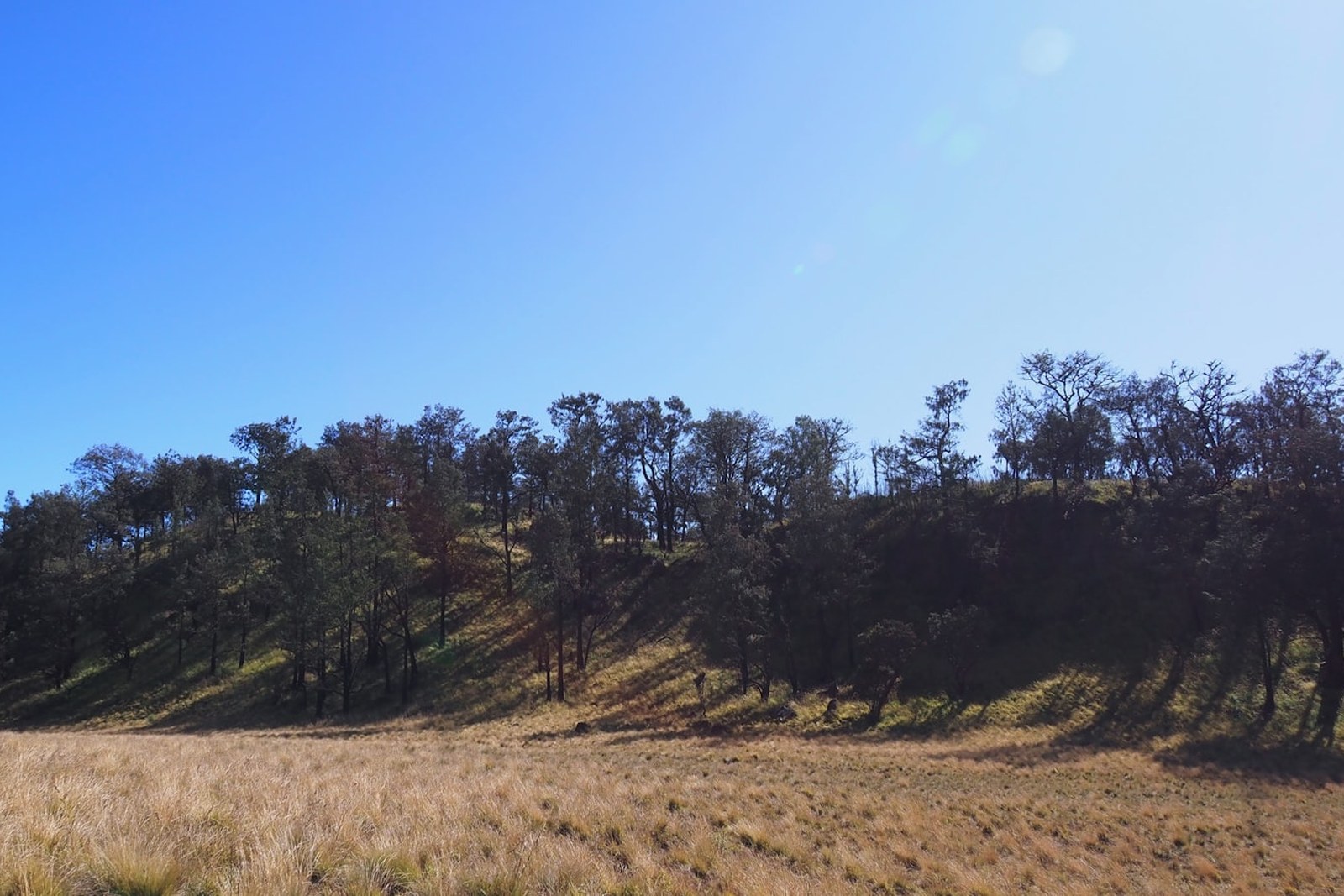
Ask most clays facilities to describe their course and you'll get some version of the same sentence: challenging terrain, beautiful setting, variety for shooters of all levels. It's not wrong, exactly. It's also indistinguishable from what the course down the road says, and the one two states over. Adjectives like that are marketing filler — pleasant, safe, and completely useless to anyone or anything trying to figure out what actually separates one course from another.
That distinction used to matter mostly to a human reader comparing two websites. It matters more now, because an AI Overview answering "what's the terrain like at [course]" or "how many stations does [course] run" isn't looking for tone. It's looking for facts it can lift and cite — a terrain description, a format detail, a distinguishing feature — and if a site only offers adjectives, there's nothing concrete to pull. The system either falls back to a vague generality or skips the site as a source entirely.
This is a fixable gap, and fixing it doesn't require reinventing your homepage. It requires a specific page most courses have never built: a plain, factual description of what's actually out there — terrain, format, target presentations in general terms, physical features that make the course distinct — written as description, not sales copy.
Why adjectives are invisible to an answer engine
"Challenging" is a judgment, not a fact. So is "scenic," "varied," and "world-class." These words describe a feeling the course is meant to produce, and that feeling is real and worth conveying somewhere on your site — but an answer engine resolving a factual query has no way to verify or differentiate a judgment. Every competitor claims the same adjectives, which means none of them function as identifying information. A system trying to build a factual answer about your course specifically will pass over language that could describe literally any range in the region.
What an answer engine can use is a concrete, checkable statement: terrain that moves through mixed hardwood and open field, a course that combines skeet-style crossing presentations with rougher walked stations, a layout built around natural elevation change rather than flat ground. These aren't hype — they're description, and description is exactly the raw material a system needs to say something specific and accurate about your course instead of something generic about the sport.
What belongs on a real course-layout page
Start with terrain type in plain terms — wooded, open, hilly, coastal plain, whatever is actually true of your ground — because terrain shapes everything else about the shooting experience and it's the first thing a curious searcher or a system wants to know. Follow with general format: how the course is structured, whether it's walked or cart-accessible, how stations are arranged relative to each other, without needing to commit to an exact count if that number shifts with course changes or events.
Then get to what makes the shooting itself distinct: general variety in target presentation — crossing, going-away, rabbit, report pairs, whatever categories genuinely apply — described honestly rather than exhaustively. Round it out with the physical features that actually distinguish the property: a pond crossing, a ridge line, mature timber, a particular vista from one of the stations. These are the details a repeat visitor would mention to a friend, and they're exactly the details a generic "beautiful, challenging course" sentence erases.
Description versus sales copy — and why the distinction is the whole point
Sales copy asks a reader to feel something and act on it. Description asks a reader — or a system — to understand something. A course-layout page needs to lean hard toward description, because its job in the funnel isn't to close the booking; it's to be the specific, verifiable source that gets cited when someone asks what a course is actually like. The persuasion can live elsewhere on the site. This page's value is in being boring in the right way: accurate, specific, and free of the same five adjectives every competitor also uses.
That doesn't mean the page has to read like a spec sheet with no personality. Specific, well-observed description is often more evocative than generic enthusiasm anyway — naming the actual tree line or the actual walk between stations tells a reader more, and makes them trust the source more, than telling them the course is "stunning." Precision and voice aren't in conflict here; precision is what gives the voice something real to say.
How this connects to what an AI Overview is actually doing
When someone asks an AI system what a specific course's terrain or layout is like, the system is trying to synthesize an answer from whatever it can find associated with that business entity — your site, third-party listings, reviews that happen to mention terrain, anything crawlable. If your own site is the thinnest, vaguest source in that mix, the system either can't attribute a confident answer to you or ends up relying more heavily on secondary sources that may be outdated, incomplete, or simply wrong about your current layout.
A detailed, accurate course-layout page changes that balance. It gives the system a clear, current, first-party source to draw from — which is the most any operator can do, since no page or schema markup can guarantee a specific citation or ranking outcome. What it can do is make sure that if your course is going to be described anywhere, the most accurate version of that description is the one sitting on your own domain.
Keeping the page honest as the course changes
A course-layout page is only as useful as it is current. If stations get reconfigured, terrain features change after storm damage or land management work, or the general format shifts for a season, the page needs to be revisited — not left as a snapshot from whenever the site last got redesigned. Treat it the way you'd treat pricing or hours: a fact page that gets checked periodically, not a one-time creative project.
This is also where restraint matters. It's tempting to over-specify — to publish an exact station count or an exhaustive list of every target presentation — in the name of being thorough. Resist that where the details genuinely shift over time or vary by event; general accuracy that stays true for a year is more useful, to both readers and answer engines, than precise detail that's wrong by spring.
Where this page fits in your site, and what it should link to
A course-layout page does its best work when it isn't an island. It belongs prominently in main navigation, not buried two or three clicks deep behind an "About" or "Experience" menu, because both human visitors and crawlers treat prominent navigation placement as a signal of importance. From there, it should link naturally to the other fact pages this cluster argues for — a first-timer FAQ for someone who reads about the terrain and now wants to know what to bring, an instructor page for someone curious who'll be guiding them through it, an events or programs page for someone wondering when they can actually book a round.
That interlinking matters for a reason beyond user convenience. When pages about the same business entity reference each other consistently and specifically, it reinforces a coherent picture for any system trying to understand what the business actually is and does. A course-layout page sitting in isolation, disconnected from the rest of the site's factual content, does less work than one that's clearly part of a larger, consistent account of the course.
The common shortcut that undercuts this page before it's built
The shortcut most courses reach for is a downloadable course-guide PDF — a printed handout, maybe originally designed for the pro shop counter, repurposed as a website download. It feels efficient: the content already exists, so why rewrite it. But a PDF tucked behind a download link carries the same blind spot as any other document search engines and AI systems struggle to parse and cite cleanly compared to a real, structured web page. The facts might be accurate and thorough, and still functionally invisible to the exact discovery mechanic this page is meant to serve.
The better path is treating the PDF, if one already exists, as source material rather than the finished product — pulling the real facts out of it and rebuilding them as an actual page, with real headings, plain description, and images that support rather than replace the text. It's slightly more work up front than linking to an existing file. It's also the difference between content that can be crawled, indexed, and cited, and content that technically exists but reaches almost no one searching for it.
When a facility runs more than one course or format
Many Southeastern facilities aren't a single sporting clays layout — they run a sporting clays course alongside a separate 5-stand, a wobble trap setup, or a dedicated skeet field, sometimes on entirely different ground. A single blended description that tries to cover all of it at once tends to collapse into the same vague language this whole post is arguing against, because it has to stay general enough to be technically true of every format on the property. The fix is treating each format as its own distinct entity with its own description, even if they share a single page or sit under a shared navigation menu.
This matters as much for answer engines as it does for a shooter comparing options. Someone asking specifically about a facility's 5-stand format, or specifically about its sporting clays terrain, is asking a narrower question than "what's this facility like," and a page that answers each format on its own terms gives a system something precise to match against that narrower query. A facility that runs multiple formats and describes them all with one paragraph of shared adjectives is giving up exactly the specificity that makes any of its individual offerings findable on their own.
What good course-layout description actually reads like
It's worth being concrete about tone, not just content, because the wrong tone can smuggle vague adjectives back in even when an operator is trying to be specific. Good description reads the way a knowledgeable staff member would explain the course to a visiting shooter standing at the top of the property — pointing things out as they'd actually appear, in the order a person would encounter them, without reaching for superlatives to fill gaps. "The course opens across a mowed field before the first stations move into the tree line" does more work than "a stunning mix of open and wooded terrain," even though both are describing the same ground.
This kind of writing takes slightly more effort than reaching for the familiar marketing vocabulary, mostly because it requires someone to actually think through what's physically true of the property rather than reach for a stock phrase. It's worth that effort specifically because it's the only version of the page that gives a search engine or an AI system something concrete to lift and cite, and it happens to be more genuinely interesting to a human reader too — specific, well-observed detail almost always beats generic enthusiasm at holding attention, which is a rare case where the search-visibility argument and the craft argument point in exactly the same direction.
Related Reading
More for operators building the same kind of page -- clays courses and dove outfits that need a specific answer, not another brochure paragraph.
Your Course Isn't an Entity Yet, and That's Why AI Can't Cite It
5-Stand Deserves Its Own Page, Not a Mention on the Homepage
FITASC Is Growing in the South, and Barely a Course Explains It
New Shooters Google 'What Does Class AA Mean,' and No Course Answers
Plantation Clays and the Stand-Alone Range Are Different Businesses
The Questions a First-Time Shooter Asks Before They Ever Call
When GuideFitter Knows Your Course Better Than Your Website Does
Pricing by the Gun: The Group-Booking Page Most Dove Operators Don't Have
Frequently Asked Questions
Isn't "challenging and scenic" still important for the emotional pitch?
Yes, and it still belongs somewhere on your site — just not on the page whose job is factual description. Keep the emotional language on your homepage and marketing pages, and let the course-layout page do different work: giving readers and answer engines something specific and verifiable. The two aren't in competition; they serve different moments in a visitor's decision.
Do we need to disclose an exact station count if it changes seasonally?
No. If your format shifts with events, weather, or maintenance, describe the general structure — how stations are typically arranged, whether the course is walked or stationary — rather than committing to a specific number that will go stale. Accuracy about the general format matters more than a precise count that needs constant correction.
What if our terrain is genuinely similar to other courses nearby?
Describe it honestly anyway — similarity to a regional terrain type is still a real, useful fact, and the specific way your course uses that terrain (how stations are placed within it, what features stand out) is rarely identical to a neighbor's. The goal isn't uniqueness for its own sake; it's replacing vague adjectives with true, specific statements, even if the underlying terrain type is common to the area.
Should this be a standalone page or part of our "About" or homepage content?
A standalone page works best for both usability and search purposes — it lets you go into real detail without cluttering a homepage that has other jobs to do, and it gives search engines and AI systems a clearly scoped, easily indexed source specifically about your course layout. Link to it prominently from the homepage and navigation rather than burying the detail inside a general page.
How much target-presentation detail is appropriate without misleading shooters?
Describe general categories that genuinely and consistently apply to your course — crossing shots, going-away, report pairs, and so on — rather than an exhaustive station-by-station breakdown that will be outdated the next time the course is reset. The goal is giving a shooter and a search system an accurate sense of variety, not a locked-in promise about what they'll see on a specific visit.
Does this page need photography, or is text enough?
Text carries the factual weight that search engines and AI systems read and cite, so it should never be skipped in favor of images alone. Photography adds real value for human visitors deciding whether to book, so the strongest version of this page pairs specific written description with images that show the actual features being described — not stock-feeling wide shots that could be any course.
Can this page help with local search even without a Google Business Profile update?
Yes — this is a separate lever from GBP category and attribute selection. A detailed on-site course-layout page strengthens what your own domain can be cited for in organic search and AI Overviews regardless of your Business Profile setup, though the two work best together as complementary parts of a broader local-visibility strategy.
What's the risk of just leaving the generic adjectives in place?
The practical risk isn't a penalty — it's an absence. Generic language gives search engines and AI systems nothing distinct to cite about your course, so when someone asks a specific factual question, your site simply isn't a useful source to draw from, and the answer they get may come from a competitor's page, an old review, or a vague generality about the sport instead of your course.
Who's best positioned to write the terrain and layout description accurately?
Someone who actually walks the course regularly — a course superintendent, head instructor, or owner — is the right source for the raw facts, even if a content writer shapes the final language for clarity and readability. Accuracy has to come from someone with firsthand, current knowledge of the ground; polish can come from anyone after that.
How often should we revisit this page once it's published?
Treat it like any other operational fact page: review it whenever the course undergoes a real change — reconfigured stations, storm damage to a feature you've described, a shift in general format — and otherwise give it a periodic check, at least annually, to make sure nothing has quietly gone stale.
Work with Pine & Marsh
If your course description reads like every other course description in the region, you haven't given search engines or shooters anything to actually find you by.
A course-layout page is a small, specific fix, but it sits at the center of a bigger problem: most clays-facility websites were built to look good, not to say anything verifiable. Our Website Design for Outfitters work is built around exactly this — sites structured so the facts that make your course distinct are actually present, findable, and citable, not buried under adjectives everyone else is using too. If you want a clear look at where your site is thin on specifics, start with a discovery call: pineandmarsh.com/contact. What you've built deserves to be found.


Comments