
Hyde County Black Bear Hunting and the Coastal North Carolina Sporting Tradition

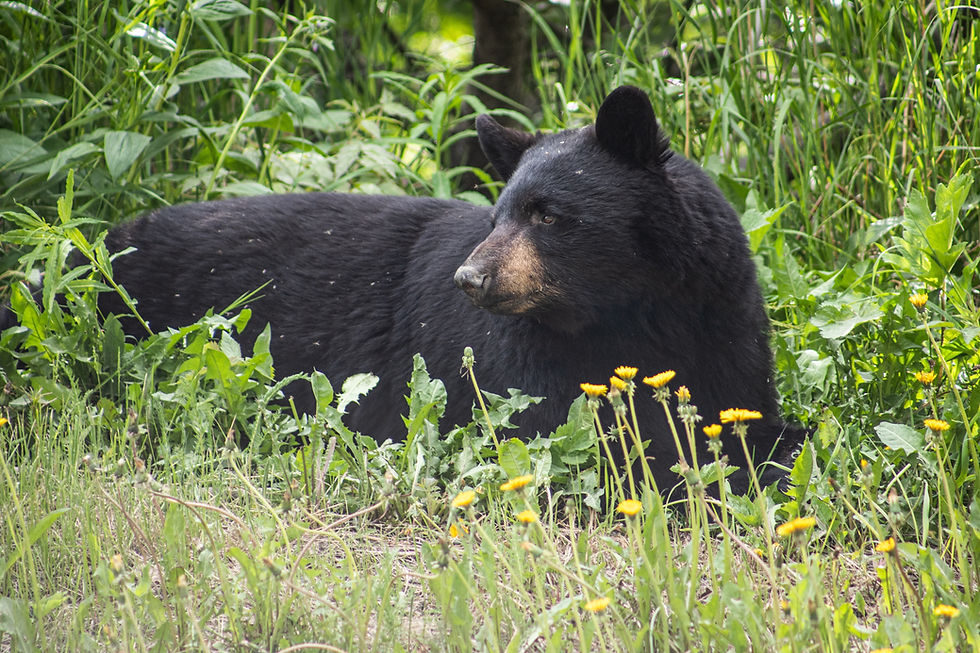
Drive west out of Engelhard on a late fall morning and the land does the explaining for you. Cornfields and soybean stubble run flat to a treeline of dense, dark shrub -- pocosin, the evergreen bog thicket that blankets much of eastern North Carolina's coastal plain -- and somewhere in that seam between farmland and wetland is one of the highest concentrations of black bears anywhere east of the Mississippi River. Hyde County does not look like bear country in the way the Smokies or the Appalachians do. There are no ridgelines, no hardwood coves, no elevation at all -- much of the county sits within a few feet of sea level, laced with drainage canals and bordered by the Pamlico Sound. And yet wildlife biologists have documented bear densities here that rival or exceed anything recorded in the mountains, a fact that still surprises hunters encountering coastal Carolina bear country for the first time.
The reason is not mysterious once you understand the habitat. Pocosin -- an Algonquian word roughly meaning swamp on a hill -- is dense, nearly impenetrable evergreen shrub bog that gives bears exactly what they need: heavy cover, security, and a productive base of soft mast. Layer in the adjacent agricultural fields that ring the wetland interior, and you get a food subsidy that pocosin alone could never provide. The result, tracked over decades by the North Carolina Wildlife Resources Commission's Black Bear Research Program, is a population and a body-condition profile that has made Hyde County and its neighboring counties a genuine destination within the Southeast's bear hunting tradition -- one that sits alongside the region's better-known waterfowl and coastal fishing draws rather than apart from them. This report looks at the ecology behind that density, the operator landscape that has grown up around it, and the seasonal overlap with Mattamuskeet-area waterfowl that defines much of the fall and winter sporting calendar here.
Ecology Snapshot
Pocosin habitat is the foundation of everything discussed in this report. It is a wetland shrub-bog community found almost nowhere outside the mid-Atlantic and southeastern coastal plain, built on deep, poorly drained peat soils that stay saturated much of the year. The dominant vegetation -- species like fetterbush, titi, gallberry, and pond pine -- grows in a dense, tangled evergreen canopy low enough to provide near-total ground cover but tall enough to shelter large mammals moving through it undetected. For a black bear, that structure checks every box: escape cover, thermal refuge, and denning habitat, all in a landscape with essentially no human foot traffic for most of the year. Large blocks of this habitat persist in and around Pocosin Lakes National Wildlife Refuge, a U.S. Fish and Wildlife Service property that spans parts of Hyde, Tyrrell, and Washington counties and anchors much of the regional bear range.
Pocosin also produces soft mast -- berries and fruiting shrubs -- that supplements a bear's diet through the growing season, but it is not, on its own, calorie-dense enough to explain the population densities researchers have documented in this part of the state. That second piece comes from the agricultural land that borders the wetland interior. Hyde County's farm economy runs on row crops -- corn and soybeans dominate, with other rotational plantings in the mix depending on the year and the field -- and bears here have adapted to move freely between pocosin cover and adjacent fields, feeding heavily on grain and forage crops during the growing and harvest seasons. That agricultural subsidy measurably improves body condition, reproductive rates, and cub survival compared to bear populations reliant on forest mast alone, which is a large part of why coastal North Carolina bears tend to run larger, on average, than their mountain counterparts.
The population growth behind this has been tracked for decades. The NCWRC's Black Bear Research Program, one of the longest-running bear studies in the country, has monitored coastal North Carolina bear populations since the early 1980s, using capture-recapture data, den surveys, and harvest reporting to build a management model that has allowed both the population and the regulated harvest to expand substantially over that period. The Wildlife Society's North Carolina chapter and regional biologists have pointed to the coastal bear program as one of the state's clearer wildlife management success stories -- a population that was historically suppressed by unregulated take and habitat loss, rebuilt through sanctuary designations, season structure, and sustained research investment.
What the Interface Creates
What makes Hyde County distinct is not that it has bears -- black bears are recovering across much of the Southeast -- it is the density at which pocosin cover and agricultural edge combine to concentrate them. Wildlife biologists studying the region have consistently found bear densities in the northern coastal counties, Hyde among them, that rank among the highest documented east of the Mississippi River, a statistic that puts this flat, low-lying agricultural county in the same conversation as far more famous bear destinations. That density is a direct product of the interface itself: pocosin blocks large enough to hold a resident population, sitting immediately adjacent to some of the most productive farmland in the state, with public and private conservation lands like Pocosin Lakes NWR providing connective tissue between the two.
For the outdoor recreation economy, that interface creates something relatively rare -- a single landscape that supports two distinct, high-value hunting traditions on an overlapping calendar. Hyde County is bear country in the fall, but it is also, simultaneously, some of the most storied waterfowl ground on the Atlantic Flyway, anchored by Lake Mattamuskeet and the surrounding refuge system. Few places in the country let an outfitter or a traveling sportsman move between big-game bear hunting and flooded-timber or field waterfowl hunting inside the same few weeks without changing counties. That multi-vertical opportunity is the practical, commercial expression of the ecology described above, and it is a large part of what this report treats as the region's defining characteristic.
Migration and Timing Signals
North Carolina's bear season structure in the eastern counties is set by the NCWRC and typically runs in segments across the late fall and into early winter, with dates and bag limits that can vary by county and by year -- hunters should always confirm current-season specifics directly with the Commission before planning a trip. In broad terms, the eastern bear season window falls in the same November-through-January stretch that defines the region's waterfowl calendar, which is what creates the overlap opportunity described above rather than two separate, disconnected seasons.
Waterfowl season on the Atlantic Flyway follows its own federally coordinated framework, administered through the U.S. Fish and Wildlife Service and implemented at the state level by NCWRC, with split segments that generally run from mid-November through late January depending on species and zone. Tundra swans, snow geese, and a strong mix of puddle ducks stage on and around Lake Mattamuskeet and the Pocosin Lakes refuge complex through this same window, drawing hunters and birders to the exact towns -- Swan Quarter, Engelhard, Fairfield -- that also serve as bear hunting basecamps. The practical result is a fall and early-winter calendar where a single trip, timed correctly, can realistically include both pursuits, something the operator landscape has been slow to package and market as a unified offering.
On the Ground
Engelhard sits at the heart of Hyde County's working bear range, a small unincorporated community surrounded by the row-crop fields and pocosin edge that define the local ecology. It functions less as a tourist town than as a genuine agricultural and sporting community, which is part of its appeal to hunters looking for an authentic, low-frills basecamp rather than a resort experience. Swan Quarter, the county seat and ferry terminal for Ocracoke, plays a similar dual role -- close enough to both the bear range and the Mattamuskeet refuge system to serve as a logical staging point for a combined trip, with basic lodging and services available for visiting sportsmen.
Belhaven, just across the county line in Beaufort County, extends the same basecamp logic westward, positioned near the Pungo Unit of Pocosin Lakes NWR and within reach of both the bear range and the broader Pamlico Sound sporting corridor. Lake Phelps, farther inland within Pettigrew State Park, adds another access point into the same interconnected wetland and agricultural system, though it is best known regionally for its own natural and cultural history rather than as a primary hunting access point. Across all of these communities, the pattern is consistent: small towns, working landscapes, and a hunting culture that has operated quietly and locally for generations, largely without the marketing infrastructure that defines more heavily promoted destinations.
Planning Your Trip: A Vertical-by-Vertical Breakdown
Black Bear. Target: mature coastal black bear, typically taken over bait or via still-hunting and dog-hunting methods depending on the specific season segment and landowner permissions. Peak: the primary eastern bear season windows fall across November and into early January, split into segments set annually by the NCWRC -- confirm exact dates before booking. Where: the pocosin-agricultural interface surrounding Pocosin Lakes NWR, with private land and outfitter-guided access making up the bulk of opportunity in Hyde County. Key dependency: season segment timing and any sanctuary or refuge-specific restrictions, which change year to year and require direct confirmation with NCWRC or a licensed local outfitter.
Waterfowl Overlap. Target: tundra swans, snow geese, and a broad mix of puddle ducks staging on and around Lake Mattamuskeet and the Pocosin Lakes refuge complex. Peak: mid-November through late January, following the Atlantic Flyway's split-season framework, with the heaviest concentrations typically building through December. Where: field and impoundment hunts around Mattamuskeet NWR, Pocosin Lakes NWR, and the surrounding private agricultural land under lease or guide access. Key dependency: refuge-specific regulations and permit or quota systems on public land, plus weather-driven migration timing that shifts bird concentrations year to year -- coordinate directly with USFWS refuge staff or a local guide for current conditions.
Key Takeaways
Hyde County's black bear density is an ecological product of two habitat types working together, not one -- the security and structure of pocosin shrub-bog cover, combined with a caloric food subsidy from adjacent corn and soybean fields. Neither alone would produce the population levels documented here.
That density has been built and tracked over more than four decades of sustained NCWRC research and management, making coastal North Carolina's bear program one of the longer continuous large-mammal studies in the Southeast, and a genuine wildlife management success story worth citing on its own terms.
The overlap between bear season and Atlantic Flyway waterfowl season in the same Hyde County towns -- Engelhard, Swan Quarter, and the Mattamuskeet-Pocosin Lakes corridor -- creates a real, underexploited combined-trip opportunity that the current outfitter landscape has not meaningfully packaged or marketed.
For the Operators
The commercial bear hunting community around Hyde County is small, established, and largely multi-generational -- family operations running guided hunts on leased or owned agricultural and pocosin-edge land, often alongside farming or other rural business. That is a strength for authenticity and local relationships, but it also means digital presence across this niche tends to be thin: basic or outdated websites, minimal search visibility, and little structured content explaining what actually makes the hunting here distinct. A hunter searching for coastal North Carolina bear hunting today has to do real work to find and vet operators, because the operators themselves have not had to compete for search visibility in a category this specialized.
The clearest whitespace is the bear-waterfowl overlap itself. Despite the two seasons genuinely sharing a calendar window and, in many cases, the same basecamp towns, almost no operator content frames a combined bear-and-duck trip as a single, plannable package. That is a positioning gap more than a logistics one -- the ecology and the season structure already support it. An outfitter or a regional booking platform that names this overlap explicitly, with honest, specific detail about how the two hunts fit together on the calendar, would be filling a real content and packaging vacuum rather than competing head-on with better-established single-species operators elsewhere in the Southeast.
Citations and Sources
This report draws on publicly available agency and wildlife-management sources; hunters and travelers should confirm current season dates, regulations, and access rules directly with the relevant agencies before planning a trip.
Agencies and sources
Key sources and agencies referenced include the North Carolina Wildlife Resources Commission (NCWRC), which manages black bear seasons, harvest regulations, and the long-running Black Bear Research Program (Bear Project) covering coastal North Carolina; the U.S. Fish and Wildlife Service, which administers Pocosin Lakes National Wildlife Refuge and Mattamuskeet National Wildlife Refuge; The Wildlife Society's North Carolina chapter, which has documented and discussed coastal bear population research; and the North Carolina Bear Hunters Association, a statewide organization representing bear hunting interests and conservation engagement.
Confidence note: the characterization of Hyde County and coastal North Carolina as holding black bear densities among the highest recorded east of the Mississippi River is well-established in wildlife management literature and agency communications, though this report does not cite a specific density figure and readers should treat any numeric density claims they encounter elsewhere as needing direct NCWRC verification. The multi-decade NCWRC Black Bear Research Program dating to the early 1980s is accurately characterized in general terms; exact program start dates and specific harvest statistics should be confirmed against current NCWRC publications. Specific crop composition on Hyde County farmland is described generally (corn and soybeans as primary row crops); any reference to sweet potatoes or other secondary crops should be treated as regionally plausible but not confirmed for Hyde County specifically. Season date ranges (bear season segments, Atlantic Flyway waterfowl splits) are described only in general seasonal terms and are not presented as current-year specific dates, since these change annually and must be confirmed with NCWRC and USFWS directly. No specific outfitter names, prices, harvest records, or population figures are included, consistent with editorial standards for this report.
Explore More
For related reading on the ecology and access points covered in this report, see the following field reports from Pine & Marsh.


Comments