
Black Bear Natural History and Habitat Ecology Across the Southeast
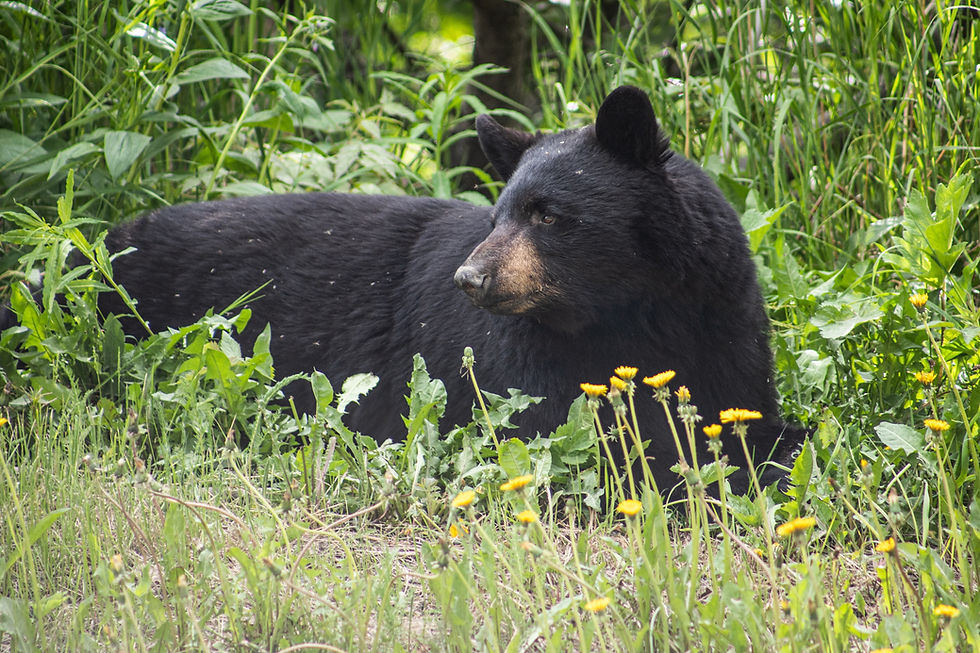
A century ago, the American black bear was nearly gone from the lowland South. Unregulated killing and the clearing of the great bottomland and longleaf forests had pushed Ursus americanus back into a handful of mountain coves and inaccessible swamps — the Okefenokee, the river bottoms of the Deep South, the high Appalachians — isolated remnants of a range that once covered the entire region. What has happened since is one of the Southeast's quietest and least-celebrated conservation successes. Protected from overharvest, given time and recovering forest, the bear has come back: the southeastern population today is most defensibly estimated at well over 55,000 animals, and across most of the region its range is the largest it has been in well over a century. This synthesis covers the full ecology of that recovery — how the bears are distributed, what they eat and when, how much land they need, and why, even in success, the black bear has become one of the hardest wildlife-management problems in the South.
The defining feature of the southeastern black bear is a paradox: it is structurally an island species that is functionally on the move. The region's bears are not one continuous population but a set of genetically distinguishable cores separated by farmland, highways, and development — and yet most of those cores are now growing and pushing back into country they had not occupied in generations. Holding both of those truths at once is the key to understanding the animal. This report walks the population structure and the numbers, the three subspecies and the bear's ecological role, the mast-driven seasonal cycle and the latitude gradient in denning, the large-landscape habitat and corridor requirements, and the conservation-and-conflict arc that now plays out at the suburban edge.
Range and Population Structure
Southeastern black bears occur in four broad settings. In the southern Appalachians, a large and contiguous population runs through the Great Smoky Mountains, Shenandoah, and the Nantahala-Pisgah high country, spilling across the Virginia, North Carolina, Tennessee, and Georgia mountains. On the Gulf Coast, smaller populations hold in the Mobile-Tensaw Delta of Alabama and the Atchafalaya Basin of Louisiana. Florida supports a set of genetically isolated subpopulations — the Florida Fish and Wildlife Conservation Commission recognizes seven, of which Apalachicola, Ocala/St. Johns, and Big Cypress are the largest and serve as 'source' populations dispersing bears into the smaller ones. And across the coastal plain, bears thrive in the pocosin and bottomland country of the Albemarle-Pamlico peninsula of North Carolina and the Okefenokee-Osceola swamp complex of the Georgia-Florida line. The Albemarle peninsula alone holds something on the order of 8,000 bears — among the densest black bear country in North America.
The numbers are larger than they are usually given credit for. Summing the current estimates of the individual state wildlife agencies — the only way to build a regional figure, since there is no single coordinated census — the southeastern total lands somewhere around 55,000 to 65,000 bears. North Carolina alone estimates more than 20,000; Virginia, 18,000 to 20,000; Tennessee, roughly 5,000 to 6,000; Arkansas, 3,000 to 5,000; Georgia about 4,100; Florida about 4,050; Louisiana around 1,200 to 1,500; South Carolina roughly 1,000; and Alabama and Mississippi a few hundred each in small, recovering pockets. North Carolina and Virginia by themselves hold nearly 40,000 bears — as many as some older syntheses assigned to the entire region. Against a continental population of roughly 900,000 black bears, the Southeast holds a substantial and rapidly growing minority. (These are independent estimates of varying age and method; treat the regional total as an informed sum, not a precise count.)
The 'island population' framing is real but only half the story. Genetically, the cores are distinct, and the small ones — the Gulf Coast remnants, the lesser Florida subpopulations — remain vulnerable to isolation, inbreeding, and the slow attrition of roads and development. But the dominant trend across the region is not contraction; it is expansion. North Carolina's occupied range is the largest it has been in more than 150 years and is still growing; Tennessee, Arkansas, Mississippi, Alabama, and Georgia bears are recolonizing former range; and Florida's big source subpopulations are pushing dispersers into the gaps between them. The right picture, then, is of fragmented genetic cores that are largely healthy and reconnecting, with corridor loss and road mortality as serious but localized risks rather than a region-wide decline.
Subspecies and Ecological Role
Three subspecies of black bear are recognized in the Southeast. The bears of the Appalachians and most of the interior are the nominate American (or eastern) black bear, Ursus americanus americanus. The Florida black bear, Ursus americanus floridanus, is a recognized subspecies historically ranging across Florida and the southern edges of Georgia, Alabama, and Mississippi. And the Louisiana black bear, Ursus americanus luteolus — the bear of the lower Mississippi bottomlands, and the animal behind the original 'teddy bear' story from Theodore Roosevelt's 1902 Mississippi hunt — is the third. The taxonomic distinctness of the Louisiana subspecies has been debated (it is separated mainly on skull morphology), but it is treated as valid by the U.S. Fish and Wildlife Service, and it carries the most consequential conservation history of the three.
Ecologically, the black bear is best understood as a large, wide-ranging omnivore that is mostly a vegetarian. Roughly eighty to eighty-five percent of the typical southeastern bear's diet is plant matter — spring grasses and forbs, summer soft mast (berries), and fall hard mast (nuts) — with the remaining fifteen to twenty percent made up largely of insects and only incidental meat or carrion. That diet makes the bear an important seed disperser: it consumes enormous quantities of blueberry, blackgum, black cherry, and pokeweed fruit and moves the seeds across the landscape in its scat, a service ecologists call endozoochory. It is fair to call the black bear an ecologically important species and, often, an umbrella or indicator species — protect enough connected forest for a bear population and you protect a great deal else. The stronger word 'keystone' is sometimes applied, but it is contested for black bears and is better used informally than as a claim of fact.
The Mast Clock: Seasonal Ecology
The black bear's year is governed by mast. Through late summer and fall, bears enter hyperphagia — a hormonally driven feeding push in which they may spend most of their waking hours eating to lay on the fat that will carry them through winter. The two pillars of that fall diet are hard mast (acorns from the oaks, nuts from the hickories) and soft mast (black cherry, pokeweed berries, and, in the coastal country, blueberry and blackgum). The quality of the mast crop drives almost everything about a given year: in a good acorn year bears den fat and stay put; in a mast-failure year they range long distances in search of food, and that is precisely when human-bear conflict spikes as hungry bears move into farmland and town.
Denning follows latitude. In the southern Appalachians, instrumented bears enter their dens in late December and early January — adult females first, adult males last — and emerge from late March into early April, a denning period of roughly ninety days. Move south and the pattern dissolves. In peninsular Florida, denning is reduced or facultative: many males den very little or not at all, non-pregnant bears may hole up for only a few weeks in the coldest stretch, and food remains available much of the winter. The one constant is reproduction: pregnant females everywhere must den to give birth, with cubs born blind and tiny in January and February and nursed in the den until spring. The gradient from a true three-month Appalachian denning season to near-continuous Florida activity is one of the clearest expressions of how the same species lives differently across the region's enormous climatic range. Outside the den, spring foraging is opportunistic — emerging grasses and forbs, overwintered hard mast, insects, and occasionally the eggs of accessible ground nests — rather than any single specialized food.
Habitat, Connectivity, and Fire
Black bears are a large-landscape animal, and the scale they require is easy to underestimate. Individual home ranges are big — adult females across the Southeast average roughly six to nineteen square miles, with males ranging over thirty-five to sixty — and a self-sustaining population needs room for many overlapping female ranges plus the larger male ranges that knit them together. Florida's management guidance frames a viable, self-sustaining black bear population as needing on the order of 200,000 to 300,000 acres of connected habitat; below that, populations become increasingly dependent on outside connectivity. Viability is ultimately better measured in animals than acres — managers treat roughly two hundred adult bears as a rough threshold below which a subpopulation grows vulnerable to inbreeding and chance, with serious quasi-extinction concern below about a hundred. The small Gulf Coast populations sit near those lines, which is exactly why corridors matter so much to them.
Connectivity is the other half of habitat. Because the cores are fragmented, the long-term genetic health of the smaller populations depends on bears being able to move between them, and that movement increasingly runs through engineered bottlenecks. The Florida Wildlife Corridor — a statewide effort to keep a connected spine of habitat down the peninsula — is in large part a black bear (and Florida panther) corridor. In the Smokies, the Pigeon River Gorge along Interstate 40 is a notorious pinch point where wildlife crossings are being built specifically to let bears and elk move without being killed on the highway. Maintaining and rebuilding those connections is the central spatial problem of southeastern bear conservation.
One subtler habitat thread ties the bear to fire. In the coastal plain — the pocosins, the pine flatwoods, the Carolina bays, the Okefenokee — much of the bear's high-value soft mast comes from fire-maintained shrubs: blueberry and huckleberry in the evergreen-shrub understory, whose fruiting is enhanced by periodic burning, alongside the fleshy fruit of blackgum. When fire is suppressed and those systems grow rank, or when they are drained, their soft-mast value declines. The same prescribed fire that maintains quail and longleaf habitat, in other words, also feeds the coastal-plain bear — one more way the region's fire-shaped landscapes underwrite its wildlife.
The Conservation Arc
The black bear's recovery is real, and it has produced two of the most instructive conservation episodes in the recent Southeast. Florida removed the black bear from its state threatened list in 2012 as the population rebounded. In October 2015, the state held its first bear hunt in twenty-one years — and it became a national controversy: the hunt was scheduled to run up to a week but produced such a rapid harvest (more than 300 bears in roughly two days) that it was halted early, and Florida did not repeat it for a decade. In August 2025, after years of debate, the Florida Fish and Wildlife Conservation Commission approved a new, tightly limited hunt; the December 2025 season issued about 172 permits drawn by lottery from more than 160,000 applications and harvested 52 bears against a statewide population above 4,000. The arc from delisting through the 2015 backlash to the constrained 2025 hunt is, in miniature, the whole modern politics of bear management. (Season and permit specifics change annually — confirm current FWC regulations.)
Louisiana's story is the counterpart. The Louisiana black bear was listed as threatened under the Endangered Species Act in 1992, its bottomland-hardwood habitat reduced to fragments along the lower Mississippi. Through decades of habitat restoration and reconnection — much of it on private and conservation land — the subspecies recovered and was removed from the endangered species list in 2016, one of the relatively few ESA mammal recoveries and a genuine success. Across the rest of the region, bears are managed as a harvested game species, with regulated hunting seasons set annually by each state agency alongside habitat protection. The leading source of bear death varies by setting: in heavily roaded, lightly hunted Florida, vehicle collisions are the single leading known cause of bear mortality (FWC attributes the large majority of documented bear deaths to vehicles, with record years above 300), while in states with active hunting seasons regulated harvest is typically the largest single mortality source and road-kill the leading non-harvest cause.
The Human Edge
For all the talk of bears needing wilderness, the defining management challenge of the modern southeastern black bear is the suburb. As bear numbers and range have grown and as development has pushed into bear country, human-bear conflict — bears drawn to garbage, pet food, and bird feeders — has become the dominant day-to-day issue for wildlife agencies across the region. The hotspots are the wildland-urban interface: the bears of greater Asheville in the North Carolina mountains, the bears of central Florida's Seminole, Lake, and Orange counties, and similar fast-growing edges everywhere bear range meets subdivision.
The biology of those interface bears is itself revealing. The long-running Asheville Urban/Suburban Bear Study, run by North Carolina's wildlife agency and North Carolina State University, found that urban bears with access to human food grow dramatically faster and reproduce earlier than their forest counterparts — Asheville's young females averaged roughly twice the weight of forest bears at the same age and often bore cubs by age two, something rural bears rarely do — though researchers caution the urban population may function as a 'sink,' its high reproduction offset by heavy vehicle and other mortality. The management response leads with prevention: the BearWise principles, securing attractants, bear-resistant trash systems, and public education are the front line, and they work (Virginia cut conflict complaints by more than three-quarters by shifting from relocating bears to changing human behavior). That attractant-control approach operates alongside — not instead of — population management through regulated harvest. The throughline is that the southeastern bear's future is now negotiated less in remote forest than at the trash can, the dumpster, and the highway crossing.
Key Takeaways
The southeastern black bear is one of the region's great underrecognized conservation successes — recovered from early-twentieth-century remnants to a population most defensibly estimated at 55,000 to 65,000 across ten states, with North Carolina and Virginia alone holding nearly 40,000.
It is structurally an island species but functionally expanding: genetically distinct cores in the southern Appalachians, the Gulf Coast, Florida's seven subpopulations, and the coastal-plain swamps — most of them now growing and recolonizing, with corridor loss and road mortality the serious but localized risks.
Its ecology runs on mast. An omnivore that is roughly 80 to 85 percent vegetarian, the bear is a major seed disperser whose fall hyperphagia tracks the acorn and berry crop; denning runs a true ninety-day season in the Appalachians and fades to facultative or near-absent in peninsular Florida, where only pregnant females reliably den. Viability is a matter of large connected landscapes (on the order of 200,000 to 300,000 acres) and population size (~200+ adults), not a single small block.
The conservation arc is recent and live: Florida delisted in 2012 and held its controversial first modern hunt in 2015 and a constrained new one in December 2025; the Louisiana black bear was federally delisted in 2016 after habitat recovery. And the defining modern challenge is the suburban interface, where attractant control and education — used alongside regulated harvest — now matter as much as remote habitat.
Frequently Asked Questions
How many black bears live in the Southeast?
There is no single coordinated census, but summing the current state wildlife-agency estimates puts the southeastern total at roughly 55,000 to 65,000 black bears across about ten states. North Carolina (more than 20,000) and Virginia (18,000 to 20,000) hold the large majority, followed by Tennessee (~5,000 to 6,000), Arkansas (3,000 to 5,000), Georgia (~4,100), Florida (~4,050), Louisiana (~1,200 to 1,500), South Carolina (~1,000), and small recovering populations in Alabama and Mississippi. These are independent estimates of varying age and method, so the regional figure is best treated as an informed sum rather than a precise count.
Are southeastern black bears endangered or recovering?
Recovering, strongly. After being reduced to isolated remnants by the early twentieth century, southeastern black bears have rebounded across most of the region; North Carolina's occupied range is the largest it has been in more than 150 years, and Tennessee, Arkansas, Mississippi, Alabama, and Georgia populations are expanding into former range. The bears remain structurally fragmented into distinct genetic cores, and small populations (the Gulf Coast remnants, the lesser Florida subpopulations) are still vulnerable, but the dominant trend is growth, not decline. The Louisiana black bear was federally delisted as recovered in 2016.
What are the black bear subspecies in the Southeast?
Three are recognized. The bears of the Appalachians and most of the interior are the nominate American (eastern) black bear, Ursus americanus americanus. The Florida black bear (U. a. floridanus) ranges across Florida and the southern edges of Georgia, Alabama, and Mississippi. The Louisiana black bear (U. a. luteolus), of the lower Mississippi bottomlands, is the third — the animal behind the original 'teddy bear' story from Theodore Roosevelt's 1902 Mississippi hunt, and the one with the most significant conservation history, having been federally listed in 1992 and delisted as recovered in 2016.
What do black bears eat, and what is mast?
Black bears are omnivores, but roughly 80 to 85 percent of the diet is plant matter, with the rest mostly insects and only incidental meat or carrion. 'Mast' is the term for tree and shrub fruit: hard mast is nuts (acorns, hickory nuts) and soft mast is fleshy fruit (blueberry, blackgum, black cherry, pokeweed). Mast drives the bear's year — in fall, bears enter hyperphagia and feed almost constantly on hard and soft mast to build winter fat. Because bears pass the seeds of the fruit they eat, they are important seed dispersers in southeastern forests.
Do black bears in Florida hibernate?
Less than their Appalachian counterparts. Denning in black bears follows latitude. In the southern Appalachians bears den for roughly ninety days — entering in late December and early January (females first, males last) and emerging from late March into early April. In peninsular Florida, where it stays warmer and food remains available, denning is reduced or facultative: many males den very little or not at all, and non-pregnant bears may den only briefly. The exception everywhere is pregnant females, which must den to give birth to cubs in January and February.
How much habitat does a black bear population need?
More than people expect, and the right measure is connectivity and population size, not a single small acreage. Individual home ranges are large (southeastern females ~6 to 19 square miles, males ~35 to 60), so a self-sustaining population needs room for many overlapping ranges. Florida management guidance frames a viable population as requiring on the order of 200,000 to 300,000 acres of connected habitat. Viability is ultimately set by numbers — roughly 200 or more adult bears is a common rough threshold, with serious genetic concern below about 100 — and by the corridors that keep fragmented populations connected, such as the Florida Wildlife Corridor and the Pigeon River Gorge crossings on Interstate 40.
Why is human-bear conflict increasing in the Southeast?
Because bear numbers and range are growing at the same time that development is expanding into bear country, bringing bears and people into contact at the wildland-urban interface. Bears are drawn to human food — garbage, pet food, bird feeders — and hotspots like greater Asheville, North Carolina, and central Florida's Seminole, Lake, and Orange counties now see frequent conflict. Research on Asheville's urban bears shows they grow faster and reproduce earlier on human food. The front-line response is prevention through attractant control, bear-resistant trash systems, and education (the BearWise principles), used alongside regulated harvest as a population-management tool.
When was the Louisiana black bear delisted, and what about Florida's hunt?
The Louisiana black bear was listed as threatened under the Endangered Species Act in 1992 and removed from the list as recovered in 2016, after decades of bottomland-hardwood habitat restoration. Florida took a different path: the state removed the black bear from its threatened list in 2012, held a controversial hunt in October 2015 that was halted early after harvesting more than 300 bears in about two days, and — after a decade-long pause — approved a new, tightly limited hunt in 2025 (the December 2025 season issued about 172 permits and harvested 52 bears). Hunt rules and permit numbers change annually; confirm current state agency regulations.
Citations and Sources
This synthesis draws on the state wildlife agencies, federal agencies, and research programs below. Population figures are independent state estimates of varying vintage, and all hunting seasons, permit numbers, and management rules change annually — verify current figures directly with the relevant agency.
State wildlife agencies
North Carolina Wildlife Resources Commission, Virginia Department of Wildlife Resources, Tennessee Wildlife Resources Agency, Georgia Department of Natural Resources, Florida Fish and Wildlife Conservation Commission, Arkansas Game and Fish Commission, Louisiana Department of Wildlife and Fisheries, South Carolina Department of Natural Resources, Alabama Department of Conservation and Natural Resources, and Mississippi Department of Wildlife, Fisheries, and Parks — statewide black bear population estimates, range maps, hunting regulations, and management plans.
Federal sources
U.S. Fish and Wildlife Service — the Louisiana black bear Endangered Species Act listing (1992) and delisting (2016) and recovery documentation.
National Park Service — Great Smoky Mountains National Park black bear denning and movement research, and Big Cypress National Preserve bear habitat.
USDA Forest Service — national-forest bear habitat (Nantahala-Pisgah, Ocala, and others) and prescribed-fire management of soft-mast systems.
Research, planning, and conservation sources
The Florida Black Bear Management Plan (FWC) — subpopulation structure, viable-population and habitat-area guidance, and mortality data.
The Asheville Urban/Suburban Black Bear Study (NCWRC and North Carolina State University) — urban-bear growth, reproduction, and sink-population findings.
BearWise (a program of the Southeastern Association of Fish and Wildlife Agencies) — human-bear conflict prevention and attractant management.
Confidence note: The regional total of roughly 55,000 to 65,000 bears is an informed sum of independent state estimates of varying vintage and method, not a single census; North Carolina and Virginia together account for nearly 40,000, against a continental population of about 900,000. Southeastern bears are structurally fragmented into distinct genetic cores but are mostly expanding and recolonizing, not declining region-wide. A viable, self-sustaining population is best framed as needing roughly 200,000 to 300,000 acres of connected habitat and on the order of 200 or more adults, rather than a single small block. The black bear is an ecologically important seed disperser and umbrella/indicator species; the stronger label 'keystone' is contested and used here only informally. Black bears do not routinely raid colonial wading-bird rookeries; spring nest predation is opportunistic. The Louisiana black bear was delisted in 2016; Florida delisted in 2012 and held hunts in 2015 and 2025 — all season and permit specifics change annually and should be verified with the relevant state agency.
Explore More
This synthesis is part of Pine & Marsh's ecology-first series on the Southeastern outdoors. The companion species and habitat syntheses and the bear-country field reports below go deeper on the ecosystems the black bear shares.
Mississippi Outdoors: A Deep Dive on Ecology, Sporting Operations, and the Road into 2027 and Beyond


Comments