
Whitetail Deer of the Southeast: Life History, Habitat, and Population Ecology Across 13 States
Updated: Jun 12
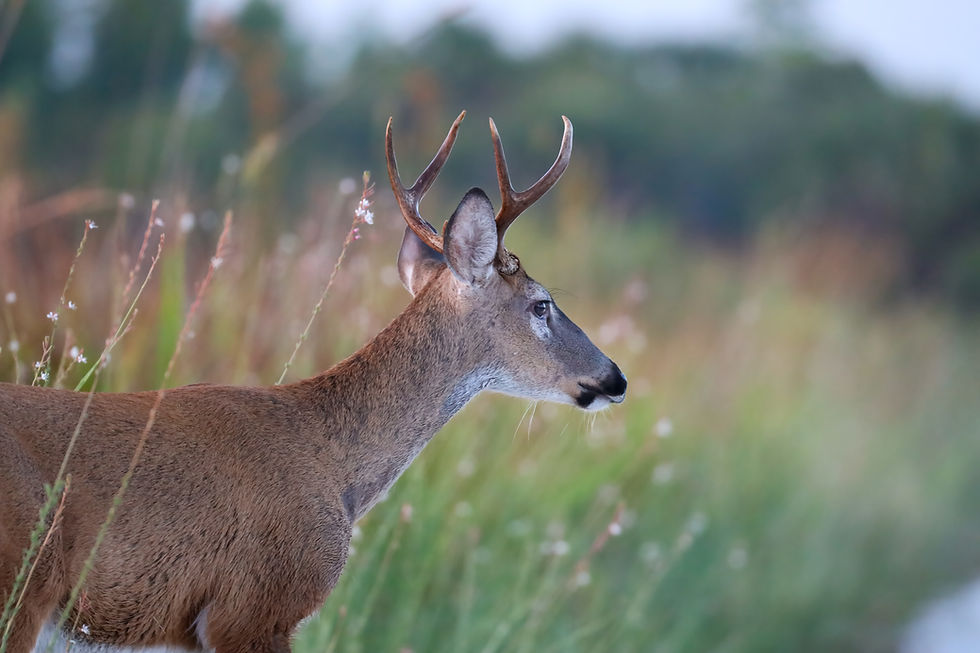
The white-tailed deer is the most widely distributed large mammal in the southeastern United States, the most economically significant game species on the continent, and a keystone herbivore whose browsing pressure shapes forest understory composition, oak regeneration cycles, and early-successional habitat availability for dozens of co-dependent species. It is also, in the 21st century, a species caught between the consequences of its own restoration success and the emergence of threats -- Chronic Wasting Disease, coyote-driven fawn mortality, and habitat fragmentation -- that its 20th-century managers never anticipated.
This report treats the white-tailed deer (Odocoileus virginianus) as a matter of ecology -- not as a trophy species or a management target, but as a large herbivore whose biology, population dynamics, and habitat relationships structure the terrestrial ecosystems of eleven southeastern states. The deer is the thread that runs through every landscape Pine & Marsh reports on: the Black Belt chalk prairies, the Tombigbee bottomlands, the longleaf pine savannas, the Appalachian cove forests, the coastal marsh edges, the Mississippi Delta agricultural matrix. Understanding the deer means understanding the landscape.
Near-Extirpation and Restoration: The 20th Century Arc
By 1900, the white-tailed deer had been reduced to remnant populations across most of the Southeast. Unregulated market hunting, habitat conversion for agriculture, and the absence of effective wildlife law enforcement had driven the species to near-extirpation in states where it had once numbered in the millions. Alabama's deer population was estimated at fewer than 2,000 animals. Mississippi, Georgia, and the Carolinas carried similarly depleted herds. The only states that maintained substantial populations through the low point were Texas (which never lost its range-country deer) and portions of the Appalachian backcountry where terrain limited access.
The restoration that followed is one of the most successful wildlife-management stories in North American history. State wildlife agencies, working with the federal government and funded increasingly by the Pittman-Robertson Act of 1937 (which directed excise taxes on firearms and ammunition to wildlife restoration), trapped deer from remnant populations and restocked them across their former range. The restocking programs introduced deer from source populations that sometimes differed genetically from the original local stock -- a detail with consequences for rut timing and body morphology that persist today. In northern Alabama, for example, deer restocked from northern genetics now carry a mid-January rut anomaly that the native southwestern Alabama population -- which was never restocked -- does not share. The Tombigbee corridor deer, carrying native Pleistocene genetics, peak in mid-November.
By the mid-20th century, whitetail populations across the Southeast had recovered to levels that supported regulated hunting. By the late 20th century, many states reported populations at or above estimated carrying capacity. Today, the southeastern states collectively hold roughly 15 to 18 million white-tailed deer -- the densest regional concentration in North America -- and the management challenge has shifted from restoration to controlling overabundance in some units while conserving habitat quality across the range.
The Soil-Antler Connection: How Geology Drives Deer Quality
The single most underappreciated driver of whitetail quality in the Southeast is soil chemistry. Antler is among the most mineral-demanding tissues that any vertebrate produces. The velvet antler growing on a mature buck from April through August is an actively metabolizing organ with a blood supply capable of producing up to an inch of gross growth per day at peak. The finished antler, once mineralized and the velvet shed, is approximately 22 percent calcium and 11 percent phosphorus by dry weight. Deer on calcium-poor soils do not simply grow smaller antlers -- they mobilize skeletal calcium to supplement dietary shortfalls, a process that imposes physiological costs on bone density and overall body condition.
Published research from Mississippi State University has documented that soil fertility and associated forage quality explain more than 50 percent of the variation in white-tailed deer body mass and antler characteristics across deer populations sampled across Mississippi. The causal pathway is direct: mineral-rich soils produce mineral-rich forage plants, which supply the calcium and phosphorus that deer deposit into bone and antler matrix during velvet growth. Research has established that yearling bucks raised on 16 percent protein diets grow antlers approximately twice as large as yearlings raised on 8 percent protein.
This soil-antler connection explains the geography of trophy whitetail in the Southeast. Alabama's Black Belt -- underlain by the Selma Chalk formation, a calcium-carbonate-rich Cretaceous seafloor deposit with soil pH values between 7.0 and 8.0 -- consistently produces the state's best-antlered deer. The Mississippi Delta's deep alluvial silt loam, deposited by Pleistocene and Holocene Mississippi River flooding, carries calcium, phosphorus, magnesium, and zinc at concentrations substantially higher than in the leached, acidic sandy soils of the surrounding Coastal Plain. The Tombigbee River corridor's alluvial soils derive in part from Black Belt chalk transported downstream, carrying a calcium signal detectable in soil chemistry but not yet studied at the Tombigbee-specific level -- an open research question that Auburn University's School of Forestry and Wildlife Sciences would be well positioned to address.
Rut Timing: A Latitudinal and Genetic Gradient
Rut timing in the Southeast varies by more than three months across the region -- from October in the Virginia mountains to late January in South Florida -- and the variation is governed by the interaction of latitude (photoperiod), genetics (restocking history), and local population dynamics. This variation is one of the most misunderstood aspects of southeastern whitetail ecology because it means that a hunter or ecologist transferring expectations from one state to another can be wrong by six weeks or more.
The photoperiodic mechanism is the baseline driver. White-tailed deer are short-day breeders: decreasing day length in autumn triggers the hormonal cascade (rising testosterone in bucks, estrus cycling in does) that produces the rut. At higher latitudes, where the photoperiod change is more extreme, the rut is compressed and early. At lower latitudes, where seasonal changes in light are smaller, the rut is more diffuse and later. This gradient runs from the Virginia Blue Ridge (peak breeding in October and early November) through the Carolinas and Tennessee (November) to the Gulf states (late November through December in most areas) to South Florida (January through February).
But photoperiod alone does not explain the full pattern. Genetic restocking history has introduced rut-timing anomalies in several states. The most documented case is in northern Alabama, where deer restocked from northern source populations now carry a mid-January rut that is weeks later than the mid-November rut of the native southwestern Alabama deer population in the same regulatory zone (Zone C). The restocking altered the photoperiodic response of the population, producing a rut timing that does not match the latitude. The Mississippi Department of Wildlife, Fisheries, and Parks has compiled more than forty years of breeding-date data from fetal measurements, documenting a five-week spread between the earliest average breeding dates (northwest Delta counties, early December) and the latest (southeastern counties, early January).
Habitat Associations Across the Region
Bottomland hardwood in the Mississippi Alluvial Valley. The alluvial bottomlands of the Mississippi, Yazoo, Tombigbee, Alabama, and Tennessee river systems are the highest-quality whitetail habitat in the Southeast by most nutritional measures. The alluvial soils are rich, the mast-producing oak overstory -- water oak, willow oak, cherrybark oak, Nuttall oak, overcup oak -- provides the fall and winter energy foundation, and the agricultural edge of the surrounding row-crop matrix supplies protein-rich browse (soybeans, corn, food plots) through the antler-growth and lactation seasons. These bottomlands function as travel corridors during the rut, concentrating buck movement along the hardwood edges that parallel the major river channels.
Pine-hardwood ecotones in the Piedmont. The Piedmont uplands from Virginia through the Carolinas to Georgia carry a mosaic of managed loblolly pine, natural mixed pine-hardwood, and agricultural land. Deer densities are moderate, body condition is moderate (reflecting the less fertile Piedmont soils), and the primary habitat driver is the timber-harvest cycle -- young clearcuts in the zero-to-eight-year stage provide intensive browse, while mid-rotation closed-canopy plantation is poor habitat. The longleaf-to-hardwood transition zones on the upper Coastal Plain carry some of the best whitetail habitat in this belt.
Agricultural edge in the Black Belt. The Black Belt's chalk-prairie soils -- Alabama, Mississippi, and portions of Georgia -- produce the region's best-conditioned deer through the soil-forage-antler pathway described above. The plantation-scale land tenure inherited from the antebellum cotton economy creates management units large enough to hold a deer herd's home range (2,000 to 10,000+ contiguous acres), supporting the intensive food-plot, timber-management, and harvest-control programs that the commercial outfitter economy depends on.
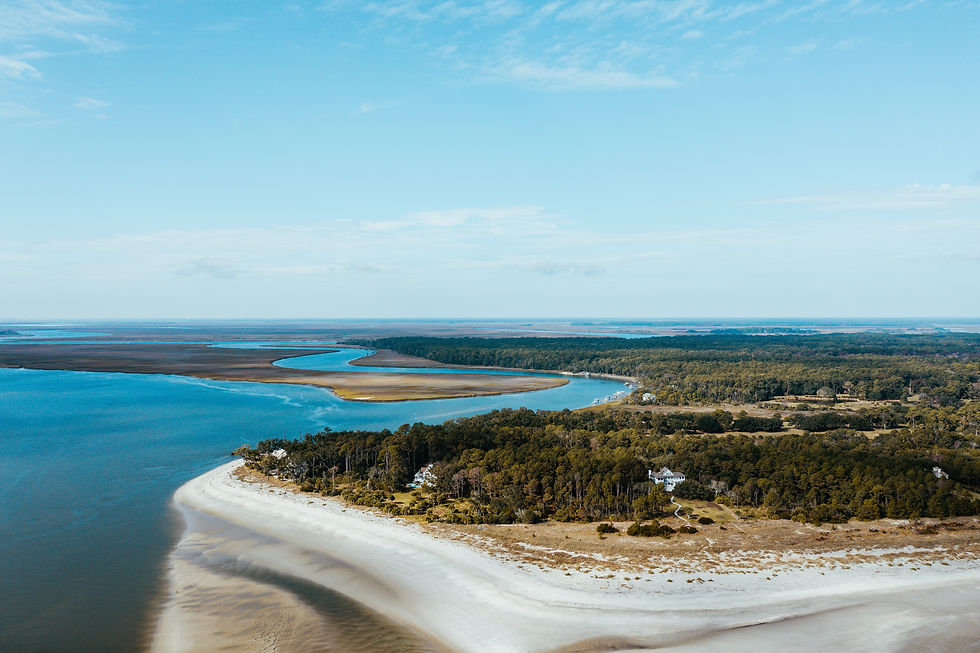
Coastal marsh and island populations. The Sea Islands of Georgia and South Carolina, the barrier islands of the Gulf Coast, and the coastal marshes of Louisiana carry small, genetically isolated whitetail populations adapted to salt spray, sandy substrate, and the limited browse of the maritime forest. These deer tend to be smaller-bodied than mainland populations, reflecting the nutrient-poor soils and limited forage diversity of the island environment. The genetics of some island populations have been isolated long enough to be measurably distinct from mainland herds.
Predation: The Coyote Changed Everything
The coyote completed its colonization of the southeastern United States within the last two to three decades, filling a mesopredator niche that the region's native predator guild -- black bear, bobcat, and red wolf (functionally extirpated from most of the Southeast) -- left partially open. The ecological consequence for whitetail was immediate and measurable: coyote predation on neonatal fawns became the primary source of fawn mortality across the region.
Research in Georgia, South Carolina, Mississippi, and Alabama -- bottomland and upland pine systems that are biologically analogous across the Gulf Coastal Plain -- documents that coyote predation accounts for 50 to 80 percent of fawn mortality in the first eight weeks of life. Bobcat predation is a secondary factor. The predation pressure is concentrated in the fawning window (late May through July, depending on latitude and rut timing), when fawns are immobile and dependent on concealment in ground cover for survival.
The management implication is significant: in areas with high coyote density and low-quality fawning cover (closed-canopy forest with sparse understory), fawn recruitment can fall below the level needed to sustain the population at current harvest rates. The interaction between coyote predation, habitat quality (early-successional cover for fawn concealment), and harvest management is now the central population-dynamics question for southeastern whitetail managers. Properties that maintain open, brushy fawning habitat through prescribed fire and timber management consistently show higher fawn survival than those where the understory has grown dense and uniform -- the same fire-and-habitat dynamic that governs bobwhite quail and turkey poult survival.
Chronic Wasting Disease: The Emerging Threat
Chronic Wasting Disease -- a fatal, transmissible prion disease of cervids -- has been confirmed in free-ranging and/or captive deer populations in at least 36 states as of 2025. In the Southeast, CWD has been detected in Mississippi (first confirmed in Issaquena County in the Mississippi Delta in February 2018, with subsequent expansion), Tennessee (14 confirmed cases as of recent USGS data), Virginia (10 confirmed cases), and North Carolina (1 confirmed case). The disease has not been confirmed in Alabama, Arkansas, Florida, Georgia, Kentucky, Louisiana, or South Carolina as of current surveillance, though the lack of detection does not guarantee its absence.
CWD is a prion disease -- caused not by a virus or bacterium but by a misfolded protein that is extraordinarily resistant to environmental degradation. Prions can persist in soil for years, and there is no treatment, no vaccine, and no practical method for decontaminating infected ground. The disease is invariably fatal in deer, with a clinical course running from infection to death over 18 to 24 months. Transmission occurs through direct contact and environmental contamination (saliva, urine, feces, and carcass decomposition, which deposit prions into soil and vegetation).
The management response across the Southeast has been surveillance and containment: mandatory testing in CWD management zones, carcass disposal regulations to prevent the transport of infected material, and, in some states, targeted increases in harvest to reduce deer density in affected areas. The long-term implications for the southeastern whitetail population and the commercial hunting economy that depends on it are not yet fully understood, but the geographic expansion of confirmed detections -- from the first detection in Mississippi in 2018 to multiple states within seven years -- indicates that the disease is spreading through wild deer movement, not solely through captive-cervid facility escapes.
Epizootic Hemorrhagic Disease: The Cyclical Killer
Epizootic Hemorrhagic Disease (EHD), caused by a virus transmitted by Culicoides biting midges, is the most significant recurring infectious disease of white-tailed deer in the Southeast. EHD outbreaks occur in late summer and early fall, when midge populations peak, and can produce dramatic die-offs in localized areas—dead deer along creek banks and pond edges, where infected animals seek water as the disease progresses. The clinical signs include fever, swelling of the head and neck, hemorrhage, and lameness, and death can occur within days of infection.
EHD is cyclical rather than chronic. Outbreaks typically occur in years when hot, dry conditions concentrate deer and midges around the same water sources, and their severity varies widely between years and across locations within a single state. A severe EHD year can reduce the local deer population by 25 to 50 percent in the most affected areas, but surviving deer develop immunity, and populations typically recover within two to three years through increased fawn recruitment into the reduced herd. The disease does not persist in the environment as CWD does, nor does it spread through deer-to-deer contact—it is entirely vector-borne.
The Deer as Ecosystem Driver
The ecological significance of white-tailed deer extends far beyond the species itself. As the dominant large herbivore in the southeastern landscape, the deer's browsing pressure shapes the structure and composition of the forest understory in ways that cascade through the ecosystem. Where deer densities exceed carrying capacity, the browse line becomes visible -- a sharp horizontal boundary below which all palatable vegetation has been consumed, leaving only unpalatable species and bare ground. This overbrowsing suppresses oak regeneration (deer preferentially consume oak seedlings), reduces the herbaceous ground cover that turkey poults and quail chicks depend on for insect foraging, and simplifies the structural diversity of the understory.
The interaction between deer density, forest composition, and fire is particularly consequential in the longleaf pine ecosystem. Longleaf pine seedlings pass through a vulnerable grass stage during which they resemble a clump of wiregrass and are accessible to deer browsing. Where deer densities are high, and fire has been suppressed (allowing hardwood encroachment that provides additional browse), longleaf regeneration can be substantially impaired. The same fire that maintains the open, grassy longleaf understory also reduces the hardwood browse that supports high deer densities, creating a feedback loop in which fire management and deer management are ecologically inseparable.
State Population Estimates and Harvest Trends
Whitetail populations across the southeastern states are estimated through a combination of harvest data, population modeling, and, in some states, direct survey methods. The numbers are approximations, not censuses, and they vary with methodology. With that caveat, the commonly cited state-level estimates frame the scale: Texas supports roughly 5.4 million deer (the largest state population in the country), Georgia roughly 1.1 million, Mississippi roughly 1.75 million, Alabama roughly 1.5 to 1.75 million, South Carolina roughly 730,000, North Carolina roughly 1 million, Virginia roughly 850,000 to 1 million, Tennessee roughly 900,000, Louisiana roughly 500,000 to 750,000, Arkansas roughly 900,000, Kentucky roughly 900,000, and Florida roughly 700,000. The combined southeastern total approaches 15 to 18 million animals, depending on which states are included and which year's estimate is used.
Harvest trends across the region show a pattern of peak harvest in the late 1990s and early 2000s, followed by gradual declines in most states driven by a combination of reduced hunter participation, EHD-related population dips in some areas, and intentional harvest reductions in response to antlerless-harvest data. The shift from maximum-harvest management toward quality deer management -- emphasizing age structure, antlerless harvest to maintain herd density near carrying capacity, and habitat improvement -- has reshaped the management philosophy across the Southeast over the past two decades.
Seasonal Movement and Home-Range Ecology
White-tailed deer in the Southeast are not migratory in the northern sense -- they do not make long-distance seasonal movements between summer and winter range. But they do shift their use of the landscape predictably with the seasons, and understanding those shifts is central to understanding both the deer's ecology and its relationship to the habitat it occupies.
Adult doe home ranges in southeastern bottomland and Piedmont systems typically run 200 to 600 acres during the summer and fall, incorporating elements of both bedding cover (dense young pine, bottomland understory, or brush) and foraging areas (food plots, agricultural edges, mast-producing hardwood). Does with fawns contract their range during the fawning period (late May through July), establishing core areas in the densest available concealment cover -- early-successional clearcuts, brushy streamside vegetation, or the grass-and-forb understory of fire-maintained longleaf. This range contraction during fawning is an anti-predator behavior: does reduce movement to minimize the scent trail that leads coyotes and bobcats to their concealed fawns.
Adult buck home ranges are larger -- typically 600 to 1,500 acres during most of the year, with peak expansion during the rut when bucks may range over 2,000 to 3,000 acres or more in search of receptive does. The rut expansion is driven entirely by breeding behavior: bucks abandon their normal food-and-cover patterns, check scrape lines along drainage corridors and habitat edges, and travel between doe groups across a landscape that may span multiple properties and habitat types. In the linear bottomland systems of the Tombigbee, Alabama, and Mississippi rivers, rut-traveling bucks follow the river corridors as movement highways, and the pinch points where bottomland narrows between bluffs or where creek drainages funnel through terrain features concentrate buck movement in predictable locations year after year.
Post-rut, bucks enter a recovery phase characterized by dramatically reduced movement and intensive food-pattern behavior. The late-season bottomland -- with its persistent overcup and Nuttall oak acorns, thermal cover from the canopy, and water from the river system -- is the preferred habitat for recovering post-rut bucks through December and January. Alabama's Zone C archery season running through February 10 provides a late-season window that few southern states match, and by January and February, deer movement is governed almost entirely by food and thermal cover.
The High-Fence Question: Genetics and the Wild Gene Pool
High-fence deer operations -- enclosed properties where deer are managed behind game-proof fencing, sometimes with supplemental feeding and selective breeding for antler characteristics -- have expanded across the Southeast over the past two decades. The ecological implications are real and largely unstudied at the population level.
Inside a high fence, the deer population is genetically isolated from the surrounding wild herd. Selective breeding for antler size can produce animals with extreme antler development that reflects the genetics selected for within the enclosure rather than the natural range of variation in the wild population. When deer escape high-fence operations -- and they do, during storms, through damaged fencing, and through gates left open -- those animals introduce artificially selected genetics into the wild gene pool. Whether this genetic introgression meaningfully alters the wild population depends on the scale of the escapes and the size of the surrounding wild herd, but the principle is that any breeding program that selects for traits not under natural selection pressure is, by definition, altering the evolutionary trajectory of the population.
The disease implications compound the genetic concern. High-fence operations that import deer from other states or captive cervid facilities create pathways for the introduction of disease—CWD, tuberculosis, brucellosis—that would not exist if the deer population were entirely wild and locally sourced. Several southeastern states have tightened regulations on cervid importation and high-fence operations in response to CWD detections, but the regulatory framework varies widely across the region.
Fawning Ecology and the Predator-Swamping Mechanism
The timing and synchrony of fawning are one of the most ecologically consequential aspects of southeastern whitetail biology. A compressed rut -- in which most does come into estrus within a narrow window -- produces a correspondingly compressed fawn cohort that arrives at nearly the same time. This synchrony provides a predator-swamping benefit: when many fawns are born simultaneously, the predator community cannot consume all available fawns before they become mobile. A doe that fawns two weeks before or after the peak is more vulnerable to predation than one that fawns with the herd, because her fawn is alone rather than one of many.
Fawns are born spotted and nearly scentless, weighing six to eight pounds. The doe leaves the fawn bedded in concealment cover and returns to nurse several times daily, approaching from downwind to avoid leading predators to the fawn's location. The fawn's primary defense in its first two to three weeks is immobility -- it lies flat, ears pinned, and does not run when approached. This concealment strategy is highly effective against visual predators (hawks, bobcats) but less effective against coyotes, which hunt primarily by scent and can locate a bedded fawn by working the wind.
Fawn survival through the first eight weeks is the recruitment bottleneck for the population. Research across the Gulf Coastal Plain documents survival rates ranging from 25 to 60 percent through this window, depending on coyote density, habitat quality (the availability of concealment cover), and weather (wet, cold conditions in the fawning window suppress fawn thermoregulation and increase mortality). The interaction of these three variables -- predator pressure, cover quality, and weather -- produces the year-to-year variation in fawn recruitment that drives the population's medium-term trajectory.
The Deer and the Forest: Browse Pressure and Regeneration
In areas where whitetail populations exceed the habitat's nutritional carrying capacity, the ecological consequences extend well beyond the deer themselves. Overbrowsing suppresses the regeneration of preferred tree species -- particularly oaks, which deer consume preferentially as seedlings -- while favoring unpalatable species that deer avoid. Over decades, this selective browsing pressure can shift the species composition of the forest understory from a diverse mix of oaks, maples, and other hardwoods toward a simplified community dominated by species that deer do not eat.
The cascade extends to other wildlife. The same herbaceous ground cover that deer suppress through overbrowsing is the insect-producing habitat that turkey poults, quail chicks, and ground-nesting songbirds depend on during their most vulnerable weeks of life. In areas where deer have eaten the understory bare, the insect biomass drops, and the species that depend on that biomass -- from wild turkeys to indigo buntings -- decline accordingly. This is not a theoretical concern. It is a documented ecological process that deer managers in the Northeast have been grappling with for decades, and that is increasingly relevant in the Southeast as deer densities in some management units exceed what the habitat can sustain without visible degradation.
The management tool is antlerless harvest—the deliberate removal of does to reduce deer density toward the habitat's carrying capacity. The Quality Deer Management philosophy that has spread across the Southeast over the past two decades explicitly incorporates antlerless harvest as a population-control mechanism, alongside age-structure management (letting young bucks walk to reach older age classes) and habitat improvement. The ecological insight behind QDM is that the health of the deer population and the health of the habitat are the same thing measured on different timescales: a healthy habitat produces healthy deer, and an overpopulated deer herd degrades the habitat that supports it.
The Mast Crop: Acorns as the Ecological Currency
Hard mast -- acorns and hickory nuts -- is the single most important food resource structuring whitetail distribution and body condition during the fall and winter months across the Southeast. The multi-species oak community that defines southeastern bottomland hardwood, mixed pine-hardwood, and mountain cove forests produces a temporally extended acorn crop that runs from September through December, depending on species and latitude.
White oak group species (white oak, swamp chestnut oak, post oak) drop acorns first, typically in September and October, and their acorns are lower in tannin and higher in fat than red oak group acorns -- making them the preferred food. Red oak group species (water oak, willow oak, cherrybark oak, Nuttall oak, overcup oak) drop later, typically October through November, and their acorns persist longer on the ground because the higher tannin content makes them less palatable to insects and squirrels. This temporal staggering of the mast crop spreads the food resource across months and buffers the deer population against the failure of any single species in a poor year.
But acorn production is highly variable from year to year. Oak mast follows a boom-and-bust cycle driven by late spring freezes, drought during acorn maturation, and the biennial bearing patterns intrinsic to many oak species. In strong mast years, deer are predictably concentrated in the productive bottomland hardwood -- healthy, well-conditioned, and distributed across the productive stands. In mast failure years, the ecological consequences cascade: deer shift earlier to agricultural crops and food plots, body condition entering the rut declines, antler development in the following year's velvet cycle may be reduced, and fawn survival can drop if does enter the fawning season with depleted fat reserves.
The mast crop also structures the behavior of the other species that share the deer's habitat. Wild turkeys, black bears, wood ducks, squirrels, and feral hogs all compete for the same acorn resource, and in a mast-failure year, the competition intensifies. Feral hogs, in particular, consume acorns voraciously and can strip a bottomland hardwood stand of its mast before the deer access it -- a competitive pressure that directly reduces the nutritional carrying capacity of the habitat for deer and every other mast-dependent species.
Thermal Cover, Bedding, and the Winter Bottomland
The thermal ecology of southeastern whitetail is less dramatic than in northern states, where deer face life-threatening cold, but it is not absent. In the bottomland hardwood corridors of the Mississippi Valley, the Tombigbee, and the Alabama River, winter temperatures can drop into the low 20s Fahrenheit during cold fronts, and the thermal cover provided by the bottomland canopy -- where temperatures may run several degrees warmer than open agricultural fields -- concentrates deer along the river corridors. During hard freezes, deer bed in the dense young pine thickets or in the lee of bottomland ridges where wind is blocked, and solar radiation is maximized.
The relationship between bedding cover and foraging habitat is the spatial architecture of the deer's daily life. During daylight, deer bed in the densest available cover -- young pine plantation in the thicket stage, brushy creek bottoms, bottomland understory tangles. As light fades, they move to feeding areas -- food plots, agricultural field edges, mast-producing hardwood flats -- along travel corridors that connect the bedding and foraging zones. The transition between bedding and foraging cover is where the deer is most visible and most vulnerable, and the topographic and vegetative features that funnel that transition -- creek crossings, ridgeline saddles, field-corner funnels, bottomland pinch points -- are the structural features that organize both the deer's ecology and the hunter's strategy.
Why This Species Matters Beyond the Harvest
The white-tailed deer occupies a unique position in the southeastern ecosystem: it is simultaneously the most heavily managed wildlife species in the region, the most economically valuable (generating billions in annual economic activity through hunting, equipment, leasing, and outfitting), and the most ecologically consequential herbivore in the landscape. The tension between these roles -- game animal, economic engine, and ecosystem driver -- defines the management challenge that every southeastern state faces.
The deer is the thread that connects the oak forest to the turkey brood, the longleaf seedling to the prescribed fire, the food plot to the soil chemistry, the coyote to the fawn, and the prion to the herd. No species in the southeastern landscape touches more ecological processes simultaneously, and no species has a larger gap between how it is popularly understood (as a quarry) and how it functions ecologically (as a keystone herbivore whose population density determines the structure and composition of the forest understory for every other species that lives there). This report is an attempt to close that gap -- to treat the deer as ecology first and everything else second.
Full Citations and Sources
The following agencies, institutions, and research inform the ecological and population context in this report.
Government and agency sources
Alabama Department of Conservation and Natural Resources -- Zone C season framework, rut map, CWD surveillance, DMAP program
Mississippi Department of Wildlife, Fisheries, and Parks -- 40+ years of fetal breeding-date data, CWD detection history (Issaquena County, February 2018), harvest statistics
U.S. Geological Survey -- Chronic Wasting Disease distribution by state and county (ver. 3.0, June 2025)
CDC -- CWD occurrence data and public health guidance
All 11 southeastern state wildlife agencies -- population estimates, harvest data, EHD outbreak reporting, and regulatory frameworks
Research, conservation, and institutional sources
Mississippi State University Deer Lab -- soil fertility and deer body mass/antler research, the gold standard for southeastern whitetail population ecology
Auburn University School of Forestry and Wildlife Sciences -- deer nutrition research, alluvial soil-mineral literature, coyote-fawn predation studies
Quality Deer Management Association (now National Deer Association) -- harvest trends, age-structure management, and QDM adoption data
Tall Timbers Research Station -- fire-deer-habitat interaction research in longleaf ecosystems
Peer-reviewed fawn survival and coyote predation research -- Georgia, South Carolina, Mississippi bottomland and upland pine systems (50-80% of fawn mortality in first 8 weeks)
Journal of Wildlife Management, Wildlife Society Bulletin -- southeastern whitetail population dynamics and CWD epidemiology
Confidence note: Population estimates cited in this report reflect commonly published figures from the state agencies listed above. These estimates are revised periodically and vary with methodology; they should be treated as approximations of scale rather than precise counts. CWD detection data reflects USGS distribution mapping as of mid-2025. Regulatory details, season dates, and bag limits change annually; confirm all specifics with the relevant state wildlife agency before planning.
Explore More
This is the second post in Pine & Marsh's ecology blog series. These companion pieces go deeper into the landscapes and systems covered above:
The Ecology of the American Southeast: Habitats, Species Richness, and Biogeographic Significance
The Mississippi Delta: Flooded Rice, Greentree Reservoirs, and Unclaimed Flyway Brand Real Estate
Southside Virginia's Blackwater Rivers: The Nottoway, the Blackwater, and Big Woods Longleaf
The Tombigbee River Corridor: Alabama's Least-Marketed Navigable Sport Fishery
The Pascagoula and the Leaf: The Largest Unimpounded River System East of the Rockies
Virginia Piedmont Hunt Country: The Steepest Digital Cliff in the Southeast
The Black Belt: Chalk Prairie Soils and the Whitetail Country That Built Alabama's Outfitter Economy


Comments