
Marketing a Mississippi Loess Hills Deer Operation
- Jun 1
- 12 min read
Updated: Jun 12
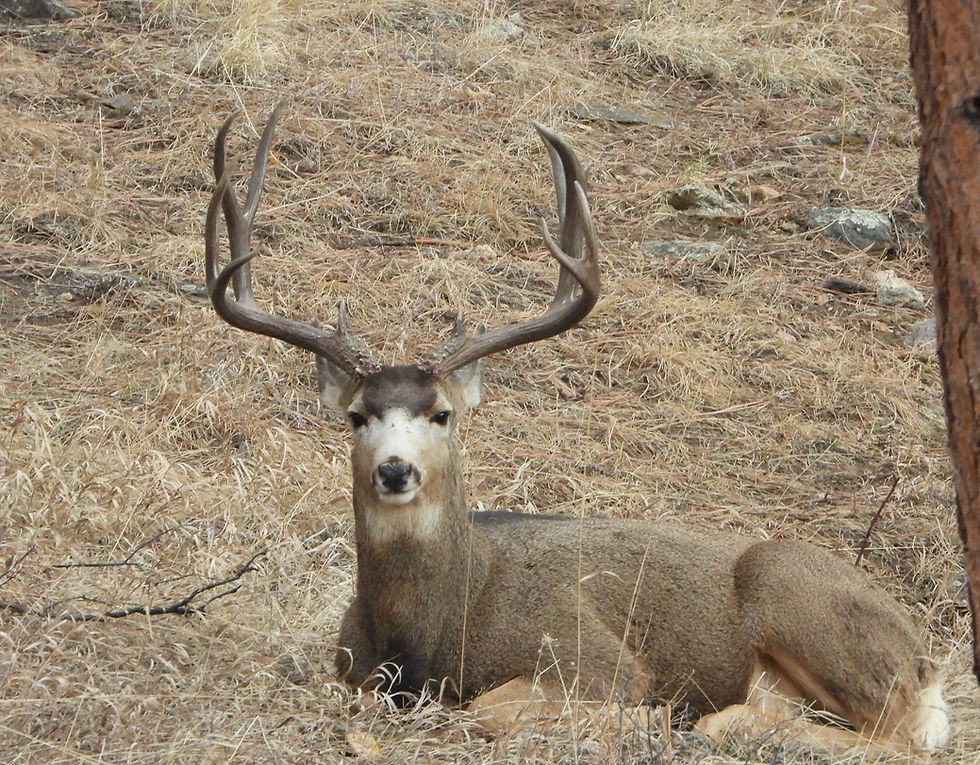
The Loess Hills of western Mississippi are one of the most distinctive deer landscapes in the South. These wind-deposited silt bluffs run in a narrow band along the eastern edge of the Mississippi River. They rise sharply above the Delta floor and create steep ridges, deep ravines, and timbered draws. For a deer operation working this ground, the terrain itself is a marketing asset that most operators never learn to describe online.
This guide is written for outfitters, guides, and lodge owners running whitetail hunts in the Loess Hills. The goal is simple. We want you to get found by the right hunters and to book the right hunts at the right price. The hunters searching for this region often do not know its proper name, so your website has to teach them while it sells them.
Pine and Marsh works with Southeastern outdoor operators on exactly this problem. We help you turn a confusing physiographic region into a clear, searchable story. Along the way, we will distinguish the Loess Hills from the Delta and from the Black Belt prairie. Those distinctions matter for both your hunting pitch and your search visibility.
What the Loess Hills Are and Where They Sit
The Loess Hills, sometimes called the Loess Bluffs, are a physiographic region formed from loess. Loess is a fine, wind-blown silt deposited during and after the last glacial period. In Mississippi, it piled up along the eastern bank of the Mississippi River. The result is a band of tall bluffs and dissected hill country that parallels the river from the Tennessee line south toward the Louisiana border.
You can trace the bluff line through the country around Vicksburg, Natchez, and the Yazoo bluffs. The soil is deep and erodible, which is why ravines cut so sharply here. Hardwood ridges, cane bottoms, and steep timbered slopes define the cover. This is not flat Delta farm ground, nor is it open prairie. It is broken, vertical, hardwood-dominated terrain.
For a deer operation, that terrain shapes everything. Stand placement, access routes, and the way deer move through saddles and benches all differ from the flat country to the west. When you describe your property online, the steepness and the timbered draws are part of what makes the hunt feel premium. Most operators bury these details or skip them entirely.
The region is narrow but long. A hunter driving in from Jackson, Memphis, or Baton Rouge will pass through very different country before reaching your gate. Helping that hunter understand where the Loess Hills sit and how to get there is a basic job your website should handle. A clear location page answers the question before a single email is sent.
How the Loess Hills Differ From the Delta and the Black Belt
This is the single most important distinction your marketing has to make. Mississippi contains several famous deer regions, and hunters blur them together. The Delta is the flat alluvial floodplain west of the bluffs. The Black Belt, or Black Prairie, is a separate soil belt that arcs through the northeastern part of the state. The Loess Hills are neither of those things.
The Delta is bottomland. It floods, it farms row crops, and its deer hunting revolves around flooded timber, sloughs, and agricultural edges. Many hunters searching for Mississippi deer picture the Delta by default. If your ground is in the Loess Hills, you have to gently correct that picture. Your terrain is upland and steep, not flooded and flat.
The Black Belt is a band of dark, fertile prairie soil that supports a distinct mix of agriculture and timber. It is a published, well-defined soil region in its own right. Confusing the Loess Hills with the Black Belt is a common error that muddies your story. The two regions do not even touch along most of their length. Keep them separate in every piece of content you publish.
Why does this matter for search? Hunters and search engines reward specificity. When your pages clearly state that you hunt the Loess Hills and explain how that differs from the Delta and the Black Belt, you capture a precise audience. You also build topical authority that generic Mississippi deer pages never reach. Specificity is not a limitation here. It is your competitive moat.
Knowing the Hunter Who Books a Loess Hills Hunt
Before you write a word of website copy, picture the person typing into the search bar. The Loess Hills hunter is often a serious whitetail hunter who values terrain and management over a guaranteed easy shot. They may be traveling from out of state. They may be a returning client who wants a specific ridge they hunted last year. Each of these hunters searches differently.
Some hunters know the region by name and search for it directly. Others search for Mississippi trophy whitetail, a county name, or a nearby town. Your content needs to meet all of these entry points. That means writing pages focused on the named region and on the practical search terms hunters actually use. Both matter, and they work together.
The booking hunter also wants reassurance. They want to know the hunt is real, the lodging is decent, and the deer are managed. Photographs, honest descriptions, and clear expectations do more to convert than any clever slogan. When your site reads as if it were written by someone who actually hunts the ground, trust follows. That trust is what turns a search into a deposit.
Building Your Keyword and Page Strategy
Your primary keyword is Mississippi loess hills deer hunting. That phrase should appear naturally in your homepage, your main hunt page, and your page titles. Do not stuff it. Use it where it reads cleanly, and support it with related phrases that hunters search. The goal is a page that reads like prose while still clearly signaling its topic to search engines.
Around that primary phrase, build a cluster of supporting pages. A region explainer page can teach what the Loess Hills are. A hunt-package page can describe your specific offerings. A location page can cover access from major cities. A frequently asked questions page can answer the practical concerns that delay bookings. Each page targets a slightly different search intent.
Long-tail phrases are where small operators win. Terms like guided whitetail hunts near Natchez, or Loess Hills deer lease alternatives, or western Mississippi bluff country deer hunting carry less competition. They also carry higher intent. A hunter typing a long, specific phrase is closer to booking than one typing a single broad word. Capture those phrases with dedicated, honest content.
Map your pages to a simple structure before you write. Decide which page owns the primary keyword and which pages support it with internal links. This pillar-and-cluster approach keeps your site organized and helps search engines understand your authority on the region. A clear map also keeps you from writing five pages that all compete for the same phrase.
Local SEO and the Google Business Profile
Most Loess Hills hunters will find you through a search that includes a place name. That makes local search optimization essential. Start with a complete and accurate Google Business Profile. Use a consistent business name, address, and phone number across all online appearances. Inconsistency in these details quietly drags down your local ranking over time.
Choose categories that match what you do, and write a profile description that names the region and the hunts you offer. Add real photographs of the property, the lodge, and harvested deer. Keep your hours and your contact details current. A profile that looks abandoned signals to both hunters and search engines that the operation may not be active.
Reviews are the currency of local search. Ask every satisfied hunter to leave an honest review, and respond to each one in a calm, professional voice. A steady flow of genuine reviews builds trust and improves your visibility in the local pack. Never buy reviews or write fake ones. The damage to your credibility is not worth the short-term lift.
Anchor your pages to the towns and counties hunters recognize. Mention Vicksburg, Natchez, and the surrounding county names where it is truthful and relevant. This helps a hunter searching from a drive-market city connect your operation to a place on the map. Local relevance and regional specificity reinforce each other when you do both well.
Content That Earns Trust and Rankings
Search engines reward sites that publish helpful, original content over time. For a Loess Hills deer operation, that content almost writes itself. Explain how deer move through the steep draws. Describe your management approach and your age-class goals. Walk a reader through a typical hunt day. Each piece teaches a hunter something while showing search engines that you know this ground.
A blog or articles section gives you room to target the long-tail phrases your main pages cannot. Write about the rut timing in the bluffs, about gear for steep terrain, or about what makes the loess soil grow the hardwood mast deer rely on. Keep each post honest and specific. Generic deer-hunting advice will not rank or impress a serious hunter.
Photography and video carry enormous weight. A short clip of fog lifting off a timbered ravine sells the experience better than a paragraph ever could. Use real footage from your own property. Hunters can spot stock imagery instantly, and it erodes the trust you are trying to build. Authentic media is one of the highest-return investments a small operation can make.
Consistency matters more than volume. One genuine, well-made post each month beats a flurry of thin articles followed by silence. Search engines and returning hunters both reward operations that show steady signs of life. Build a simple calendar you can actually sustain through the season and the offseason alike.
Your Website as a Booking Engine
Your website is the hub that every other channel points toward. Social posts, ads, and search results all send hunters to your pages, so those pages have to convert. The most common failure is a beautiful site that hides the booking path. Make it obvious how a hunter inquires, what the next step is, and how quickly you respond. Clarity converts.
Most of your traffic will arrive on a phone. A hunter checking your site from a truck or a deer camp needs fast load times and tappable buttons. If your pages are slow or hard to use on mobile, you lose bookings you never even see. Test your own site on a phone with a weak signal and fix whatever frustrates you.
Be transparent about pricing and logistics. Hunters dislike sending an email just to learn what a hunt costs. You do not have to publish every number, but give ranges, explain what is included, and describe the lodging honestly. Transparency filters out mismatched inquiries and attracts the hunters who are ready to commit. It also signals confidence in what you offer.
Build a strong frequently asked questions page and a clear pricing page. These two pages do quiet, constant work answering the concerns that stall a booking. When a hunter can self-serve the basic answers, your phone calls and emails become real conversations about dates and deposits rather than fact-finding. Let your site do the early work for you.
Work with Pine and Marsh
Pine and Marsh is a marketing agency built for outdoor operators in the Southeast. We work with deer outfitters, duck lodges, and fishing guides across the region, and we understand the difference between the Loess Hills, the Delta, and the Black Belt. That regional fluency is rare among general marketing firms. It means we can tell your story without flattening it into generic deer hunting copy.
We start with a clear-eyed look at where you stand online. That includes your website, your Google Business Profile, your reviews, and how you appear when a hunter searches for your region. From there, we build a plan that fits your operation and your budget. We do not sell the same package to everyone, because no two pieces of ground hunt the same way.
Many operators rely heavily on booking aggregators and listing platforms. Marketplaces like BookYourHunt and GuideFitter, and booking tools like FareHarbor and Mallard Bay, can bring real value. On the fishing side, platforms like FishingBooker do similar work. These tools have their place, and we help you use them well rather than pretending they do not exist.
The risk depends on a platform you do not control. When all your bookings flow through someone else's marketplace, you rent your audience rather than own it. We help you build a direct booking channel through your own website, email list, and search presence. The aggregators become one source of business among several, not your only lifeline.
Our philosophy is simple. What you have built deserves to be found. The Loess Hills give you a genuinely distinctive product, and a hunter who wants exactly that experience should be able to find you when they search. We close the gap between the quality of your hunt and your brand's visibility. That is the whole job.
If you run a deer operation in the Loess Hills or anywhere in the Southeast, we would like to talk. We can start with a straightforward review of your current digital presence and a few clear recommendations. No pressure and no jargon. Just an honest look at how to get the right hunters to your gate.
Frequently Asked Questions
What are the Mississippi Loess Hills?
The Loess Hills are a band of steep, wind-deposited silt bluffs along the eastern edge of the Mississippi River in western Mississippi. They form dissected hill country with hardwood ridges and deep ravines. The region runs roughly from the Tennessee line south past Vicksburg and Natchez. It is a distinct physiographic region, not part of the Delta or the Black Belt prairie.
How are the Loess Hills different from the Mississippi Delta?
The Delta is the flat alluvial floodplain west of the bluffs. It floods, farms row crops, and centers on bottomland deer hunting. The Loess Hills rise sharply above the Delta and offer steep, upland, hardwood-dominated terrain. The hunting experience is vertical and timbered rather than flat and flooded. The two regions sit side by side but hunt very differently.
Are the Loess Hills the same as the Black Belt prairie?
No. The Black Belt, or Black Prairie, is a separate soil belt that arcs through northeastern Mississippi. It is defined by dark, fertile prairie soils. The Loess Hills are defined by wind-blown silt bluffs along the river. The two regions are geographically separate and should never be described as the same place in your marketing.
What is the primary keyword I should target for a Loess Hills deer operation?
The primary keyword is Mississippi loess hills deer hunting. Use it naturally in your homepage, your main hunt page, and your page titles. Support it with related phrases and long-tail terms that hunters actually search for. Avoid keyword stuffing. A page that reads like genuine prose will outperform one crammed with repeated phrases every time.
Should I publish my hunt prices on my website?
In most cases, yes, at least as ranges. Hunters dislike emailing just to learn what a hunt costs, and transparency filters out mismatched inquiries. Explain what is included and describe the lodging honestly. You do not have to list every detail, but giving real ranges builds trust and attracts hunters who are ready to book.
How important is a Google Business Profile for a deer outfitter?
It is essential. Most hunters find regional operations through local search, and the Google Business Profile is central to that. Keep your name, address, and phone consistent everywhere. Add real photos, choose accurate categories, and gather honest reviews. A complete, active profile improves your visibility and signals that the operation is real and running.
What kind of content should a Loess Hills deer operation publish?
Publish original, specific content about your ground. Explain how deer move through the steep draws, describe your management approach, and walk readers through a typical hunt day. Write about rut timing in the bluffs and gear for steep terrain. Honest, detailed content ranks better and impresses serious hunters far more than generic deer advice.
How do I reach hunters who do not know the region by name?
Build pages around both the named region and the practical terms hunters use. Many hunters search for Mississippi trophy whitetail, a county name, or a nearby town rather than the words Loess Hills. Cover those entry points with dedicated content, then teach the regional name once they arrive. Meeting both search behaviors widens your reach.
Do I really need to distinguish my region in my marketing?
Yes, and it is one of your strongest advantages. Specificity captures a precise, high-intent audience and builds topical authority that generic Mississippi deer pages cannot match. Clearly stating that you hunt the Loess Hills and explaining how that differs from the Delta and Black Belt gives both hunters and search engines a clear reason to choose you.
Where can I confirm the deer seasons and bag limits for my area?
Always confirm the current regulations with the Mississippi Department of Wildlife, Fisheries, and Parks (MDWFP). Seasons, zones, and bag limits change, and the agency is the authoritative source. Do not publish specific dates or limits on your own site without first checking them against MDWFP, and point hunters to the agency for the official rules.
Should I rely on booking aggregators for my deer hunts?
Use them, but do not depend on them. Platforms like BookYourHunt, GuideFitter, FareHarbor, and Mallard Bay can bring real business and fill open dates. The risk is renting an audience you do not own. Build a direct booking channel through your own website, email list, and search presence, so aggregators are just one of several sources.
How much does mobile performance matter for my website?
A great deal. Most hunters will visit your site from a phone, often from a truck or deer camp with a weak signal. Slow pages and hard-to-tap buttons cost you bookings you never see. Test your own site on a phone in poor conditions and fix whatever frustrates you. Fast, simple mobile pages convert.
How often should I publish new content?
Consistency matters more than volume. One genuine, well-made post each month beats a burst of thin articles followed by silence. Steady publishing signals to search engines and returning hunters that your operation is active. Build a content calendar you can actually sustain through both the season and the offseason, and stick to it.


Comments