
Marketing a Taxidermy Studio: From Word-of-Mouth Local to Regional Trophy Specialist
Updated: Jun 12
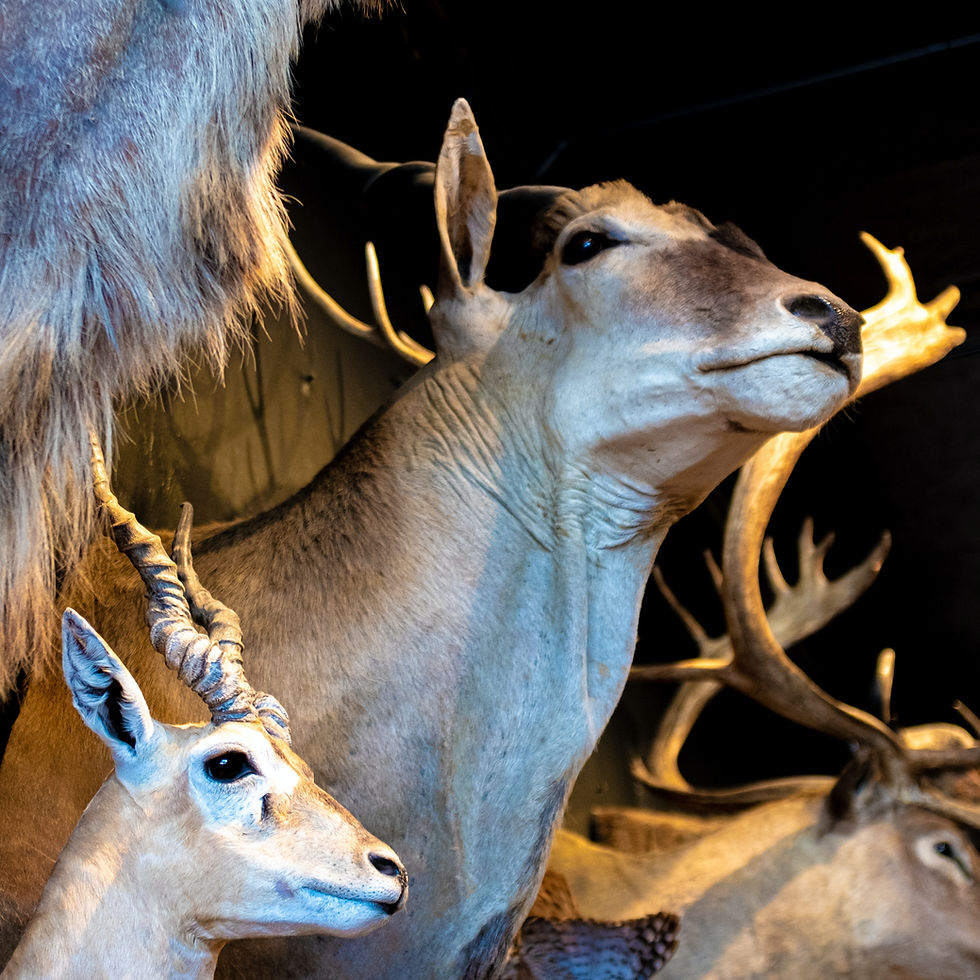
By Jacob Mishalanie and Thomas Garner -- Pine & Marsh
Every county in the southeastern United States has at least one working taxidermist. Most have two or three. Almost none of them have a professional website, a Google Business Profile with more than a handful of reviews, or a single page of content optimized for the searches their future customers are already running. The taxidermy vertical is one of the largest untouched local SEO opportunities in the outdoor industry -- and it is hiding in plain sight.
This post maps the taxidermy studio market across the Southeast, breaks down how these operators currently find customers, identifies the digital gaps that make this vertical so vulnerable to aggregator capture, and lays out the content and local SEO playbook that can move a single-county word-of-mouth shop into a regional trophy specialist position. If you run a taxidermy studio or market one, this is the field brief.
The Taxidermy Vertical -- Why It Matters for Outdoor Marketing
Taxidermy is not a niche. Across the eleven southeastern states -- Alabama, Arkansas, Florida, Georgia, Kentucky, Louisiana, Mississippi, North Carolina, South Carolina, Tennessee, and Virginia -- there are an estimated 2,000 to 4,000 active taxidermists. That count spans full-time shops with dedicated showrooms, part-time garage operations running out of a pole barn, and everything in between. The density is driven by the Southeast's extraordinary hunting participation rates. Whitetail deer season alone generates 50 to 70 percent of annual revenue for the average taxidermy shop, and when you layer in turkey, waterfowl, bear, hog, and trophy fish mounts, the year-round demand is substantial.
Yet virtually every one of these operators acquires customers the same way: word of mouth. A hunter kills a buck, asks his buddy at deer camp who mounted his last one, and calls that number. The taxidermist answers a cell phone, quotes a price, and says to drop it off. There is no website visit, no Google search, no review comparison, no portfolio browse. The entire transaction chain is analog.
This creates a massive digital whitespace. When a hunter who just moved to a new county searches "taxidermist near me" or "deer mount cost in [city]," the local pack is thin. Google Business Profiles are unclaimed or incomplete. Yelp listings have one or two reviews. Individual taxidermist websites almost never appear on page one organically, except for the most obscure long-tail city-level queries. The operators who do rank are typically directories—TaxidermyNet.com, state association membership pages, or generic Yelp results. No southeastern marketing agency is actively optimizing taxidermist GBP profiles. This territory is uncontested.
For a marketing agency that understands local SEO, schema markup, and content strategy for outdoor businesses, the taxidermy vertical represents a volume play unlike any other in the sporting industry. The addressable market is ten times larger than that of bear-hunting guides or alligator outfitters. The average engagement is smaller -- a taxidermist GBP and local SEO package might run $300 to $600 per month versus a full outfitter website build -- but the sheer number of operators who need help makes the total opportunity enormous.
The Service Stack: What Taxidermy Studios Actually Sell
Effectively marketing a taxidermy studio requires understanding what the studio actually produces. The service menu is broader than most outsiders realize, and each mount type carries its own price point, turnaround expectations, and search-demand profile. Here is the full stack as it exists across southeastern shops.
Game Head and Shoulder Mounts
Shoulder mounts are the bread and butter of every southeastern taxidermy operation. Whitetail deer shoulder mounts account for the largest volume category, with current market rates ranging from $400 to $650 per mount, depending on the shop's reputation, backlog, and region. Turkey full-strut mounts range from $400 to $700. Bear shoulder and full mounts command $1,200 to $3,000 or more, depending on size. Hog shoulder mounts fall in the $400 to $1,200 range. The shoulder mount is the default purchase for a hunter's first trophy, and it is the service most likely to generate a word-of-mouth referral.
From a marketing perspective, shoulder mounts are high-intent purchases. The hunter already has the animal. The decision is not whether to mount it but who will do the work. Search queries like "deer shoulder mount near me" and "deer mount cost [city]" carry extremely high commercial intent with almost zero organic competition from local shops. A single well-optimized landing page titled "Deer Shoulder Mount Prices in [County/State]" can rank for these queries within weeks because nobody else is publishing the content.
Fish Mounts and Replicas
Fish taxidermy has undergone a significant shift over the past decade. Traditional skin mounts -- where the actual fish skin is preserved and mounted -- are increasingly being replaced by replica mounts. A replica is a custom-painted fiberglass reproduction built from measurements and photographs of the original catch. The fish can be released alive, and the mount is more durable and color-stable than a skin mount. Replica fish mounts are now the dominant product for largemouth bass, trout, and most saltwater species.
Pricing for fish mounts typically runs $30 to $50 per inch for freshwater gamefish like bass and stripers, and $45 to $80 per inch for saltwater trophy species like tarpon, cobia, and marlin. Coastal taxidermists in Florida, North Carolina, South Carolina, and Louisiana often specialize in saltwater replicas, and their customer base overlaps heavily with offshore fishing charter clients and tournament anglers. Companies like King Sailfish Mounts have built stronger digital presences than most local taxidermists, which means local operators are losing potential customers to a national replica company simply because the national company has a website that ranks.
Full-Body and Life-Size Mounts
Full-body mounts represent the premium tier of taxidermy work. A life-size whitetail deer mount runs $800 to $1,400. Full-body bear mounts start at $1,200 and can exceed $3,000 for large specimens. Bobcat full mounts fall in the $600-$1,000 range. These are showcase pieces -- they go in lodges, hunting camps, corporate offices, and dedicated trophy rooms. The customer for a life-size mount is typically a repeat client who has already had shoulder mounts done and is willing to invest in a statement piece.
Full-body mounts are also the best portfolio content a taxidermist can produce. A well-photographed life-size deer in a natural habitat base generates more social media engagement, more website clicks, and more word-of-mouth conversation than any other single piece in the shop. Studios that professionally photograph their full-body work and consistently post it to Instagram, Facebook, and their Google Business Profile see measurably higher inquiry rates.
Bird Mounts: Waterfowl and Upland
Bird taxidermy is a specialty within the craft. Waterfowl mounts -- mallards, wood ducks, pintails, and other species popular in the Mississippi Flyway and Atlantic Flyway states -- run $200 to $400 per bird. Turkey fan mounts, where just the tail fan and beard are preserved, are a lower-cost entry point at $75 to $200. Upland bird mounts, including quail and dove, are less common but carry strong regional demand in states like Georgia, South Carolina, and Alabama, where quail hunting traditions run deep.
Bird mounts require particular skill in feather preservation and positioning, and taxidermists who specialize in waterfowl or upland birds often compete in state and national competitions. Award-winning bird work is a powerful marketing differentiator. A competition ribbon or Best in Show award should appear on every digital surface the studio controls -- GBP, website, social media bios -- because it signals quality in a way that no amount of self-promotion can replicate.
European Mounts and Skull Plates
European mounts -- cleaned and whitened skulls displayed on a plaque or as stand-alone pieces -- have grown dramatically in popularity over the past five years. Professional European deer mounts run $100 to $200, making them the most affordable professional taxidermy option. Turnaround times are significantly shorter than those of shoulder mounts, typically four to eight weeks versus twelve to twenty-four months. This combination of lower price and faster delivery has made European mounts the entry product for younger hunters and budget-conscious customers.
The marketing angle on European mounts is critical. DIY beetle-and-boiling kits are widely available for $50 to $200, which means the taxidermist is competing against the customer's own kitchen. Studios that market European mounts alongside shoulder mounts capture a wider funnel -- the customer who comes in for a European mount this year may come back for a shoulder mount next year. Search queries like "European mount near me" and "deer skull mount [city]" are growing with minimal SEO competition. A taxidermist who publishes a comparison page -- "European Mount vs. Shoulder Mount: Price, Turnaround, and What to Expect" -- owns a content position that does not currently exist in most southeastern markets.
The Southeastern Taxidermy Landscape: Seasonal Volume, Turnaround, and Pricing
Taxidermy in the Southeast runs on a seasonal clock. Deer season -- October through January across most states -- drives the majority of annual volume. A typical full-time shop processes 200 to 500 pieces per year, with the bulk of intake happening in a three-month window from November through January. Turkey season adds a spring spike. Waterfowl and fish work fills the gaps. The result is a business that runs at capacity during peak season and spends the rest of the year working through the backlog.
The backlog problem is real and industry-wide. Quality taxidermy shops in the Southeast routinely carry 12- to 24-month backlogs. A deer killed in November 2025 may not be ready at a premium shop until late 2026 or early 2027. Post-COVID surges in hunting participation made this worse. The backlog creates a marketing paradox: it signals quality and demand, but it also pushes impatient customers to lower-quality shops that promise faster turnaround. Studios that communicate their backlog transparently -- "Current turnaround: 14 months" with an explanation of why quality takes time -- outperform shops that hide their wait times or give vague estimates
.
Revenue for a typical full-time southeastern taxidermy operation falls in the $60,000 to $180,000 per year range. Elite, award-winning shops with long waitlists and premium pricing can gross $200,000 to $400,000. Most operations are one to two-person businesses. Larger shops may employ three to eight full or part-time staff. The business model is fundamentally a skilled trade with repeat customers -- a satisfied hunter comes back every season, and more importantly, sends every hunter they know.
Named Operators: The Southeastern Taxidermy Market in Profile
The taxidermy industry is extraordinarily fragmented. No single studio has achieved broad consumer brand recognition through digital marketing in the Southeast. What follows are operator archetypes that represent the landscape as it actually exists -- drawn from industry patterns, competition circuits, and market observation.
McKenzie Taxidermy Supply, based in Granite Quarry, North Carolina, is the largest taxidermy supply company in the United States. McKenzie does not operate as a studio, but it shapes the entire industry by supplying forms, eyes, habitat materials, and training seminars to thousands of taxidermists across the country. Their annual seminars in North Carolina draw taxidermists from every southeastern state and serve as the de facto continuing education for the trade. Any taxidermist marketing strategy should account for McKenzie's influence on product quality and technique standards.
State competition winners represent the prime marketing opportunity in this vertical. Every southeastern state hosts annual taxidermy competitions through organizations such as the North Carolina Taxidermists Association, the Georgia Taxidermists Association, and the Virginia Taxidermists Association. Winners gain immediate reputation boosts within the trade, but that reputation rarely extends to the digital world. Award-winning shops often have slightly better websites and social media presence than their non-competing peers, but still lack schema markup, FAQ pages, species-specific landing pages, or any meaningful SEO strategy. These competition-circuit operators are the ideal Pine & Marsh target: the quality signal is already established and simply needs digital amplification.
Saltwater trophy taxidermists operating along the coasts of Florida, North Carolina, South Carolina, and Louisiana represent a distinct sub-niche. Their customers are offshore fishing charter clients and tournament anglers seeking replica mounts of tarpon, cobia, marlin, and other gamefish. National replica companies like King Sailfish Mounts have built functional websites and e-commerce operations that outrank local taxidermists in search results. A coastal taxidermist with a proper website, species landing pages, and a portfolio gallery can compete directly with these national brands on local and regional queries -- but almost none have built that digital infrastructure.
The typical rural southeastern taxidermist -- the two-person shop processing 300 to 500 pieces per year with a fourteen-month backlog -- acquires every single customer through reputation, deer camp word of mouth, and feed store bulletin boards. Their digital presence is effectively zero. No website. No optimized GBP. No review program. Their entire business runs on a phone number passed between hunting buddies. This is not a failing of intelligence or ambition. It is a function of the trade culture: taxidermists are artisans who spend their time on the work, not on marketing. That gap is the opportunity.
The Taxidermy Buyer: How They Search and What They Evaluate
The taxidermy customer's search behavior splits into two distinct patterns. The first is the referral path -- the hunter asks a friend, gets a name, and calls directly. No search engine is involved. This path still accounts for the majority of taxidermy transactions in the Southeast. The second path is the search path -- the hunter is new to an area, does not have a local network, or wants to compare options before committing. This is the growing path, where digital presence determines who wins.
When a hunter searches, the queries are remarkably consistent. "Taxidermist near me" is the highest-volume query and is dominated by Google Maps local pack results. "Taxidermist [city name]" is second. "Deer mount near me," "deer European mount near me," "turkey taxidermist near me," and "fish taxidermy near me" all carry meaningful volume with minimal organic competition. Price queries—"how much does a deer mount cost" and "deer shoulder mount cost [state]"—are among the highest-intent searches in the vertical because the customer already has an animal and is comparing options.
What the buyer evaluates is equally consistent. Portfolio quality is the top factor -- the hunter wants to see finished mounts that look lifelike and professionally posed. After portfolio, turnaround time is the second decision driver. A shop quoting eight months will beat a shop quoting eighteen months for the impatient buyer, even if the longer wait signals higher quality. Price is third. Most hunters expect to pay $400 to $600 for a deer shoulder mount and are not shocked by that range, but they want to see the number before they call. Studios that publish pricing -- even ranges -- remove a friction point that competitors leave in place.
Reviews are the emerging fourth factor. Younger hunters who are accustomed to checking Google reviews for every purchase bring that behavior to taxidermist selection. A studio with 50 or more Google reviews and a 4.8 rating will instantly capture the attention of this demographic. Most southeastern taxidermists have fewer than ten reviews. Many have none. A simple review generation program -- asking every satisfied customer to leave a Google review at pickup -- can move a studio from invisible to dominant in its local pack within a single season.
What Is Changing Now: 2024 Through 2026
Several trends are reshaping the taxidermy market, creating both urgency and opportunity for studios willing to invest in their digital presence.
Replica mounts are growing faster than skin mounts for fish. The catch-and-release ethic is now mainstream among bass anglers and increasingly common among saltwater fishermen. A replica mount lets the angler release the fish alive and still hang a museum-quality mount on the wall. This shift means fish taxidermists need to market their replica capability explicitly. If a studio's website says "fish taxidermy" but never mentions replicas, the catch-and-release angler assumes they only do skin mounts and moves on to a national replica company. The content fix is straightforward: a dedicated "Replica Fish Mounts" page with species examples, pricing, and an explanation of the process.
Social media portfolio marketing is replacing the showroom visit. Ten years ago, a hunter would drive to a taxidermy shop, walk the showroom, and evaluate the work in person. Today, the evaluation happens on Instagram and Facebook. Studios that post consistent, well-lit photographs of finished mounts -- especially in-progress and before-and-after content -- build a portfolio that reaches thousands of potential customers without anyone stepping foot in the shop. The studios doing this well are seeing measurable increases in inquiry volume and geographic reach. A taxidermist in rural Georgia posting quality work on Instagram can attract customers from three or four surrounding counties who would never have heard of the shop through word of mouth alone.
European mounts continue to take market share from shoulder mounts among younger and budget-conscious hunters. The studios that market both products together -- offering European mounts as an entry point and shoulder mounts as the premium option -- are capturing a wider customer funnel than shops that treat European mounts as an afterthought. Smart studios are creating comparison content that educates the buyer and positions both options as legitimate choices.
The World Taxidermy Championships and state-level competitions continue to drive reputation within the trade, but the marketing value of competition wins is being amplified by social media in ways it never was before. A Best in Show award shared on Instagram with professional photography reaches more potential customers in a single day than a plaque on a showroom wall reaches in a year. Studios that invest in professional photography of their competition entries are getting outsized marketing returns from the same work they were already producing.
The Aggregator Interception Problem
When a taxidermist has no digital presence, aggregators fill the void. The customer searches, and the results they see are not the taxidermist's own content but third-party platforms that sit between the customer and the business. This is the aggregator interception problem, and it is acute in the taxidermy vertical.
Google Maps dominates "near me" queries for taxidermists. The local pack -- the three-result map listing at the top of search results -- is where most customers start, and many customers stop. A taxidermist with a complete GBP profile, accurate category, a dozen photos, and 30 or more reviews will appear in this pack. A taxidermist with an unclaimed or bare-bones profile will not. The problem is that most southeastern taxidermists fall into the second category, which means Google Maps is showing the customer whoever happened to claim their listing and ask for a few reviews -- not necessarily the best taxidermist in the area.
Yelp ranks in many suburban and urban markets for taxidermy queries. The Yelp listing is often sparse -- a phone number, an address, and one or two reviews. But it ranks because no individual taxidermist website is competing for the same keyword. TaxidermyNet.com, a national directory, captures some state-level queries. State taxidermist association membership directories appear for searches like "taxidermists in North Carolina." Sportsman's forums -- SE Deer Hunter, NC Hunting and Fishing, and similar regional boards -- contain recommendation threads that rank for long-tail queries and drive referrals.
Every one of these aggregator positions is fixable. A taxidermist who builds even a basic five-page website with species landing pages, publishes a price transparency page, claims and optimizes their GBP, and runs a review generation program will displace aggregators from their own local search results within 60 to 90 days. The investment is small. The return is the difference between being found by every hunter searching in their county and being invisible behind a Yelp page with two stars.
Digital Health Read: The Current State of Taxidermy Studio Websites
The digital health of the southeastern taxidermy vertical is, by any measure, near zero. An estimated 70 to 80 percent of active taxidermists in the eleven southeastern states have no professional website. The remaining 20 to 30 percent have either a Facebook business page serving as their only web presence or a simple one-page site with a phone number, an address, and a few photos.
Among those who do have websites, the deficits are consistent and severe. No taxidermist in the Southeast is known to have a schema-optimized, blog-content-rich website with strong Google Business Profile integration. The specific gaps are universal: no FAQ schema answers "How much does a deer mount cost?" or "How long does taxidermy take?" No LocalBusiness schema. No photo galleries with alt text or ImageObject markup. No price transparency pages. No species-specific landing pages for deer, turkey, fish, bear, or waterfowl. No review generation systems. No booking or appointment software—phone-only intake is the industry standard.
This is not a vertical where you need to outcompete sophisticated operators with better content. This is a vertical where the first operator in any given market to build a real website will, by default, essentially own that market's search results. The barrier to entry is not talent or budget. It is awareness. Taxidermists do not know what they are missing because they have never seen what good looks like in their industry.
What to Publish, in Order: The Taxidermy Studio Content Playbook
For any taxidermy studio investing in its digital presence for the first time, the content build should follow this order of priority. Each item is listed in descending order of impact on local search visibility and customer conversion.
First: Google Business Profile optimization. This is the single highest-leverage play for any taxidermist. Claim the listing if unclaimed. Set the correct primary category. Upload 20 or more high-quality photos of finished mounts. Write a complete business description with specific keywords. Answer every Q&A. Post monthly updates with seasonal work. A taxidermist with a complete GBP, 50 or more reviews, and regular photo updates will dominate the local pack in most southeastern markets within 60 to 90 days. This is uncontested territory.
Second: a price transparency page. Title it "Taxidermy Prices in [County/State] -- What to Expect." List every mount type with a price range. This single page can rank for extremely high-intent searches like "how much does a deer mount cost in [state]" with essentially zero competition from local shops. No southeastern taxidermist currently publishes this content. The first one to do it in any market will own the position.
Third: species-specific landing pages. Build separate pages for deer mounts, turkey mounts, fish mounts, bear mounts, waterfowl mounts, and European mounts. Each page should include pricing, turnaround estimates, a photo gallery of finished work for that species, and care instructions for the hunter on preparing the animal for mounting. These pages create topical depth that Google rewards and give the studio individual ranking opportunities for species-specific queries.
Fourth: a "How to Cape a Deer for Taxidermy" guide. This is one of the highest-SEO-value pieces of content a taxidermist can publish. The search volume is substantial, the competition is thin, and the content positions the studio as a knowledgeable authority. Every hunter who reads this guide and bookmarks it for deer season is a potential customer. The guide should include step-by-step instructions with photos, common mistakes to avoid, and a clear call to action to bring the cape to the studio.
Fifth: FAQ schema deployment. Build a comprehensive FAQ page that answers every question customers commonly ask—how long does taxidermy take, how much does it cost, do I need an appointment, how should I store the hide before drop-off, what is a European mount, and how do I care for a finished mount? Implement FAQPage schema markup so Google can surface these answers directly in search results. This is free real estate in the SERP that no taxidermist in the Southeast is currently claiming.
Sixth: a structured photo gallery with ImageObject schema. Before-and-after photography is the single most engaging content format for taxidermy. A raw cape or skin next to the finished mount tells a story that generates shares, saves, and return visits. Tag every image with alt text that includes species, mount type, and location. Cross-post to Instagram, Facebook, Pinterest, and GBP.
Seventh: a "European Mount vs. Shoulder Mount" comparison page. This content serves two audiences -- the budget-conscious hunter deciding between options and the search engine looking for comprehensive topical coverage. Include pricing, turnaround, display options, and photographs of both mount types side by side. This page does not exist on any southeastern taxidermist's website today. It is a category-owning position for the first studio that publishes it.
The Black's Camp Analog: What a Fully Built Taxidermy Digital Presence Looks Like
Pine & Marsh uses Black's Camp on Lake Marion as the reference case for what a fully built digital presence for an outdoor business looks like. The taxidermy vertical has its own version of this archetype -- the shop that would emerge if one southeastern taxidermist executed the entire playbook above.
Picture a competition-winning taxidermy studio in a mid-size southeastern market -- say, a county seat town in North Carolina, Georgia, or Alabama. The shop has been in business for 15 years, processes 400 pieces a year, and carries a 16-month backlog. The owner is a state competition winner with Best in Show awards in multiple categories. The work is excellent. The reputation, within a 30-mile radius, is strong.
Now add the digital layer. A professional website with species landing pages for deer, turkey, fish, bear, waterfowl, and European mounts. Each page includes pricing, turnaround estimates, a curated photo gallery, and care instructions for the hunter. A price transparency page ranking for "taxidermy prices [state]" and "deer mount cost [city]." A comprehensive FAQ page with schema markup answers every question a customer asks before calling. A blog publishing seasonal content -- "Preparing Your Deer for the Taxidermist This Season" in September, "European Mount vs. Shoulder Mount" in October, "How to Choose a Fish Replica Mount" in April.
A Google Business Profile with 80 or more reviews, seasonal photo updates, all Q&As answered, and a complete service menu. LocalBusiness schema on every page. Article schema on every blog post. Instagram and Facebook are running weekly portfolio posts with consistent lighting and presentation. A simple email capture -- "Join our waiting list" -- converts browsers to leads even during peak backlog periods.
That studio would not just dominate its county. It would dominate a multi-county region. It would rank for state-level queries. It would appear in AI-generated answers to questions like "best taxidermist in [state]" and "how much does taxidermy cost in the Southeast." It would receive inquiries from hunters 100 miles away who found it on Google and drove past three closer taxidermists to reach the one with a professional website and a 4.9-star rating. That is the Black's Camp analog for taxidermy. It does not exist yet. But the first studio to build it will own the position for years.
Work with Pine & Marsh
Pine & Marsh is a small, owner-operated outdoor marketing agency built on a 2,206-outfitter audit baseline that covers every sporting vertical in the 11 southeastern states. The taxidermy vertical is one of the largest we have mapped -- 2,000 to 4,000 operators, almost none with meaningful digital infrastructure, and a local SEO opportunity that is essentially uncontested in every county we have examined. This post is the field brief. What follows is the work.
Our taxidermy studio audit maps your AI citation surface, Google Business Profile depth, schema layer, FAQ coverage, and editorial cadence against the nearest competing taxidermists in your market, the aggregators currently intercepting your local queries, and the directory listings that are either helping or hurting your visibility. The output is a prioritized 90-day publishing plan, a 12- to 18-month pillar content build, and a list of inbound link targets specific to the taxidermy and hunting verticals in your region.
The whitespace in this vertical is extraordinary. The following content positions do not exist on any taxidermist domain in the Southeast and represent category-owning opportunities for the studio that claims them first: "Taxidermy Prices in [Your State] -- Full Mount Cost Guide" does not exist. "European Mount vs. Shoulder Mount: What Every Hunter Should Know" does not exist. "How to Cape a Deer for Your Taxidermist -- Step by Step" does not exist. "Replica Fish Mounts Explained: Why Catch-and-Release Anglers Are Choosing Replicas" does not exist. "Taxidermy Turnaround Times: Why Quality Takes 12 Months and What to Expect" does not exist. Each one is a category-owning position for the operator who publishes it first.
The window is narrowing. Google Maps is already the default discovery path for hunters searching "taxidermist near me." Yelp, TaxidermyNet, and forum recommendation threads are filling the gaps that taxidermist-owned content should occupy. Every month that a studio's GBP sits unclaimed or under-optimized is a month of customer inquiries flowing to whichever competitor happened to ask for reviews. The studios with competition awards, 15-year reputations, and 400-piece annual throughput have enormous earned equity that is sitting idle in the digital space. That equity compounds the moment it is activated.
We come to the shop. We walk through the showroom. We photograph the finished mounts, the works in progress, and the habitat bases under construction. Engagements are owner-operated, capped at a number that allows us to know every client's market, and built to compound. Every deliverable is designed to travel through the next decade of the business -- including through a succession event if one is on the horizon.
If you would like a direct read on how your taxidermy studio stacks up against this playbook, the conversation is just a short call away.
Frequently Asked Questions
Why is the taxidermy vertical such a strong local SEO opportunity compared to other outdoor businesses?
Taxidermy is uniquely vulnerable to local SEO intervention because the competitive floor is so low. An estimated 70 to 80 percent of southeastern taxidermists have no professional website. Google Business Profiles are frequently unclaimed or incomplete. No marketing agency in the Southeast is actively optimizing taxidermist GBP profiles. When you combine high customer search volume -- "taxidermist near me" is the dominant query -- with near-zero organic competition from operator-owned content, the result is a market where a properly optimized GBP and a basic five-page website can dominate a county's local pack within 60 to 90 days. Most outdoor verticals require months of content building to gain traction. Taxidermy rewards the first mover almost immediately because there is nobody to outrank.
How does the seasonal peak in deer season affect a taxidermy studio's marketing calendar?
Deer season -- October through January across most southeastern states -- generates 50 to 70 percent of the average taxidermy shop's annual revenue. Marketing efforts need to be front-loaded before this window opens. GBP optimization, website content, and review generation programs should be in place by September, so the studio is visible when hunters begin searching for taxidermists with a fresh harvest. Content like "How to Cape a Deer for Your Taxidermist" should be published in September or early October to capture pre-season search volume. Post-season content -- turnaround updates, backlog communication, European mount promotions -- fills the January through March period when customer anxiety about wait times is highest.
What is the typical marketing budget range for a taxidermy studio working with an agency?
A taxidermy studio's marketing investment is typically smaller than a full outfitter or lodge engagement because the service stack is more focused. A GBP optimization and local SEO management package runs $300 to $600 per month and covers profile management, review generation support, monthly photo uploads, Q&A monitoring, and local pack tracking. The initial website build -- five to eight pages covering species, pricing, FAQ, and gallery -- is a one-time investment that varies by scope. The upsell path moves from GBP to website to ongoing content (species pages, blog posts, seasonal updates) as the studio sees results from the first phase. For a full-time shop grossing $100,000 to $200,000 annually, a $300 to $600 monthly marketing investment represents a small fraction of revenue with outsized return potential.
How does the 12-to-24-month backlog at quality shops factor into marketing strategy?
The backlog is both a marketing asset and a marketing challenge. A long wait list signals quality and demand, which builds trust with prospective customers. But it also drives impatient buyers to lower-quality competitors that promise faster turnaround times. The marketing solution is transparent communication. Studios that publish their current turnaround time on their website and GBP -- "Current estimated turnaround: 14 months" -- paired with quality signaling content (competition awards, portfolio photography, testimonials from satisfied customers who waited) convert more inquiries than shops that hide their wait times. Additionally, promoting European mounts as a faster alternative ($100 to $200, four- to eight-week turnaround) captures budget-conscious and impatient segments without losing them to a competitor.
Why are replica fish mounts changing the marketing game for coastal taxidermists?
Replica fish mounts -- custom-painted fiberglass reproductions built from measurements and photos -- have become the dominant product for bass, trout, and most saltwater species because they allow catch-and-release while still producing a museum-quality mount. This shift creates a marketing problem for local taxidermists: national replica companies like King Sailfish Mounts have built professional websites and e-commerce operations that outrank local operators in search results. A coastal taxidermist in Florida or North Carolina who does not explicitly market replica capability on their website is losing customers to these national brands. The fix is a dedicated "Replica Fish Mounts" page with species examples, pricing per inch ($30 to $80 depending on species), and a clear explanation of the process. This page does not exist on most local taxidermist websites and represents an immediate ranking opportunity.
What role do state taxidermy competitions play in a studio's digital marketing strategy?
State and national taxidermy competitions -- run by organizations such as the National Taxidermists Association, the North Carolina Taxidermists Association, and their counterparts in every southeastern state -- are the primary quality-credentialing mechanism in the industry. Winning a Best in Show or category award immediately elevates a studio's reputation among peers. The marketing opportunity is amplifying that signal digitally. Competition wins should appear on the studio's GBP profile, website homepage, species landing pages, and social media bios. Professional photography of competition entries should be posted to Instagram and Facebook, where a single award-winning piece can generate more customer inquiries in a week than a showroom plaque generates in a year. The competition circuit is already producing the content—studios just need to distribute it.
How does Google Business Profile optimization differ for taxidermists compared to fishing guides or hunting outfitters?
Taxidermists are service businesses with a fixed location, which makes GBP optimization even more impactful than it is for mobile guide services. A fishing guide operates from a boat ramp and may serve multiple lakes -- their GBP service area is broad and competitive. A taxidermist operates from a shop at a specific address, which means they dominate a tighter geographic radius with higher precision. The GBP category should be "Taxidermist" (not a generic category). The photo strategy should emphasize finished mounts in the showroom, works in progress, and the shop itself. The Q&A section should preemptively answer questions about pricing, turnaround, drop-off hours, and species. Service menu listings should include every mount type with price ranges. This level of GBP completeness is uncontested in most southeastern markets -- 60 to 90 days of consistent optimization typically moves a taxidermist into the top three local pack results.
What content should a taxidermist publish first if they have never had a website?
The first priority is always GBP optimization -- it requires no website at all and delivers the fastest return. After GBP, the first website content should be a price-transparency page listing every mount type with its price range. This page ranks for high-intent queries like "deer mount cost [city]" and "taxidermy prices [state]" with virtually no competition. Second should be species-specific landing pages for the studio's top three to four mount types (typically deer, turkey, fish, and European mounts). Third should be a "How to Cap a Deer" or similar preparation guide that captures high search volume and positions the studio as an authority. Fourth is an FAQ page with schema markup. This four-page content stack plus an optimized GBP will outperform 95 percent of southeastern taxidermists' digital presence within the first 90 days.
How do European mounts function as a customer acquisition tool for taxidermy studios?
European mounts priced at $100 to $200, with a four- to eight-week turnaround, serve as the entry product in a taxidermist's customer funnel. Younger and budget-conscious hunters who would not pay $500 for a shoulder mount will pay $150 for a European mount. That first transaction establishes a relationship. The hunter sees the quality of work, experiences the customer service, and returns the following season -- potentially for a shoulder mount at three to four times the price. Studios that market European mounts alongside shoulder mounts on the same website capture a wider audience than shops that treat Europeans as a low-margin afterthought. The search query "European mount near me" is growing with minimal competition, and a comparison page—European vs. shoulder—educates the buyer while positioning both products.
What makes a taxidermy studio a strong referral pipeline for other outdoor businesses?
A taxidermist knows every serious hunter in their county. Their customer base overlaps almost perfectly with the client lists of hunting outfitters, fishing guides, sporting lodges, and outdoor retailers in the same region. A satisfied taxidermist client who sees tangible marketing results becomes a natural referral source to these adjacent businesses. This makes taxidermy studios a strategic entry point for a marketing agency seeking to build a regional outdoor client base. Win the taxidermist, deliver measurable GBP and local search results, and the taxidermist introduces you to the guide service, the lodge, and the sporting goods store down the road. The referral network potential is one of the strongest arguments for treating taxidermy as a volume vertical rather than a one-off engagement.
How do AI search engines handle taxidermy queries, and what does that mean for studio SEO?
AI assistants like ChatGPT and Perplexity can explain the taxidermy process and quote general price ranges, but they cannot name specific local taxidermists. When asked "best taxidermist in [city]," AI engines default to recommending a Google Maps search. This means taxidermy is primarily a local search problem, not an AI citation problem—GBP optimization is the highest-leverage investment. However, informational queries like "how much does deer taxidermy cost" and "how to find a good taxidermist" are AI-answerable questions where schema-rich content can earn citations. A studio with an FAQ schema, an Article schema, and price-transparency content provides AI engines with structured data to cite. The play is to dominate Google Maps for local queries while building schema-rich content that captures the informational queries AI engines are beginning to answer.
Can a taxidermy studio in a rural county realistically compete with shops in larger metro areas through digital marketing?
Yes, and rural studios actually have a structural advantage. Google's local pack prioritizes proximity -- a taxidermist in a rural county with an optimized GBP will appear for every "near me" search in that county before a metro-area shop 60 miles away. The rural studio's competition for local pack positioning typically consists of one or two other operators with equally bare-bones digital presences, meaning the investment required to reach the top position is minimal. Additionally, rural taxidermists often have stronger word-of-mouth reputations within their counties, which translates to review acquisition potential. A studio that converts its existing satisfied customer base into Google reviews can accumulate 30 to 50 reviews in a single deer season. That review volume, combined with a complete GBP profile, makes the rural studio effectively unbeatable in its geographic radius -- and social media extends its reach to surrounding counties where hunters are willing to drive for quality work.
About the Authors
Jacob Mishalanie and Thomas Garner are the co-founders of Pine & Marsh, a southeastern outdoor marketing agency dedicated to the sporting businesses that define the region—from taxidermy studios and hunting outfitters to fishing guides and sporting lodges. Their work is grounded in a 2,206-outfitter audit baseline covering every sporting vertical across the eleven southeastern states.
Sources
National Taxidermists Association (NTA) -- industry data and membership statistics. State taxidermist associations -- North Carolina, Georgia, Virginia, and others -- competition records and membership directories. McKenzie Taxidermy Supply -- pricing benchmarks and industry training data. Pine & Marsh internal audit data -- 2,206-outfitter baseline, digital health scoring methodology, GBP audit framework. World Taxidermy and Fish Carving Championships -- competition participation and award records. Google Business Profile data -- local pack analysis across southeastern markets, 2024-2026. TaxidermyNet.com -- directory traffic and listing analysis. King Sailfish Mounts -- replica fish mount market positioning and pricing.


Comments