
Marketing the Tuckasegee and Watauga Rivers: Float-Trip Trout and the Western NC Fly Shop Belt
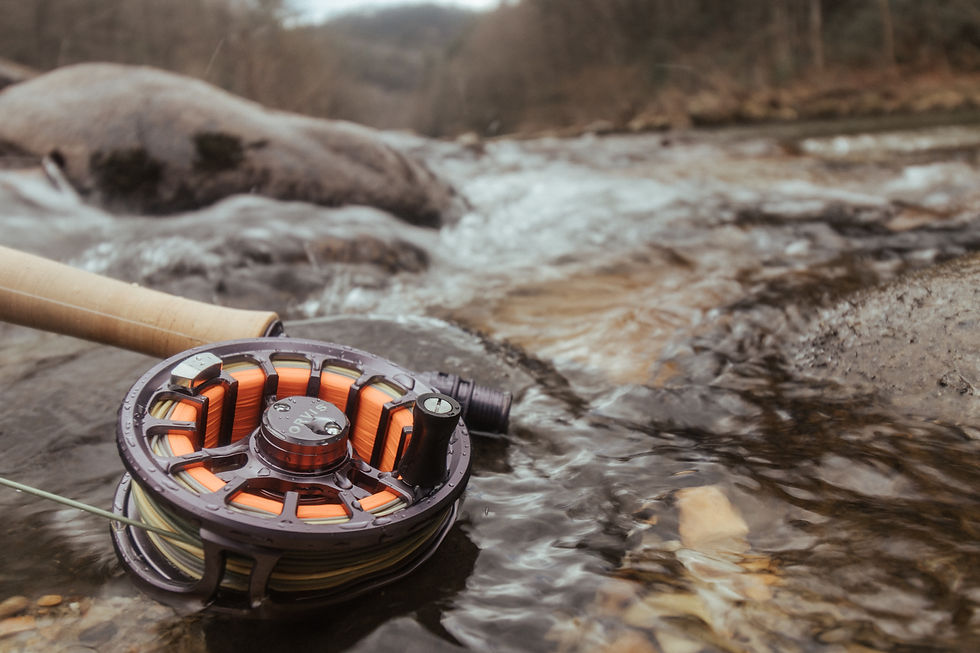
Western North Carolina holds two of the most productive trout tailwaters in the entire Southeast -- the Tuckasegee River and the Watauga River. Together, they anchor what locals and visiting anglers call the fly shop belt, a corridor of guide services, fly shops, lodges, and outfitters stretching from the Nantahala Gorge through Sylva and Dillsboro, up through Boone and Valle Crucis, and into the high headwaters of the Blue Ridge. For the businesses that depend on float-trip trout and wade-fishing clients, this corridor represents an enormous economic engine. But the digital marketing infrastructure behind it has not kept pace with the quality of the fishing.
A Pine & Marsh audit of fly shops and guide services across the western NC trout belt returned an average score of 5.57 out of 10. 80% of the audited businesses had no structured data markup. Eighty-five percent had no FAQ schema. Most lacked localized landing pages for the specific rivers, hatches, and seasons that drive their bookings. That gap is not just a missed opportunity -- it is a vulnerability. Aggregator platforms and third-party booking engines are filling the vacuum, intercepting the very search traffic these operators should own.
This post maps the geography, fishery, economy, and marketing landscape of the Tuckasegee and Watauga river systems. It is written for fly shop owners, drift boat guides, wade fishing outfitters, lodge operators, and anyone whose livelihood depends on getting anglers to the water in western North Carolina.
The Tuckasegee River: Sylva, Dillsboro, and the Heart of Jackson County
The Tuckasegee River begins high in the mountains south of Cashiers, fed by tributaries draining the escarpment between the Blue Ridge and the Nantahala range. It flows north and west through the towns of Cullowhee, Sylva, and Dillsboro before joining the Little Tennessee River near Fontana Lake. The total length of fishable water on the Tuckasegee system exceeds 20 miles, but the most famous stretch -- and the one that drives the float-trip economy -- is the delayed harvest section running through Sylva and Dillsboro.
The North Carolina Wildlife Resources Commission manages the Tuckasegee delayed harvest section under special regulations that restrict harvest from October through June, creating a catch-and-release fishery during the prime months. The result is a river loaded with trout through the cooler seasons. Rainbow trout are the dominant species, heavily stocked but supplemented by natural reproduction in tributary streams. Brown trout hold in deeper pools and undercut banks, growing to trophy sizes in the tailwater sections below dams. Brook trout -- the only native salmonid in the southern Appalachians -- survive in the coldest headwater tributaries feeding the upper Tuckasegee system.
The geography of the Tuckasegee makes it ideal for drift boat fishing. Long, accessible floats pass through small-town scenery with easy put-in and take-out points. Guides run McKenzie-style drift boats and rafts, covering water that wade anglers cannot easily reach. The float-trip model is central to the guide economy here -- it puts clients over more fish, covers more water, and commands higher per-trip rates than walk-and-wade excursions alone.
Dillsboro sits at the gravitational center of the Tuckasegee fly fishing scene. A cluster of fly shops, outfitters, and guide services operates within a few blocks of the river. This density of businesses creates both competition and community -- anglers visiting the area can shop for gear, book a guide, and be on the water within minutes. The town functions as a base camp for the entire Tuckasegee system.
The Watauga River: Boone, Valle Crucis, and the High Country Tailwater
The Watauga River originates on the slopes of Grandfather Mountain and flows through the Boone and Valle Crucis area before crossing into Tennessee and entering Watauga Lake. The North Carolina section of the Watauga is one of the state's premier tailwater trout fisheries, fed by cold bottom-release water from Watauga Dam. This cold, consistent flow supports year-round trout populations and creates conditions that rival those of tailwaters many times its size.
The Watauga's character differs from the Tuckasegee in important ways. The river is smaller, tighter, and more technical. Wade fishing is the dominant method on much of the Watauga, though drift boats and rafts run sections where the water allows. The trout tend to be more pressured and more selective, which makes the Watauga a favorite among experienced fly anglers who prize the challenge. Brown trout are a particular draw -- the Watauga produces some of the largest brown trout in the North Carolina mountains, fish that have learned to feed on sculpin, crayfish, and large stonefly nymphs in the deeper runs.
Valle Crucis, a small community just west of Banner Elk, serves as the cultural anchor of the Watauga fly-fishing scene. The original Mast General Store, a landmark since 1883, sits in Valle Crucis, and the area has long attracted visitors for the mountain atmosphere as much as for the fishing. Fly shops in the Boone and Banner Elk corridor cater to a clientele that includes Appalachian State University students, second-home owners, and destination anglers traveling from Charlotte, the Triangle, and beyond.
The Watauga also benefits from its proximity to the South Fork of the New River, Elk Creek, and dozens of smaller mountain streams that offer wild trout fishing in remote settings. Guides who operate on the Watauga often run trips on these adjacent waters as well, creating a multi-stream offering that extends the season and diversifies the client experience.
The Western NC Fly Shop Belt: A Corridor of Commerce Built on Trout
The term fly shop belt describes the unusual concentration of fly fishing retail, guide services, and outfitting businesses along the western North Carolina mountain corridor. From the Nantahala Gorge in the southwest to Boone in the northeast, a distance of roughly 120 miles, anglers can find more than two dozen dedicated fly shops and guide operations. No other region in the Southeast matches this density.
This concentration exists because the geography demands it. Western North Carolina sits at the intersection of the Blue Ridge and the Great Smoky Mountains, with the Pisgah and Nantahala National Forests covering more than a million acres of public land. Thousands of miles of trout streams flow through this landscape. The Tuckasegee and Watauga are the marquee rivers, but the Nantahala, the French Broad, the Davidson, the South Toe, and dozens of smaller creeks all support fishable trout populations. The fly shop belt exists because the resource base is massive and the access is public.
Each fly shop in the belt operates as a hybrid business. It is part retail store, part guide booking office, part local intelligence hub, and -- increasingly -- part content producer. The shops that thrive are the ones that understand all four roles. They sell flies and leaders at the counter, book guided float trips and wade trips through their websites, provide daily fishing reports that keep anglers informed, and publish content that drives organic search traffic year-round.
The challenge is that most of these businesses were built on word-of-mouth and repeat customers. The transition to digital marketing has been uneven. Some shops have invested in strong websites, email lists, and social media presence. Many have not. And even among the better-marketed shops, fundamental SEO infrastructure -- structured data, FAQ schema, localized landing pages, mobile optimization -- remains weak.
The Float-Trip Trout Economy: Drift Boats, Guide Fees, and Seasonal Patterns
Float trips are the economic backbone of the western NC trout guide industry. A half-day drift boat trip on the Tuckasegee typically runs between $250 and $350 for one or two anglers. Full-day trips range from $400 to $500. Wade fishing trips are priced slightly lower but require more effort from the angler and cover less water. The float-trip model is more scalable for guides—they can run multiple trips per day during peak season, and the drift boat provides a platform for instruction, making the experience accessible to beginners and experienced anglers alike.
Seasonal patterns drive the calendar. The delayed harvest season on the Tuckasegee (October through June) is the prime booking window. Within that window, the spring months -- March through May -- see the heaviest demand as water temperatures rise, insect hatches intensify, and trout feed aggressively on the surface. Fall brings a second surge as brown trout enter their spawning period, becoming more active and aggressive. Summer is the slowest season on the lower Tuckasegee, as water temperatures can push trout into thermal stress, but guides shift to higher-elevation streams and headwater tributaries to keep clients on fish.
On the Watauga, the tailwater release schedule from Watauga Dam creates its own rhythm. Cold-water releases can produce excellent fishing even in summer months when freestone streams are too warm. Guides who understand the generation schedule -- and can communicate it to potential clients through their websites and social channels -- have a significant competitive advantage.
The economic multiplier extends well beyond guide fees. Anglers who book float trips also spend money on lodging, meals, gas, fly shop purchases, and local attractions. A single guided float trip can generate $500 to $800 in total local spending when ancillary costs are included. For small mountain towns like Sylva, Dillsboro, and Valle Crucis, the trout economy is not a niche—it is a pillar.
Rainbow Trout, Brown Trout, and Native Brook Trout: The Western NC Triad
Three species of trout define the western NC fishery, and each plays a different role in the guide economy.
Rainbow trout are the workhorse. Heavily stocked by the NCWRC, rainbows provide the volume that keeps clients catching fish on float trips and wade trips alike. They are aggressive feeders, willing to take dry flies, nymphs, and streamers. For first-time fly anglers on a guided trip, rainbows are the species most likely to produce the bent rod and the photograph that turns a casual visitor into a repeat client.
Brown trout are the trophy. Browns grow larger than rainbows in western NC tailwaters, and they are warier, more selective, and harder to catch. A 20-inch brown trout on the Tuckasegee or Watauga is a legitimate achievement, and guides who can put clients on big browns command premium reputations. Brown trout also drive the fall booking season -- their spawning behavior makes them more aggressive and more visible in October and November, creating a window that experienced anglers specifically target.
Brook trout are native. Southern Appalachian brook trout -- sometimes called speckled trout or specks -- are the only salmonid native to these mountains. They survive in the coldest, highest-elevation headwater streams, often in water too small and remote for guided trips. But brook trout hold enormous symbolic and conservation value. Guides who can offer a brook trout experience -- a hike-in trip to a wild stream in the Pisgah or Nantahala National Forest -- tap into a market of anglers who value authenticity and wildness above catch rates.
The Pisgah and Nantahala National Forest Corridor
The Pisgah and Nantahala National Forests together cover more than 1.1 million acres of western North Carolina mountain terrain. This is the largest block of public land in the southern Appalachians, and it contains the densest concentration of wild-trout waters in the eastern United States. For fly shops and guide services operating in the Tuckasegee and Watauga corridors, the national forest system is both a resource and a marketing asset.
Anglers searching for wild trout in the Southeast will inevitably encounter the Pisgah and Nantahala names. These forests contain hundreds of miles of streams classified as wild trout water by the NCWRC -- streams where naturally reproducing trout populations sustain themselves without stocking. The marketing opportunity is significant: guides and shops that position themselves as gateways to national forest trout water can capture search traffic from anglers planning trips around public-land access.
Content that connects specific guide services to specific national forest streams -- with details about access points, trail conditions, seasonal patterns, and species -- is the kind of deep, localized information that ranks well in search and converts browsers into bookers. Yet most fly shop websites in the belt treat the national forest as an afterthought, mentioning it only in passing rather than building dedicated pages or content around the opportunity.
The Digital Marketing Gap: What the Pine & Marsh Audit Found
Pine & Marsh conducted a digital marketing audit of fly shops and guide services across the western NC trout corridor. The findings were consistent with patterns we have seen across the southeastern outdoor industry, but the specific numbers are worth examining.
Average audit score: 5.57 out of 10
80% of businesses had no structured data markup of any kind
85% had no FAQ schema on their websites
Most lacked dedicated landing pages for specific rivers, species, or trip types
Mobile optimization was inconsistent -- several sites were not fully responsive
Google Business Profile completion rates were below 60% on average
Few businesses had any schema markup for LocalBusiness, Service, or Product
Content publishing frequency was low -- most blogs had fewer than 10 posts total
These numbers matter because they represent the gap between where these businesses are and where they need to be to compete in organic search. A fly shop with no structured data, no FAQ schema, and no dedicated river pages is invisible to the search features that increasingly dominate Google results -- featured snippets, People Also Ask boxes, knowledge panels, and local pack results.
The operators who close this gap first will capture a disproportionate share of the organic traffic. Search engine optimization for fly fishing guides is not about tricks or shortcuts -- it is about building the most complete, most authoritative, most useful body of content for the specific queries that anglers type before they book a trip.
SEO Opportunities: The Queries That Drive Bookings
The keyword landscape for Western NC trout fishing is rich and underserved. The primary booking-intent queries -- the searches that indicate someone is ready to spend money -- include:
Tuckasegee River fishing guide
Watauga River fly fishing
NC trout float trip
Western NC fly fishing guide
Dillsboro fly fishing
Boone fly fishing guide
Valle Crucis fly fishing
Tuckasegee River drift boat trip
Watauga River brown trout
Western NC delayed harvest fishing
Each of these queries represents a potential client. And for most of them, the current search results are dominated by general fishing directories, aggregator sites, and state tourism pages rather than by the actual guide services and fly shops that operate on these rivers. That is the definition of an SEO opportunity -- high-intent queries with weak incumbent results.
The strategy for capturing these queries is straightforward but labor-intensive. Each target keyword needs a dedicated landing page or a comprehensive blog post built around it. That page needs proper on-page SEO -- title tags, meta descriptions, header structure, internal linking. It needs structured data markup so search engines can parse and display the content in rich results. And it needs to be genuinely useful to the searcher -- not keyword-stuffed filler, but real information that answers the questions an angler has before booking a trip.
Long-tail queries offer additional opportunities. Searches like 'best time to fly fish the Tuckasegee,' 'what flies to use on the Watauga in March,' and 'Tuckasegee River water levels for fishing' all indicate anglers deep in the planning process. Content that answers these specific questions -- fishing reports, hatch charts, water level guides, seasonal calendars -- builds authority and captures traffic that feeds the booking pipeline.
The Fly Shop as Marketing Hub: Retail, Guiding, and Content Production
The modern fly shop is not just a retail store. It is a marketing hub -- or it should be. The shops that dominate their local markets are the ones that have figured out how to turn their daily operations into a content engine.
Consider what a fly shop already knows and does every day. The staff checks river conditions. They talk to guides coming off the water. They see which flies are selling. They hear from customers about what is working and what is not. They know the hatch schedules, the water temperatures, the generation patterns, the access points. All of this information is marketing gold -- it is exactly the content that anglers search for online before they book a trip or drive to the river.
The translation from daily knowledge to published content is where most shops fall short. A fishing report posted to Instagram reaches followers but disappears from search within hours. The same report published as a blog post on the shop's website, with proper headers, location tags, and structured data, becomes a permanent asset that ranks in search results for months or years. An FAQ page answering the 25 most common questions about fishing the Tuckasegee or Watauga becomes a traffic magnet that feeds the booking calendar.
Fly shops that embrace the marketing hub model see compounding returns. More content leads to more search visibility. More visibility leads to more website traffic. More traffic leads to more guide bookings and more retail sales. The flywheel effect is real, but it requires consistent investment in content creation and SEO infrastructure.
Aggregator Interception: The Threat from Third-Party Platforms
When fly shops and guide services do not own their search presence, someone else will. Aggregator platforms -- sites like FishingBooker, GetMyBoat, TripAdvisor, and even Airbnb Experiences -- are increasingly targeting outdoor recreation keywords. These platforms have massive domain authority, dedicated SEO teams, and the resources to build landing pages for every river and every species in the country.
The aggregator model works by inserting itself between the angler and the guide. The angler searches for 'Tuckasegee River fishing guide,' finds the aggregator's listing page, and books through the platform -- which takes a commission of 15% to 25% on every booking. The guide does the work; the platform takes the margin. Over time, guides who rely on aggregator traffic become dependent on a channel they do not control, subject to algorithm changes, commission increases, and competitive pressure from other guides listed on the same platform.
The defense against aggregator interception is ownership of organic search. A guide service that ranks on page one for its core keywords does not need the aggregator. A fly shop that owns the featured snippet for 'best time to fish the Watauga River' captures the click before the aggregator ever enters the picture. But building that search presence requires the same investments most operators have been slow to make -- dedicated pages, structured data, FAQ schema, and consistent content publishing.
Content Gaps Operators Should Fill Now
Based on the Pine & Marsh audit and competitive analysis of the western NC trout corridor, the following content gaps represent the highest-priority opportunities for fly shops and guide services:
River-specific landing pages: Dedicated pages for each river system (Tuckasegee, Watauga, Nantahala, etc.) with detailed information about access, regulations, species, and seasonal patterns
Trip-type pages: Separate pages for float trips, wade trips, half-day trips, full-day trips, and multi-day packages -- each optimized for its own keyword set
Species pages: Dedicated content for rainbow trout, brown trout, and brook trout fishing in western NC, including tactics, best seasons, and trophy opportunities
Seasonal guides: Comprehensive month-by-month or season-by-season fishing guides that help anglers plan their trips and capture long-tail search traffic
Hatch charts and fly selection guides: Practical reference content that anglers return to repeatedly, building brand authority and generating consistent traffic
FAQ pages: Structured FAQ content with schema markup, answering the 20-30 most common questions about fishing each river system
Fishing report archives: Regular fishing reports published as blog posts (not just social media) that build a searchable archive of conditions and catches
National forest access guides: Detailed content about fishing in the Pisgah and Nantahala National Forests, including trailhead directions, stream descriptions, and regulation summaries
Each of these content types serves double duty -- it ranks in search, and it converts visitors into clients. A well-built river page does not just attract traffic; it answers the questions that move an angler from research to booking.
Work with Pine & Marsh
Pine & Marsh is a southeastern outdoor marketing agency that works exclusively with fishing guides, fly shops, outfitters, lodges, and outdoor recreation businesses. We understand the Western NC trout economy because we have studied it, audited it, and built marketing systems for businesses operating within it.
If you run a fly shop, guide service, or lodge on the Tuckasegee, Watauga, or anywhere in the western NC fly shop belt, we can help you close the digital marketing gaps that are costing you bookings. Our work includes:
Comprehensive digital marketing audits with specific, actionable recommendations
Website rebuilds and redesigns optimized for search and conversion
Structured data and schema markup implementation
SEO strategy and content planning for river-specific and species-specific pages
Blog content creation and fishing report systems
Google Business Profile optimization
Email marketing and client retention systems
Social media strategy aligned with search and booking goals
The western NC trout corridor is too valuable a market to leave to aggregators and outdated websites. The operators who invest in their digital presence now will own the search results -- and the bookings -- for years to come. Reach out to Pine & Marsh to start the conversation.


Comments