
Marketing a Roanoke River Valley Trophy Whitetail Lodge
Updated: Jun 12
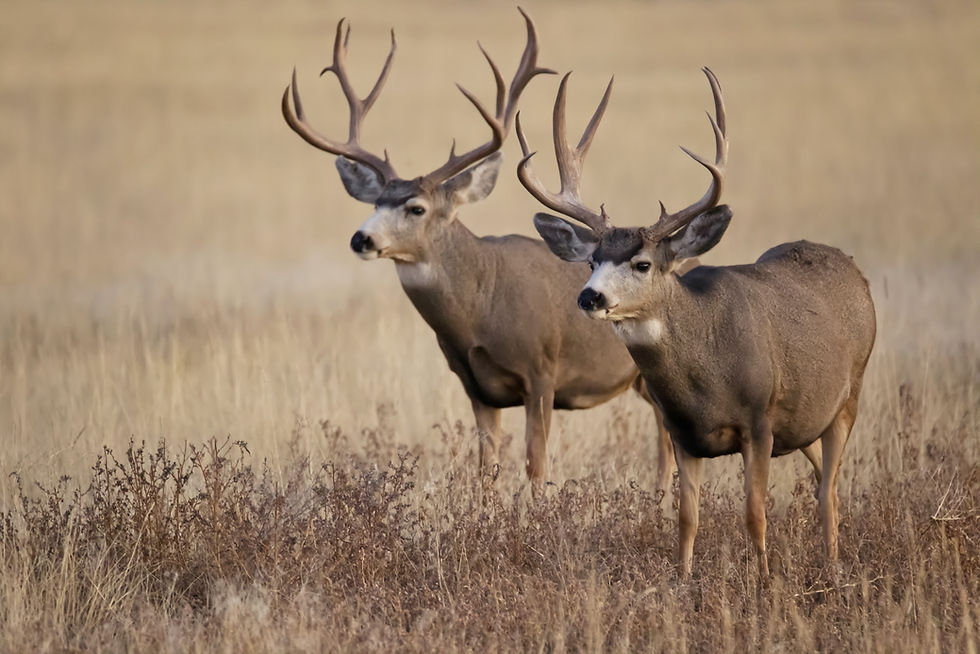
The Roanoke River Valley carves a quiet, fertile seam across northeastern North Carolina, and for the lodge owner who hunts it seriously, that seam holds some of the most productive bottomland whitetail ground in the state. The river winds through Northampton, Bertie, Halifax, and Martin counties before easing toward Albemarle Sound, and along the way, it deposits the kind of rich alluvial soil that grows big bucks and bigger expectations. If you operate a trophy whitetail lodge in this corridor, you already know the deer are here. The harder question, and the one this article exists to answer, is whether the hunters who would pay to chase those deer can actually find you online before they book somewhere else.
This is a marketing problem more than a hunting problem, and it is one we see repeatedly across the rural Southeast. The ground produces, the guiding is honest, and the lodge fills its limited weeks largely through word of mouth and a handful of repeat clients. That model works until it does not. When a cornerstone client retires, when a neighbor leases out the farm next door, or when a competitor two counties over builds a sharp website and starts ranking for the searches your future guests are typing, the quiet referral engine sputters. The purpose of a deliberate digital presence is to make sure that the next high-intent hunter who searches for Roanoke River deer hunting lands on your story rather than someone else's.
Pine and Marsh works with outdoor operators across the southeastern states, and the Roanoke corridor presents a familiar shape: exceptional habitat, a thin digital footprint, and a booking pipeline that depends far too heavily on the same handful of relationships. In the following sections, we will walk through how a lodge in this valley should think about its market, search visibility, booking funnel, and the trust signals that convince a stranger to wire a deposit. None of it requires you to become a marketer. It requires that the people who hunt for a living partner with people who market for a living, so that the reputation you have earned in the woods finally shows up where buyers are looking.
It is also worth noting, at the outset, the lodge cluster that anchors much of the serious guiding in this part of the state. The operations gathered loosely around the Northampton and Ahoskie area have long formed the quiet heart of trophy whitetail guiding on the lower river, and while we keep that reference soft rather than presenting it as a formal organization, it is useful context for understanding the competitive landscape in which you operate. Knowing roughly where the other credible lodges sit and how they present themselves online is the first step toward distinguishing your own story from theirs.
The Roanoke River Valley as a Whitetail Destination
The Roanoke rises in the Virginia Blue Ridge and runs southeast for hundreds of miles before it reaches North Carolina, but it is the lower river -- the broad, slow, hardwood-bottom stretch below the fall line -- that matters most to deer hunters. Here, the channel braids through cypress sloughs, oxbow lakes, and seasonally flooded hardwood flats, and the surrounding uplands break into a patchwork of agricultural fields, planted pine, and mature timber. That mix of cover and groceries is precisely what grows heavy-bodied, well-antlered whitetails, and it is why the counties hugging the lower Roanoke are regionally regarded as a strong trophy region within North Carolina.
It is worth being honest about how we frame that reputation, because hunters have grown skeptical of breathless marketing claims. We deliberately avoid declaring any single county the best or the top deer county in the state, because such claims are difficult to substantiate and easy for a savvy prospect to discount. What the data and local experience support is a softer, more durable statement: the Roanoke River Valley is consistently productive, the bottomland genetics are excellent, and the agricultural-edge habitat gives a well-managed property a real shot at mature bucks year after year. That is a claim you can stand behind in a phone call, and it is the claim your website should make.
The river itself shapes the hunting in ways that prospective guests find genuinely compelling once you explain them. Annual flooding refreshes the soil and concentrates deer movement along terraces and ridges when the bottoms fill with water. Mast from oaks and other hardwoods drives early-season patterns, while the surrounding farm fields of corn, soybeans, and winter wheat pull deer into predictable feeding windows. A lodge that can articulate this -- how the water, the timber, and the agriculture interact across a season -- immediately sounds more credible than one that simply posts a few trail-camera photos and a phone number.
There is also a quieter advantage to the valley that matters for marketing: it is not yet crowded with polished competition. Unlike the Midwest's famous whitetail counties or the heavily marketed plantation belt to the south, the Roanoke corridor remains relatively under-told online. For the hunter chasing a genuinely wild, agriculture-driven Southern bottomland experience, that obscurity is part of the appeal, and for you, it is an opening. The operator who tells this story well, early, and consistently will own the search results for years before the rest of the valley catches up.
Finally, the destination story has to acknowledge the realities of access and tradition in this part of North Carolina. Much of the best ground is privately held, family-owned, and worked for timber and row crops as much as for recreation. A lodge that controls or leases quality acreage in this environment is offering something a hunter genuinely cannot buy on his own, and your marketing should treat that access as the premium asset it is rather than burying it beneath generic language about scenery and hospitality.
How the Habitat Translates Into Deer Quality
Habitat is the foundation of every trophy claim, and the Roanoke bottoms offer a combination that is difficult to engineer artificially. The annual deposition of nutrient-rich sediment along the floodplain keeps the soil productive, which in turn keeps native browse and agricultural crops dense in protein. Deer raised on that nutrition tend to carry better body weight and grow heavier antlers than deer scraping a living from poorer ground, and a hunter who understands nutrition will register the difference the moment you describe it.
The structure of the landscape matters just as much as its fertility. The interplay of thick bottomland cover, hardwood ridges, planted pine, and open agriculture creates abundant edge, and edge is where deer live. A property that controls a meaningful stretch of that transition zone -- where bedding cover meets feeding ground -- holds deer through the season and gives a guest realistic daily encounters. Explaining this on your website does double duty: it educates the prospect, and it quietly proves you know your ground.
None of this guarantees a mature buck on any given morning, and your marketing should never imply that it does. What the habitat genuinely supports is a credible, repeatable opportunity at quality deer for a hunter who puts in the time, and that honest, grounded promise is both more believable and more durable than any exaggerated guarantee a less careful competitor might make.
Who Your Future Guest Actually Is
Before you can market a Roanoke River trophy lodge effectively, you have to be precise about who is on the other end of the search. The hunter willing to travel to northeastern North Carolina and pay for guided or semi-guided trophy whitetail access is not the same person who buys an over-the-counter tag and hunts public land near home. He is typically an experienced deer hunter, often from out of state or from the urban corridors of the mid-Atlantic, who has the means to invest in a quality experience and the discernment to walk away from anything that feels like a tourist trap.
This guest researches obsessively before he spends. He reads, compares, watches videos, and forms an opinion about your operation long before he ever calls. By the time he picks up the phone, he has usually narrowed his choices to two or three lodges and is looking for a reason to choose or eliminate each one. That means the work your website does in those silent research hours is the most important sales work your business does all year, and most lodges in the valley are losing that work to nicer-looking competitors without ever knowing it happened.
He is also risk-averse in a specific way. A trophy hunt represents real money, scarce vacation days, and a meaningful emotional investment, so the downside of choosing badly looms large in his mind. He is asking himself whether the deer are real, whether the guides are competent and honest, whether the lodging is comfortable enough, and whether the people running the place will treat him fairly if the weather turns or a stand goes cold. Every one of those anxieties is a question your marketing can answer in advance, and the lodge that answers them most clearly wins the booking.
It helps to picture two or three representative versions of this guest rather than a single faceless customer. One is the seasoned out-of-state traveler hunting his way through new states in search of a wall-hanger; he cares most about deer quality and the credibility of your harvest history. Another is the regional professional who wants a turnkey, comfortable, low-hassle weekend within a few hours' drive; he cares about lodging, logistics, and ease of booking. A third is the small group -- friends, a father and son, a handful of colleagues -- looking for a shared experience, and they care about camaraderie, capacity, and whether you can host them together. Each of these reads your website looking for different reassurance, and a well-built site speaks to all three without forcing any of them to dig.
Understanding this person changes everything about how you present the lodge. It tells you that price, while it matters, is rarely the deciding factor for the trophy buyer, because someone willing to travel for a mature buck is not shopping on cost alone. It tells you that authenticity outperforms polish, because this hunter can smell a hollow operation. And it tells you that the single most persuasive thing you can offer is evidence -- real photos, real names, real history, and real numbers -- presented honestly and without the inflated claims that make him distrust the rest of your story.
There is one more thing worth knowing about this guest: he talks. The trophy hunting world is smaller and more connected than it appears, and a guest who has a great experience tells his hunting friends, posts his buck, and becomes an unpaid ambassador for your lodge. The same network amplifies bad experiences just as efficiently. This is why everything in your marketing, from the honesty of your claims to the speed of your response, ultimately feeds a reputation that travels far beyond any single booking.
The Search Visibility Problem
The uncomfortable truth for most Roanoke Valley lodges is that they are effectively invisible to the hunters most likely to book them. When a prospective guest opens Google and types something like Roanoke River deer hunting, North Carolina trophy whitetail outfitter, or guided deer hunts northeastern NC, the lodge that appears at the top of those results is the one that gets the call, and right now that lodge is rarely the one with the best deer. It is the one with the best website.
Search visibility is not magic, and it is not reserved for big companies with big budgets. It is the product of a handful of disciplined fundamentals applied consistently over time. Your website needs pages that clearly target the phrases hunters actually search for, written in natural language that addresses their real questions rather than being stuffed with keywords. It needs a clean technical foundation so that Google can read and trust it. And it needs enough genuine, substantive content for a search engine to conclude you are an authority on hunting this specific river valley, rather than a thin brochure that happens to mention deer.
Geography is your greatest untapped asset here, and most lodges waste it. The hunters worth winning are searching with place names -- the river, the counties, the towns, the soundside region -- and a lodge that weaves Roanoke River, Northampton, Halifax, Bertie, and the broader Albemarle area naturally into its pages will surface for searches that a generically written competitor never touches. This is the difference between competing against every deer lodge in America and competing only against the small handful that actually operate in your corner of North Carolina, which is a fight you can win.
Content depth compounds over time, rewarding patience. A single well-written page about hunting the Roanoke bottoms will help, but a lodge that steadily publishes substantive articles -- about the rut timing in northeastern North Carolina, about how flooding affects deer movement, about what a first-time guest should expect -- builds an authority that becomes very difficult for a latecomer to dislodge. Each piece of honest, useful content is both a doorway for a new searcher and a signal to Google that you are the real authority on this ground. The lodges that start this work now will be reaping the rankings long after the rest of the valley wakes up.
It is also important to be realistic about the timeline, because nothing erodes trust faster than overpromising on search. Earning durable rankings in a competitive niche takes months, not days, and the operators who succeed treat it as a season-over-season investment rather than a switch to be flipped before opening week. The encouraging counterpoint is that, because so few Roanoke Valley lodges are doing this work at all, even modest, consistent effort tends to produce outsized results compared with what the same effort would yield in a saturated market like the Midwest.
The Searches That Actually Lead to Bookings
Not all search traffic is created equal, and a lodge that chases volume rather than intent wastes its effort. The searches that lead to deposits are specific and high-intent: phrases that pair a clear desire to hunt with a clear willingness to pay, often anchored to a place. A hunter typing guided trophy whitetail hunts in North Carolina is far closer to booking than one casually reading about deer biology, and your content should be organized to capture and reward that high-intent visitor first.
This is where local, geographic language pays its largest dividend. The competition for broad national terms is fierce and expensive, but the competition for the specific combination of your river, your counties, and trophy guiding is thin. By writing naturally and thoroughly about your actual location, you position yourself to win exactly the searches made by the hunters who could realistically travel to and book with you, rather than burning effort on traffic that will never convert.
Answering questions is the other half of the strategy, because so much modern search is phrased as a question. Hunters ask when the rut peaks, what a guided hunt costs, what to bring, and what success rates look like, and a lodge that answers those questions honestly on its own pages earns both the search visibility and the trust that come from being genuinely helpful. The content that ranks best is almost always the content that was most useful to a real person first.
Building a Website That Converts Hunters
Ranking in search gets the right hunter to your website, but the website itself has to do the convincing, and this is where a great many otherwise excellent lodges fall down. A site that loads slowly, looks dated, hides its photos, or buries the phone number will lose a high-intent guest in seconds, no matter how good the deer are. The goal of the site is not to win design awards; it is to move a skeptical, research-minded hunter from curiosity to confidence to contact as smoothly as possible.
The first thing the site must do is establish, within moments, that the deer are real and the operation is serious. That means leading with genuine photography of actual harvests from your actual property, ideally with the kind of context -- the year, the hunter, a sentence of story -- that makes each image credible rather than generic. A wall of honest trail-camera and harvest images does more persuasive work than any paragraph of adjectives, because this guest trusts his eyes and distrusts your marketing copy by default.
The site must also answer the practical questions a serious buyer asks before they are willing to engage. He wants to understand what a hunt actually includes, what the lodging and meals are like, how many hunters you take at once, what seasons and dates are available, and roughly what the experience costs or at least how pricing works. Lodges often hide this information for fear of scaring people off, but the opposite is true: vagueness reads as evasiveness to this audience, and the operator who is forthright about logistics and honest about expectations earns trust that the secretive competitor never will.
Trust signals woven throughout the site carry enormous weight with a guest who is wagering real money on strangers. Testimonials from named, real past hunters, references to your harvest history framed honestly rather than inflated, mentions of how long you have operated, and clear, human descriptions of the people who will be guiding all reduce the perceived risk of booking. The softer your reputation claims -- regionally regarded as a strong trophy region rather than the best in the state -- the more believable everything else on the page becomes, because the reader senses you are not the kind of operation that exaggerates.
Finally, the site has to make contact effortless and obvious from every page. The phone number and a simple inquiry form should follow the reader wherever he scrolls, the call to action should be unambiguous, and the path from interested to in touch should never require more than a click or two. A surprising number of lodges win the hunter's attention and then lose him at the last step because the next move is not obvious. The website's entire job is to carry him gently to that moment of contact, and then to get out of the way.
Photography and Proof Beat Adjectives
If there is a single lever that moves this audience more than any other, it is honest visual proof. A discerning trophy hunter has read a hundred lodge websites that all promise giant bucks and world-class experiences, and he has learned to ignore the words entirely. What he cannot ignore is a credible photograph of a real deer taken by a real hunter on your real ground, especially when it carries the small details -- a date, a name, a brief story -- that mark it as authentic rather than borrowed.
This is why we counsel lodges to invest in genuine photography rather than stock imagery, and to organize it so a visitor can browse harvest after harvest across multiple seasons. A deep, dated gallery does more to establish credibility than any amount of superlative copy, because it lets the hunter draw his own conclusion from evidence rather than asking him to take your word for it. The lodge that shows rather than tells wins the skeptic.
Video extends the same principle further. Short, honest clips of the property, the lodging, a guide talking through how a hunt unfolds, or a guest recounting a real experience give the prospect a vivid sense of what he is buying and collapse much of the distance that makes a stranger hesitate. It does not need to be cinematic; it needs to be real, because realness is the currency that converts this particular buyer.
The Booking Funnel From Search to Deposit
It helps to think about marketing a trophy lodge not as a single website but as a funnel -- a sequence of stages that a hunter moves through from his first vague search to the moment he commits a deposit and blocks the dates on his calendar. Each stage has its own job, its own failure points, and its own opportunities, and a lodge that understands the whole journey can find and fix the specific leak that is costing it bookings rather than guessing.
The journey begins with discovery, the moment a hunter first becomes aware that you exist. That might be a Google search, a referral from a friend, a social media post, or a well-placed advertisement. The work at this stage is simply to be present and visible where the right hunters are looking, which loops back to the search visibility and content fundamentals discussed earlier. A lodge that is invisible at discovery never gets a chance at the stages that follow, no matter how good everything downstream might be.
Next comes consideration, the silent research phase in which the hunter studies your website, compares you with alternatives, and forms his opinion. This is where photography, honest information, and trust signals do their work, and it is the stage where most lodges quietly lose the sale without ever knowing a prospect was there. The goal at this stage is to answer every reasonable question and remove every reasonable doubt, so that when he is ready to act, you are the obvious choice rather than one of several maybes.
Then comes the inquiry, the moment the hunter raises his hand -- a phone call, an email, a form submission. This is a fragile, high-value moment, and how quickly and warmly you respond often determines whether the deal survives. A serious buyer who fills out a form on three lodges' websites will frequently book with whichever one calls him back first and treats him like a person rather than a lead. Speed and genuine human attention at this stage convert prospects that slower, colder competitors lose.
The final stage is commitment, the conversation that turns an interested prospect into a paying guest with a deposit down. By this point, the marketing has done its job, and the sale rests on a real human relationship -- a clear, fair conversation about dates, expectations, terms, and logistics. The role of all earlier marketing is to bring the hunter into this conversation already trusting you, so that the close feels like a natural next step rather than a hard sell. When the funnel works, the deposit conversation is the easiest part, because everything before it has already earned the yes.
The value of viewing the business as a funnel is as much diagnostic as it is descriptive. When bookings are soft, the funnel tells you where to look: if no one is finding you, the problem is discovery; if traffic comes but no one inquires, the problem is the website and its trust signals; if inquiries come but do not close, the problem is response speed or the booking conversation itself. Rather than guessing or blaming the season, the operator who maps his funnel can pinpoint and repair the single weakest link.
Seasons, Regulations, and Honest Expectation-Setting
Nothing erodes a lodge's credibility faster with a knowledgeable hunter than getting the regulations wrong, and nothing builds it faster than getting them right. Deer seasons in North Carolina are set by the North Carolina Wildlife Resources Commission, and the eastern part of the state, where the Roanoke Valley sits, has historically run an extended season that includes archery, blackpowder, and gun segments throughout the fall and into early winter. A guest considering a trip wants to understand when the rut typically peaks, which weapons seasons align with which weeks, and what the bag and tagging rules require of him.
Because regulations change and because the eastern season structure has specific dates that shift year to year, the responsible posture for any lodge is to present season information as NCWRC-attributed and to encourage every guest to reconfirm the current regulations with the Commission before their trip. We deliberately frame these details with a reconfirm note rather than stating them as permanent facts, both because they are accurate and because they signal to the reader that you are a careful, law-abiding operator who respects the rules and expects his guests to do the same. That posture reassures the serious hunter far more than false precision would.
The rut is the single most asked-about element of timing, and it deserves honest treatment. In northeastern North Carolina, the peak of breeding activity generally falls in the autumn window that the Commission and longtime local hunters recognize, though exact timing varies with weather and from year to year. Rather than promising a guest that he will hit the rut perfectly, the credible approach is to explain the general pattern, note that nature does not run on a calendar, and help him choose dates that give him the best realistic odds. A hunter who is told the truth about timing trusts everything else you tell him.
Expectation-setting extends well beyond dates and into the heart of what trophy hunting actually is. A mature buck is never guaranteed, and a lodge that implies otherwise is setting itself up for angry reviews and lost repeat business. The far stronger play is to be candid: explain your management approach, your typical age structure, what a good hunt looks like, and what a tough one looks like too. The guest who books knowing the real odds and harvests a buck is thrilled, and the one who books knowing the real odds and goes home empty-handed still respects you enough to come back.
This honesty is also a marketing asset in its own right, not merely an ethical obligation. In a category full of lodges making inflated claims, the operator who speaks plainly about regulations, timing, and realistic outcomes stands out as trustworthy, and trustworthiness is exactly what this risk-averse, research-driven buyer is hunting for. Honest expectation-setting is not the cautious alternative to good marketing; for a trophy whitetail lodge, it is the most persuasive marketing there is.
There is a practical workflow that keeps this honesty sustainable from year to year. Rather than baking specific dates into your pages where they will quietly go stale, write about seasons and the rut in durable, general terms and direct readers to the Commission for the current calendar. This keeps your site accurate without constant rewriting, protects you from the embarrassment of publishing last year's dates, and, every time a guest follows that link, reinforces that you are the operator who points him to the official source rather than guessing.
Reviews, Reputation, and Word of Mouth Online
The Roanoke Valley lodge has built its business on word of mouth, and the good news is that word of mouth has not died in the digital age—it has simply moved online and become permanent, searchable, and visible to strangers. Google reviews, in particular, function as the modern version of the trusted recommendation, and a strong, recent body of honest reviews can do more to convert a hesitant prospect than almost anything else on your website. The hunter who is wavering between you and a competitor will very often let the reviews break the tie.
Most lodges dramatically underinvest in this, and the cause is usually simple neglect rather than any real obstacle. Satisfied guests are generally happy to leave a review when asked, but they almost never think to do it on their own, so the lodge that builds a quiet, consistent habit of requesting a review after every good hunt will accumulate a reputation that its silent competitors cannot match. This is low-cost, high-leverage work, and it compounds: each new review makes the next prospect a little more confident and the next booking a little easier to close.
Responding to reviews matters as much as collecting them, because prospective guests read responses as carefully as they read reviews. A gracious, specific reply to a positive review reinforces the warmth that made the guest happy, and a calm, professional, non-defensive response to a rare critical review often impresses a reader more than the complaint discourages him. Handling criticism with grace publicly signals exactly the kind of fairness that a risk-averse buyer is looking for, and it can turn an awkward moment into a quiet selling point.
Reputation also extends beyond review platforms into the broader ecosystem of mentions, photos, and conversations that surround your name online. A guest who has a great hunt and posts a photo of his buck, a forum thread where your lodge is recommended, a tagged image on social media -- all of these reinforce the sense that you are a real, active, well-regarded operation. A lodge that encourages and gently amplifies this kind of organic sharing builds a layer of credibility that no amount of self-produced marketing copy can replicate.
The throughline across all of it is consistency. Reputation is not built in a single campaign; it is built one satisfied guest, one requested review, one thoughtful response, and one shared photo at a time, accumulated patiently over seasons. The lodge that treats reputation as an ongoing discipline rather than an afterthought ends up with a moat that competitors find nearly impossible to cross, because trust earned slowly and honestly is the one asset that cannot be bought in a hurry.
Paid Advertising and When It Makes Sense
Search engine optimization and reputation-building are the foundation, but they take time, and a lodge that wants to fill specific weeks in a specific season sometimes needs a faster lever. That lever is paid advertising, and used wisely, it can put your lodge in front of high-intent hunters at exactly the moment they are searching. Used carelessly, it can quietly drain a budget with very little to show for it, so the discipline around paid advertising matters as much as the decision to use it at all.
Google Ads is often the most natural fit for a trophy lodge because it captures intent at the precise moment of search. When a hunter types guided deer hunts North Carolina or Roanoke River trophy whitetail into Google, a well-built ad can place you at the top of his results immediately, without waiting for organic rankings to mature. The key is tight targeting -- the right keywords, the right geography, and a landing page that delivers exactly what the ad promised -- so that you are paying only for clicks from hunters who could plausibly book you.
Seasonality should drive the entire paid strategy because hunter intent in this category is sharply time-concentrated. Interest in deer hunting climbs through late summer and into the fall as seasons approach, peaks in the heart of the season, and falls off afterward, so a lodge that pours its budget into the off-season is largely wasting it. The smart approach is to pace spending against this curve, leaning in hard when prospects are actively planning and booking and pulling back when they are not, so that every advertising dollar lands when it can actually produce a deposit.
Paid advertising also pairs powerfully with everything else discussed in this article, and it should never be run in isolation. An ad that sends a hunter to a thin, unconvincing website wastes the click, whereas the same ad directed to a credible, photo-rich, trust-laden landing page converts. Likewise, the data that paid campaigns generate -- which searches, which messages, and which offers actually produce inquiries -- feeds back into your organic content and your understanding of your own market. The lodge that treats paid and organic as one integrated system gets far more from both than the lodge that treats them as separate experiments.
None of this means every lodge must advertise, and it is worth being honest about that. A small operation that fills its limited weeks comfortably through referrals and organic search may not need paid advertising at all, and there is no virtue in spending money to manufacture demand you already have. Paid advertising earns its place when you have specific capacity to fill, a clear sense of what a booking is worth to you, and a website ready to convert the traffic. When those conditions are met, it is a precise, powerful tool; when they are not, the money is usually better spent strengthening the foundation first.
Bringing It All Together for a Roanoke River Lodge
Stepping back from the individual tactics, the larger picture for a Roanoke River Valley trophy lodge is genuinely encouraging. You operate in a region with excellent bottomland whitetail habitat, agricultural edge that grows quality deer, and a corridor that remains relatively under-told online compared with the more heavily marketed regions of the country. The hunting asset is real, and the competitive digital field is thin, which is exactly the combination that allows a focused operator to build a commanding presence faster than he could in almost any other market.
The work itself is not exotic, and that is part of why it is so achievable. It is a website that loads fast and looks credible, honest photography that proves the deer are real, content that earns search rankings for the place names hunters actually use, a booking funnel with no obvious leaks, a steady habit of collecting and responding to reviews, and -- when capacity needs filling -- a disciplined, seasonal paid advertising program. None of these pieces is complicated on its own. The challenge is doing all of them consistently while you are also running a lodge, guiding hunters, and managing the land.
That is precisely the gap a marketing partner exists to fill, and it is the reason most successful lodges eventually stop trying to do it all alone. The owner's time is best spent in the woods and with guests, not wrestling with search algorithms, ad dashboards, and content calendars. The most effective arrangement pairs the operator's deep knowledge of the ground and the hunting with a partner's deep knowledge of how buyers search, evaluate, and decide, so that the reputation earned in the field finally shows up where future guests are looking.
It is also worth remembering the modest, honest framing that runs through everything above, because it is itself a strategy. We do not claim the Roanoke is the best deer county in North Carolina; we say it is regionally regarded as a strong trophy region, and we keep references to any particular lodge cluster soft, and our season information NCWRC-attributed with a reconfirm note. That restraint is not timidity. With this skeptical, research-driven buyer, it is the very thing that makes the rest of your story believable, and believability is what closes the booking.
The lodges that will own the Roanoke Valley's digital presence a few seasons from now are the ones that begin the work now, while the field is still open. The deer have always been here, and the hunters who want them are already searching for them. The only question is whether, when they search, they find a lodge that has told its story clearly, honestly, and well -- or whether they find a competitor who simply got there first. The advantage belongs to whoever starts.
Work with Pine and Marsh
Pine and Marsh is a marketing agency built specifically for outdoor operators across the southeastern United States, and the Roanoke River Valley trophy lodge is exactly the kind of business we exist to serve. We understand both sides of the equation -- the realities of guiding, managing land, and filling limited weeks, and the digital mechanics of search, reputation, and conversion that determine whether the right hunters ever find you. We bridge that gap so that the reputation you have earned in the woods finally works for you online.
Our approach begins with listening because no two lodges are the same, and generic playbooks fail in this regard. We learn your ground, your history, your harvest record, your capacity, and the kind of guest you most want to host, and only then do we build a strategy around the specific way your operation actually makes money. Whether your booking pipeline depends too heavily on a few aging relationships, or you simply want to grow without compromising the experience, we tailor the work to your real situation rather than handing you a template.
Practically, that work spans the full picture we have described in this article. We build and improve websites that load fast, showcase honest photography, and convert skeptical hunters into inquiries. We produce content that earns search visibility for the place names your future guests are typing. We help you establish the review and reputation habits that turn satisfied guests into a permanent, searchable endorsement, and when you have specific capacity to fill, we design and manage seasonal paid advertising that lands your message at the moment intent peaks.
Throughout, we hold ourselves to the same honesty we recommend to you, because credibility is the whole game with this audience. We do not invent inflated claims; we frame your strengths in language a discerning hunter will actually believe, and we keep regulatory details accurate and properly attributed. The trust we help you build with prospects is the same trust we work to build with you, and we would rather grow slowly on a foundation of honesty than chase a quick win that damages your reputation.
If you operate a trophy whitetail lodge along the Roanoke River, or anywhere in the rural Southeast where great hunting deserves a better digital presence, we would welcome a conversation. There is no obligation and no pressure -- just an honest discussion about your goals, your market, and whether a partnership makes sense for where you want the lodge to go. The best time to start owning your corner of the search results was a few seasons ago; the second-best time is now, and we would be glad to help you begin.
Reach out to Pine and Marsh whenever you are ready to talk. We will bring the marketing expertise, the regional understanding, and the same patient, honest discipline we have described here, and together we will make sure that the next hunter searching for a Roanoke River Valley trophy whitetail experience finds you first.
Why Local Geography Wins the Search
The strategic heart of search visibility for a Roanoke River lodge is the deliberate, natural use of local geography throughout the site. National terms like trophy whitetail hunting are contested by lodges in every state with deep pockets and years of head start, and trying to outrank them head-on is a losing proposition for a small regional operation. The far smarter battlefield is the specific, place-anchored search, where the only real competition is the handful of lodges that genuinely operate in your corner of the state.
When your pages speak naturally about the lower Roanoke, about Northampton and Halifax and Bertie, about the Albemarle region and the bottomland hardwoods, you become the obvious answer for the hunter who searches that way -- and the serious, ready-to-book hunter very often does. He is not casually browsing; he has decided he wants to hunt this part of North Carolina and is looking for the operator who clearly belongs there. Local specificity is how you signal that you are that operator.
This advantage compounds with content depth. A lodge that publishes thoughtful, geographically grounded writing about hunting this river system accumulates a kind of topical authority that a generically written competitor cannot quickly match, and once earned, it tends to hold. The investment is patience and consistency rather than money, which is exactly the kind of advantage a smaller operator can actually sustain over the long run.
Capacity, Pacing, and Protecting the Experience
A trophy lodge sells a scarce, perishable product: a finite number of quality hunts across a short season. That scarcity is part of what makes the experience premium, and it should shape how you market rather than being treated as a constraint to overcome. The goal is not to maximize raw inquiries but to fill your real capacity with the right guests at the right price, and a marketing program tuned to that reality looks different from one chasing pure volume.
This is where understanding your numbers matters. Knowing how many hunts you can host well, what each booking is worth, and how far in advance your best guests plan lets you pace your marketing and advertising to match. You lean in when you have weeks to fill and prospects are deciding, and you ease off when the calendar is full, rather than spending indiscriminately year-round. Marketing that respects your capacity protects both your margins and the quality of the experience that built your reputation in the first place.
There is also a reputational discipline in not overbooking or overpromising. A lodge that crams in more hunters than the ground can support degrades the experience for everyone and invites the very negative word-of-mouth that travels fastest in this connected community. The most durable marketing strategy is the one that keeps the actual experience excellent, because a great hunt is the marketing that sells the next great hunt.
Measuring What Actually Matters
Marketing without measurement is guesswork, and a lodge that cannot tell which efforts produce bookings is flying blind. The metrics worth watching are not vanity numbers like raw page views, but rather those tied to revenue: how many qualified inquiries you receive, where they come from, how many convert to deposits, and what each booking ultimately costs you to acquire. With those numbers in view, you can invest more in what works and stop wasting effort on what does not.
The encouraging reality is that this kind of measurement does not require a large operation or a complicated system. A simple, honest record of how each new guest first found you and what finally moved him to book reveals far more than most lodges expect, and it usually confirms that a few channels do the heavy lifting while others contribute little. Knowing that lets you concentrate your limited time and budget where they actually pay off.
Over time, this discipline turns marketing from an expense into an investment with a knowable return. When you understand that a certain amount of effort or spending reliably produces a certain number of bookings worth a certain amount, the decision to invest becomes a confident business calculation rather than a hopeful gamble. That clarity is one of the most valuable things a marketing partner can help a lodge build.
Telling the Story of the River and the Land
Beyond the mechanics of search and conversion lies something less technical but every bit as important: the story you tell about your place. A trophy hunter is not only buying access to deer; he is buying an experience and a sense of place, and the lodge that can convey the character of the lower Roanoke -- the flooded hardwoods at dawn, the agricultural edges where deer slip out at last light, the quiet of bottomland that few hunters ever see -- gives the prospect something to imagine himself into. Story is what turns a transaction into a trip he wants to take.
This storytelling should never drift into fiction or exaggeration, because the same hunter who is moved by an authentic narrative is repelled by a manufactured one. The art is in describing what is genuinely true about your ground in vivid, specific language: the way the season unfolds, the rhythms of the river, the particular feel of hunting this corner of North Carolina. Specificity reads as truth, and truth is what this audience responds to. A lodge that knows its ground intimately has an endless supply of authentic stories; the only task is to write them down well.
Done consistently, this kind of place-based storytelling also reinforces every other part of your marketing. It deepens the content that earns search rankings, gives photography its context, and gives the prospect a reason to choose you over a competitor whose ground may be similar on paper but whose story is blank. In a field where many lodges sound interchangeable, a clear and honest voice about your particular piece of the Roanoke is a quiet but powerful differentiator.
It is worth saying that this voice does not have to be polished or literary to work. Plain, sincere description from someone who clearly loves and knows the land beats any amount of slick agency copy with this audience. If anything, a little roughness reads as authenticity. The aim is simply to let the hunter feel, before he ever arrives, what it is like to hunt your stretch of the river, so that booking with you feels less like a purchase and more like the beginning of something he already wants.
Common Mistakes Roanoke Valley Lodges Make
It is instructive to name the patterns that hold lodges back, because most of them are entirely fixable once seen. The most common is simple absence: a lodge with excellent ground and an honest operation that has almost no findable presence online, leaving every searching hunter to land on a competitor instead. The deer are real, and the experience is good, but because nothing surfaces in search, the business never gets the chance to make its case to the people most likely to book.
A second frequent mistake is the thin, dated website that does exist but actively undermines the lodge. A slow-loading page with a handful of small, contextless photos and no clear information reads, to a discerning buyer, as evidence that the operation itself is careless or struggling, even when the opposite is true. In a category where the website is the primary sales tool, a poor one does more harm than no website at all, because it converts the curiosity it earns into doubt.
A third mistake runs in the opposite direction: overclaiming. Lodges that declare themselves the best in the state, guarantee giant bucks, or fill their pages with superlatives trigger exactly the skepticism this audience is primed for, and they often lose the very buyers they most want. The fix is the honest, softened framing we have returned to throughout this article, which reads as confidence rather than salesmanship and earns the trust that closes bookings.
The final recurring mistake is neglecting the inquiry once it arrives. A lodge can do everything upstream right -- rank well, convert the visit, earn the phone call -- and then quietly lose the booking by responding slowly, vaguely, or impersonally. The serious buyer who has narrowed his choices is often deciding between two good lodges, and the one who answers promptly and treats him like a welcome guest rather than a lead almost always wins. Fixing the response habit alone can lift bookings without any other change.
A Realistic First Season of Marketing Work
It helps to picture what a sensible first year of marketing actually looks like, because the prospect of doing everything at once is what stops many lodges from starting at all. The honest answer is that you do not do it all at once; you sequence it. The first priority is almost always the foundation: a credible, fast website built around honest photography and forthright information, structured so that the place names hunters search appear naturally throughout. Everything else builds on that base, so it comes first.
With the foundation in place, the next priority is visibility and trust, working in parallel. Substantive, geographically grounded content begins the slow work of earning search rankings, while a simple, consistent habit of requesting reviews after good hunts begins compounding your reputation. Neither produces overnight results, but both accumulate quietly through the season, and by the following year, they form a presence that competitors who started later cannot easily match.
Paid advertising, if it fits your situation, enters where it makes sense: when you have specific capacity to fill, and the foundation is ready to convert the traffic it buys, timed to the seasonal rise in hunter intent. Run in that order -- foundation, then organic visibility and reputation, then targeted paid support -- the work is not overwhelming. It is a sequence of achievable steps, each building on the last, that within a season or two transforms a quiet, referral-dependent lodge into one that the right hunters can reliably find.
The most important thing is simply to begin, because the single biggest advantage in this under-told market belongs to whoever starts first. Every season a Roanoke Valley lodge waits is a season a competitor could be claiming the search results, building the review base, and telling the story of this river before you do. The work is patient and the rewards compound, which means the value of starting now rather than later is larger than it first appears.
None of this work needs to happen in a rush or all in a single season, and approaching it as a steady, multi-year discipline rather than a one-time push is what separates the lodges that build a lasting presence from the ones that try once and give up. The river is not going anywhere, the deer return every fall, and the hunters who want them keep searching, which means patient, consistent effort is rewarded far more reliably here than a single burst of activity ever could be.
Frequently Asked Questions
What makes the Roanoke River Valley a whitetail destination?
Exceptional bottomland habitat produces genuine deer quality in the Roanoke River Valley, so the hunting asset is real. The gap is usually marketing, with lodges running on a few aging relationships rather than a visible booking pipeline.
Who is the future guest for a Roanoke Valley lodge?
A hunter who finds the lodge through search rather than word of mouth, which is exactly why building search visibility matters. The relationships that have filled the lodge are aging, and the next generation of guests discovers lodges online.
What searches actually lead to bookings?
Specific, high-intent searches tied to the place and the hunt rather than broad terms, so a lodge should build content around the Roanoke River Valley, the species, and the experience to capture hunters ready to book.
How does a lodge website convert hunters?
With real photography and proof rather than adjectives, clear information, honest expectation-setting, and a straightforward path from search to deposit. Hunters book what they can see and trust, so proof beats promises.
How should seasons and regulations be handled?
Accurately and honestly, attributed to the North Carolina Wildlife Resources Commission with a note to confirm current rules, while setting realistic expectations. That builds the trust that converts and earns repeat bookings.
When does paid advertising make sense for a lodge?
Once the website can convert and the foundation is in place, focused paid advertising can generate inquiries faster than organic alone, but it should be added on top of a converting foundation rather than used to paper over a weak one.


Comments