
Why Hunting Revenue May Be Conservation's Best Business Case
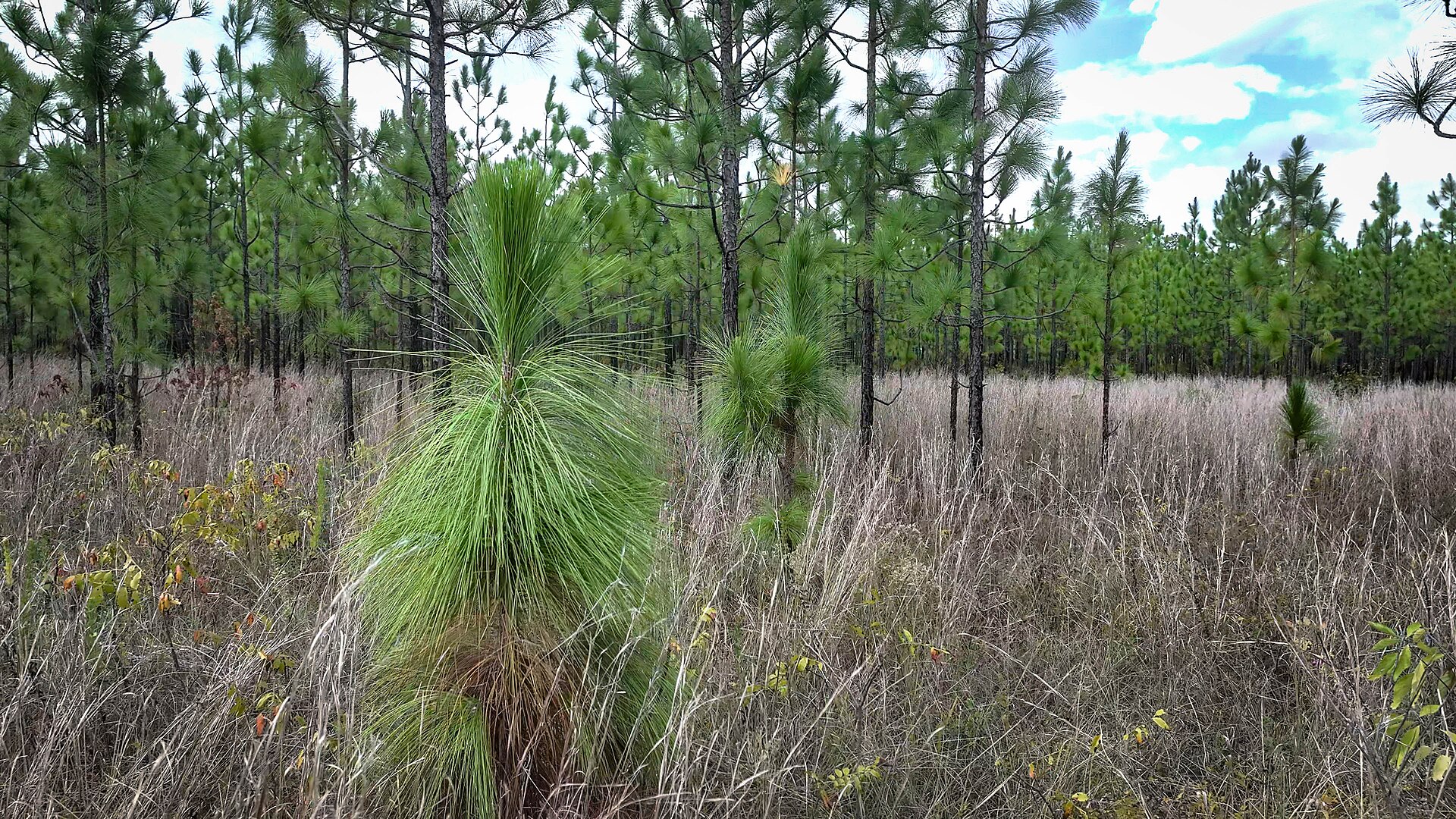
Land doesn't stay undeveloped because everyone agrees it should. It stays undeveloped, in the overwhelming majority of cases across the Southeast, because someone found a way to make keeping it in its current state pencil out economically against the alternative — timber, row crops, or a subdivision. That's an uncomfortable frame for anyone who thinks about conservation primarily in emotional or moral terms, but it's the honest one, and it's the frame land trusts and conservation-minded landowners increasingly work inside deliberately rather than around.
A commercial hunting or fishing operation is one of the clearest examples of ground staying "working" in exactly this sense — the land generates real income specifically because it stays wild, managed, and undeveloped, rather than in spite of it. That's a different economic story than a static conservation easement alone tells, because it requires an actual paying customer to show up, season after season, which means the ground's future is tied directly to whether the operation running it can be found and booked.
This piece isn't a conservation-finance explainer, and it isn't tax advice — nothing here should be read as a substitute for an accountant, an attorney, or a conservation professional familiar with a specific property. It's an argument about a real, mounting economic pressure on undeveloped Southern land, and the increasingly serious case being made that a working hunting or fishing business is one of the more durable defenses against that pressure — which means visibility, oddly enough, becomes part of the conservation story too.
The Real Pressure on Undeveloped Ground
Undeveloped land across the Southeast sits under constant, quiet economic pressure to become something else. Timber value, agricultural conversion, and development pressure from population growth all compete for the same acreage that a hunting lease or a guided operation depends on. None of that pressure is hypothetical or exaggerated — it's the basic economic reality facing any landowner holding ground that isn't currently generating the highest return available to it.
A landowner sitting on undeveloped acreage has to answer a hard question eventually, whether they want to or not: what is this land worth to me, in dollars, compared to what it could be worth if I sold the timber, converted it to row crops, or sold it outright to a developer. Sentiment about keeping land wild only holds up against that question for so long without an actual revenue stream attached to the wild use.
This is exactly the gap a working hunting or fishing operation fills. It gives undeveloped ground a real, recurring income stream that depends specifically on the land staying undeveloped, managed for habitat, and accessible to paying guests — which means the land's economic case for staying wild gets stronger, not weaker, the more successfully that operation is run and found by the guests who fund it.
What the Federal Tax Code Actually Recognizes
This dynamic isn't just an informal argument — it's built into how federal tax law treats conservation. Under Internal Revenue Code Section 170(h), a landowner can make what's called a qualified conservation contribution: donating a conservation easement, a real-property interest given to a qualified organization exclusively for conservation purposes, in exchange for a tax deduction. The IRS explicitly lists several purposes that qualify, including outdoor recreation or education of the public, protecting a relatively natural habitat, and preserving open space — including farmland and forest land — where doing so yields a significant public benefit.
Critically, a landowner who places a conservation easement on their property typically keeps the land itself; the easement is a perpetual restriction on future use, not a transfer of ownership. According to IRS Publication 526 (2025), qualified conservation contributions are generally limited to 50% of a taxpayer's adjusted gross income minus other charitable deductions — with a notably higher limit for qualified farmers and ranchers (those whose farming income exceeds 50% of their total gross income for the year), whose contribution can be limited to 100% of AGI minus other charitable deductions, provided the donated property used in agriculture or livestock production remains restricted to that use. Otherwise, the standard 50% limit applies. This is general tax-code information, not tailored advice — any landowner considering this route needs their own accountant and attorney familiar with the specific property and their financial situation.
None of this is a hunting-lease return-on-investment calculation, and this piece won't pretend it is. What it illustrates is that federal policy already recognizes working, income-generating conservation uses — including outdoor recreation — as a legitimate conservation purpose in its own right, not a lesser cousin of pure preservation.
The Scale of What's Already Being Protected This Way
The Land Trust Alliance's most recently published National Land Trust Census, covering 2020 (the latest year with published acreage figures as of this writing — the 2025 Census data collection closed in January 2026, with results not yet public), found more than 61 million acres voluntarily protected across the country, with more than 20 million of that under conservation easement specifically and roughly 8.5 million owned outright by land trusts. By the Alliance's own comparison, that's more acreage than all U.S. national parks combined.
The trend line matters as much as the total: acres protected grew by roughly a third between 2010 and 2020, and easement acreage specifically grew by more than half over that same period — a genuine acceleration in this particular conservation tool, not a static or declining one. And 81% of owned and eased acreage, per that same census, is held by an accredited land trust, a meaningful signal of institutional rigor behind these numbers rather than informal or unverified claims.
The Natural Resources Conservation Service's Agricultural Conservation Easement Program is named by the Land Trust Alliance as a federal partner specifically supporting working-lands conservation — a further sign that keeping land in active, income-generating agricultural or recreational use, rather than idle preservation alone, is a recognized and federally supported conservation strategy, not a fringe interpretation.
Genuine Preservation vs. What the IRS Is Actually Policing
It's worth being direct about a real integrity problem in this space, because ignoring it would undercut the credibility of the whole argument: the IRS has, in its own words, pursued enforcement specifically against syndicated conservation easement transactions — arrangements built on inflated appraisals designed to generate outsized tax shelters rather than genuine conservation outcomes. In a May 2026 announcement, the IRS described the deduction's original purpose as encouraging genuine preservation, not subsidizing tax shelters built on inflated valuations, and offered a settlement track specifically for taxpayers involved in those syndicated disputes.
That enforcement story is real, and it's worth naming plainly rather than glossing over — but it's also a fundamentally different story from a working farm, ranch, or hunting operation using a legitimate, properly appraised conservation easement or simply running a genuine income-generating operation on land it intends to keep undeveloped. Nothing about the IRS's scrutiny of syndicated abuse casts doubt on land trusts generally or on the working-land conservation model discussed here; conflating the two would be both inaccurate and unfair to the many land trusts operating with real rigor.
The honest takeaway is that this space rewards real diligence and real appraisal integrity, and punishes attempts to game it for a tax outcome disconnected from actual conservation. A working hunting or fishing operation generating real revenue from real guests is about as far from a syndicated shelter as this space gets — its conservation case is made by an actual functioning business, not an inflated valuation on paper.
Why Visibility Becomes Part of the Conservation Story
Here's the part of this argument that connects directly to everything else in this series: a working hunting or fishing operation only makes the economic case for keeping land undeveloped if it actually generates enough revenue to compete with the alternative uses pressing on that ground. And revenue depends, in the most basic sense, on guests finding and booking the operation. An outfit that's invisible online, that a prospective guest can't find or verify, isn't generating the revenue that makes the working-land argument real for that specific property.
This reframes visibility from a marketing nicety into something closer to a conservation input. An operator who builds genuine topical authority online, who makes their operation easy to find, verify, and book, isn't just growing a business — they're strengthening the actual economic case for that ground staying wild rather than becoming the next subdivision or clear-cut. That's not an exaggeration; it follows directly from the basic mechanics described above.
None of this means every operator should start describing themselves as a conservation organization, or claim a specific dollar figure of conservation impact they can't substantiate — this piece deliberately avoids inventing any such number, because none exists that would hold up to scrutiny for a specific operation. What can be said honestly is that the connection between "more bookings" and "more durable case for the land staying undeveloped" is real, structural, and worth an operator understanding clearly, even if it never becomes a marketing headline.
Related Reading
More for operators building the same kind of page -- clays courses and dove outfits that need a specific answer, not another brochure paragraph.
The End of Phone-Tag: What an Instant-Confirmation Culture Is Doing to the Southern Hunt Camp
The Guide as Brand: What Happens When a Person Outranks the Business That Employs Them
A Season That Won't Sit Still: Booking Calendars in an Era of Weather Variability
The Insurance Conversation Nobody Wants to Have at the Camp Table
Five Years Out: What Getting Found Will Mean After the Search Box Disappears
The Phone Call Is Dying, and So Is the Business Built Around It
Frequently Asked Questions
Is a hunting or fishing operation the same thing as a conservation easement?
No. A conservation easement is a specific, perpetual legal restriction placed on land, typically in exchange for a tax deduction, while a working hunting or fishing operation is simply a business generating revenue from land that happens to remain undeveloped. The two can coexist on the same property, but neither requires the other.
Does this piece recommend a specific tax strategy for landowners?
No. This is general information about how federal tax code treats qualified conservation contributions, sourced from IRS Publication 526 — it is not tax advice, and any landowner considering a conservation easement or related strategy needs their own accountant and attorney familiar with their specific property and finances.
Are Tall Timbers Research Station or Ducks Unlimited partners in this working-land argument?
They're referenced here only as real, well-known organizations active in the broader conservation conversation, not as claimed partners of any specific operator or property. No partnership, funding relationship, or endorsement should be inferred.
How much land has actually been protected through conservation easements?
The Land Trust Alliance's 2020 National Land Trust Census — the most recently published acreage figures as of this writing — found more than 61 million acres voluntarily protected nationally, with more than 20 million acres under conservation easement specifically. The 2025 Census results were not yet published as of this piece's research.
What is the IRS actually concerned about in this space?
Primarily syndicated conservation easement transactions built on inflated appraisals designed to generate outsized tax shelters rather than genuine conservation. The IRS has described this as a distortion of a deduction meant to encourage genuine preservation — a concern distinct from legitimate, properly appraised easements or ordinary working-land operations.
Does a hunting operation need a conservation easement to make this argument?
No. The core argument here is simpler and doesn't require an easement at all: a working, revenue-generating hunting or fishing operation gives undeveloped land an economic reason to stay undeveloped, independent of any formal conservation designation.
Why does visibility matter to a conservation argument at all?
Because a working-land operation only strengthens the economic case for keeping land undeveloped if it actually generates enough revenue to compete with alternative land uses — and revenue depends on guests being able to find, verify, and book the operation in the first place.
Should an operator start marketing their hunting operation as a conservation organization?
That would overstate the case. A hunting or fishing operation is a business; the conservation argument here is about the economic effect of that business existing and generating revenue, not about rebranding the operation as something it isn't.
What's a farmer or rancher's specific advantage under the tax code here?
Per IRS Publication 526, a qualified farmer or rancher (farming income exceeding 50% of total gross income) may deduct a qualified conservation contribution up to 100% of adjusted gross income minus other charitable deductions, rather than the standard 50% limit — provided the donated property used for agriculture or livestock production stays restricted to that use.
Is there a specific dollar figure for how much conservation value hunting revenue creates?
No credible, sourced figure exists for this, and this piece deliberately doesn't invent one. The argument here is structural — revenue strengthens the economic case for keeping land undeveloped — not a specific conservation-dollar-per-booking calculation.
Work with Pine & Marsh
If visibility is now inseparable from an operation's economic survival, building real topical authority online is the modern version of keeping the lights on — and, quietly, of keeping the ground undeveloped.
44 Recreation Agency's SEO & Topical Authority service is built for exactly this stake: making sure the operation whose survival depends on being found and booked actually gets found and booked. Reach us at pineandmarsh.com/contact. What you've built deserves to be found.


Comments