
Red Hills Quail Plantation Field Report: Thomasville, Longleaf Restoration, and the Finest Wild Bobwhite Ground Left

There is a stretch of country between Thomasville, Georgia and Tallahassee, Florida that does not look like much from the highway. Rolling red clay hills, open pine woods with grass and forb growing thick beneath widely spaced trunks, the occasional gate and long dirt drive disappearing toward a plantation house. But this is the Red Hills, roughly 300,000 acres of privately held longleaf pine forest that constitutes the largest and best-managed remnant of an ecosystem that once covered the American South from Virginia to Texas. It is also, without much competition, the most storied wild bobwhite quail ground in the United States.
The Red Hills earned that status the hard way, through more than a century of continuous, deliberate land management rather than accident or luck. Roughly 80 private plantations, many held by the same families for four and five generations, have kept this land in longleaf pine and under a regime of regular prescribed fire since before the science of fire ecology had a name. The result is a working landscape that supports wild, self-sustaining bobwhite quail populations at a density found almost nowhere else east of the Mississippi, alongside gopher tortoises, red-cockaded woodpeckers, and a wildflower community that rivals a tallgrass prairie in diversity.
This field report is built around that landscape: the ecology of longleaf pine and fire, the biology of the bobwhite quail that depends on it, the geography that runs from the Aucilla and Wacissa Rivers on the east to the Apalachicola River on the west, and the institutions, chiefly Tall Timbers Research Station in Tallahassee, that have spent more than six decades turning plantation land management into published science. It also looks honestly at where the Red Hills sits today: a tradition-bound sporting culture with an enormous ecological story to tell, and a digital footprint that has not caught up to it.
Ecology Snapshot
Longleaf pine forest once covered an estimated 90 million acres across the Southeastern Coastal Plain, from southeastern Virginia down through Florida and west into East Texas. Logging, agricultural conversion, fire suppression, and the shift toward faster-growing loblolly and slash pine plantations reduced that range dramatically over the twentieth century; conservation groups including The Longleaf Alliance now estimate that less than 3 percent of the original longleaf range remains in any form, with old-growth stands rarer still. The Red Hills, together with a handful of other strongholds in the Southeast, holds the largest contiguous block of fire-maintained longleaf left standing, and it is in largely private hands.
That survival is not incidental. Longleaf pine is a fire-adapted species: its seedlings pass through a distinctive grass stage that protects the growing tip from flame, mature trees develop thick, fire-resistant bark, and the open canopy structure that fire maintains allows sunlight to reach a diverse groundcover of native grasses, legumes, and forbs. Remove fire from the system and hardwood midstory quickly closes in, shading out the groundcover that both longleaf regeneration and ground-nesting wildlife depend on. The Red Hills plantations have avoided that fate through an unbroken tradition of prescribed burning, typically on a one- to three-year return interval, that has been documented and refined at Tall Timbers Research Station since the station's founding in 1958.
The scientific foundation for that fire tradition predates Tall Timbers itself. Wildlife biologist Herbert Stoddard spent the mid-to-late 1920s in the Red Hills conducting one of the first rigorous field studies of bobwhite quail ecology, work commissioned by a cooperative of plantation owners concerned about declining bird numbers. His resulting book, commonly cited as published in 1931, documented that periodic burning, far from harming quail habitat as conventional wisdom of the era assumed, was essential to maintaining it. That finding reoriented plantation management across the region and laid the groundwork for the fire ecology research program Tall Timbers has carried on for more than sixty years since.
Tall Timbers Research Station itself grew directly out of that legacy. Established in 1958 on land bequeathed by plantation owner Henry Beadel near Tallahassee, the station formalized what Red Hills landowners had already been practicing into a standing scientific institution, one that has since become the leading North American authority on fire ecology broadly, not just on quail habitat. Its research program has expanded well beyond bobwhite biology into fire behavior, longleaf regeneration, and the broader community ecology of fire-dependent landscapes, but the Red Hills plantations remain both its home ground and its longest-running field laboratory.
What the Interface Creates
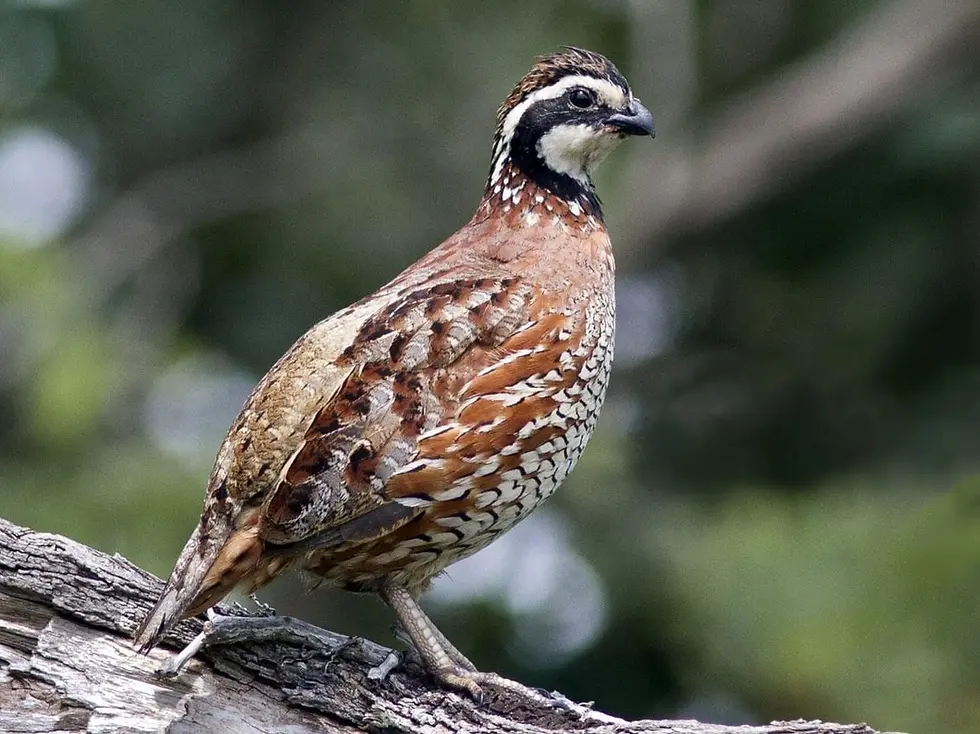
The bobwhite quail is, in essence, an edge species. It needs a mosaic of open, fire-managed ground for nesting and brood-rearing, dense shrubby cover for escape from predators and weather, and reliable seed and insect food sources, all within a relatively small home range, often well under 100 acres for a single covey. Longleaf pine savanna managed with regular fire creates exactly that interface. The open pine canopy allows enough light to reach the ground to support a diverse herbaceous layer of native bunch grasses, ragweed, partridge pea, beggarweed, and dozens of other native forbs, which in turn support the insect populations that quail chicks rely on almost exclusively in their first weeks of life.
Fire-managed open ground also does something less visible but equally important: it keeps woody encroachment and dense leaf litter in check, both of which quail struggle to move through and which harbor higher densities of nest predators. Plantation managers in the Red Hills typically burn in blocks on a rotating schedule, leaving unburned cover adjacent to freshly burned ground so that birds always have both open feeding areas and nearby escape cover within reach. This patchwork, refined over generations and increasingly documented through Tall Timbers research and Joseph W. Jones Ecological Research Center studies at Ichauway, is what allows a working plantation to carry wild quail at densities far above what unmanaged pine forest or intensively farmed land can support.
The same interface that benefits quail supports a broader community of species that has made the Red Hills a conservation priority well beyond upland bird hunting. Gopher tortoises, whose burrows shelter hundreds of other species, red-cockaded woodpeckers, Bachman's sparrows, and a long list of at-risk plants all depend on the same fire-maintained open pine structure. The Red Hills Conservation Coalition, along with Tall Timbers and its plantation partners, has worked to keep the region's private land base intact and under conservation easement specifically because that continuity of fire management is what holds the whole system together.
Quail biologists generally describe bobwhite habitat needs in terms of year-round carrying capacity rather than a single season's cover. A covey needs nesting cover in late spring, brood habitat with abundant insect life through summer, reliable seed and mast sources heading into fall, and dense escape cover through winter, all within reach of one another. Where fire-managed longleaf savanna provides that full annual cycle in one connected landscape, quail populations can sustain themselves without the annual restocking that most commercial upland hunting operations elsewhere in the country depend on. That self-sustaining quality, more than any single management practice, is what separates the Red Hills from typical put-and-take preserve hunting.
Migration and Timing Signals
Bobwhite quail are non-migratory, so the calendar here is shaped less by movement and more by the overlapping rhythms of hunting season, fire season, and the bird's own reproductive cycle. Georgia and Florida both set wild quail hunting seasons in the range of late November through late February, with plantation operations generally concentrating serious hunting activity from December through February, when coveys have settled into stable winter home ranges and cool weather makes for comfortable hunting behind pointing dogs.
Prescribed burning follows on the calendar's heels, typically running from roughly February into March across the Red Hills, though some managers burn earlier in winter or later into spring depending on site conditions, fuel loads, and weather windows. This is deliberate: burning after the bulk of the hunting season avoids disturbing wintering coveys, and burning before spring green-up maximizes the fire's effect on hardwood control while minimizing harm to ground-nesting birds, whose nesting season has not yet begun.
Brood-rearing season follows through the late spring and summer, generally from May into August, with peak hatching activity in June and July. This is the period when the groundcover produced by that winter's burns matters most, since newly hatched chicks depend heavily on the insect life supported by fresh, low, diverse vegetation. It is also, for visitors interested in the ecological side of a Red Hills trip rather than the hunting side, a strong window for observing the plantation landscape at its most biologically active, alongside spring wildflower bloom in recently burned units.
Plantation managers also run summer covey counts and fall roadside or dog-based census surveys ahead of hunting season, methods with roots in Stoddard-era research that Tall Timbers has continued to refine, to gauge population trends and set harvest expectations for the coming winter. Those counts, along with the timing and intensity of that year's burns, are why experienced Red Hills managers can speak with real confidence about covey numbers on their own ground well before the season opens, a level of population knowledge that is unusual in American upland hunting outside this specific tradition.
On the Ground
Thomasville, Georgia sits at the historic center of the Red Hills plantation belt and remains the most natural basecamp for a visit. The town's downtown retains a well-preserved late-nineteenth-century core, a legacy of the winter resort era when wealthy Northern industrialists began buying up worn-out cotton land in the 1880s and 1890s and converting it into quail hunting retreats, which is how much of the Red Hills came under conservation-minded private ownership in the first place. The Lapham-Patterson House, a Victorian-era house museum in town, and Pebble Hill Plantation just south of Thomasville, a working plantation with a historic main house open for public tours, both offer accessible entry points into that history for visitors who are not hunting. Greenwood Plantation, further west along the Red Hills belt, retains one of the few surviving antebellum plantation houses in the region and adds another layer to the area's long land-use history.
Tallahassee, Florida anchors the southern end of the Red Hills and is home to Tall Timbers Research Station itself, along with Florida State University and a state capital's worth of infrastructure, making it the practical air and lodging hub for the region. Lake Iamonia, just north of the city, sits within the Red Hills matrix and is worth knowing as a landmark even for visitors focused on upland birds rather than fishing or waterfowl. Quincy, Florida, northwest of Tallahassee toward the Apalachicola River, marks the western edge of the core plantation belt and offers a quieter, less-visited approach to the same longleaf country.
Smaller Georgia towns including Pelham and Boston round out the basecamp options for visitors working the eastern and northern edges of the Red Hills, particularly those interested in the broader South Georgia quail and longleaf landscape beyond the core plantation belt. None of these towns are set up as conventional tourist destinations; the region's identity is built around private land, and most of the working plantations that define it are not open to the public or to commercial hunting clients. That exclusivity is part of what makes the handful of operations that do accept guests a genuinely rare booking in American wingshooting.
For visitors without a hunting invitation or booked plantation stay, the most productive way to engage with the Red Hills is through its research and conservation institutions rather than trying to access private land directly. Tall Timbers Research Station in Tallahassee offers public programming, guided tours, and interpretive trails that explain the fire ecology underpinning the entire region, and the Joseph W. Jones Ecological Research Center at Ichauway, roughly an hour east toward Newton, Georgia, provides a similarly research-driven window into longleaf and wetland ecology on a large, actively managed tract. Between Thomasville's historic downtown, Pebble Hill's public tours, and these two research institutions, a visitor can come away with a genuine understanding of the Red Hills' ecology and land ethic without ever setting foot on a private hunting lease.
Planning Your Trip: A Vertical-by-Vertical Breakdown
Wild Bobwhite Hunting. Target: guided wild covey hunts behind pointing dogs on managed plantation ground, distinct from the released-bird hunting available at many other Southeastern preserves. Peak timing: December through February, once coveys have settled into winter ranges. Where: the small number of Red Hills plantations that accept commercial or member-guest hunters, concentrated around Thomasville and extending toward Tallahassee and Quincy. Key dependency: booking well ahead of season, since wild-quail plantation access is limited and largely relationship-driven rather than open to walk-up reservations.
Prescribed Fire Season Viewing. Target: observing active prescribed burning and its immediate effect on groundcover, a core part of understanding the region's land management tradition. Peak timing: roughly February into March, weather-dependent. Where: visible from public roads throughout the plantation belt during burn season, and interpreted in depth through Tall Timbers Research Station's public programming near Tallahassee. Key dependency: burn scheduling is entirely weather-driven, so specific dates cannot be planned far in advance; a multi-day window improves the odds of seeing an active burn.
Plantation Booking and Access. Target: understanding how Red Hills plantation access actually works before planning a trip around it. Peak timing: relevant year-round for planning, though hunting-season bookings should be made months ahead. Where: a minority of the region's roughly 80 plantations accept outside hunters; most operate as private family retreats or membership operations closed to the public. Key dependency: working through an established outfitter, sporting agent, or direct plantation relationship, since cold outreach to Red Hills operations rarely succeeds given the tradition's closed, reputation-based culture.
Brood-Rearing and Wildflower Season. Target: visitors interested in the ecological rather than hunting side of the Red Hills, including spring groundcover bloom and general land-management touring. Peak timing: May through August for brood-rearing biology, with a strong wildflower window in the spring following winter burns. Where: best experienced through Tall Timbers Research Station and Joseph W. Jones Ecological Research Center public programs, plus the publicly accessible Pebble Hill Plantation grounds near Thomasville. Key dependency: this is not a hunting-season trip, so plantation access is more limited; public and institutional programming is the more reliable entry point outside hunting season.
Key Takeaways
The Red Hills region, roughly 300,000 acres spanning South Georgia's Thomasville area into North Florida around Tallahassee, holds the largest intact remnant of a longleaf pine ecosystem that once covered an estimated 90 million acres and has been reduced to under 3 percent of its historic range. Roughly 80 private plantations, many held across multiple generations, are the reason that remnant survives.
Prescribed fire is the mechanism, not a side note. The open, fire-maintained pine structure that supports wild bobwhite quail also supports gopher tortoises, red-cockaded woodpeckers, and one of the most diverse native groundcover communities in the eastern United States, a connection first documented in Herbert Stoddard's field research in the Red Hills in the 1920s and carried forward by more than six decades of published work from Tall Timbers Research Station.
The plantation tradition that protects this landscape is also what makes it hard to access. Most of the region's plantations are private and closed to outside hunters; the small number that do accept guests represent one of the most exclusive and highest-prestige tiers in American wingshooting, and booking depends on relationships and lead time rather than open reservations.
For the Operators
The Red Hills plantation tradition is arguably the single highest-prestige sporting brand in Southeastern outdoor recreation, but its digital footprint is thin and concentrated. The conversation is largely owned by Tall Timbers itself, a handful of legacy plantations with long institutional histories, and periodic feature coverage from outlets like Garden & Gun. That is a narrow set of voices for a 300,000-acre region with 80-plus working properties, and it leaves most individual plantations with little independent digital identity beyond word of mouth and existing client relationships.
That gap is becoming more consequential as the region faces what amounts to a succession cliff: land held by the same families for four and five generations is increasingly passing to heirs who may be less connected to day-to-day management, or facing estate and tax pressures that push toward sale, subdivision, or a shift toward more commercial operation. Newer or transitioning operators stepping into that gap often have strong ecological credentials and land management practices but none of the legacy editorial halo that established names carry by default. The opportunity for a publisher working in this space is not to compete with Tall Timbers as a research authority, but to serve as the editorial bridge between that deep ecological tradition and the operators, new and old, who need to build a modern public identity around it. That is a factual, non-promotional role, grounded in the same fire science and land ethic the region has always run on, not a marketing pitch for any single plantation.
Citations and Sources
This report draws on well-established public research and conservation literature from the organizations named below; readers planning a visit or citing specific figures should confirm current details directly with each agency, since management practices, acreage, and program offerings change from year to year.
Agencies and sources
Primary sources for the ecological and historical claims in this report include Tall Timbers Research Station, whose more than six decades of longleaf pine and fire ecology research form the scientific backbone of Red Hills land management; the Joseph W. Jones Ecological Research Center at Ichauway, a major partner institution in longleaf and bobwhite research in the broader region; the USFWS Patuxent Wildlife Research Center, which has conducted long-running bobwhite quail population research; Quail Forever and The Longleaf Alliance, both national conservation organizations focused respectively on upland bird habitat and longleaf pine restoration; the Georgia Department of Natural Resources and the Florida Fish and Wildlife Conservation Commission, which set and publish quail hunting season regulations in their respective states; and the Red Hills Conservation Coalition, a regional partnership working to keep the Red Hills' private land base intact and under conservation management.
Confidence note: the core ecological claims here, longleaf pine's historic range of roughly 90 million acres reduced to under 3 percent today, the Red Hills' status as the largest remaining contiguous fire-maintained longleaf landscape, and the fundamental role of prescribed fire in bobwhite habitat, are well established in Tall Timbers and Longleaf Alliance literature and are stated with confidence. The count of roughly 80 plantations in the Red Hills is a commonly cited figure in regional conservation and journalistic sources and should be treated as an approximation rather than a precise current census. On the Stoddard publication date, this report uses 1931, the widely cited publication year for his landmark bobwhite quail study, rather than 1928 as sometimes referenced; his field research began in the mid-1920s under a cooperative study commissioned by regional landowners, but the book itself is consistently dated to 1931 in Tall Timbers' own historical materials. Hunting season and prescribed burn timing windows are described in general terms consistent with typical Georgia and Florida practice and should be confirmed against current-year state regulations and individual plantation burn plans before any visit is finalized. No specific plantation names, prices, bag figures, or records are cited in this report, consistent with the private and largely non-commercial nature of most Red Hills land.
Explore More
For readers going deeper on the ecology and geography behind this report, the following related field reports and species profiles cover adjacent ground.


Comments