
The Dove Opener Countdown: A Six-Week Campaign for the South's Biggest Social Hunt
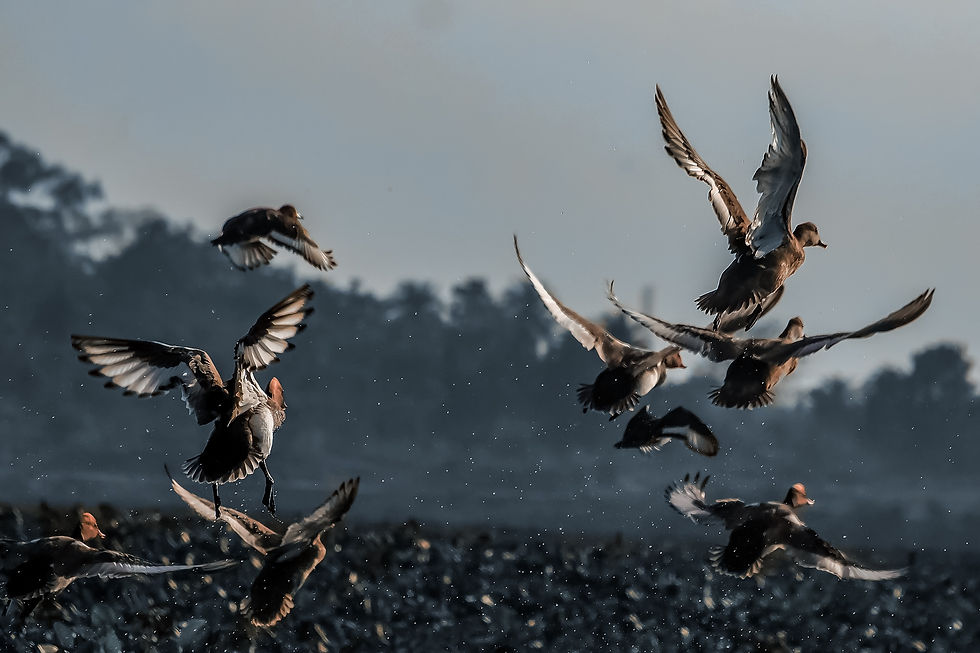
The dove opener is one of the premier social hunting events in the South. It is a cultural institution as much as a hunt, the day a managed sunflower field fills with corporate groups in matching caps, three generations of one family sharing a tailgate lunch, and first-timers who have never carried a shotgun into a field before. The shooting is high-volume and fast, the birds are concentrated over standing and manipulated grain, and the whole thing runs more like a festival than a solitary tree-stand morning. For a dove-field operator, a plantation, or a guide, opening weekend is the single most visible product you sell all year, and it is the product that defines your reputation for the next twelve months.
Here is the problem most operators feel in their gut but never put on a calendar: by the time the opener arrives, the selling is already over. Demand for opening-weekend hunts peaks well before the season starts. Outfitters across the region charge premium opening-week rates, urge hunters to reserve early in the summer, and watch their best fields and most desirable dates fill weeks in advance. If you are reading this in late July, the sought-after opening-weekend inventory you are looking for will not be available in late August. It is something you are selling right now, today, whether you have decided to run a campaign or not.
That is the core idea of this post. Late July is not the quiet lull before a September event. It is the starting gun on a six-week clock. The opener lands on the early-September split, though the exact opening date ranges from around September 1 to late September, depending on your state and zone, so anchor the countdown to your own opener. Working back roughly six weeks from a typical early-September opener gives you the window to fill your fields, package your corporate buyouts, build a waitlist, and have everything sold before the first hunter ever loads a shell. Operators who treat the back half of summer as downtime are leaving their best dates to luck. Operators who run a deliberate countdown sell out on purpose.
This is the execution companion to the Dove vertical playbooks. Those posts cover the business of running a dove operation, the economics, and the positioning. This one covers the countdown, the literal week-by-week schedule of what to publish, what to send, and what to sell across the six weeks between late July and the opener. It is built to be repeatable. Run it once, write down what worked, and you have a system you redeploy every single summer. One important note before we start: every season date, zone, opener, and bag limit in this post varies by state and by year, and several states impose noon-only or afternoon-only opening-day hours. Treat every regulatory detail here as a prompt to confirm the current rules with your own state wildlife agency, not as a substitute for them.
Why the Opener Is a Six-Week Problem, Not an Opening-Day Problem
The mistake that costs operators the most money is thinking of the opener as a date. It is not a date. It is a demand curve, and that curve crests weeks before the season opens. The early-September opener is generally regarded as the most popular and highest-participation portion of the dove season in the Southeast, the marquee social event that draws the most hunters into the field. That popularity is exactly why buying happens early: when everyone wants the same weekend, the people who plan ahead win the field, and the people who wait get waitlisted. The scarcity is real, and your audience knows it, which means your job is not to create urgency but to be visible and bookable at the moment that urgency is already peaking in their heads.
Look at how the broader market behaves, and the pattern is unmistakable. Opening-week hunts carry premium pricing, often noticeably higher per gun than the same field commands two weeks later, and outfitters consistently tell hunters to book early in the summer. On public land, the structure pushes even harder toward early decisions, because state wildlife management area quota-hunt applications often close in mid-August, weeks before the season. Whether your customer is chasing a coveted private peg or a public draw, the decision window is open in July and August, not the week of the hunt. If your marketing only ramps up after Labor Day approaches, you are arriving to a party where the good seats are already taken.
There is a second reason the work has to happen now, and it has nothing to do with the customer's calendar and everything to do with yours. A dove field is an agricultural product with a long lead time. The sunflowers, milo, corn, wheat, and other grain that concentrate birds were planted months ago, and the field's quality is being decided in the summer growing weeks, not in September. That means late July and early August are simultaneously when your customers are deciding where to hunt and when your field is visibly maturing into proof that it is worth hunting. The six-week countdown works because it lets you sell the field at exactly the time it is most photogenic and most provable. You are not manufacturing hype. You are documenting a real crop as it comes into condition and turning that documentation into bookings.
One honest caveat on the timeline. The specific claim that fields universally sell out by mid-August is a useful planning assumption, not a hard law of the market. Whether your particular fields fill by mid-August, late August, or only in the final days depends on your region, your reputation, your pricing, and how aggressively you market. The defensible truth is the one that should drive your plan: demand peaks well before the September opener, and your best dates can fill weeks in advance. Build the six-week countdown around that reality, and you will never be caught flat-footed, whether your sellout lands early or late.
Weeks One and Two: Field-Prep Content
The first two weeks of the countdown, roughly the last week of July through the first week of August, are not about asking for the sale. They are about proving the field. This is field-prep content, and its entire job is to build anticipation while quietly establishing that your operation runs real, well-managed, bird-attracting fields. The raw material is already growing in front of you: standing sunflowers, milo, corn, wheat, and other grain crops maturing in the heat. Your task is to turn the crop's progress into a steady drip of honest, concrete proof that a customer's opening weekend will be worth the premium.
The content itself is simple and should feel like a grower's diary rather than an ad. Post crop-progress photos that show the sunflowers heading out and going from green to gold, the milo and corn filling, and the field maturing week over week. Shoot wide establishing frames that show acreage and scale, then tight frames that show seed heads and grain, because both answer different customer questions: how big is the shoot, and how much food is actually out there. Time-lapse comparisons are especially powerful here. A side-by-side of the same field two weeks apart tells a story of competent management with zero hype, and it is exactly the kind of clear, factual, visual evidence that both a scrolling human and an answer engine can read and trust. Caption with the boring, credible details: the crop planted, roughly when it went in, how the dry or wet stretch has affected it, and what you are watching for as the heads ripen.
Why does this work as marketing when it never mentions price? Because it answers the only question a serious dove hunter cares about before they book: will there be birds? A managed sunflower or grain field that is visibly maturing toward ripe seed is the single most persuasive thing you can show, far more convincing than any adjective. It also does quiet, durable work for your credibility. When you later explain that you hunt over legitimately grown and manipulated crops rather than anything questionable, your field-prep archive is the receipt that proves it. You spent two weeks publicly documenting a real agricultural crop as it came into condition, and that record is both your best sales tool and your best legal-confidence asset.
Two weeks of field-prep content also primes the audience you are about to sell to. Every crop-progress post is a reason for last year's hunters, corporate contacts, and local followers to re-engage with you before you ever send a sales message. By the time you open the roster in week three, you have an audience that has watched the field ripen, formed a mental picture of opening morning, and started to feel the early-September clock ticking. That is the right emotional and informational state to sell into. Anticipation built on real proof converts far better than a cold price list dropped into a quiet feed.
Weeks Three and Four: Roster Sales
Weeks three and four, roughly the middle of August, are when the countdown turns commercial. The field-prep content has done its job of proving the product and warming the audience; now you open the roster and sell the seats. The Southeastern dove market runs on two distinct sales tracks, and a good campaign markets both deliberately rather than defaulting to one. The first track is individual spots, sometimes called pegs or guns, priced per hunter. The second is the whole-field corporate buyout, where one group takes the entire field for a session. These are not the same product with two prices. There are two products with different buyers, pricing logic, and sales messages, and you should be selling both in these two weeks.
Individual spots are the high-volume, per-gun track. The pricing logic is straightforward and tiered by demand: opening-day and opening-weekend pegs command a premium, and the same seat on the same field typically drops in price for later hunts in the split. That premium is not arbitrary; it reflects the genuine scarcity of the most popular dates and gives early bookers a concrete reason to commit now rather than wait. Your sales content for this track should make the date hierarchy obvious, show how many opening-weekend pegs remain, and let real scarcity do the persuading. When a field has only a handful of opening-day spots left, say so plainly. You are not inventing pressure; you are reporting the state of a genuinely finite roster, and that honesty is what makes the scarcity believable.
The whole-field corporate buyout is the other track, and it carries entirely different pricing logic. Here you are not selling per gun; you are selling exclusivity: a private field, a guaranteed group experience, and the certainty that the buyer controls the day. Buyouts are typically priced as a per-person package with a group minimum or as a flat whole-field rate, and they usually bundle in the things a corporate host cares about, such as a reserved field, guides, and a tailgate lunch. The buyer is different too. An individual-peg buyer is a hunter chasing a date; a buyout buyer is a host, often a business, buying an experience for a group of roughly ten to forty people. Your buyout messaging should speak to that host, emphasizing the all-handled, turnkey nature of the day rather than the per-gun price.
The strategic reason to run both tracks in the same two weeks is that they protect each other. If individual-peg sales are slow on a given date, a single corporate buyout can fill the entire field at once and rescue the day. If buyout interest is light, a deep roster of individual hunters keeps your fields full and your premium dates moving. Selling only one track leaves money and security on the table. Practically, that means your week-three and week-four content should alternate: a per-gun availability update aimed at hunters, then a corporate buyout pitch aimed at the business host who is right now looking for a memorable way to entertain a team or thank a client before the season fills.
Weeks Five and Six: The Final Push
By weeks five and six, the last stretch before the opener, your strongest dates may already be gone, and that changes the job. The final push is not about discounting your way to a full field; it is about capturing the remaining demand and routing it intelligently. The first tool is the waitlist. When opening weekend is sold out or nearly sold out, every remaining inquiry should be directed to a structured waitlist rather than a dead end. A waitlist does three things at once: it captures contacts you will sell to next year, it lets you backfill instantly when a peg cancels, and it signals real scarcity to everyone who hears that the field is full. A field with a waiting list is a field that has proven its value, and that reputation compounds into next season.
The second tool is redirecting late demand to the rest of your season. The early-September opener is the marquee event, but it is only the first segment of a split season. Southeastern states run split dove seasons within a federal framework, typically in three segments: an early-September segment, a fall or late-fall segment, and a late segment running into December and January. That means a hunter who missed the opener is not a lost sale; they are a sale for the second split or the late split. Your week-five and week-six content should make the rest of the calendar visible: name your second-split and late-split hunt dates and let the hunters who could not get an opening peg book the next-best thing. Pair every date you publish with a clear instruction to confirm the current split with their state wildlife agency, because exact segment dates differ by state, zone, and year.
The third tool in the final push is the youth seat or beginner promotion, and it belongs here for both good reasons and good business reasons. The opener is the traditional on-ramp for first-time and young hunters, the social, low-barrier hunt where a kid takes their first shots in a field full of family. Holding back a block of youth seats and promoting them in the final weeks does real recruitment work for the sport and fills seats that might otherwise sit empty, since youth and beginner seats often sell to families late, once the adults have sorted their own plans. Frame these honestly around mentorship and a first-field experience rather than as a discount, and confirm any youth-license and age rules for your state, since those vary as well.
The throughline of the final push is that you are no longer chasing the opener; you are converting opener-driven demand into a fuller, longer season. Every inquiry that has arrived in the last two weeks is from someone who wants to hunt your fields. The waitlist captures the ones you cannot seat now; the second-split and late-split calendar gives the rest somewhere to go, and the youth promotion fills the social, family-oriented seats that round out opening weekend. Handled well, weeks five and six turn a sold-out opener from an end point into the front door of a season that keeps selling through January.
The Corporate Dove Hunt: One of the Most Accessible Entertainment Products in the Outdoor Industry
Of everything you sell, the corporate dove hunt deserves its own dedicated push because it is one of the most accessible corporate entertainment products in the entire outdoor industry. The reasons are structural. A dove hunt is a half-day event, not a multi-day expedition, so a busy executive or client can do it without clearing a calendar. It is a highly social, low-barrier format where the talking and the tailgate matter as much as the shooting, which means a group can include people who have never hunted and still have a great day. And it commonly books groups of roughly 10 to 40 hunters, which happens to be exactly the size of a sales team, a client-appreciation list, or a department outing. Almost no other hunting product checks all three boxes the way a dove field does.
A word on the phrase low-skill, because honesty matters, and it is also good marketing. Wingshooting doves well is genuinely difficult; the birds are fast and erratic, and even experienced shooters burn through shells. So the right framing is not that it is easy to shoot doves, but that it is easy to participate. A first-timer can stand in a good field, take their shots, miss most of them, and still have one of the best afternoons of their year, because the social energy, the shared lunch, and the volume of birds carry the experience regardless of anyone's hit rate. That is the accessibility that makes it a corporate product: nobody is excluded by lack of skill, and the people who can actually hit birds get to look good in front of the group. Sell the participation, not the difficulty.
Packaging a corporate hunt is about removing every point of friction for the host. The buyer of a corporate dove hunt is usually not the hunter; it is a host, often a business owner, a sales leader, or an executive assistant, whose job is to show appreciation to employees, customers, or prospective clients and who wants the day handled. So the package should handle it: a private, reserved field, guides, a clear schedule for a half-day session, and the social anchor of a tailgate lunch. Price it as a per-person package with a group minimum or as a flat whole-field buyout, and make the inclusions explicit so the host can approve a single line item rather than assemble a day. The easier you make it to say yes, the more buyouts you book.
Knowing who the buyer is should also shape where and how you market in these six weeks. Individual-peg content lives well in the hunting community, but corporate-buyout content needs to reach the host, which means it should speak the language of team events, client entertainment, and employee appreciation as much as the language of dove hunting. A landing page or a clearly written summary that answers the host's real questions, including how many people it accommodates, how long the day runs, whether beginners can come, and what is included, is exactly the kind of clear, factual content that both a deciding human and an AI answer engine can pull from when someone searches for a corporate group experience. Build that content once, and it sells buyouts every August.
The Legal-Confidence Content Play: Explain Baiting Rules and Become the Trusted Operator
Here is a content play that almost no operator runs, which is exactly why it works: explain the federal baiting rules clearly and accurately, and you become the operator hunters trust. Baiting is the single most consequential legal issue in dove hunting, the point at which a well-meaning hunter can get cited and an operation can lose its reputation overnight. Most field operators avoid the topic because it feels like a liability to discuss. The truth is the opposite. The operator who explains the rules plainly and demonstrably in legal fields turns a source of customer anxiety into a reason to book with them specifically. What follows is a plain-language summary of the relevant federal regulations, not legal advice, and it should always point hunters to the official U.S. Fish and Wildlife Service guidance and their own state agency, since state rules can be stricter than federal.
The core federal distinction is about the source of the grain, and it is sharp. Under federal regulation at 50 CFR 20.21(i), it is illegal to take doves by the aid of baiting, or on or over any baited area, where a person knows or reasonably should know that the area is or has been baited. A baited area is defined as any area where salt, grain, or other feed has been placed, exposed, deposited, distributed, or scattered if it could serve as a lure or attraction for migratory game birds where hunters are attempting to take them. On the legal side of the line, it is permitted to hunt doves over lands where grain or seed is present solely as the result of a normal agricultural operation, meaning a planting, harvesting, or post-harvest practice carried out in accordance with the official recommendations of your state's Cooperative Extension specialists. The deciding question is never how the field looks; it is where the grain came from and why it is there. Grain on the ground because of legitimate farming is legal to hunt over. Grain placed, hauled in, piled, or scattered to lure birds is bait.
Two specifics are worth stating precisely because hunters get them wrong. First, manipulation of a crop grown on that field is legal for dove hunting: you may mow, shred, disk, roll, chop, trample, flatten, burn, or treat with herbicide a standing crop such as corn, wheat, milo, sorghum, millet, sunflower, or buckwheat, and hunt over the result. But manipulation expressly does not include distributing or scattering grain after it has been removed from or stored on the field where it was grown. In other words, knocking down your own standing sunflowers is legal; hauling in a bag of milo and spreading it is bait, even on a real farm field. Second, and critically, this manipulation latitude is a dove rule and does not apply to waterfowl, where the rules are stricter. Never let dove guidance bleed into waterfowl advice; conflating the two is a serious legal error.
The single most useful thing you can teach hunters is the 10-day rule, because it surprises people. Under the federal definition, an area that has been baited remains a baited area and is off-limits to hunting for ten full days following the complete removal of all the salt, grain, or other feed. Removing bait the day before a hunt does not make a field legal; the ten-day clock starts only once all bait is gone. Two more points belong in any honest explainer. There is no fixed safe distance from bait at which hunting becomes automatically legal; federal guidance is explicit that there is no set distance, and it is judged case by case. And the hunter bears personal responsibility under the knows-or-reasonably-should-have-known standard, which is why USFWS tells hunters to ask the landowner, host, and guide whether an area has been baited, to be suspicious of birds feeding in unusual concentrations, and to abandon the hunt if they find grain and are uncertain why it is there.
Now connect this back to the campaign. Publishing a clear, accurate baiting explainer during the six-week countdown does two things at once. It answers a question your customers are genuinely nervous about, building trust and making them more comfortable booking. And it positions you as the operator who runs clean, legal fields and is unafraid to say so, which is a real competitive advantage in a market where many operators stay silent. Pair the explainer with your weeks-one-and-two field-prep archive, and the message writes itself: here is our crop growing in the field, here is exactly how the law works, and here is why hunting with us is hunting with confidence. That is a far stronger position than hoping nobody asks. Just keep the framing right, present it as a plain-language summary of 50 CFR 20.21 and 20.11, defer to stricter state law, and send hunters to the official USFWS fact sheet for authority.
Opener Week and the Second-Split Calendar
When the six-week countdown ends, the campaign does not. Opener week is its own distinct phase with its own content needs, and it is handled by a separate opener-day content kit post that covers the day-of setup, the field logistics, the shot-of-the-morning social content, and the on-site moments that turn an opening day into next year's marketing. Think of this countdown as the selling system that fills the field, and the opener-week kit as the capturing system that documents the field once it is full. Hand off cleanly between them: by the time opener week arrives, every seat should already be sold through this six-week campaign, freeing you to spend opener week running a great hunt and gathering the content that seeds the following summer.
The opener is also the gateway to a season that keeps selling, and the smart operator has the rest of the calendar mapped before the first shot. Southeastern states run split dove seasons within the federal framework, which allows a season of up to 90 days outside the dates of roughly September 1 through January 31, divided into segments. In practice, that means three selling windows, not one: the early-September opener, a fall or late-fall second split in roughly October and November, and a late split running into December and January. Each split is a fresh marketing moment with its own inventory, its own audience, and its own reasons to hunt, from the cooler weather of the late splits to the second chance for everyone who missed the opener.
Re-marketing the later splits should be a scheduled part of your annual system, not an afterthought. As the second split approaches in the fall, run a compressed version of this same countdown: post field-condition updates, reopen the roster for second-split dates, and re-engage your opener customers and waitlist with the next available hunts. Do the same again ahead of the late split in winter. The audience you built and the waitlist you captured during the opener campaign are the warm list you sell the later splits to, which is precisely why capturing every inquiry in weeks five and six pays off for months. One sold-out opener, marketed well, becomes the demand engine for two more selling windows.
Throughout it all, the regulatory discipline remains the same. Exact split dates, zones, openers, and any noon-only or afternoon-only opening-day hours vary by state and by year, and the standard daily bag limit across the Southeastern states checked is fifteen doves per day, counted as mourning and white-winged doves in aggregate, with a possession limit of forty-five. Publish those details when they help your customers plan, but always pair them with a clear instruction to confirm the current season, zone, bag limit, and shooting hours with their own state wildlife agency. Being the operator who tells hunters to verify and makes it easy to do so is part of the same trust advantage that the baiting explainer earns you.
The Bottom Line
The dove opener is one of the South's premier social hunting traditions, and the operators who fill their fields are not the ones with the loudest opening-day post. They are the ones who started selling in late July, treated the six weeks before the opener as a single coordinated campaign, and had every premium peg and corporate buyout sold before the season ever opened. Field-prep content in weeks one and two, roster sales across both individual and corporate tracks in weeks three and four, and a final push of waitlists, second-split inventory, and youth seats in weeks five and six is a complete system that turns a finite, high-demand weekend into a sold-out one, and then into the front door of a season that keeps selling through January.
Pine and Marsh builds this six-week countdown as a repeatable system. We map the calendar to your state's actual opener and splits, script the field-prep, roster, and final-push content, package your individual pegs and corporate buyouts, and stand up the legal-confidence and corporate-host content that earns trust and books groups, all designed to be redeployed every summer with less effort and better results each year. If you want your next opener sold out on purpose rather than by luck, that is the system we build, and the time to start is the moment the sunflowers start heading out. Always confirm your current season dates, zones, bag limits, shooting hours, and baiting rules with your state wildlife agency and the official USFWS guidance before you publish or hunt.
Frequently Asked Questions
When does dove season open in the Southeast?
There is no single Southeastern opening day. The opener falls on the early-September split, but the exact date varies by state, zone, and year. For the 2025-26 season, several states opened on or near September 1 (Labor Day) regardless of the weekday, including South Carolina, Mississippi, Tennessee, and Virginia, while North Carolina opened September 2 and Georgia opened Saturday, September 6 (the first Saturday). Alabama opened by zone (North Zone September 6, South Zone September 13), and Florida opens latest, with a North Zone start in late September. Several states also restrict opening-day hours: Tennessee and Virginia open at noon statewide on opening day, Alabama's zone openers run noon to sunset, and South Carolina's public dove fields are afternoon-only with no entry before noon. Always confirm your exact opening date, zone, and any noon or afternoon-only opening-day rule with your state wildlife agency for the current season.
What are dove season splits, and how do they work?
Under the U.S. Fish and Wildlife Service framework for the Eastern Management Unit, states may set a dove season of up to 90 days within the general dates of roughly September 1 through January 31, and may divide that season into segments called splits. Southeastern states typically run three-segment split seasons: an early-September segment that includes the opener, a fall or late-fall segment in roughly October and November, and a late segment running into December and January. Exact segment dates differ by state, zone, and year, so confirm your current split with your state wildlife agency before publishing dates or booking hunts.
What is the daily bag limit for doves?
The standard daily bag limit across the Southeastern states checked for 2025-26 is 15 doves per day, counted as mourning and white-winged doves in aggregate rather than 15 of one species. The possession limit is typically 45, which is three times the daily bag. Eurasian collared doves generally do not count toward the 15-bird daily limit in Southeastern states. Bag and possession limits can change, so confirm the current limit with your state wildlife agency for the year you are hunting.
What makes a field legally baited for dove hunting?
Under federal regulation at 50 CFR 20.21(i), it is illegal to take doves by the aid of baiting or on or over any baited area where a person knows or reasonably should know the area is or has been baited. A baited area is defined as any area where salt, grain, or other feed has been placed, exposed, deposited, distributed, or scattered if it could serve as a lure or attraction for migratory game birds where hunters are attempting to take them. The deciding factor is the source and purpose of the grain. Grain present solely as the result of a normal agricultural operation conducted per state Cooperative Extension recommendations is legal to hunt over, but grain placed, hauled in, piled, or scattered to lure or attract doves is bait. This is a plain-language summary, not legal advice; confirm details with the USFWS and your state agency.
What is the 10-day baiting rule?
Under the federal definition in 50 CFR 20.11, an area that has been baited remains a baited area, and off-limits to dove hunting, for 10 full days following the complete removal of all the salt, grain, or other feed. Removing the bait the day before a hunt does not make the field legal. The 10-day clock starts only once every bit of bait has been completely removed, because removing the bait does not remove the lure it created. There is also no fixed safe distance from bait at which hunting becomes automatically legal; federal guidance is explicit that there is no set distance, and each situation is judged on a case-by-case basis.
Can I hunt doves over a mowed or disked crop?
Yes, for doves. Manipulation of a crop grown on that field is legal for dove hunting, including mowing, shredding, disking, rolling, chopping, trampling, flattening, burning, or herbicide treatment of a standing crop such as corn, wheat, milo, sorghum, millet, sunflower, or buckwheat. However, manipulation expressly does not include distributing or scattering grain after it has been removed from or stored on the field where it was grown, so hauling in outside grain and spreading it is baiting even on a real farm field. Important caveat: this manipulation allowance is a dove rule and does not apply to waterfowl, where the rules are stricter. Never apply dove manipulation guidance to waterfowl hunting.
How do you price individual spots versus a whole-field corporate buyout?
Operators commonly sell two distinct products with different pricing logic. Individual spots, sometimes called pegs or guns, are priced per hunter, with opening-day and opening-weekend pegs commanding a premium that typically drops for later hunts in the split, reflecting the real scarcity of the most popular dates. A whole-field corporate buyout is priced for exclusivity rather than per gun, usually as a per-person package with a group minimum or a flat whole-field rate, and it typically bundles a private reserved field, guides, and amenities like a tailgate lunch. The two tracks serve different buyers, so a strong campaign markets both.
How many people can a corporate dove hunt accommodate?
A dove hunt is one of the most accessible corporate-entertainment products in the outdoor industry, and it commonly books groups of roughly 10 to 40 hunters, which fits a sales team, a client-appreciation list, or a department outing. It is a half-day, highly social, low-barrier event, so beginners can participate even though hitting fast-flying doves is genuinely challenging. The buyer is usually a host, often a business, looking to show appreciation to employees, customers, or prospective clients, so corporate packages are built to handle the whole day: a private field, guides, a clear half-day schedule, and a tailgate lunch.
When should I start marketing my dove fields for the opener?
Start in late July, roughly six weeks before the early-September opener. Demand for opening-weekend hunts peaks well before the season starts; outfitters charge premium opening-week rates, urge hunters to reserve early in the summer, and watch their best fields and dates fill weeks in advance. On public land, wildlife management area quota-hunt applications often close in mid-August. The specific claim that fields universally sell out by mid-August is a planning assumption rather than a hard rule and varies by operator and region, but the underlying reality is firm: your best dates can fill weeks ahead, so a six-week countdown beginning in late July puts you in front of buyers at the moment their urgency peaks.
Should I sell youth or beginner seats for the opener?
Yes, and the final weeks before the opener are the natural time to promote them. The opener is the traditional on-ramp for first-time and young hunters because it is a social, low-barrier, family-oriented hunt. Holding back a block of youth or beginner seats and promoting them in the last weeks does genuine recruitment work for the sport and fills seats that often sell late, once adults have sorted their own plans. Frame these around mentorship and a first-field experience rather than as a discount, and confirm any youth-license and age requirements for your state, since those rules vary by state and year.
What is the second split, and how should I market it?
The second split is the fall or late-fall segment of the dove season, running in roughly October and November, that follows the early-September opener. Because Southeastern states run three-segment split seasons, a hunter who missed the opener is not a lost sale but a candidate for the second split or the late split in December and January. Market the later splits by running a compressed version of your opener countdown as each split approaches: post field-condition updates, reopen the roster for the split's dates, and re-engage your opener customers and waitlist. Always pair any published dates with an instruction to confirm the current split, zone, bag limit, and shooting hours with the state wildlife agency, since these vary by state and year.
Sources
State wildlife agencies — including Georgia DNR, South Carolina DNR, Outdoor Alabama, Mississippi MDWFP, Tennessee TWRA, North Carolina WRC, Virginia DWR, and Florida FWC — for current-season opening dates, zones, splits, shooting hours, bag and possession limits, and youth-season rules, all of which vary by state and year. Always confirm the current regulations with your own state agency and the official USFWS guidance before publishing or hunting.


Comments