
Alabama Turkey Ecology: Conecuh National Forest and the Gulf Coast
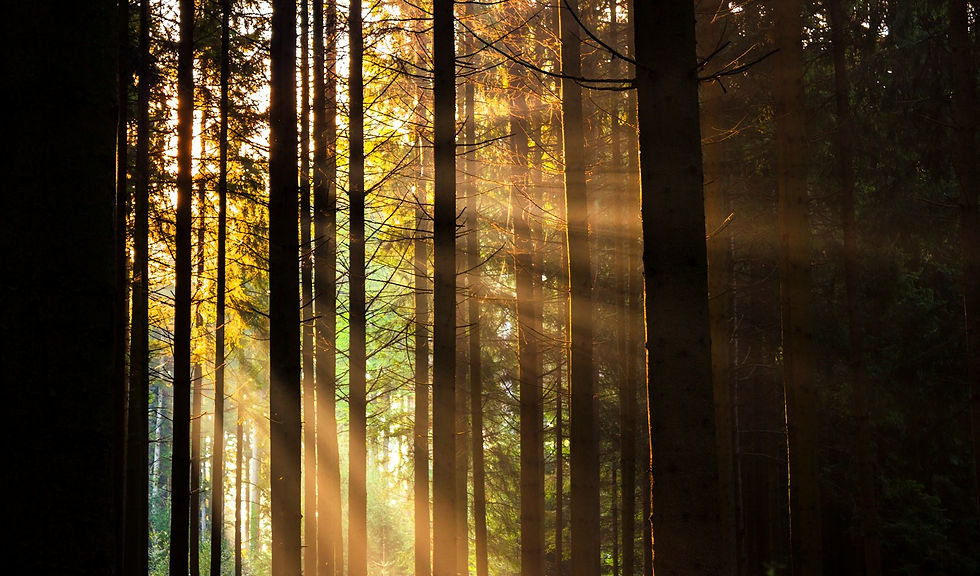
In mid-October the south Alabama pine woods hold their breath between seasons. The heat has broken, the bogs along the seeps have gone to seed, and the understory on Conecuh National Forest shows its fire history the way a tree shows rings: one block blackened at the base of every trunk and already greening, the next knee-high and gold, the one beyond that thickening toward the kind of tangle a turkey hen will walk around rather than through. Drive the forest roads south of Andalusia toward the Florida line and you cross that patchwork again and again. It is not random. It is the visible record of a burn program, and for the Eastern wild turkey (Meleagris gallopavo silvestris), it is the most important thing on the landscape.
Conecuh is Alabama's southernmost national forest and its most coastal in character, a lower Coastal Plain forest of pine ridges, stream terraces, broad floodplains, and seepage bogs that sits on the state line within an easy drive of the Gulf. It is turkey country, but it is also red-cockaded woodpecker country, pitcher plant country, indigo snake country, and bobwhite country, and every one of those claims runs through the same management tool. Fire decides whether a stand nests turkeys, raises broods, or does neither in a given year.
This post looks at that relationship carefully. A lot of what gets repeated about turkeys and longleaf pine (Pinus palustris), including some exact-sounding canopy percentages and cover heights, does not come from measurements on this forest. The research that does exist comes mostly from Georgia, Louisiana, North Carolina, and central Alabama, and it is genuinely useful when you keep its geography attached. What follows is what that research found, what the Forest Service has reported about Conecuh and its sister forests, and what the 2026-27 regulations mean on the ground in Covington and Escambia counties.
A Forest on the Florida Line
The U.S. Forest Service lists Conecuh National Forest at 84,224 acres in Covington and Escambia counties, in the southern part of the state along the Alabama-Florida line. The agency describes its topography as level to moderately sloping, with broad ridges, stream terraces, and broad floodplains. It is the second smallest of Alabama's four national forests, alongside Bankhead at 181,988 acres, Talladega at 394,960 acres, and Tuskegee at 11,348 acres. Together the four cover about 673,000 acres.
One correction belongs at the very start, because it trips up maps, hunting plans, and more than a few articles: Conecuh National Forest is not in Conecuh County. Whatever the name suggests, its acres lie in Covington and Escambia. That distinction has real consequences for turkey hunters, which we will come back to in the regulations section.
The forest's terrain is subtle. There are no mountains here and few hills worth the name. What changes as you move across Conecuh is moisture. Dry, sandy ridges carry pine. Terraces and lower slopes grade into wetter flatwoods. Where groundwater seeps out at the base of slopes, the forest holds some of the best examples of Gulf Coastal Plain hillside bogs in the region. Streams thread through it all, bordered by hardwood bottoms. A turkey moving through a single day can cross several of those communities, and each one responds to fire differently.
What 84,224 Acres Does and Does Not Mean
It is common to see this forest described as 84,000 acres of longleaf pine. That is not accurate. The 84,224-acre figure is the whole forest, floodplains and bogs included. The Forest Service's own 2024-2025 biennial monitoring report labels Conecuh with the same whole-forest shorthand, about 84,000 acres, and treats longleaf as a restoration target inside that total rather than a description of all of it.
What the monitoring report does say clearly is that longleaf restoration is the forest plan's primary priority on the national forests in Alabama. That is a meaningful statement of direction. Longleaf once dominated much of the southeastern Coastal Plain, and the Forest Service has spent decades converting off-site pine plantations and closed stands back toward open longleaf woodland. The report's table of existing versus potential longleaf did not render cleanly in its published form, and the report itself notes an error in the longleaf-composition calculation in the previous 2022-2023 report. For that reason this post does not quote a Conecuh longleaf acreage. The honest answer is that a large and growing share of the forest is longleaf or is being restored to it, and the exact current figure is not something the public record pins down reliably.
The forest-wide restoration numbers are clearer. Across all four Alabama national forests, longleaf habitat improvements through overstory treatments totaled 1,211 acres in 2024 and 1,812 acres in 2025. In fiscal year 2025, working with the National Forest Foundation, the Forest Service planted 356 acres of longleaf seedlings, a total of 268,471 seedlings, across the national forests in Alabama. Those are statewide figures for the national forest system, not a Conecuh inventory, but they show the scale and steadiness of the restoration effort.
For turkeys, the composition of the overstory matters less than what happens under it. A longleaf stand that is never burned can be just as poor for nesting and brood-rearing as an off-site plantation. A longleaf stand that is burned on a frequent, varied schedule becomes something else entirely. That is why the fire record deserves more attention than the acreage.
Fire as the Forest's Operating System
Longleaf pine evolved with frequent, low-intensity surface fire. The seedlings tolerate it, the grasses and forbs of the understory depend on it, and many of the animals of the system, including the turkey, use the open structure that fire maintains. Remove fire and hardwoods and shrubs move into the midstory and understory, the ground layer shades out, and the woods close.
On the national forests in Alabama, fire is planned and carried out on a large scale. On January 17, 2025, the Forest Service announced plans to burn about 193,584 acres across Bankhead, Conecuh, Talladega, and Tuskegee during the following six months, weather permitting. The Conecuh portion of that plan was 51,496 acres in Escambia and Covington counties. That number is a plan for a six-month window, not a tally of acres actually burned, and weather, smoke conditions, and staffing always determine how much of a plan gets done.
The completed numbers in the 2024-2025 monitoring report are forest-wide rather than Conecuh-specific, and they show a decline. Prescribed burning across the national forests in Alabama totaled 145,629 acres in fiscal year 2022, 135,312 acres in fiscal year 2023, 126,916 acres in fiscal year 2024, and 77,402 acres in fiscal year 2025. The Forest Service's about page, using a slightly different accounting, reports 78,100 acres rehabilitated with prescribed fire in fiscal year 2025. The report's narrative says annual burn acres declined and that growing-season burning was reduced, which may increase hardwood encroachment.
That last sentence is worth sitting with. A one-year dip in burning does not ruin a longleaf forest. But fire programs work on rotations, and stands that miss their turn move one more year away from fire. If the decline persists, more of the landscape drifts toward the older, denser end of the post-fire range. For a bird whose nesting and brood habitat depends on the balance of recently burned and recovering stands, the trend is the thing to watch.
Prescribed burning off the national forest in Alabama runs through the Alabama Forestry Commission, which requires a burn permit for silvicultural and agricultural burns, with an exception for burns of a quarter acre or less. Private landowners around Conecuh who manage for turkeys are working under that permit system, and the commission's page is the starting point for anyone planning a burn on adjoining land.
Why Turkeys and Fire Belong Together
The Eastern wild turkey is not a deep-woods bird in the way many people imagine. Throughout the southeastern pine belt, it is a bird of open woodland and edges, of ground cover dense enough to hide a hen on a nest and open enough to let a brood move and feed. Those two needs pull in slightly different directions, and fire is the tool that keeps both available.
Immediately after a burn, the ground layer is open and fresh growth arrives quickly. Over the next one to three years, grasses and forbs thicken and woody sprouts recover. A few years beyond that, without another fire, shrubs and young hardwoods begin to dominate and the stand becomes dense and dark at turkey eye level. Each stage offers something: a recently burned stand offers open feeding ground, a stand a year or two past fire offers concealment, and a stand further out offers screening cover for roosting broods. A landscape that has all of those in close proximity gives a hen choices across the whole reproductive season.
What Georgia Hens Chose: Nest Cover in Burned Longleaf
The most detailed nesting work in a frequently burned longleaf system comes from southwestern Georgia, east of Conecuh across similar Coastal Plain terrain. Researchers from the University of Georgia and the Joseph W. Jones Ecological Research Center followed radio-tagged hens on two longleaf properties, the Jones Center in Baker County and Silver Lake Wildlife Management Area in Decatur County, from 2011 through 2013. Both sites were burned on roughly a one-to-three-year interval.
Streich and colleagues, writing in the Journal of the Southeastern Association of Fish and Wildlife Agencies in 2015, tracked 45 hens and documented 84 nests and 51 ground-roosts. Hens placed nests where the canopy was more open and the ground cover was taller and woodier than the surrounding forest. Average canopy closure at nest sites was 54 percent, compared with 65 percent at random points. Average minimum vegetation height at nests was 85 centimeters, about 33 inches, compared with 39 centimeters, about 15 inches, at random points. Average woody ground cover was 24 percent at nests and 12 percent at random points.
These are Georgia measurements, not Conecuh measurements, but they paint a clear picture: hens in those Georgia woods looked for patches where light reached the ground and grew thick, tall, partly woody cover, then tucked their nests inside it. That is not the same as looking for a freshly burned, wide-open floor. It is a description of the one-to-two-year post-fire stage and of the woody patches that survive a burn.
The same Georgia project, reported by Little and colleagues in Forest Ecology and Management in 2014, measured reproductive outcomes. Forty-two percent of 78 nests hatched at least one egg, with most failures caused by predation. Thirty-seven percent of hens renested after a failure, and 43 percent of those renests hatched. Mean time since fire at nest initiation was about 614 days, or roughly 1.7 years. The authors recommended prescribed fire every one to two years in longleaf systems like the ones they studied, and they found that growing-season fire had minimal impact on production in that study.
Brood survival in that system was a sobering reminder of how difficult the first weeks are. In the Streich paper, 11 of 34 broods, or 32 percent, survived the flightless period. That pattern of poor poult survival is consistent with what agencies across the Southeast are seeing in their brood surveys, and it is the stage of the turkey's life cycle where habitat quality has the most room to make a difference.
Days Since Fire and the Question of Rotation
If hens choose nest sites a year or two past fire, how much does rotation length matter? Three studies help frame the answer.
In a follow-up from the same southwestern Georgia sites, Little and colleagues reported in the Journal of Wildlife Management in 2016 that days since fire did not influence hen selection among stands that were already burned on a frequent schedule of three years or less. The authors were candid that this result partly reflected the study design: the sites did not include longer rotations, so hens could not choose them. In a landscape where every stand is burned often, time since fire stops being a strong discriminator because all stands are within a good range.
West of Conecuh, Yeldell and colleagues studied 55 hens and 69 nests on Kisatchie National Forest in west-central Louisiana during 2014 and 2015, publishing in the Journal of Wildlife Management in 2017. Kisatchie is a pine-dominated forest managed with prescribed fire on a one-to-three-year return. Hens there selected stands burned two years prior for nesting, and nests had higher percent ground cover around them. Nest survival declined with time since fire, and nests in stands that had gone three or more years without fire had low survival. The authors concluded that a three-year return is compatible with turkey management in southeastern pine forests, and their results make the case that letting stands go much longer carries a cost.
Wood and colleagues, in a 2019 Journal of Wildlife Management paper, followed 63 hens in a longleaf pine system managed with frequent prescribed fire and looked at nests, brood roosts, and daytime brood use separately. Hens selected nest sites with more visual obstruction and more ground cover, and time since fire did not inform nest-site selection. Brood roosts were a different story. Hens roosted broods in stands three to six years post-fire, with more ground cover and less visual obstruction than random sites. During the day, broods used stands burned in the current year and two years after fire, with ground cover the strongest predictor. The authors concluded that short fire return intervals of one to two years did not produce the vegetation hens selected for brood roosts, and that maintaining diverse fire return intervals is needed to provide the full set of conditions nesting and brooding hens use.
Put the three together and the message is consistent. Frequent fire keeps a pine forest in turkey condition, and stands that go three or more years without fire lose value for nesting. But a landscape in which every stand is burned on the same short cycle can lack the older patches broods use at night. The best rotation is not one number. It is a distribution.
Brood Habitat: Insects, Ground Cover, and the First Weeks
A turkey poult is largely an insect eater in its first weeks. It cannot fly for roughly the first two weeks, so it needs feeding ground where it can move freely, find invertebrates, and escape cover nearby when a hawk or a fox shows up. Brood habitat, in short, is a balance between openness at ground level and overhead or surrounding concealment.
How fire affects the insect supply is less straightforward than it is often presented. At Fort Bragg, North Carolina, Chitwood and colleagues sampled macroarthropods in longleaf stands from May through August 2014 and published the results in Forest Ecology and Management in 2017. Time since fire had no significant effect on the combined biomass of spiders, beetles, bees and wasps, and grasshoppers, the groups they evaluated as turkey foods. Spider biomass and grasshopper biomass actually increased as time since fire increased. The authors concluded that frequent prescribed fire is unlikely to pose a risk to overall macroarthropod biomass as long as fire frequency and patch size stay mixed across the landscape.
That finding cuts against a simple story in which fresh burns are the insect buffet and everything else is barren. In that North Carolina longleaf, the bugs were there across the post-fire range. What fire changes more reliably is access: how easily a poult can walk through the vegetation, see what is around it, and get to the food that is there.
An older study adds a piece. Hurst, writing in the 1978 Southeastern Association proceedings, used pen-raised poults aged 4 to 14 days in loblolly and shortleaf pine woods in east-central Mississippi from 1975 to 1977. Total animal food consumed was higher on recently burned plots than on unburned roughs, and the author suggested a three-year burning rotation for that forest type. The forest type and the method differ from Conecuh's longleaf, but the result supports the idea that burned ground can make food easier for young poults to find, even when total insect biomass is similar.
The Wood study's brood results fit this picture. Daytime brood use was concentrated in stands burned the current year or two years earlier, where ground cover was present but the stand was still open, and roosting moved into older, thicker stands. A brood's day is a commute between those two conditions, and the shorter the commute, the less exposed the brood.
Growing Season Versus Dormant Season
Prescribed fire in southeastern pine is divided by season. Dormant-season burns, typically in winter, are easier to schedule and often easier on smoke management. Growing-season burns, in spring and early summer, more closely match the lightning-season fires under which longleaf evolved and tend to be more effective at setting back hardwood sprouts.
For turkey managers, growing-season fire raises an obvious concern: it overlaps nesting and brood-rearing. The Georgia studies looked at this directly. In the Streich paper, 7 of 84 nests were exposed to growing-season prescribed fire, and 2 of those 7 still hatched. One brood was lost to a growing-season fire. In the Little paper's sample, 5 nests were exposed to prescribed fire, 2 successful and 3 not, and the authors concluded that growing-season fire had minimal impact on overall production on those sites. The authors of both papers framed frequent fire, including growing-season fire, as compatible with turkey nesting and roosting cover when the goal is longleaf restoration.
The reason is partly arithmetic and partly behavior. On a landscape burned in patches, any one burn touches a small share of the nests on the property, and hens that lose a nest early often renest. The long-term benefit of the habitat that growing-season fire maintains outweighs the occasional loss.
On the national forests in Alabama, the 2024-2025 monitoring report notes that growing-season burning was reduced across the forests, and it does not publish a growing-season versus dormant-season split for Conecuh. The report flags the possible consequence, more hardwood encroachment, without quantifying it. For turkeys, a shift toward more dormant-season burning is not necessarily harmful in the short run, but over years it can let woody stems gain ground in the understory, which pushes stands toward the denser end of the range faster.
The Pyric Mosaic: Why Variety Beats a Single Number
Ecologists sometimes describe a landscape shaped by repeated, patchy fire as a pyric mosaic. The term is useful for turkeys because it shifts attention from individual stands to the arrangement of stands.
A hen needs nesting cover in spring, open feeding ground near escape cover for a young brood, and older, thicker stands to roost that brood at night. If all of those are within a short walk, the brood spends less time crossing exposed ground and less time in poor cover.
A forest burned on a single uniform schedule, every stand every two years, may deliver plenty of nesting and feeding habitat but too little of the older cover. A forest where fire has slipped, with large blocks unburned for many years, delivers the opposite and loses nesting value. The goal on any longleaf landscape managed for turkeys is the middle path: frequent fire, delivered in varied timing and patch size, so that the landscape always holds a range of post-fire ages.
Wild Pigs on the Same Ground
Wild pigs (Sus scrofa) are part of the south Alabama landscape, and they are part of the turkey conversation across the Southeast. Pigs root up ground cover, compete for mast and other foods, and eat eggs and small animals they encounter. The question is how much those behaviors matter for turkey populations, and what the evidence actually shows.
The strongest Alabama evidence comes from a removal experiment. McDonough and colleagues, publishing in the Journal of Wildlife Management in 2024, used camera surveys in central Alabama from 2018 to 2021 to compare wild turkey abundance on three large pig-removal sites, each between 3,407 and 5,531 hectares, against an untreated control site of 2,510 hectares, over one pre-treatment year and two post-treatment years. Over 22 months, 1,851 wild pigs were removed from the treatment sites. When the number of pigs removed equaled the baseline population estimate, the models estimated 1.50 times as many wild turkeys, turkeys were 2.01 times as likely to be detected, and poults were 3.49 times as likely to occupy an area as at baseline pig abundance. That last estimate came with a wide confidence interval, from 1.12 to 10.89, so its exact size is uncertain.
The authors described the result as a localized increase in wild turkeys, and The Wildlife Society's summary of the work noted two important caveats: the increase may reflect turkeys moving in from surrounding land rather than more successful nesting on the removal sites, and the researchers do not consider pigs the sole or main cause of turkey declines, pointing also to habitat change and harvest. The study is still the clearest evidence in Alabama that removing pigs at scale can coincide with more turkeys on the ground.
Direct evidence that pigs eat turkey nests is thinner. A 2020 Scientific Reports study by Sanders and colleagues used simulated turkey nests in south-central Texas, on a site with Rio Grande wild turkeys, and estimated the probability that a nest would be depredated by wild pigs at 0.3. That is a different subspecies, a different state, and artificial nests rather than real ones, so it shows pigs will take eggs they find, not how often they take Eastern turkey nests in south Alabama longleaf.
On Conecuh specifically, the public record is limited. The Forest Service's 2024-2025 monitoring report names feral swine as an ongoing challenge across the Alabama national forests and reports significant infestations on Bankhead and the Oakmulgee district, with smaller populations on Tuskegee and Shoal Creek. It counts removals on Bankhead and Oakmulgee but does not name Conecuh in that paragraph or give a Conecuh pig count. Pigs are present in the wiregrass and pine country around the forest, which we covered in our post on wild hog ecology in the Alabama Wiregrass, but there is no published census of pigs on Conecuh and no camera study of turkey nest predators on this forest.
What can be said is that pigs and turkeys use some of the same ground, that pig rooting changes the ground layer turkeys depend on, and that the best Alabama evidence suggests large-scale removal can help turkeys locally. How much pigs limit turkeys on Conecuh is an open question.
The Statewide Turkey Picture
Conecuh's turkeys are part of a statewide population that has been struggling. The Alabama Department of Conservation and Natural Resources' 2025 Alabama Wild Turkey Report describes more than a decade of gradual decline in statewide population metrics, a pattern documented across much of the Southeast. The state's summer brood survey, conducted by Wildlife and Freshwater Fisheries staff and partners who record hens, gobblers, jakes, and poults they see, put 2025 reproduction at 1.53 poults per hen statewide. The report notes the conventional wisdom that an average at or above 2.00 is needed for a sustainable population, and says data collected since 2010 reveal a long-term decline in reproduction.
The report does not publish a separate ratio for Conecuh National Forest or for the Gulf Coast counties, so this post does not assign one. The statewide figure is context, not a local measurement.
On the national forests themselves, the Forest Service's monitoring report says Eastern wild turkey numbers continue to reflect statewide declines linked to low hen survival and recruitment. Hunters on the national forests in Alabama harvested 458 turkeys in 2023-2024 and 308 in 2024-2025. Choccolocco Wildlife Management Area and Talladega National Forest produced the highest harvests both years. The report also notes that regulation changes made with the state wildlife agency in 2022 were aimed at protecting birds early in the season. Those 2022 changes included a later opener and a reduction in the season limit from five gobblers to four, the limit that remains in place today.
Neighbors in the Longleaf
Turkeys share Conecuh with several species whose fortunes depend on the same fire-maintained structure, and their trends offer useful evidence about the condition of the forest.
The red-cockaded woodpecker (Dryobates borealis) nests in cavities it excavates in living old pines and needs open, fire-maintained pine stands. Across the national forests in Alabama, active red-cockaded woodpecker clusters increased to 434 in 2024 and 464 in 2025, according to the Forest Service. The Conecuh National Forest and neighboring Blackwater River State Forest in Florida, treated as a single population across the state line, reached 250 potential breeding groups in 2024. That is a combined two-forest figure, not a Conecuh-only count, but it is a sign that the open pine structure the woodpecker needs is being maintained across a large block of the Alabama-Florida border.
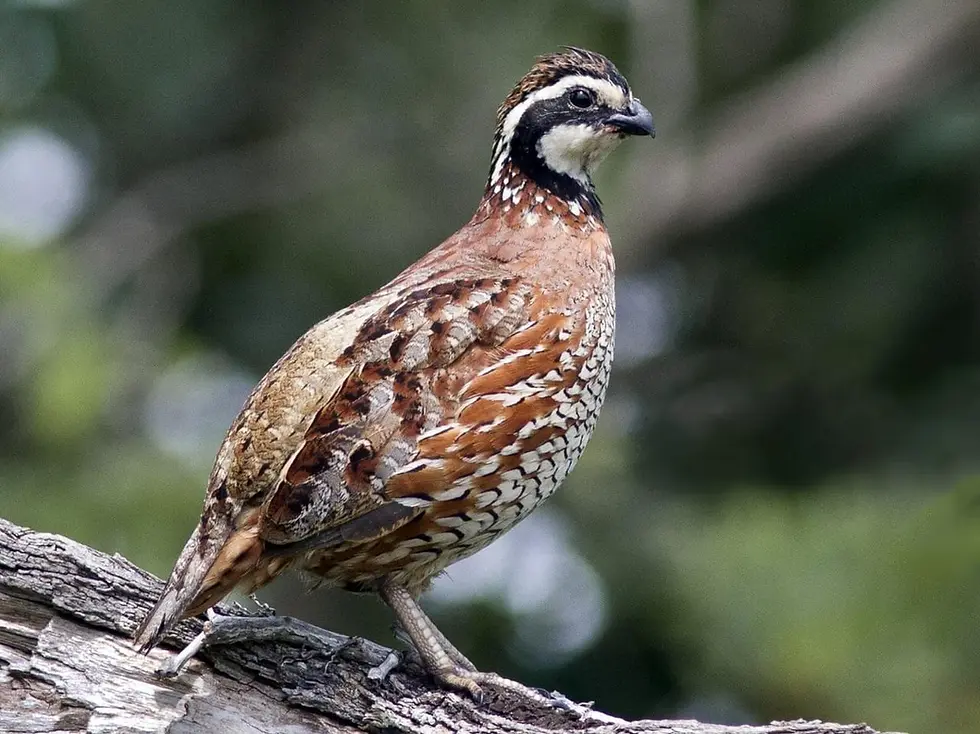
Northern bobwhite (Colinus virginianus) are another longleaf indicator. The monitoring report says bobwhite detections remain relatively high on Conecuh and low elsewhere on the Alabama national forests. No bobwhite harvest data were reported. Bobwhite and turkeys favor overlapping habitat structure, an open overstory over a diverse grass and forb ground layer, and the bobwhite's relative strength on Conecuh fits with the forest's fire history. We explored the bobwhite and longleaf relationship in detail in our post on bobwhite quail ecology and the longleaf pine connection.
The eastern indigo snake (Drymarchon couperi), a federally threatened species and the largest native snake in the United States, has been the focus of a reintroduction effort on Conecuh. The monitoring report records 85 indigo snakes released on Conecuh during 2024-2025.
Then there are the bogs. Conecuh is known for its Gulf Coastal Plain seepage bogs, and the Forest Service highlights Parker Springs Bog, on the western side of the forest, as an excellent example of how an East Gulf Coastal Plain bog should look. Pitcher plants (Sarracenia), sundews (Drosera), bladderworts (Utricularia), and butterworts (Pinguicula) grow there, and the Forest Service notes that frequent prescribed burning helps regenerate the bog community. The monitoring report says several Conecuh bogs visited in the latest cycle remain open, with suitable conditions in most cases regarding woody encroachment and prescribed fire.
The Gulf Coast Edge
The second half of this post's title points south, toward the Alabama Gulf Coast in Baldwin and Mobile counties and the coastal-plain country between Conecuh and the bays. It is fair to be direct about what is and is not known there.
Turkeys live across south Alabama, including the coastal counties, and the Eastern wild turkey's range continues south into Florida, so Conecuh is not the end of the subspecies' range. But the research summarized in this post does not include a study of turkey habitat use in coastal Alabama, and neither the Forest Service monitoring report nor the state brood survey breaks out a Gulf Coast figure. Claims about how turkeys use specific coastal plant communities near the bays are not something the public record documents for this region, so this post does not make them.
What can be said with confidence is how the regulatory map treats the coast. Under ADCNR's 2026-2027 season page, Baldwin and Mobile counties are both in Zone 1, along with Escambia. Zone 1 has no fall season. Those counties follow the same spring framework as the rest of Zone 1, with a special youth hunt on March 13-14, a special disabled hunt on March 19, and a spring season from March 20 through May 3, with decoys allowed. As with all season dates, confirm current regulations with ADCNR before you hunt.
Reading the 2026-27 Regulations on This Landscape
The county split around Conecuh is one of the more confusing corners of Alabama's turkey regulations, and it is worth laying out carefully. Everything below comes from ADCNR's Turkey Season 2026-2027 page and its May 7, 2026 Conservation Advisory Board announcement. Confirm current regulations with ADCNR before every hunt.
Statewide, the season is gobblers only, one per day, with a four-gobbler limit across the combined fall and spring seasons. The Conservation Advisory Board's May 2026 action moved the spring opener five days earlier, to March 20, for 2027, removed the earlier restriction on decoys during the opening days, and left the four-bird limit unchanged.
On the national forest, the Conecuh Ranger District is grouped with the Talladega, Shoal Creek, Oakmulgee, and Tuskegee districts. For 2027, that block has a special youth hunt on March 13, a special disabled hunt on March 19, and the spring season from March 20 through May 3, all from daylight to 1 p.m., with decoys allowed. That block lists no fall season. No more than two gobblers may be taken from any one wildlife management area, community hunting area, or national forest ranger district, and no more than one gobbler may be taken during the first 10 days of each season from each of those areas.
On private land around the forest, the two counties go different ways. Escambia County is in Zone 1, which has no fall season. Covington County is in Zone 3, which lists fall dates of November 14-22 and December 12-27, with decoys prohibited during fall, followed by the same youth, disabled, and spring dates as Zone 1. So a hunter on private land in Covington County may have a fall season this year, while a hunter a few miles away in Escambia County, or on the ranger district itself, does not. And because the forest is not in Conecuh County, Conecuh County's Zone 1 status says nothing about the national forest.
What the Evidence Supports, and What It Does Not
It helps to end with a plain accounting, because turkey ecology in the longleaf is a field where confident-sounding numbers travel faster than the studies behind them.
The evidence supports a few things clearly. Longleaf pine woodland kept open by frequent fire provides the structure Eastern wild turkeys use for nesting and brood-rearing. Hens in Georgia longleaf chose nest sites with more open canopy and taller, woodier ground cover than the surrounding forest, typically a year or two past fire. Nests in Louisiana pine stands left three or more years without fire had low survival. Broods in a longleaf system used recently burned stands by day and older stands, three to six years past fire, by night, which argues for a varied fire mosaic rather than a single rotation. Growing-season fire, applied in patches, had minimal impact on nest production in the Georgia studies. Wild pig removal at scale in central Alabama coincided with more turkeys and a higher likelihood of poults on the ground.
The evidence also has clear limits. There is no published Conecuh nesting study, no Conecuh brood-survival estimate, no Conecuh poult-per-hen ratio, no completed Conecuh-only prescribed fire total in the latest public reporting, no growing-season versus dormant-season split for the forest, and no counted pig population on Conecuh. Some figures that circulate about turkeys and longleaf, including specific canopy percentages and cover heights, do not match what the Georgia researchers measured. The honest way to write about this forest is to use the best regional science with its geography attached and to leave the local numbers blank where they have not been measured.
For Conecuh, the practical conclusion is the one the Forest Service's own monitoring points toward. The forest's open pine structure appears to be holding for woodpeckers, quail, and bogs. Statewide turkey reproduction remains below replacement. Forest-wide burn acres have declined, and growing-season burning has been reduced. If fire returns to its earlier pace, with varied timing and patch size, the forest is well positioned to offer turkeys the full mosaic they use. If it does not, the woods will slowly close, and turkeys will be among the first species to show it.
Frequently Asked Questions
How many acres is Conecuh National Forest, and is that all longleaf pine?
The U.S. Forest Service lists Conecuh National Forest at 84,224 acres. That figure is the whole forest, including floodplains, stream terraces, bogs, and mixed stands, not an inventory of longleaf pine. Longleaf restoration is the forest plan's primary priority, but the latest monitoring report does not give a reliable Conecuh-only longleaf acreage.
Which counties is Conecuh National Forest in?
The forest lies in Covington and Escambia counties along the Alabama-Florida line. It is not in Conecuh County, despite the shared name. That matters for turkey hunters, because Covington and Escambia sit in different hunting zones on private land.
When is spring turkey season on the Conecuh Ranger District in 2027?
Under the Alabama Department of Conservation and Natural Resources 2026-2027 season page, the Conecuh Ranger District has a special youth hunt on March 13, 2027, a special disabled hunt on March 19, 2027, and the spring season from March 20 through May 3, 2027, with hunting from daylight to 1 p.m. and decoys allowed. No more than two gobblers may come from the district, and no more than one in the first 10 days. Confirm current regulations with ADCNR before you hunt.
Is there a fall turkey season on Conecuh National Forest?
The 2026-2027 ranger-district block that includes Conecuh lists no fall season. On private land, Escambia County is in Zone 1, which has no fall season, while Covington County is in Zone 3, which lists fall dates of November 14-22 and December 12-27 with decoys prohibited. Confirm current regulations with ADCNR before planning any fall hunt.
How many turkeys are harvested on Alabama's national forests?
The Forest Service's 2024-2025 monitoring report counts 458 turkeys harvested across the national forests in Alabama in 2023-2024 and 308 in 2024-2025. Choccolocco Wildlife Management Area and Talladega National Forest produced the highest harvests both years. The report does not break out a Conecuh total.
What was Alabama's 2025 turkey brood survey result?
The 2025 Alabama Wild Turkey Report put statewide reproduction at 1.53 poults per hen, below the 2.00 the agency describes as needed for a sustainable population. The report says data collected since 2010 show a long-term decline in reproduction statewide. It does not publish a separate ratio for Conecuh National Forest or the Gulf Coast.
Do wild pigs hurt turkey populations in Alabama?
A 2024 Journal of Wildlife Management study in central Alabama found that when wild pig removal matched the baseline pig population, sites had about 1.5 times as many turkeys and poults were about 3.5 times as likely to occupy an area. The authors describe the effect as a localized increase, and they note turkeys may have moved in from surrounding land. No comparable study has been published for Conecuh, and the Forest Service's latest report does not count pigs on this forest.
How often should longleaf pine be burned for turkeys?
The research points to frequent fire with variety rather than one magic number. Georgia longleaf studies recommended burning every 1 to 2 years, a Louisiana study found nests in stands unburned for 3 or more years had low survival, and another longleaf study found hens roosted broods in stands 3 to 6 years after fire. Managing a mix of recently burned and recovering stands appears to serve nesting and brood-rearing best.
Full Citations and Sources
Government and agency sources
U.S. Forest Service -- National Forests in Alabama: About the Area (page last updated June 10, 2026) -- https://www.fs.usda.gov/r08/alabama/about-area -- accessed October 2026
U.S. Forest Service -- National Forests in Alabama prescribed burning plans for 2025 (news release, January 17, 2025) -- https://www.fs.usda.gov/r08/alabama/newsroom/releases/2025-national-forests-alabama-prescribed -- accessed October 2026
U.S. Forest Service -- National Forests in Alabama 2024-2025 Biennial Monitoring Evaluation Report -- https://www.fs.usda.gov/sites/nfs/files/r08/alabama/publication/2024-2025%20NFsAL%20BMER.pdf -- accessed October 2026
U.S. Forest Service -- Celebrating Wildflowers, Parker Springs Bog (Conecuh Ranger District) -- https://www.fs.usda.gov/wildflowers/regions/southern/ParkerSpringsBog/index.shtml -- accessed October 2026
Alabama Forestry Commission -- Burn Permits -- https://forestry.alabama.gov/Pages/Fire/Burn_Permits.aspx -- accessed October 2026
Alabama Department of Conservation and Natural Resources -- Turkey Season 2026-2027 -- https://www.outdooralabama.com/seasons-and-bag-limits/turkey-season -- accessed October 2026
Alabama Department of Conservation and Natural Resources -- Conservation Advisory Board turkey season date changes (article, May 7, 2026) -- https://www.outdooralabama.com/articles/cab-honors-blankenship-changes-turkey-season-dates -- accessed October 2026
Alabama Department of Conservation and Natural Resources -- 2025 Alabama Wild Turkey Report -- https://outdooralabama.com/sites/default/files/2025%20Alabama%20Wild%20Turkey%20Report%20%28002%29%20ADA%20CHECK.pdf -- accessed October 2026
Alabama Legislative Services Agency -- Alabama Administrative Code 220-2-.01, Hunting Seasons -- https://admincode.legislature.state.al.us/api/rule/220-2-.01 -- accessed October 2026
Research, conservation, and institutional sources
Journal of the Southeastern Association of Fish and Wildlife Agencies -- Streich, Little, Chamberlain, Conner, and Warren (2015), Habitat characteristics of eastern wild turkey nest and ground-roost sites in 2 longleaf pine forests, 2:164-170 -- https://seafwa.org/sites/default/files/journal-articles/25%252520Streich%252520et%252520al%252520164-170.pdf -- accessed October 2026
Forest Ecology and Management -- Little, Streich, Chamberlain, Conner, and Warren (2014), Eastern wild turkey reproductive ecology in frequently-burned longleaf pine savannas, 331:180-187 (University of Nebraska-Lincoln repository) -- https://digitalcommons.unl.edu/natrespapers/721/ -- accessed October 2026
Journal of Wildlife Management -- Little, Chamberlain, Conner, and Warren (2016), Habitat selection of wild turkeys in burned longleaf pine savannas, 80:1280-1289 (University of Nebraska-Lincoln repository) -- https://digitalcommons.unl.edu/natrespapers/727/ -- accessed October 2026
Journal of Wildlife Management -- Yeldell, Cohen, Little, Collier, and Chamberlain (2017), Nest site selection and nest survival of eastern wild turkeys in a pyric landscape, 81:1073-1083 -- https://doi.org/10.1002/jwmg.21267 -- accessed October 2026
Journal of Wildlife Management -- Wood, Cohen, Conner, Collier, and Chamberlain (2019), Nest and brood site selection of eastern wild turkeys, 83:192-204 (Louisiana State University repository) -- https://repository.lsu.edu/agrnr_pubs/179 -- accessed October 2026
Forest Ecology and Management -- Chitwood, Lashley, Sherrill, Sorenson, DePerno, and Moorman (2017), Macroarthropod response to time-since-fire in the longleaf pine ecosystem, 391:390-395 (North Carolina State University copy) -- https://faculty.cnr.ncsu.edu/christophermoorman/wp-content/uploads/sites/9/2017/03/macroarthropods-and-fire_Chitwood-et-al-2017_FEM.pdf -- accessed October 2026
Proceedings of the Annual Conference of the Southeastern Association of Fish and Wildlife Agencies -- Hurst (1978), Effects of controlled burning on wild turkey poult food habits, 32:30-37 -- https://seafwa.org/sites/default/files/journal-articles/HURST-30-37.pdf -- accessed October 2026
Journal of Wildlife Management -- McDonough, Zenas, Gitzen, Smith, VerCauteren, and Ditchkoff (2024), Population response of eastern wild turkey to removal of wild pigs, 88:e22662 -- https://doi.org/10.1002/jwmg.22662 -- accessed October 2026
University of Nebraska-Lincoln Digital Commons -- USDA National Wildlife Research Center record for McDonough and others (2024) -- https://digitalcommons.unl.edu/icwdm_usdanwrc/2828 -- accessed October 2026
The Wildlife Society -- Journal of Wildlife Management summary: wild pig removal boosts turkey numbers -- https://wildlife.org/jwm-wild-pig-removal-boosts-turkey-numbers/ -- accessed October 2026
Scientific Reports -- Sanders, Hewitt, Perotto-Baldivieso, VerCauteren, and Snow (2020), Invasive wild pigs as primary nest predators for wild turkeys -- https://www.nature.com/articles/s41598-020-59543-w -- accessed October 2026


Comments