
American Alligator: Apex Predator Ecology and Keystone Role in Southeastern Wetlands
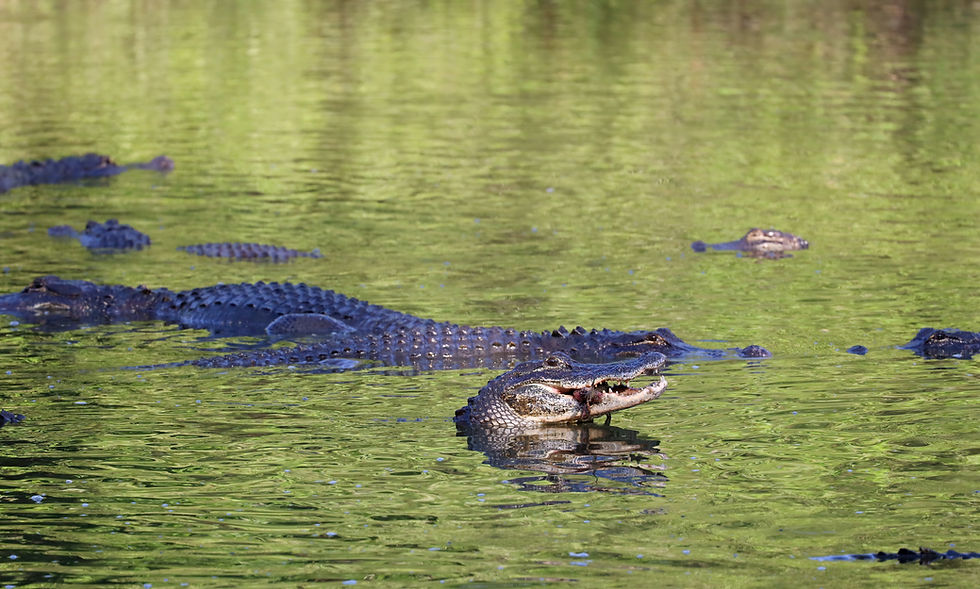
In the freshwater marshes south of Lake Charles, Louisiana, where the Chenier Plain dissolves into a lattice of canals and cattle levees, there is a sound that defines the landscape more completely than any birdcall or weather pattern. It is a low, sustained bellow -- a subsonic vibration that you feel in your sternum before you hear it with your ears -- and it rolls across the marsh grass in the predawn darkness of late May like something geological rather than biological. The animal producing it is lying in eighteen inches of water with only its eyes and nostrils above the surface, and it weighs somewhere between four hundred and six hundred pounds, and it has been doing this -- bellowing in this marsh, in this water, at this latitude -- for roughly the same duration that the marsh itself has existed. The American alligator (Alligator mississippiensis) is not merely a resident of the southeastern wetland. It is the architect of it.
That distinction -- architect rather than inhabitant -- is the single most important thing to understand about the alligator's ecology, and it is the thing that most popular accounts of the species get wrong. The alligator is famous for being large and dangerous, for being hunted and recovered, for being the mascot of a certain cultural register of the Deep South. But its ecological significance has almost nothing to do with its teeth. It has to do with its feet, its tail, and its habit of excavating depressions in the substrate of seasonal wetlands -- depressions that hold water when everything else dries out, that concentrate fish, turtles, wading birds, crayfish, and aquatic invertebrates into refugia that sustain entire food webs through the dry season, and that function as the keystone feature of the freshwater Coastal Plain ecosystem from the Texas Sabine to the North Carolina Outer Banks. The American alligator is one of the most successful conservation recovery stories in the history of the Endangered Species Act, and one of the most ecologically consequential animals on the North American continent; neither of those facts can be understood without understanding the gator hole.
The Gator Hole: Ecosystem Engineering on the Coastal Plain
The term "ecosystem engineer" carries specific meaning in ecology: an organism that creates, modifies, or maintains habitat for other species through its physical activity rather than its trophic interactions. Beavers are the textbook example in temperate North America. In the subtropical and warm-temperate wetlands of the southeastern Coastal Plain, the alligator fills an equivalent role -- and in seasonal wetlands where water levels fluctuate dramatically between wet and dry periods, the alligator may be the more consequential engineer of the two.
The mechanism is the gator hole. An adult alligator, particularly a large territorial male, excavates and maintains a depression in the wetland substrate using its feet, tail, and body. The hole may be as small as six feet across in a roadside ditch or as large as thirty feet in diameter and several feet deep in the interior marshes of the Everglades or the Atchafalaya Basin. The alligator clears vegetation from the depression and the surrounding bank, creating an open-water pond surrounded by a raised berm of excavated material -- a micro-topographic feature in a landscape that is otherwise almost perfectly flat. The hole fills with water during the wet season and, critically, retains water during the dry season when the surrounding marsh surface dries out.
The ecological consequences of this simple excavation are enormous. During dry-downs -- periods of low water that occur annually in the Everglades, seasonally across the Gulf Coastal marshes, and episodically during drought in every southeastern state -- gator holes become the last standing water in the landscape. Fish, turtles, frogs, crayfish, aquatic insects, and snails concentrate in these refugia at densities that can exceed anything observed during normal water conditions. Wading birds -- great blue herons, great egrets, white ibis, wood storks, roseate spoonbills -- aggregate around gator holes to feed on the concentrated prey. In the Everglades, the wood stork's nesting success is directly correlated with the timing and severity of dry-downs and, by extension, with the availability of gator holes that concentrate prey at densities sufficient to sustain chick-rearing. Remove the alligator from this system, and you do not merely lose a predator. You lose the physical infrastructure that sustains the prey base for an entire guild of wading birds during the most resource-limited period of the annual cycle.
The raised berm surrounding a gator hole provides a second, less obvious ecological service. In the flat, seasonally flooded wetlands of the Coastal Plain, even a few inches of elevation above the water table creates conditions suitable for woody plant establishment. Willows, wax myrtles, red maples, and pond cypresses colonize gator hole berms, creating tree islands in otherwise treeless marsh -- islands that provide nesting habitat for turtles, den sites for snakes and small mammals, and perching and nesting sites for birds. In the Everglades, tree islands are recognized as one of the landscape's defining features, and their origin is often traced directly to alligator activity. The alligator does not just dig a pond. It creates an entire micro-landscape of aquatic refugia, elevated terrestrial habitat, and transitional edge -- the full gradient from open water to dry ground -- in a single engineering act.
Apex Predator and Mesopredator Regulator
The alligator's role as an apex predator is significant but is frequently overstated in popular media compared with its role as an ecosystem engineer. An adult alligator is an opportunistic carnivore with a diet that varies dramatically by size class, season, and habitat. Hatchlings and juveniles eat insects, snails, small fish, and invertebrates. Sub-adults transition to larger fish, crayfish, and small turtles. Adults consume fish, turtles, snakes, birds, mammals, and, in coastal Louisiana and Florida, blue crabs and nutria. The dietary breadth is enormous, but the alligator is not a pursuit predator -- it is an ambush predator whose metabolic rate is low enough that it can subsist on a fraction of the caloric intake required by a mammalian predator of equivalent body mass.
The alligator's most consequential predatory function in southeastern ecosystems is mesopredator regulation. In wetland systems where alligators are abundant, the populations of mid-sized predators -- raccoons, opossums, feral hogs, armadillos -- are suppressed by the combination of direct predation (particularly on raccoons and opossums that forage near water) and behavioral avoidance (mesopredators reduce their activity near water bodies occupied by large alligators). This suppression has cascading benefits for ground-nesting birds, turtle nests, and other prey species that suffer disproportionately from mesopredator predation. Research in the Everglades and coastal Louisiana has documented higher nest success rates for colonial wading birds and sea turtles in areas with robust alligator populations -- not because alligators protect nests directly, but because the presence of a large aquatic apex predator reduces the foraging activity of the egg-raiding mammals that are the primary nest predators in the southeastern Coastal Plain.
The alligator also plays a role in nutrient cycling that is rarely discussed outside technical ecology. By feeding in aquatic habitats and basking, defecating, and nesting on land, alligators transfer nutrients from aquatic to terrestrial systems -- a biogeochemical function that fertilizes the vegetation around gator holes, nest mounds, and basking sites. In nutrient-poor wetlands like the Everglades and the Carolina Bay systems, this aquatic-to-terrestrial nutrient subsidy can measurably increase plant productivity on and around alligator activity sites. The alligator is simultaneously a predator, an engineer, and a nutrient vector -- a triple ecological role that no other species in the southeastern wetland duplicates.
Life History: Slow Maturation, Temperature-Dependent Sex, and Extreme Juvenile Mortality
The American alligator's life history is built on a demographic strategy that is fundamentally different from the game birds and mammals that dominate the southeastern sporting landscape. Where a bobwhite quail matures in one year and may live three, and a white-tailed deer matures in two years and may live twelve, an alligator reaches reproductive maturity at six to ten years of age and may live sixty to seventy years in the wild. This is a K-selected life history in the classical sense: low reproductive output per year, high parental investment, slow maturation, and long adult lifespan. The critical population parameter is adult survival, not annual reproduction—a fact with profound implications for harvest management.
Nesting begins in June across the southeastern range, with females constructing mound nests of vegetation, mud, and debris on elevated ground near water -- levee banks, canal edges, marsh hummocks, and lake margins. A typical clutch contains 28 to 35 eggs, deposited in a cavity within the mound and covered with additional vegetation. The decomposing plant material generates heat, and the nest temperature during the middle third of the approximately 65-day incubation period determines the sex of the hatchlings through temperature-dependent sex determination (TSD). Nest temperatures at or above approximately 34°C (93°F) produce males; temperatures at or below approximately 30°C (86°F) produce females; intermediate temperatures produce mixed-sex clutches. This mechanism means that the sex ratio of each year-class is determined by weather, nest-site microhabitat, and nest-mound composition rather than by genetics -- a vulnerability to climate change that has generated significant research attention.
The female guards the nest throughout incubation and assists hatchlings in emerging from the nest mound when they begin vocalizing in late August or September. She carries hatchlings to water in her mouth and remains in proximity to the pod of juveniles for one to two years -- a level of parental care that is exceptional among reptiles and that significantly reduces early juvenile mortality from predation by large wading birds, raccoons, large fish, and other alligators. Despite this maternal investment, juvenile mortality is extreme: more than 90 percent of hatchlings do not survive to maturity. Predation during the first two years accounts for the majority of this loss. The demographic math is straightforward: a female that nests annually for forty or fifty years, producing 30 eggs per clutch, needs only a handful of those hundreds of offspring to survive to reproductive age to maintain the population. It is the adults -- the long-lived, slowly replaced breeding animals -- whose survival drives population trajectory.
Range and Habitat: From the Louisiana Cheniers to the Carolina Sounds
The American alligator's range spans the entire southeastern Coastal Plain, from the Sabine River on the Texas-Louisiana border east to the Atlantic coast and north to the coastal counties of North Carolina -- with isolated populations in the Virginia portion of the Great Dismal Swamp that represent the species' northernmost occurrence. Within this range, alligator density varies by orders of magnitude depending on habitat type, latitude, and management history. Louisiana supports the densest alligator population on the continent, with an estimated 2 million or more alligators occupying the state's coastal marshes, freshwater swamps, and agricultural impoundments. Florida holds the second-largest population, estimated at 1.3 million animals distributed across habitats as varied as the Everglades sawgrass marshes, the Kissimmee chain of lakes, the St. Johns River system, and the coastal estuaries of the Big Bend and Panhandle.
The habitat gradient across the southeastern range produces markedly different alligator ecologies. In coastal Louisiana, alligators occupy brackish and intermediate marshes at densities that have no parallel elsewhere in the range -- densities sustained by the extraordinary productivity of the Gulf coastal marsh, where the combination of warm temperatures, year-round water availability, and abundant prey (blue crab, crayfish, nutria, fish) supports some of the fastest growth rates and highest nesting densities documented for the species. In the Everglades, alligators function as the keystone engineer of a freshwater system defined by sheet flow across a limestone platform, and the gator hole's role as dry-season refugia is more ecologically critical here than anywhere else in the range because the Everglades' seasonal hydrology produces extreme dry-downs that eliminate standing water from vast areas of the interior marsh.
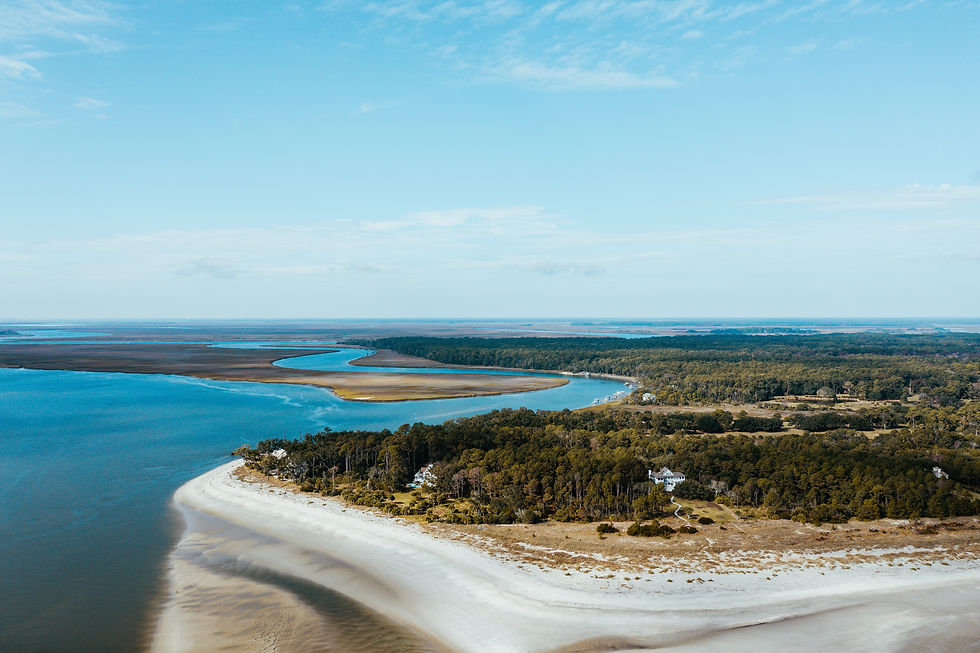
In the Carolinas and Georgia, alligators occupy the blackwater rivers, Carolina bays, coastal sounds, and barrier island marshes of the outer Coastal Plain. Population densities are lower than in Louisiana and Florida, reflecting both the colder winters (which reduce activity periods and growth rates) and the more fragmented wetland habitats of the mid-Atlantic coastal zone. The ACE Basin in South Carolina, the Altamaha River delta in Georgia, and the lower Cape Fear and Alligator rivers in North Carolina represent the core habitat in these states. North of the Albemarle Sound in northeastern North Carolina, alligator occurrence becomes marginal—the species persists in small numbers in the Great Dismal Swamp and a few tidewater drainages, but winter cold limits its population viability at this latitude. The northern range boundary is a physiological constraint: alligators cannot survive sustained exposure to water temperatures below approximately 7°C (45°F), and their metabolic rate drops so severely during cold periods that growth, reproduction, and immune function are all compromised.
Alabama and Mississippi support substantial alligator populations in their Gulf coastal counties -- Mobile-Tensaw Delta, Grand Bay, the Pascagoula River marshes, and the coastal impoundments of Jackson County -- with smaller populations extending up the major river systems (Tombigbee, Alabama, Pearl, Yazoo) into the interior Coastal Plain. These populations are less studied than those in Louisiana and Florida, but are ecologically significant as the connective tissue linking the Gulf coastal mega-populations to the smaller Atlantic-slope populations in Georgia and the Carolinas.
From Five Hundred Thousand to Five Million: The Conservation Recovery
The American alligator's population trajectory in the twentieth century is one of the most dramatic conservation arcs in the history of North American wildlife management. By the early 1960s, decades of unregulated commercial hide hunting had reduced the continental population to an estimated 500,000 animals or fewer -- a decline of more than 90 percent from pre-exploitation levels. Alligators had been functionally extirpated from large portions of their historical range in the Carolinas, Georgia, Alabama, and Mississippi, and populations in Louisiana and Florida, while still present, had been reduced to levels that raised serious concerns about long-term viability.
The recovery began with regulatory protection. The alligator was listed as endangered under the Endangered Species Preservation Act of 1966 (a precursor to the modern ESA) and retained endangered status under the Endangered Species Act of 1973. Federal listing effectively ended legal commercial harvest across the range. State agencies in Louisiana, Florida, Georgia, South Carolina, and other southeastern states simultaneously closed or severely restricted alligator seasons and began enforcing anti-poaching regulations that had previously been unenforced or nonexistent. The combination of federal listing and state enforcement removed the primary source of mortality -- commercial hide harvest -- from a species whose life history is built on high adult survival. The population responded exactly as demographic theory predicted: slowly at first (because maturation takes six to ten years), then with accelerating momentum as the first post-protection cohorts reached breeding age.
By the early 1980s, alligator populations had recovered sufficiently in Louisiana and Florida for those states to petition for delisting. The USFWS removed the alligator from the endangered species list in 1987, but with an unusual classification: "threatened due to similarity of appearance." This designation -- unique to the alligator among recovered species -- exists because the American alligator's hide is visually similar to that of the American crocodile (Crocodylus acutus), which remains federally listed. The similarity-of-appearance classification allows regulated harvest and trade in alligator products while maintaining federal tracking of the hide trade to prevent laundering of crocodile products as alligator. It is a regulatory innovation with no exact precedent and reflects the unusual intersection of conservation biology and commercial economics that defines alligator management in the Southeast.
Today, the continental population exceeds five million animals. Louisiana alone accounts for roughly 2 million, Florida for approximately 1.3 million, and the remaining southeastern states collectively support an additional 1 to 2 million. The recovery is comprehensive: alligators now occupy every major wetland system within their historical range, and populations in most states are at or near the habitat's carrying capacity. The species is no longer conservation-limited. It is habitat-limited -- the primary constraint on further population growth is the availability of wetland habitat, not hunting pressure or regulatory protection.
Sustainable Use: Louisiana's Egg-Collection Model
Louisiana's alligator management program is widely regarded as the most successful sustainable-use model for any crocodilian species in the world, and it deserves extended treatment because it demonstrates how conservation economics can align harvest incentive with habitat protection in ways that benefit the species at population scale.
The program operates on two parallel tracks: a wild-harvest season (typically September, with tags allocated to landowners based on survey data from their property) and an egg-collection/ranching program in which permitted operators collect wild alligator eggs from nests on private and state-managed marshes, hatch and raise the animals in controlled facilities, and return a percentage of the juveniles (currently 12 to 14 percent, depending on the year) to the wild at the collection site. The remaining animals are harvested for hides and meat at commercially optimal sizes.
The conservation logic is specific and measurable. Wild alligator nests suffer approximately 50 percent predation and flooding loss under natural conditions -- raccoons, flooding, and fire destroy roughly half of all nests before hatching. Of the eggs that do hatch, more than 90 percent of the juveniles die within two years from predation. The ranching program collects eggs that would otherwise face these losses, hatches them at near-100 percent success rates in controlled conditions, and returns juveniles that are large enough (typically four feet or longer) to have passed through the highest-mortality size classes. The 12-to-14 percent return rate puts more surviving juveniles back into the wild population than natural recruitment would have produced from the same nests. The program demonstrably increases the number of alligators that reach maturity while simultaneously generating economic value from the remainder—value that gives landowners a direct financial incentive to maintain the coastal marsh habitat that supports nesting.
This is the point that separates the Louisiana model from simple harvest management. A landowner whose coastal marsh supports 50 alligator nests has a quantifiable annual economic interest in maintaining that marsh as nesting habitat. The egg-collection permits generate revenue (from the sale of raised hides and meat) that exceeds the value of the same acreage for any alternative land use except oil and gas extraction. In a state where coastal marsh is disappearing at a rate of approximately 25 to 35 square miles per year due to subsidence, sea-level rise, and saltwater intrusion, the alligator program provides one of the few economic counterweights to the forces driving wetland loss. It is conservation through incentive rather than regulation -- a model that has been studied and adapted by crocodilian management programs in Australia, Zimbabwe, and Papua New Guinea.
State-by-State Harvest Programs Across the Southeast
Beyond Louisiana's ranching model, regulated alligator harvest programs now operate in every southeastern state with significant alligator populations. Florida's Statewide Alligator Harvest Program, administered by FWC, allocates harvest permits by management unit through a public lottery and a private-lands permit system. Florida's program harvests approximately 7,000 to 10,000 alligators annually, primarily from lakes, rivers, and marshes across the central and northern portions of the state, with Lake Okeechobee and the Kissimmee chain units among the most productive. Florida also operates a separate Nuisance Alligator Program (SNAP) through contracted trappers, which removes an additional 8,000 to 10,000 alligators per year from areas where human-alligator conflict is reported -- a program driven by the state's explosive suburban growth into historical alligator habitat.
Georgia opened its modern alligator season in 2003, initially restricted to a few coastal counties, and has since expanded the program to include the Altamaha, Satilla, and Savannah river systems, as well as several large reservoirs in the Coastal Plain. South Carolina manages alligator harvest through a public hunt on specific WMA units and a growing private-lands program in the Lowcountry and ACE Basin. Alabama operates a limited alligator season focused on the Mobile-Tensaw Delta and select coastal WMAs. Mississippi manages the harvest in the southern-tier counties and the coastal zone. North Carolina, at the northern edge of the range, has a limited season in the southeastern Coastal Plain counties where populations are stable. Arkansas and Tennessee, on the extreme western and northern margins of the range, have opened limited harvest programs as populations have expanded into historically unoccupied or marginally occupied habitats along the lower Mississippi and Tennessee river systems.
Nest Ecology and the Climate Vulnerability of Temperature-Dependent Sex
Temperature-dependent sex determination is one of the alligator's most biologically distinctive traits and one of its most significant vulnerabilities in a warming climate. Because nest temperature during a critical window of embryonic development determines whether hatchlings are male or female, any systematic shift in ambient temperature or nest microclimate can skew population sex ratios, potentially affecting long-term reproductive success.
Research at Rockefeller Wildlife Refuge in southwestern Louisiana -- one of the longest-running alligator research stations in the world -- has documented the nest temperature ranges that produce each sex. The pivotal temperature is approximately 32-33°C (89-91°F): above this range, clutches produce predominantly males; below it, predominantly females. The thermal window is narrow enough that a sustained increase of two to three degrees Celsius in average summer temperatures could shift the sex ratio of entire year-classes toward male-dominated cohorts. In a species where a single male can mate with multiple females, a moderate male skew may be demographically tolerable. But an extreme skew -- the kind that persistent warming could produce -- would reduce the number of breeding females in the population and, over decades, reduce reproductive output.
The practical buffer against this vulnerability is the variability of nest-site selection. Female alligators nest in a range of microhabitats -- sun-exposed levee banks, partially shaded marsh edges, forest-margin hummocks -- and the thermal variation among nest sites within a single marsh or swamp can exceed the variation between cooler and warmer years. As long as females have access to a diversity of nesting microhabitats, the population-level sex ratio is buffered by the spatial heterogeneity of nest temperatures. The threat intensifies when habitat homogenization -- the loss of shaded nest sites to marsh erosion, or the elimination of vegetative complexity by development -- reduces the diversity of thermal microhabitats available to nesting females. In the Everglades, where tree islands have been lost to altered hydrology and invasive species, the reduction in shaded nesting options is a documented concern.
Threats to the Southeastern Alligator: What Has Changed and What Is Changing
The alligator's recovery is complete by any population metric, but the landscape it recovered into is not the landscape it was extirpated from. Three categories of change warrant attention for their potential to affect alligator ecology and carrying capacity across the southeastern range.
Coastal wetland loss is the most acute threat, concentrated in Louisiana, where the state has lost approximately 2,000 square miles of coastal marsh since the 1930s -- an area roughly the size of Delaware. The causes are well documented: levee construction on the Mississippi River (which prevents the sediment deposition that historically built and maintained the delta), subsidence of the deltaic platform, saltwater intrusion into freshwater and intermediate marshes, and sea-level rise. For alligators, coastal marsh loss reduces nesting habitat, eliminates the freshwater and intermediate marsh zones that support the highest nesting densities, and compresses populations into narrower bands of suitable habitat between the advancing saltwater line and the developed upland. Louisiana's Coastal Master Plan -- a $50 billion, 50-year framework for sediment diversions, marsh creation, and structural protection -- is the state's response, and its success or failure will directly determine whether the two-million-alligator population of coastal Louisiana is sustainable at current levels.
Suburban development into wetland-adjacent landscapes creates a different category of pressure. In Florida, the expansion of residential communities into historically rural areas of the Kissimmee basin, the upper St. Johns, the Tampa Bay watershed, and the southwest coast has produced the most intense zone of human-alligator conflict in the range. Florida's Nuisance Alligator Program removes thousands of alligators per year from residential areas, golf courses, retention ponds, and suburban waterways -- animals that are not nuisances in any ecological sense but that have become incompatible with the land use that has been built on top of their habitat. Similar pressures are emerging in the coastal counties of Georgia, South Carolina, and North Carolina as Lowcountry and Outer Banks development expands into alligator habitat.
Invasive species compound both threats. In southern Florida, the Burmese python (Python bivittatus) -- an established invasive predator whose population in the Everglades has effectively eliminated most mid-sized mammals from the ecosystem -- has been documented preying on juvenile and sub-adult alligators, and adult pythons and adult alligators engage in mutual predation events that have been widely documented and occasionally photographed. The long-term effect of python competition on alligator populations in the Everglades is not yet quantified, but the elimination of the mammalian prey base (raccoons, opossums, rabbits, marsh rabbits) that alligators in the Everglades historically consumed has almost certainly altered the species' diet and energy budget in southern Florida.
The Alligator as Indicator: What Healthy Populations Tell Us About Southeastern Wetlands
The American alligator functions as an indicator species for southeastern wetland health in a way that few other animals can match. Because the alligator requires freshwater or low-salinity marsh for nesting, because it depends on wetland productivity for prey, because its reproductive success is tied to hydroperiod and nest-site quality, and because its population responds predictably (if slowly) to changes in habitat condition, the status of the alligator population in a given watershed or marsh system provides a reliable proxy for the overall ecological health of that system.
Where alligator nesting density is high, the wetland is productive. Where nest success is high, water levels are stable, and mesopredator pressure is manageable. Where adult body condition is good, prey availability is sufficient. Where the population age structure shows a healthy distribution of size classes -- from hatchlings to large adults -- recruitment and survival are both functioning. Conversely, a decline in nesting density, an increase in nest failure, a reduction in average body size, or a skew toward small size classes in the population are early warnings of wetland degradation that may not yet be apparent in water quality data, vegetation surveys, or other monitoring metrics. The alligator integrates the condition of its habitat across multiple dimensions -- hydrology, productivity, predator community, thermal regime -- and expresses that integration in its population metrics. For wetland managers across the Southeast, the alligator population survey is one of the most informative tools available.
The species' recovery also carries a broader lesson for conservation in the Southeast. The alligator was saved by a combination of regulatory protection (ESA listing), enforcement (anti-poaching), and economic incentive (sustainable-use harvest programs). It was not saved by habitat restoration alone -- the habitat was still there when the species was depleted; what was needed was protection from overexploitation. But its long-term persistence now depends on habitat -- on the maintenance of the coastal marshes, freshwater swamps, river floodplains, and lake margins that five million alligators require. The conservation story has shifted from a population problem (too few animals) to a habitat problem (too little space), and the species' future in the Southeast will be determined not by hunting regulations or ESA status but by the fate of the wetlands themselves.
Explore More
This post is part of Pine & Marsh's ecology blog -- a long-form editorial series covering the ecology of every species, habitat, and conservation story across the eleven southeastern states we report on.
Full Citations and Sources
The following agencies, institutions, and data programs inform the ecological, population, and management context in this report.
Government and agency sources
U.S. Fish and Wildlife Service -- Endangered Species Act listing and delisting history, "threatened due to similarity of appearance" classification, CITES export permit administration, national population status reviews
Louisiana Department of Wildlife and Fisheries -- alligator management program, egg-collection and ranching protocols, coastal marsh nesting surveys, wild-harvest tag allocation system, population monitoring data for the Chenier Plain and deltaic coastal zones
Florida Fish and Wildlife Conservation Commission -- Statewide Alligator Harvest Program, Nuisance Alligator Program (SNAP), population surveys for the Kissimmee chain, Lake Okeechobee, St. Johns River, and Everglades management units
State wildlife agencies across the southeastern range (Georgia DNR, South Carolina DNR, Alabama DCNR, Mississippi MDWFP, North Carolina WRC, Arkansas AGFC, Tennessee TWRA, Texas Parks and Wildlife Department) -- state-level alligator management plans, harvest programs, population surveys, and nuisance-animal management protocols
Louisiana Coastal Protection and Restoration Authority -- Coastal Master Plan, sediment diversion projects, marsh creation programs, and long-term coastal land-loss projections relevant to alligator nesting habitat
National Park Service, Everglades National Park -- alligator population monitoring, gator hole ecology research, tree island formation studies, Burmese python impact assessments
Research and institutional sources
Rockefeller Wildlife Refuge, Grand Chenier, Louisiana -- long-term alligator nesting ecology, temperature-dependent sex determination research, growth rate studies, and population demography datasets spanning multiple decades
University of Florida, Department of Wildlife Ecology and Conservation -- alligator population genetics, Everglades ecosystem research, human-alligator conflict studies, and crocodilian comparative ecology
Crocodile Specialist Group (IUCN/SSC) -- global crocodilian conservation status assessments, sustainable-use program evaluations, and comparative management framework analyses
The Ecology and Behavior of the American Alligator (McIlhenny, 1935; Joanen and McNease, 1970s-1990s research series) -- foundational natural history, nesting behavior, and population ecology literature for the species in Louisiana
Confidence note: Population estimates cited in this report (5M+ continental, ~2M Louisiana, ~1.3M Florida) reflect the most recent published assessments from state wildlife agencies and are subject to the inherent imprecision of mark-recapture and aerial survey methods applied to cryptic aquatic reptiles. The 500,000 pre-ESA population estimate is widely cited in the conservation literature but is itself an approximation derived from retrospective analysis rather than a contemporaneous census. Temperature-dependent sex determination parameters reflect published research from Rockefeller Wildlife Refuge and other southeastern study sites; pivotal temperatures may vary slightly across the range. Coastal land-loss figures for Louisiana reflect USGS and CPRA published estimates, which carry uncertainty ranges that vary by modeling methodology. Juvenile mortality rates (>90%) are consistent across multiple studies in Louisiana and Florida but may not apply uniformly to all southeastern populations. Harvest figures are based on published data from state agency annual reports and the USFWS CITES export database.
Comments