
Mourning Dove Migration and Breeding Ecology Across the Southeast
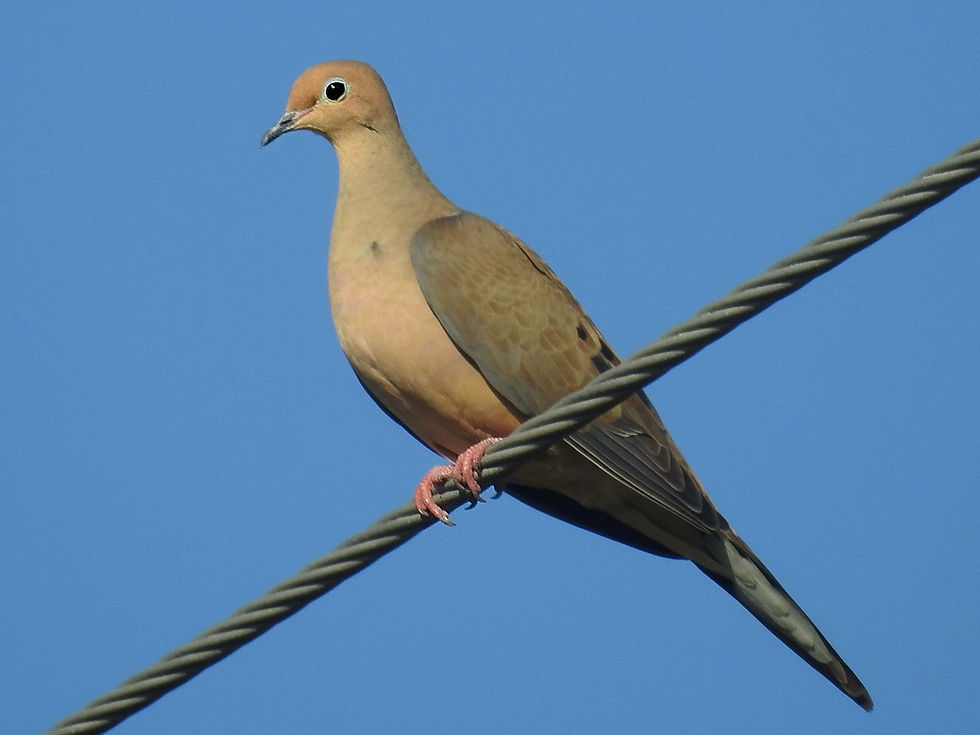
On the first Saturday of September, across every southeastern state from Virginia to Louisiana, something happens that has no equivalent in American field sports. Hunters by the hundreds of thousands walk into cut sunflower fields, harvested millet strips, and burned-over grain plots at four o'clock in the afternoon, set out a bucket and a box of shells, and wait for birds that weigh four ounces. By six o'clock, the fields are quiet again, the tailgates are down, and the season -- the earliest legal hunting season in the Southeast, the one that marks the end of summer as surely as the first cool front -- has begun. The bird that occasions all of this is the Mourning Dove (Zenaura macroura), and it is, by a margin that no other species approaches, the most harvested migratory game bird in North America.
More than 20 million mourning doves are taken annually by hunters across the United States, according to the U.S. Fish and Wildlife Service's Harvest Information Program -- a figure that exceeds the combined harvest of all North American duck species in most years. The southeastern states account for a disproportionate share of that harvest, both because the region lies squarely within the fall migration corridor and because the agricultural landscape of the Coastal Plain and Piedmont produces the grain fields and bare-ground feeding sites that concentrate doves in huntable densities. Yet for all its familiarity -- the dove is the bird that most rural southerners see more often than any other, perched on power lines and fencerows from the Carolina sandhills to the Mississippi Delta -- its ecology is more complex, more migratory, and more tightly bound to agricultural land use than most hunters or landowners appreciate.
Three Management Units and the Southeast's Position Within Them
The mourning dove is managed under the Migratory Bird Treaty Act, which places regulatory authority with the U.S. Fish and Wildlife Service rather than individual state agencies -- a critical distinction from resident game species like white-tailed deer and wild turkey, whose seasons and bag limits are set at the state level. USFWS divides the continental dove population into three management units for regulatory purposes: the Eastern Management Unit (EMU), the Central Management Unit (CMU), and the Western Management Unit (WMU). The boundaries follow state lines rather than biological gradients, a regulatory convenience that approximates but does not precisely match the actual population structure.
The eleven southeastern states that Pine & Marsh reports on fall entirely within the Eastern Management Unit, and they occupy a position within it that is both geographically and ecologically central. The EMU stretches from the Canadian border south through the Great Lakes, the Ohio Valley, the mid-Atlantic states, and the entire Southeast to the Gulf Coast. The southeastern states function as the EMU's primary wintering ground: banding recovery data collected by the Bird Banding Laboratory over more than seven decades show that mourning doves harvested or recovered in Georgia, Alabama, Mississippi, Louisiana, and the Carolinas during fall and winter originated from breeding populations as far north as Michigan, Wisconsin, Ohio, Indiana, and Pennsylvania. The Southeast does not merely participate in the Eastern Management Unit. It receives and winters a substantial portion of the unit's total population, and the condition of its agricultural landscape -- the availability of harvested grain fields, weed-seed flats, and bare-ground feeding sites -- directly affects overwinter survival, which determines how many birds return north to breed the following spring.
Fall migration in the EMU begins in earnest in mid-September across the northern tier and reaches the southeastern states in waves through October and November. Unlike waterfowl migration, which is driven primarily by freeze-up and photoperiod, dove migration is more diffuse and less predictable. Doves move south in loose, unstructured flights rather than the organized formations of ducks and geese. They respond to cold fronts, but they also respond to local food availability -- a harvested grain field in central Tennessee can hold thousands of birds for days before a front pushes them farther south, while the same field stripped of grain will be empty regardless of weather. This responsiveness to local food supply makes the mourning dove's migration through the Southeast more variable from year to year than the waterfowl migration that dominates the region's outdoor calendar from November through January.
Breeding Biology: The Most Prolific Nester in North America
The mourning dove's reproductive biology is, by any standard, extraordinary among North American birds and is the primary reason the species sustains a harvest of 20 million birds per year without population-level decline. A mated pair produces a clutch of exactly two eggs -- no more, no less, a consistency that is unusual in avian biology. Incubation lasts approximately 14 days, shared between the male and female (the male incubates during midday; the female incubates from late afternoon through the night and into the morning). The squabs -- the term for nestling doves -- are fed crop milk for the first several days of life, a protein- and fat-rich secretion produced by the lining of the adult's crop that is functionally analogous to mammalian lactation. No other group of North American game birds produces crop milk; it is a trait shared only among the pigeons and doves (family Columbidae).
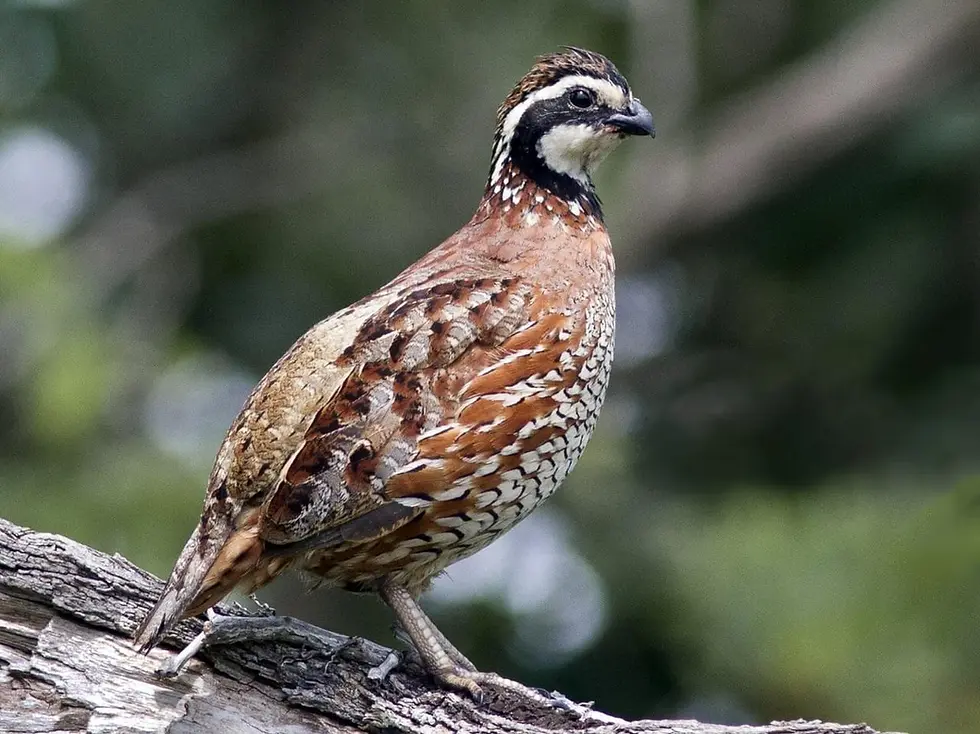
What makes the mourning dove's reproduction exceptional is not the clutch size -- two eggs is modest by game-bird standards -- but the number of nesting attempts per season. In the southeastern states, where the breeding season extends from late February or March through September, a single pair may initiate five to six nesting attempts in a single year. If each attempt successfully fledges two young (fledging typically occurs at 12 to 14 days post-hatch), a pair can theoretically produce 10 to 12 fledglings in a single breeding season. No other North American bird sustains this level of reproductive output over this duration. The bobwhite quail lays larger clutches (12 to 16 eggs), but it is limited to one or two nesting attempts. Waterfowl produce one clutch per year. The dove's strategy is the inverse: small clutches, many attempts, and a breeding season long enough to accommodate repeated failure and re-nesting.
In the Southeast, this extended breeding season is a function of latitude and climate. Doves in the Carolinas and Georgia are on nests by early March; doves in the Gulf states -- Alabama, Mississippi, Louisiana, and Florida -- may begin nesting in late February. The season extends through August and occasionally into September, giving southeastern pairs a full six to seven months of potential nesting activity. Nesting habitat is catholic: doves use open woodland, pine plantation edge, suburban ornamental trees, agricultural shelterbelts, and even ground sites in open fields. The nest itself is a minimal platform of sticks so loosely constructed that the eggs are often visible from below through the nest floor -- a construction standard that would be lethal for a ground-nesting species, but that works for an arboreal nester whose primary nest predators are snakes and corvids rather than mammalian ground predators.
The southeastern landscape is particularly favorable for dove nesting because it provides the structural mosaic the species prefers: scattered trees for nest sites adjacent to open ground for feeding. The classic dove landscape in the South is not deep forest or unbroken agriculture but the edge between them -- a fencerow with a few oaks or pines overlooking a harvested grain field, a farmstead with pecan trees bordering a mowed pasture, a power-line right-of-way cut through planted pine. This preference for the agricultural-woodland interface explains why the mourning dove thrived across the Southeast during the era of small, diversified farms and has declined in areas where that landscape has been replaced by either dense suburban development or the large-scale monoculture agriculture that eliminates the edge habitat the species depends on for nesting.
Diet and Feeding Ecology: An Obligate Granivore on Southeastern Ground
The mourning dove is an obligate granivore -- it eats seeds, almost exclusively, and it eats them from the ground. This dietary specialization shapes every aspect of dove ecology in the Southeast, from habitat selection to migration timing to management strategy. Unlike the bobwhite quail, whose chicks require an insect-rich diet for the first two weeks of life, dove squabs are sustained by crop milk and transition to a seed diet as they fledge. Adult doves consume seeds from a wide range of cultivated and wild plants, but across the southeastern states, the dominant food items are agricultural grain and weed seed: waste corn, sunflower, browntop millet, wheat, grain sorghum, croton (goatweed), pokeweed, pigweed (Amaranthus), foxtail, and panic grass.
The feeding behavior is specific and consequential for management. Doves feed on bare ground or very lightly vegetated ground where seeds are visible and accessible. They will not scratch through litter or dense vegetation to find food -- they lack the morphological equipment (heavy feet, strong legs) that gallinaceous birds like quail and turkey use to scratch and rake. A sunflower field with seeds lying on bare soil after harvest is an ideal dove-feeding habitat; the same sunflower field with six inches of standing stubble and a mat of fallen leaves covering the seeds is marginal to useless. This is why dove field management in the southeastern states revolves around exposing seed on bare ground: burning, disking, mowing, and manipulating vegetation to create the open, accessible feeding surface the species requires.
Two micro-habitat features that are easily overlooked but functionally critical for dove use across the Southeast are grit and water. Doves require small stones and coarse sand to grind seed in their muscular gizzard -- they have no teeth and no crop enzymes capable of breaking down hard seed coats without mechanical abrasion. Exposed dirt roads, gravel driveways, sand pits, and the bare margins of agricultural fields provide grit in the southeastern landscape. Water is equally essential: doves drink at least once daily, typically in the morning and evening, and they prefer open, shallow water with gently sloping banks where they can walk to the water's edge -- stock ponds, creek crossings, puddles in field roads. A dove field without a water source within roughly a mile will hold fewer birds than the same field with water nearby. The combination of bare ground, grit, and accessible water defines the dove's microhabitat triangle in the Southeast, and properties that provide all three consistently attract the highest concentrations of doves.
Dove Management Plantings and the Southeastern Tradition
The managed dove field is a southeastern institution with deep roots in the region's agricultural and sporting culture. From the Lowcountry of South Carolina to the Black Belt of Alabama to the Delta counties of Mississippi and Arkansas, the September dove opener is the first hunt of the season, often the largest social gathering in the sporting calendar, and the occasion for a land-management practice that is unique to the dove: the deliberate planting, manipulation, and exposure of grain crops specifically to attract and concentrate doves for hunting.
The legal framework for dove field management is governed by federal baiting regulations under the Migratory Bird Treaty Act—regulations that are more specific and more strictly enforced than those governing any other game bird in the Southeast. The fundamental rule is that doves may be hunted over a field where grain has been planted, allowed to mature, and then harvested or manipulated by normal agricultural practices. Sunflower, browntop millet, Japanese millet, grain sorghum, and corn are all legal planting options. The grain may be mowed, disked, bush-hogged, or combined, and doves may be hunted over the resulting exposed seed. What is prohibited is the direct scattering or placement of grain (baiting) to attract doves -- a distinction that turns on whether the seed reached the ground through an agricultural practice or through deliberate placement. The line between legal manipulation and illegal baiting has generated more federal enforcement actions and more confusion among southeastern hunters and landowners than any other wildlife regulation in the region.
The most effective dove plantings in the southeastern states follow a consistent pattern refined over decades by state wildlife agencies, cooperative extension services, and private land managers. Browntop millet -- planted in May or June, maturing by early September -- is the backbone species for most southeastern dove fields. It produces abundant small seed, grows on a wide range of soil types across the Coastal Plain and Piedmont, and responds well to mowing or light disking that exposes seed on bare ground before the September opener. Sunflower is the prestige crop: a field of mature sunflower, heads drooping with seed, bush-hogged to lay the stalks flat and scatter seed across open ground, will concentrate doves in densities that no other planting matches. The limitations are cost and soil requirements -- sunflower demands better soil, more inputs, and more acreage to justify the investment. Many southeastern operations plant a mosaic of both: millet strips for reliable bird attraction, sunflower blocks for the visual and ecological anchor that draws the highest concentrations.
The Call-Count Survey: How the Southeast's Doves Are Monitored
The primary population monitoring tool for mourning doves in the United States is the Call-Count Survey (CCS), administered by the U.S. Fish and Wildlife Service and conducted by state wildlife agency personnel and trained volunteers. The CCS operates on a design similar to the Breeding Bird Survey: observers drive standardized routes during the breeding season (typically late May through early June) and count the number of mourning dove calls heard at each of 20 listening stations spaced one mile apart along each route. The survey has been conducted annually since 1966, providing a long-term population index comparable in duration to the BBS.
For the Eastern Management Unit, the Call-Count Survey data show a population trend that has been stable to slightly declining over the past five decades -- a trajectory that stands in sharp contrast to the precipitous 85-percent decline of the bobwhite quail over the same period. The EMU dove population has declined approximately 15 to 20 percent since 1966, a rate that the USFWS Dove Technical Committee has assessed as biologically sustainable given the species' extraordinary reproductive capacity. The mourning dove's ability to produce 10 to 12 fledglings per pair per year in the southeastern states provides a demographic buffer that the bobwhite, with its single annual nesting effort, cannot match.
However, the EMU-wide trend masks significant geographic variation within the Southeast. Call-count indices have declined most steeply in the northern Piedmont states -- Virginia, the Carolinas, and Tennessee -- where the loss of small, diversified farms to suburban development and large-scale agriculture has eliminated the patchwork of grain fields, fencerows, and open woodland edge that historically supported the highest breeding densities. In the lower Coastal Plain and Delta -- Georgia, Alabama, Mississippi, Louisiana, and Arkansas -- dove populations have been more stable, sustained by the continued availability of agricultural grain fields and managed dove plantings on private land and state wildlife management areas.
Banding Data and What It Reveals About Southeastern Dove Populations
The USGS Bird Banding Laboratory maintains the most comprehensive banding dataset for mourning doves in North America, with millions of doves banded and hundreds of thousands of recoveries recorded since the program's inception. For the southeastern states, the banding recovery data reveal a migration and population connectivity pattern with significant implications for both management and harvest regulation.
Doves banded during the breeding season in Ohio, Indiana, Michigan, Wisconsin, and Pennsylvania are recovered during fall and winter in Georgia, Alabama, Mississippi, South Carolina, and North Carolina at rates that confirm the Southeast's role as the primary wintering ground for the northern EMU breeding population. The migration is not random: banding recoveries show a broadly southwest-trending movement from the Great Lakes and Ohio Valley into the Gulf states, with a secondary southeast movement from the mid-Atlantic into the Carolinas and Georgia. The practical consequence is that the mourning dove population available to southeastern hunters in September and October is not a local population -- it is a composite of local breeders, mid-latitude migrants, and northern-origin birds that arrive in successive waves as fall progresses.
This population mixing has direct management implications. Harvest regulations set by USFWS for the Eastern Management Unit must balance the biological status of breeding populations in the northern states (which produce the majority of the unit's young) with the wintering-ground conditions in the southern states (which determine overwinter survival). A generous season in Georgia harvests birds that bred in Indiana. A habitat loss in Ohio reduces the number of birds that winter in Alabama. The mourning dove's management, like the waterfowl management more common in the Southeast, is inherently a landscape-scale, multi-state enterprise governed by migratory connectivity that no single state can control.
Agricultural Change and the Southeastern Dove Landscape
The mourning dove's dependence on agricultural grain and bare-ground feeding habitat makes it acutely sensitive to changes in farming practice -- more so than any other migratory game bird in the Southeast except perhaps the American woodcock, which depends on young forest and early-successional cover. The landscape that historically produced the highest dove densities in the Southeast was the small, diversified farm of the mid-20th century: 200 to 500 acres of mixed row crops (corn, cotton, soybeans, small grain), pasture, and woodlot, with fencerows, dirt roads, grain bins, and bare-ground livestock lots providing the combination of seed, grit, water, and nesting cover that doves require. That landscape was not managed for doves. It produced doves incidentally, as a byproduct of an agricultural system whose scale, diversity, and structural heterogeneity provided everything the species needed.
The consolidation of southeastern agriculture into larger, more mechanized, less structurally diverse operations has degraded this incidental dove habitat in ways that are measurable but rarely dramatic enough to make headlines. Clean farming practices -- the elimination of weedy field borders, the removal of fencerows to accommodate larger equipment, the shift from small grain (wheat, oats) to continuous corn or soybean rotation -- reduce the weed-seed and waste-grain availability that doves depend on. Modern combines are more efficient at extracting grain from the stalk, leaving less waste on the ground after harvest. Herbicide-tolerant crop systems suppress the pigweed, foxtail, and croton that once grew in field margins and provided fall and winter seed. None of these individual changes is catastrophic for doves, but their cumulative effect across millions of acres of southeastern farmland is a gradual reduction in the carrying capacity of the agricultural matrix that once supported the region's highest dove densities.
Suburban sprawl compounds the agricultural effect, particularly in the Piedmont and upper Coastal Plain, where population growth has been most intense. The corridor from Charlotte through the Research Triangle to Raleigh, the Atlanta metropolitan expansion into formerly agricultural counties, the Nashville exurban ring into middle Tennessee farm country, and the Gulf Coast development pressure from Mobile to Pensacola have all converted former dove habitat to residential and commercial land use. Suburban landscapes can support nesting doves -- the species is remarkably tolerant of human proximity and will nest in ornamental trees above busy parking lots -- but they do not provide the bare-ground grain access that feeding doves require. A dove that nests in a suburban crepe myrtle still needs to fly to an agricultural field to eat. When those fields disappear under subdivision and strip mall, the nesting pair persists, but the feeding habitat that sustains it through the non-breeding season does not.
Harvest Management: Federal Frameworks and Southeastern Season Structures
Mourning dove harvest in the southeastern states is regulated through a federal framework system administered by the U.S. Fish and Wildlife Service. Each year, USFWS establishes the maximum season length, bag limit, and opening and closing dates for each management unit. States then select their specific seasons within those parameters. For the Eastern Management Unit, the current federal framework allows a maximum season length of 70 days, a daily bag limit of 15 birds, and a possession limit of 45. Most southeastern states structure their 70 days as a split season -- two or three segments separated by closed periods -- to spread harvest opportunity across the fall migration and provide hunting during both the early-season local birds and the later-arriving migrants.
The split-season structure reflects a deliberate management strategy tailored to the phenology of southeastern dove migration. The first segment typically opens on September 1 (or the first Saturday nearest to it) and runs through mid-October, targeting the locally breeding population and early migrants. The second segment reopens in November or December, targeting the northern-origin birds that have migrated into the southeastern wintering grounds. Some states -- Georgia, South Carolina, and Alabama among them -- use a three-way split to provide additional hunting opportunity in January, when the full migratory population has arrived, and dove densities on wintering-ground food sources are at their seasonal peak.
The harvest itself is remarkably self-regulating. Dove hunting in the Southeast is an afternoon affair -- doves feed primarily in the morning and late afternoon, and most states open shooting at noon or 12:30 PM to protect morning feeding flights. As dove numbers decline in a given field due to harvest pressure, the remaining birds redistribute to alternative feeding sites, naturally reducing hunter success without requiring mid-season regulatory adjustments. The USFWS Harvest Information Program estimates that approximately 40 to 50 percent of the annual dove harvest in the EMU occurs during the first two weeks of the September season, with harvest effort and success declining as the season progresses and fields are shot out or doves disperse.
The Dove as a Southeastern Cultural Institution
It would be incomplete to write about mourning dove ecology in the Southeast without acknowledging what the September opener means to the region's sporting culture. In states where deer season does not open until October or November and waterfowl season waits until late November or December, the dove opener is the first day afield -- the day that ends summer and begins the season that defines the southern outdoor calendar from September through February. Corporate dove hunts on managed fields are the single most common form of commercial sporting-event hosting in the Southeast, exceeding even deer hunting in the corporate and social-entertainment segment. The dove shoot is accessible in a way that few other hunts are: it requires no dog, no boat, no guide, no specialized equipment beyond a shotgun, and no particular physical fitness. A grandmother and a teenager can stand in the same sunflower field and have the same experience.
This cultural significance gives dove management in the southeastern states a political and social dimension that purely ecological analysis can miss. The managed dove field is not just a wildlife habitat practice -- it is a social infrastructure, a land-use investment that binds landowners to the sporting community and incentivizes agricultural practices (planting millet and sunflower, maintaining open field edges, retaining stock ponds) that benefit not only doves but an entire suite of early-successional and field-edge species. Where dove fields are maintained in the Southeast, the associated habitat benefits bobwhite quail, field sparrows, Eastern meadowlarks, cottontail rabbits, and the raptor populations that feed on all of them. The September dove field is, in ecological terms, a managed early-successional habitat patch embedded in an agricultural matrix -- precisely the habitat type that has declined most rapidly across the region.
Population Outlook and the Southeastern Carrying Capacity
The mourning dove's population trajectory in the Eastern Management Unit is more stable than that of any other upland game bird in the Southeast, and the species' extraordinary reproductive capacity provides a demographic buffer against habitat loss and harvest pressure that few other hunted species possess. But stability is not invulnerability. The gradual erosion of agricultural feeding habitat across the southeastern Piedmont and upper Coastal Plain, combined with suburban sprawl that eliminates the farm-edge nesting cover the species depends on, is reducing the landscape's carrying capacity for doves in a pattern that is diffuse, incremental, and easy to overlook until the cumulative effect becomes apparent in the Call-Count Survey data a decade later.
The lower Coastal Plain and the Delta remain the strongest landscapes for mourning doves in the Southeast -- areas where agriculture is still the dominant land use, where managed dove fields are a cultural and economic institution, and where the combination of grain availability, open ground structure, and mild winters sustains the highest wintering densities in the EMU. The conservation challenge for the mourning dove in the Southeast is not the dramatic habitat catastrophe facing the bobwhite or the recruitment crisis facing the wild turkey. It is the slow, steady simplification of the agricultural landscape that once provided everything the species needed as a byproduct of farming -- a landscape being replaced, acre by acre, by operations too large, too clean, and too monocultural to support the incidental abundance of seed, grit, water, and edge cover that 20 million mourning doves depend on every fall.
The managed dove field, in this context, is not a luxury or a recreational indulgence. It is a compensatory habitat practice that replaces the incidental feeding habitat that modern agriculture no longer provides. State wildlife agencies across the Southeast manage dove fields on WMAs from Virginia to Louisiana. Private landowners plant millet and sunflower on ground that might otherwise be continuous soybean. Corporate sporting operators maintain fields that attract doves and, incidentally, maintain early-successional habitat in a landscape that is losing it. Whether this patchwork of intentional management can sustain the dove densities the Southeast has historically supported -- in the face of continued agricultural consolidation and suburban expansion -- is the question that the next generation of Call-Count Survey data will answer.
Explore More
This post is part of Pine & Marsh's ecology blog -- a long-form editorial series covering the ecology of every species, habitat, and conservation story across the eleven southeastern states we report on.
Full Citations and Sources
The following agencies, institutions, and data programs inform the ecological, population, and management context in this report.
Government and agency sources
U.S. Fish and Wildlife Service -- Mourning Dove National Status Report, Eastern Management Unit harvest frameworks, Harvest Information Program estimates, Migratory Bird Treaty Act baiting regulations and enforcement guidance
U.S. Geological Survey, Bird Banding Laboratory -- mourning dove banding and recovery data, migration connectivity analysis for the Eastern Management Unit, population-level banding recovery rates
U.S. Fish and Wildlife Service, Division of Migratory Bird Management -- Mourning Dove Call-Count Survey, 1966–present; annual population indices and trend estimates by management unit and state
State wildlife agencies across the southeastern EMU (Virginia DGIF, North Carolina WRC, South Carolina DNR, Georgia DNR, Florida FWC, Alabama DCNR, Mississippi MDWFP, Louisiana LDWF, Arkansas AGFC, Tennessee TWRA, Kentucky DFWR) -- state-level dove management plans, WMA dove field programs, harvest survey data, season-structure frameworks
Research and institutional sources
USDA Natural Resources Conservation Service -- Conservation Reserve Program field-border practices, native-grass planting guidance for upland bird habitat in the southeastern states
Cooperative Extension Services (University of Georgia, Auburn University, Mississippi State University, Clemson University, University of Tennessee) -- dove field management guides, browntop millet and sunflower planting recommendations, baiting regulation interpretation for southeastern landowners
Migratory Shore and Upland Game Bird Technical Committee (USFWS) -- population assessment methodology, harvest strategy frameworks, Call-Count Survey design and analysis
Ecology and Management of the Mourning Dove (Baskett, Sayre, Tomlinson, and Mirarchi, 1993) -- comprehensive species monograph; breeding biology, crop milk physiology, migration ecology, population dynamics
Confidence note: Population trend data cited in this report reflect the USFWS Mourning Dove Call-Count Survey and Breeding Bird Survey analyses through the most recent published assessment period. The 20-million annual harvest figure is the commonly published estimate from the Harvest Information Program; actual annual harvest fluctuates with weather, season structure, and hunter participation. Banding recovery patterns describe general directional trends in migration connectivity and do not capture the full complexity of individual-bird movement. Breeding biology parameters (clutch size, incubation period, nesting attempts per season) are based on published research from multiple southeastern states and may vary locally. Management regulations cited reflect the current federal framework; states adjust their season selections annually within the federal parameters.
Comments