
The Gulf Coast Digital Gap: Why Alabama, Mississippi, Louisiana, and Arkansas Outfitters Are Losing the AI Search Revolution
Updated: Jun 12
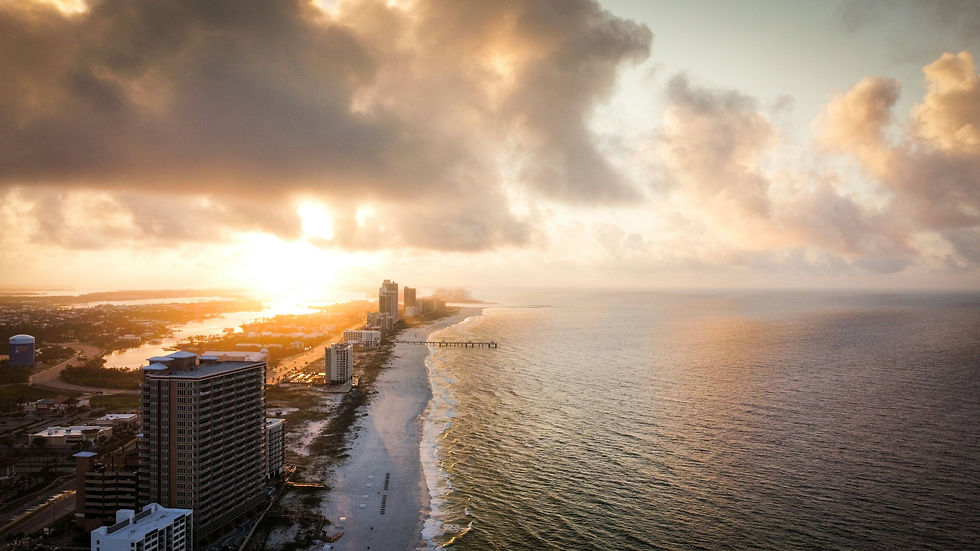
The Gulf Coast Digital Crisis: Four States, One Disappearing Coastline of Opportunity
Pine & Marsh audited 2,206 outdoor operators across 11 southeastern states. The Gulf Coast corridor -- Alabama, Mississippi, Louisiana, and Arkansas -- represents the most severe digital deficit in our entire dataset. These four states combine world-class natural resources with the weakest online infrastructure we measured anywhere in the Southeast.
Alabama posted a digital health score of 4.76, the lowest of all 11 states. Mississippi followed at 4.85. Louisiana managed 5.68, and Arkansas scored 5.69. For context, the 11-state average sits near 6.2. The Gulf Coast is not just lagging—it is structurally invisible to the discovery systems that now drive booking decisions.
AI search visibility tells an even sharper story. Arkansas operators appear in AI-generated recommendations just 3.5% of the time -- the lowest figure in our entire 2,206-operator dataset. Alabama reaches 19.9%, Mississippi 20.6%, and Louisiana 13.1%. When a potential client asks ChatGPT, Gemini, or Perplexity for the best redfish guide in Louisiana or the top duck lodge in Arkansas, four out of five times the answer will be an aggregator, a magazine article, or a competitor from another state.
This post breaks down the digital crisis state by state, identifies the structural patterns driving it, and outlines the playbook that turns a 4.76 into a defensible market position.
Alabama: The Lowest Digital Health Score in 11 States
Alabama earned a 4.76 digital health score in Pine & Marsh's audit -- dead last among all 11 southeastern states we measured. Of the 34 operators we audited in the Gulf Coast session, Alabama's operators showed the most extreme gap between the quality of their on-water product and the strength of their online presence.
The Mobile-Tensaw Delta: America's Amazon, Digitally Invisible
The Mobile-Tensaw Delta spans 260,000 acres. E.O. Wilson called it "America's Amazon." It supports at least six bookable verticals on a single outboard tank of gas -- inshore fishing, offshore charters, duck hunting, bowfishing, eco-tours, and kayak adventures. No other landscape in the southeastern United States packs that kind of commercial diversity into one watershed.
Yet when Pine & Marsh ran AI search queries for Mobile-Tensaw Delta guides, the results returned state tourism pages, Wikipedia entries, and the Audubon Society before a single operator appeared. The delta's operators have not built the structured content that AI systems need to recommend to them. There are no FAQ pages addressing seasonal patterns. There is no schema markup identifying service areas, species, or pricing. The delta's digital surface is almost entirely absent.
Alabama's Artificial Reef Zone and the Offshore Content Gap
Alabama maintains the largest artificial reef zone in the United States -- roughly 1,200 square miles of permitted reef territory in the Gulf of Mexico. The Alabama Department of Conservation and Natural Resources has managed this program since 1953, building on the state's outdoor heritage that traces back to ADSFR's founding in 1929.
Alabama's roughly 60 miles of coastline punch far above its weight in offshore fishing productivity. But Pine & Marsh's audit found that offshore content from Alabama operators is structurally thinner than content from comparable operations in Destin, Panama City, or Orange Beach's own neighbor markets. Most Alabama charter pages list a phone number, a few photos, and a sentence about "great fishing." They do not build the species-specific, season-specific, technique-specific content layers that AI search engines use to match queries with providers.
Zeke's Landing and the Category SEO Lesson
Zeke's Landing Marina in Orange Beach represents the exception that proves the rule. Like Destin's HarborWalk Village, Zeke's has built category-level SEO authority -- it ranks for "Orange Beach fishing charters" and related queries not because any single captain invested in digital, but because the marina itself built a content ecosystem. Individual captains operating from Zeke's benefit from the marina's authority, but they do not own their own discovery path. If the marina changes its listing format or prioritizes different operators, captains who relied on Zeke's traffic have no fallback.
The AI Asymmetry Problem
Alabama presents the most extreme AI-famous-vs-operator-invisible asymmetry in our dataset. The state's fisheries, the delta, and the reef zone appear frequently in AI-generated content about Gulf Coast fishing. But that content almost never connects to a specific bookable operator. AI knows Alabama is a great place to fish. It does not know which captain to recommend. That gap is where bookings disappear into aggregator funnels.
Digital health score: 4.76 (lowest in 11-state dataset)
AI high-visibility rate: 19.9%
34 operators audited in Gulf Coast session
Mobile-Tensaw Delta: 260,000 acres, 6 bookable verticals
Artificial reef zone: ~1,200 square miles, largest in the US
ADSFR's heritage dates to 1929
Zeke's Landing Marina owns category SEO similar to Destin HarborWalk
Mississippi: Casino Gets the Headline, the Sound Carries the Fishery
Mississippi posted a 4.85 digital health score -- second lowest in our 11-state dataset. AI high-visibility reached just 20.6%. But the raw numbers only begin to describe the structural problem. Mississippi's outdoor operators face a unique attribution challenge: the state's Gulf Coast tourism narrative is dominated by casino marketing, and the fishery that actually drives repeat visitation gets buried under a Biloxi gaming headline.
The Mississippi Sound: 62 Miles of Undermarketed Water
The Mississippi Gulf Coast stretches 62 miles from Bay St. Louis to Pascagoula, with an estimated 80 to 120 active charter operators working these waters. Pine & Marsh's audit found that GBP claim rates along this stretch are the lowest in the Southeast. Schema adoption is essentially vestigial -- operators with any structured data at all typically have only what their CMS generates by default, with no custom markup for services, species, or geographic coverage.
Offshore content from Mississippi operators is structurally thinner than comparable content from Alabama Panhandle or Florida Panhandle peers. When we compared the average word count, FAQ coverage, and schema depth of Mississippi charter pages against Orange Beach or Destin equivalents, Mississippi pages averaged roughly 40% less indexable content. That deficit compounds in AI search, where content depth directly correlates with the probability of a recommendation.
Biloxi Marsh: World-Class Redfish, Louisiana Address
The Biloxi Marsh covers more than 200,000 acres and stands as one of the world's premier redfish fisheries. Here is the catch for Mississippi operators: much of the Biloxi Marsh fishing is accessed from Louisiana launch points, and many of the captains working these waters operate from Louisiana marinas. Mississippi operators who do run trips into the Biloxi Marsh face a geographic attribution problem -- the marsh itself carries a Mississippi name, but the booking infrastructure often routes through Louisiana-based platforms.
This creates a double disadvantage. Mississippi operators lose credit for a fishery that bears their state's name, while Louisiana aggregators and marinas capture the booking traffic. Pine & Marsh's audit found multiple instances where a search for "Biloxi Marsh fishing charter" returned Louisiana-based operations before any Mississippi-domiciled guide.
Casino-Tourism Attribution Drift
The Mississippi Gulf Coast tourism economy is built around casinos. The gaming industry spends tens of millions annually on advertising that positions Biloxi and Gulfport as entertainment destinations. Fishing, hunting, and outdoor recreation appear as secondary amenities in that marketing -- something to do between poker sessions, not a reason to book the trip.
This attribution drift has real consequences for operators. When AI systems analyze the Mississippi Gulf Coast, they give casino-tourism content greater weight because there is simply more of it. Outdoor operators who have not built their own content depth get categorized as ancillary experiences rather than primary destinations. The fix is not to outspend casinos. The fix is to build structured, species-specific, season-specific content that gives AI systems a reason to recommend your operation for fishing queries rather than defaulting to the casino resort's "things to do" page.
The Mississippi Delta: Duck Hunting Heritage Without Digital Surface
Inland Mississippi holds one of the most globally recognized waterfowl hunting destinations in North America. The Mississippi Delta's flooded timber and agricultural fields draw mallards, pintails, and teal along the Mississippi Flyway. Operations like Beaverdam and Tara Wildlife have built reputations that reach international hunting audiences.
But Pine & Marsh's audit found that even premium Delta lodges often run websites with minimal structured data, no FAQ pages that address season dates or regulations, and no schema markup to identify their hunting verticals. The editorial halo from Ducks Unlimited features, Garden & Gun profiles, and Field & Stream coverage does equity-building work that the operators' own digital surfaces cannot capture or convert. A magazine feature drives awareness. A structured website converts that awareness into a booking.
Digital health score: 4.85 (second lowest in dataset)
AI high-visibility rate: 20.6%
GBP claim rates: lowest in Southeast
Schema adoption: vestigial (CMS defaults only)
MS Gulf Coast: 62 miles, 80-120 active charter operators
Biloxi Marsh: 200,000+ acres, premier redfish fishery
Casino attribution drift suppresses outdoor operator visibility
Mississippi Delta: globally recognized duck destination
Louisiana: 1.2 Million Acres of Marsh, 13.1% AI Visibility
Louisiana scored 5.68 in Pine & Marsh's digital health audit—above Alabama and Mississippi but still well below the 11-state average. More alarming is Louisiana's 13.1% AI high-visibility rate. In a state with 1.2 million acres of coastal marsh -- the largest coastal wetland system in the continental United States -- fewer than one in seven operators appear when AI search tools generate recommendations.
Venice and Plaquemines Parish: The Marina Owns Your Brand
Venice, Louisiana, and the broader Plaquemines Parish corridor represent the densest outfitter market in the state, with an estimated 100 to 180 active charter operators working the waters south of New Orleans. Pine & Marsh's audit identified a pattern we call marina-class capture: the marina is the trip, and the captain is interchangeable across listings.
Venice Marina, Cypress Cove Marina, and Coco Marina own charter SEO for this region. When a potential client searches for "Venice, Louisiana, fishing charter," these marina pages dominate the results. Individual captains appear as line items within a marina's roster, not as independent operators with their own search authority. The captain's name, expertise, species specialties, and seasonal patterns are flattened into a marina listing that treats all captains as equivalent.
This is the charter fishing equivalent of what happens when an outfitter lets an OTA own their brand. The marina benefits from aggregated content authority. The captain gets bookings only when the marina sends them. If the marina restructures its website, changes its commission structure, or simply features different captains more prominently, operators who built no independent digital presence have no recourse.
The Cajun Captain Dynamic
Louisiana's outdoor culture is inseparable from its culinary culture. Pine & Marsh's audit found that the most successful Louisiana operators -- those who do appear in AI recommendations -- have leaned into this integration. They do not just market fishing trips. They market the full experience: the predawn launch from a dock where your captain's family has worked for three generations, the shore lunch cooked on a camp stove in the marsh, the cooler of filets cleaned and seasoned before you reach the truck.
Operators who treat their trip listing as a simple species-and-price page miss the booking dynamic that makes Louisiana unique. The cuisine and the outdoor experience are not separate products. They are one booking decision. Operators who build content reflecting that integration outperform those who do not.
Post-Hurricane Ida: The Captain Site Loss Pattern
Hurricane Ida in 2021 did not just damage boats and docks. It wiped out digital infrastructure. Pine & Marsh's audit found multiple Louisiana operators whose websites went offline during Ida and never came back. Some captains lost their domain registrations during the recovery period. Others let hosting lapse while they rebuilt physical infrastructure and never restored their web presence.
The result is a cohort of experienced, fully operational captains who have no website at all—they operate entirely through marina listings, Facebook pages, or word of mouth. In a pre-AI search environment, that might have been survivable. In 2026, operating without a structured website means you do not exist in the discovery layer that an increasing share of clients use to find their next trip.
FishingBooker and OTA Capture
FishingBooker and Captain Experiences have built heavy capture positions across Louisiana's inshore market. Pine & Marsh's audit found that for many common Louisiana fishing queries -- "Louisiana redfish guide," "New Orleans fishing charter," "Lafitte fishing trip" -- OTA listings outrank individual operator websites. The OTAs have invested in the structured content, FAQ coverage, and schema markup that individual operators have not.
This is not an argument against listing on OTAs. It is an argument for building a digital presence strong enough that your own website competes with the OTA listing for the same query. When your site outranks the aggregator, you capture the booking at zero commission. When it does not, you pay 15-20% for every client the OTA sends.
The Atchafalaya Basin and CPRA Sediment Diversion
The Atchafalaya Basin spans 1.4 million acres -- the largest river swamp in North America. It supports commercial crawfishing, recreational bass fishing, duck hunting, and eco-tourism. The CPRA Mid-Barataria Sediment Diversion project is actively reshaping salinity patterns on the west side of the Mississippi River delta, shifting species distributions and creating new fishing patterns over the next decade.
Operators who build content around these ecological shifts now -- explaining how salinity changes affect redfish distribution, how sediment diversion creates new marsh habitat, how water levels in the Atchafalaya cycle seasonally -- will own the AI search narrative for this region as it evolves. Operators who wait will find that the narrative has been written by conservation organizations, academic institutions, and news outlets, none of which link to a booking page.
Digital health score: 5.68
AI high-visibility rate: 13.1%
Coastal marsh: 1.2 million acres (largest in continental US)
Venice/Plaquemines: 100-180 active charter operators
Marina-class capture: Venice Marina, Cypress Cove, Coco Marina own charter SEO
Post-Hurricane Ida captain site losses persist into 2026
FishingBooker and Captain Experiences dominate inshore queries
Atchafalaya Basin: 1.4 million acres, the largest river swamp in North America
CPRA Mid-Barataria Sediment Diversion reshaping west-side salinity
Arkansas: 3.5% AI Visibility and the Stuttgart Succession Cliff
Arkansas scored 5.69 in Pine & Marsh's digital health audit—nearly identical to Louisiana's. But Arkansas's AI high-visibility rate of 3.5% is the lowest in our entire 11-state, 2,206-operator dataset. For every 100 AI-generated search recommendations related to Arkansas outdoor experiences, just three or four include an actual Arkansas operator. The rest point to directories, magazine features, OTA listings, and out-of-state competitors.
The Stuttgart Duck Hunting Heritage
Arkansas Game and Fish Commission duck stamps sell 80,000 to 100,000 annually. The state consistently ranks in the top three nationally for mallard harvest. Stuttgart, self-proclaimed "Duck Hunting Capital of the World," anchors a hunting economy that extends across the Grand Prairie and into the bottomland hardwood forests of eastern Arkansas.
Pine & Marsh's audit found that the Stuttgart corridor represents the most concentrated succession cliff in our entire 11-state package. Lodge principals are overwhelmingly 65 and older. Their digital presence is overwhelmingly Facebook-only. Many of these operations have hosted clients for two or three generations, built reputations through word of mouth and magazine coverage, and never invested in a website beyond a basic Facebook business page.
The succession problem compounds the digital problem. When a 70-year-old lodge owner retires or passes the operation to the next generation, the transfer often includes physical assets—land, blinds, boats, dog kennels—but not digital assets. There is no website to transfer. There is no email list. There are no structured data profiles. The incoming operator inherits a reputation that exists entirely in the memories of past clients and the pages of hunting magazines, with no digital infrastructure to convert that reputation into future bookings.
Public Land Infrastructure: NWR and WMA Digital Gaps
Arkansas's public hunting infrastructure is extensive. White River National Wildlife Refuge covers roughly 160,000 acres. Cache River NWR spans approximately 70,000 acres. Bayou Meto Wildlife Management Area adds another 33,000 acres. These public lands draw tens of thousands of hunters annually and create a built-in audience for commercial outfitters who operate on adjacent private land.
But Pine & Marsh's audit found that AGFC's outfitter directory and the Arkansas Duck Hunters Association outrank individual lodges for nearly every commercial query related to Arkansas duck hunting. When a potential client searches for "Arkansas duck hunting lodge" or "Stuttgart guided duck hunt," the directory pages appear first. Individual operators appear as entries within those directories -- if they appear at all.
The Editorial Halo Problem
Arkansas outdoor operations benefit enormously from editorial coverage. Ducks Unlimited, Garden & Gun, and Field & Stream have published extensively about Arkansas duck hunting, the Grand Prairie, and the state's waterfowl heritage. This coverage builds brand equity that no individual operator could purchase through advertising.
But editorial equity and digital surface are different things. A Ducks Unlimited feature about Stuttgart does not contain a booking link to your lodge. A Garden & Gun profile does not include your FAQ page or your schema markup. The editorial halo creates awareness. It does not create a conversion path. Operators who rely on the halo without building their own structured content are effectively outsourcing their marketing to organizations that have no incentive to send clients to any specific lodge.
Digital health score: 5.69
AI high-visibility rate: 3.5% (lowest in 11-state dataset)
AGFC duck stamps: 80,000-100,000/year, top-3 nationally in mallard harvest
Stuttgart succession cliff: principals 65+, Facebook-only presence
White River NWR: ~160,000 acres
Cache River NWR: ~70,000 acres
Bayou Meto WMA: ~33,000 acres
AGFC directory and AR Duck Hunters Association outrank individual lodges
Editorial halo from DU, Garden & Gun, and Field & Stream cannot convert without a digital surface
The Aggregator Capture Pattern on the Gulf Coast
Across all four Gulf Coast states, Pine & Marsh's audit identified a consistent pattern of aggregator capture. Marinas, state directories, and online travel agencies own the queries that should belong to individual operators. This is not accidental. These aggregators have invested in structured content—FAQ pages, schema markup, review aggregation, internal linking—that individual operators have not.
The pattern operates at three levels. First, marina-class capture: operations like Venice Marina, Zeke's Landing, and Cypress Cove build content ecosystems that rank for location-plus-activity queries.
Individual captains become interchangeable listings within those ecosystems. Second, directory capture: AGFC, ADSFR, Mississippi tourism boards, and Louisiana wildlife directories rank for commercial queries because they have more pages, more internal links, and more structured data than any individual operator. Third, OTA capture: FishingBooker, Captain Experiences, and similar platforms invest in SEO at a scale no individual operator can match, then charge 15-20% commissions for the traffic they capture.
The defense against all three capture types is the same: build your own structured content authority. An operator with a properly built website -- species pages, FAQ coverage, schema markup, Google Business Profile optimization, and consistent content publishing -- can outrank aggregators for their own brand queries and compete for category queries in their local market.
The Succession Cliff: Gulf Coast Edition
The succession cliff is not unique to the Gulf Coast, but it is more concentrated here than anywhere else in our dataset. Stuttgart's duck lodges represent the most extreme example, but the pattern appears across all four states.
In Alabama, multigenerational charter families in Orange Beach and Gulf Shores operate from docks their grandparents built. The physical infrastructure transfers cleanly between generations. The digital infrastructure -- if it exists at all -- consists of a Facebook page and a phone number written on a marina whiteboard.
In Mississippi, the same pattern plays out in the Delta's duck hunting lodges and along the Sound's charter fleet. In Louisiana, captains whose families have fished Plaquemines Parish for generations operate without websites, relying on marina listings and phone referrals.
The cost of this succession gap is not theoretical. Pine & Marsh documented the "Myrtlewood case" -- a working operation whose domain registration lapsed and was acquired by a listing service. The operation's name now points to an aggregator page that the original operator does not control. Clients searching for that operation by name find the listing service rather than the actual business. This is the endgame of digital neglect, and it is preventable with basic domain management and web presence maintenance.
Hurricane Resilience and Digital Infrastructure
The Gulf Coast faces hurricane risk that no other region in our 11-state dataset shares at the same intensity. Hurricanes do not just damage boats, docks, and lodges. They destroy digital infrastructure—and the digital losses often persist long after the physical rebuilding is complete.
Pine & Marsh's audit documented a clear pattern following Hurricane Ida in Louisiana: operators who maintained their websites through the storm and recovery period retained their search rankings and client relationships. Operators who let their sites lapse -- even for a few months -- lost ranking authority that took years to rebuild. Some never rebuilt at all.
Digital hurricane preparedness is now as important as physical hurricane preparedness for Gulf Coast operators. This means maintaining domain registrations on auto-renew, using hosting providers with geographic redundancy, keeping email lists backed up off-site, and having a plan to post storm-recovery updates that maintain client communication during downtime. The operators who communicate through and after storms are the operators who retain bookings for the following season.
The AI Search Gap: Why 3.5% to 20.6% Visibility Matters
AI search is not a future concern. It is a present reality. ChatGPT, Google's AI Overviews, Perplexity, and Gemini are already generating travel and outdoor recreation recommendations. When a potential client asks, "What is the best redfish guide near Venice, Louisiana?" or "Where should I go duck hunting in Arkansas?", AI systems generate answers from the structured data they can find.
At 3.5% AI visibility, Arkansas operators appear in roughly one out of every 28 AI-generated recommendations for their own state. At 13.1%, Louisiana operators appear in about one of eight. At 19.9% and 20.6%, Alabama and Mississippi fare somewhat better but still miss four out of five potential recommendation slots.
The operators who do appear in AI recommendations share specific characteristics identified by Pine & Marsh's audit across all 11 states. They have FAQ pages that directly answer the questions clients ask. They use schema markup—LocalBusiness, TouristTrip, or Service—that provides AI systems with structured data to parse. They maintain Google Business Profiles with complete information, regular posts, and active review management. They publish content on a consistent schedule, building topical authority in their specific verticals.
80% of Gulf Coast operators use no schema beyond their CMS defaults. Eighty-five percent have no dedicated FAQ page. Email newsletter penetration across the Gulf Coast sits below 40%. These are not expensive problems to fix. They are awareness problems, and they are the reason Pine & Marsh built this audit.
What the Fix Looks Like: The Pine & Marsh Playbook
Pine & Marsh's work with Black's Camp demonstrated what happens when a Gulf Coast operator executes the full playbook. Black's Camp went from minimal AI visibility to what we call an AI monopoly position—appearing in the majority of AI-generated recommendations for its target queries. The playbook is not proprietary magic. It is the disciplined execution of fundamentals that most operators have simply never been told about.
Step 1: Structured Data Foundation
Every page on your site needs schema markup that tells search engines and AI systems exactly what your business does, where you operate, what species you target, and when your seasons run. This is not optional in 2026. It is the baseline requirement for appearing in AI search results. Pine & Marsh's audit found that 80% of Gulf Coast operators run no schema beyond what their website platform generates by default—and those defaults are almost always inadequate.
Step 2: FAQ Content Architecture
Build a dedicated FAQ page with 25 to 50 questions and answers that address the specific queries your potential clients ask. What species can I catch in March? What is the cancellation policy for weather? Do you provide rods and tackle? How far is the run to the fishing grounds? Each answer should be 80 to 150 words -- detailed enough to be useful, concise enough to be parseable by AI systems. Mark up every FAQ with FAQPage schema. This single step can move an operator from invisible to visible in AI search within 60 to 90 days.
Step 3: Google Business Profile Optimization
Claim your GBP if you have not already -- Pine & Marsh found GBP claim rates on the Mississippi Gulf Coast are the lowest in the Southeast. Complete every field. Post weekly updates with photos. Respond to every review. Use the Q&A feature to pre-populate answers to common questions. Your GBP is often the first thing a potential client sees, and it feeds directly into AI search systems.
Step 4: Aggregator Defense Content
Build species pages, location pages, and seasonal guides that compete directly with the aggregator listings that currently outrank you. If FishingBooker ranks above you for "Venice, Louisiana redfish charter," study what their page includes that yours does not. Then build better. You know your fishery better than any aggregator. Put that knowledge on your website in a structured, indexable form.
Step 5: Email List as Insurance
With newsletter penetration below 40% across the Gulf Coast, most operators have no direct communication channel with past clients. An email list is a hurricane, a succession, and an aggregator insurance all in one. It is the only marketing channel you fully own, and it costs almost nothing to maintain. Start collecting emails today. Send a monthly update. When the next storm hits or the next algorithm changes, your email list is the asset that keeps your business connected to its clients.
The Gulf Coast Deserves Better Digital Infrastructure
Alabama's 260,000-acre delta, Mississippi's 62-mile Sound, Louisiana's 1.2 million acres of coastal marsh, and Arkansas's century-old duck hunting heritage represent some of the most valuable outdoor recreation assets in North America. The operators who work these landscapes have built their businesses over decades and generations. They deserve digital infrastructure that matches the quality of their product.
Pine & Marsh built this audit because the data demanded it. When the lowest digital health score in 11 states belongs to a state with the largest artificial reef zone in America, something is broken. When the lowest AI visibility in the entire dataset belongs to the state that sells 80,000 duck stamps a year, the gap between resource quality and digital presence is not just a marketing problem -- it is an industry problem.
Pine & Marsh works exclusively with southeastern outdoor operators—hunting lodges, fishing charters, outfitters, and guide services. If your operation is on the Gulf Coast and your digital presence does not reflect the quality of your product, that is exactly the problem we solve. Start with a free digital health audit at pineandmarsh.com, or reach out directly to discuss what the playbook looks like for your specific operation.


Comments