
Kentucky Elk Country Field Report: The Coalfield Restoration, a Thriving Eastern Herd, and a Conservation Comeback Story
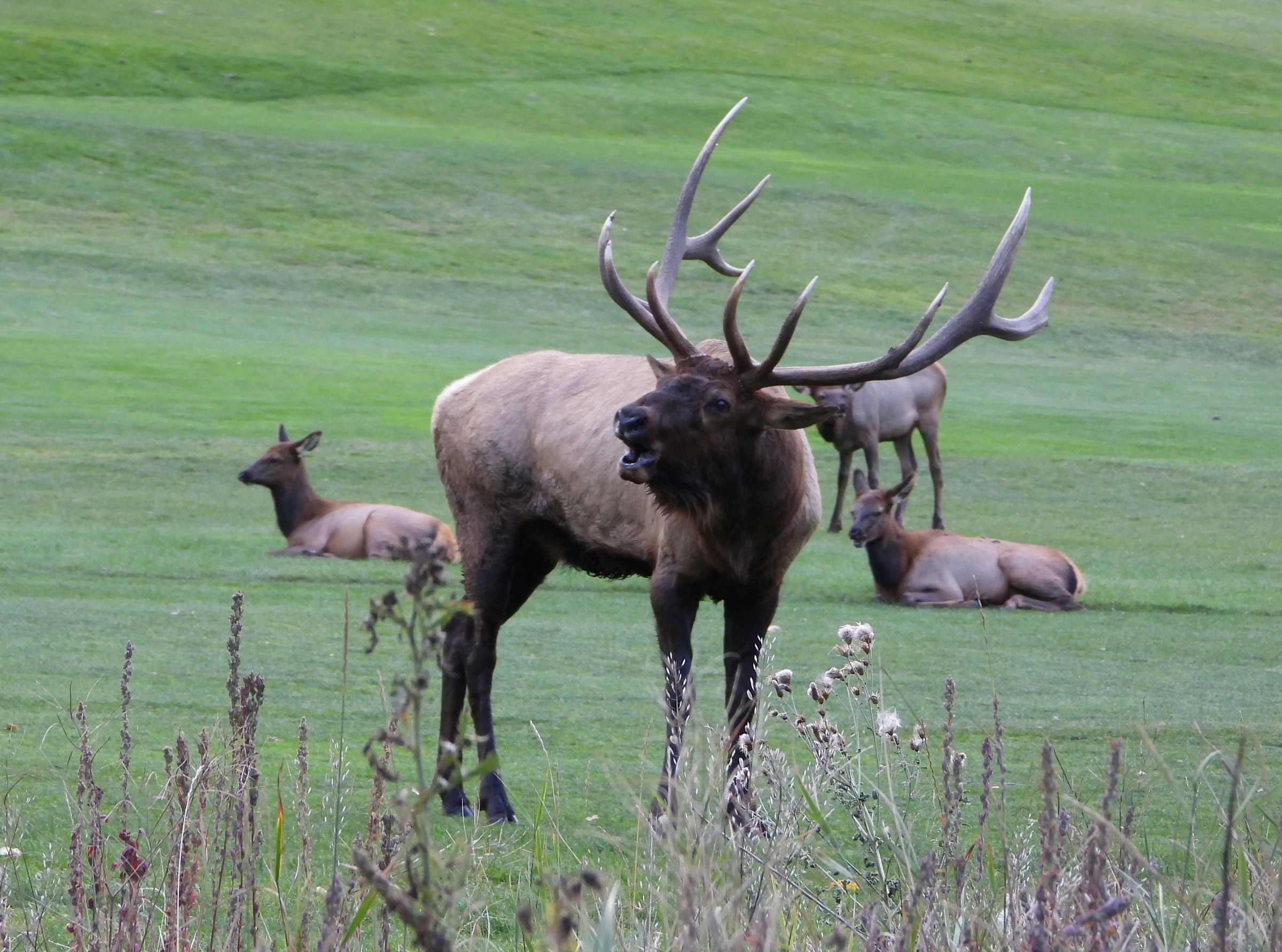
Take the road toward Hazard on a cool morning in early November and the hills close in around you. Hollows run down to narrow creeks, houses and churches sit tight along the bottoms, and the ridgelines are a dull gold and rust where the last hardwood leaves are hanging on. Then, somewhere past a bend, the forest simply stops. A wide bench of grass opens up at the top of a ridge, flat enough to land a plane on, with a line of timber standing at its far edge. If you slow down and look at the edge where the grass meets the trees, there is a fair chance something big and brown is standing there.
This is Kentucky elk country, and the odd thing about it is how it was made. Elk were native to Kentucky until the mid-1880s, when habitat loss and overhunting wiped them out. More than a century later, state biologists carried elk in from the West and released them onto the same coalfields where surface mining had flattened the mountains and planted the leftovers with grass. The herd took hold. According to the Kentucky Department of Fish and Wildlife Resources (KDFWR), the state's elk population is now estimated at over 10,000 animals, and Kentucky has the highest elk population of any state east of the Mississippi River.
That makes the story a rare one in the Southeast. It is a species restoration, a land-reclamation story and a public-access puzzle all at once, and the pieces do not always line up the way the popular version says. This field report is written in early November 2026, with the bull seasons finished, the cow and archery seasons still ahead, and the drawing for 2027 already open. It walks the ecology, the herd numbers and their limits, the timing of the year, and the towns and public ground where a trip starts. For the other side of the state, see our reports on the Western Kentucky coalfields and Mississippi River bottoms and Land Between the Lakes, where the elk are a separate, fenced viewing herd.
An Ecology Snapshot: Coalfields, Reclaimed Grassland and an Appalachian Forest Edge
The restoration, by the numbers
The present herd began in December 1997. KDFWR captured wild elk in other states and released them into southeast Kentucky through March 2002. Its current 2025-2026 elk report says the herd was established from 1,543 wild elk, most of them from Utah, with others from Kansas, Oregon, North Dakota, Arizona and New Mexico. Release sites were in Harlan, Knott, Leslie, Letcher, Martin, Perry and Pike counties.
Put simply, that is roughly 1,500 animals released over about four and a half years. It is a modest founding population for a herd that now numbers in the five figures.
The first hunt came quickly. The 2025-2026 report says the first elk hunt was in 2001, with six bulls and six cows taken and every hunter filling a permit. Permits stayed at the same number through 2003, rose to 40 in 2004, and have fluctuated ever since. In 2025 there were 500.
The zone and what it is made of
The restoration zone covers 16 counties in southeast Kentucky, about 4.1 million acres. The counties named in the state regulation (301 KAR 2:132) are Bell, Breathitt, Clay, Floyd, Harlan, Johnson, Knott, Knox, Leslie, Letcher, Magoffin, Martin, McCreary, Perry, Pike and Whitley. The original zone was 14 counties. Whitley and McCreary were added in 2004 to create a travel corridor toward Tennessee's own elk restoration zone, so older lists of the zone are out of date.
KDFWR's history page describes the land as about 80 percent deciduous forest, 10 percent active and reclaimed surface mine, 9 percent agricultural or cleared land and 1 percent urban. That 10 percent is the key number in this story. It is the small share of the landscape that does a lot of the work.
How mining made grassland
Surface coal mining changed the physical shape of this part of Appalachia. John Cox, a University of Kentucky wildlife biologist, described it in a 2011 Forest Service proceedings paper: rugged, forested terrain converted into gently sloping mesas and plateaus, revegetated with grass and forb species that are typically exotic but cheap and good at binding soil. Some of these mines exceed 5,000 hectares, and Cox wrote that they resemble the rolling plains that elk use in parts of their western range. The federal law behind the reclamation is the Surface Mining Control and Reclamation Act, Public Law 95-87, enacted August 3, 1977, which created the Office of Surface Mining Reclamation and Enforcement.
That history is why the first managers looked at old mines as a place to put elk. Cox reports that by March 2002 more than 1,500 elk had been released at eight sites in Kentucky, seven of them on active or reclaimed coal surface mines. The elk responded. In his analysis, animals selected mine land at every release site, and although surface-mined areas were only 10 percent of the restoration area, the home ranges at each release site contained at least 30 percent of that cover type.
What the Interface Creates: Mine Grass, Forest Edge and a Working Habitat Program
Why the edge matters
Cox gives a plain explanation for the pull of reclaimed land. Reclaimed mines have reduced topographic gradients, which lets elk maximize forage intake, minimize energy expenditure and stay close to forest edges and thermal cover. The open ground also gives a gregarious, herd-living animal a long view. The same paper notes that many elk roam the mines in daylight and bed conspicuously in the open, and that GPS-collared animals moved only a few hundred meters a day between bedding and feeding areas, though he labels that last point as unpublished data.
For a visitor, the practical meaning is simple. The edge is where you look. The elk are not up in the roadless interior of the national forest. Look on the open grass and along the line where it meets the trees, which is the cover Cox describes them using.
The habitat is aging, and KDFWR is working on it
Mine grassland is not a permanent gift. The 2025-2026 elk report says the decrease in surface mine activity in the elk zone has led to the loss of early successional habitat and an increase in non-native species such as autumn olive. Reclaimed grass fields that stop being disturbed turn to brush.
KDFWR's response is prescribed fire and herbicide. Its report says 12,054 acres have been burned since 2018, with yearly totals of 471, 830, none in 2020 because of COVID restrictions, 647, 963, 2,714 in 2023, 3,267 in 2024 and 3,162 in 2025. In 2021 the department named the elk zone an area of special interest and started the Eastern Kentucky Habitat Initiative, with a goal of burning 2,000 acres a year. A Rocky Mountain Elk Foundation grant paid for aerial herbicide treatment of 2,461 acres on Cumberland Forest Wildlife Management Area in Bell County in September 2024, to control invasive woody species and promote better forage. The report's photo caption says the sprayed area was burned in spring 2025 and improved forage for elk and other wildlife as a result.
Two research efforts are still pending. KDFWR and the University of Kentucky placed cameras in a grid across Elk Hunting Unit 4 in summer 2024 to estimate elk abundance in that unit, with results expected in later 2026. A separate study with the Rocky Mountain Elk Foundation, the University of Kentucky and the University of Tennessee is looking at how the herbicide and fire work affects elk habitat, and the report said it should conclude in summer 2026. Check with KDFWR for published results before citing either study.
The costs of a grassland herd
The 2011 Cox paper is blunt about the downside. In the years after release the elk's effects on local vegetation became increasingly apparent, particularly on or near reclaimed surface mines. He describes wide trails and erosion where elk enter and leave forest, browse lines at the edges, and repeated browsing and antler rubbing that left thousands of black locust saplings stunted. Black locust made up as much as 27 percent of woody browse in the diet in the study he cites. He also notes that elk were browsing invasive plants such as autumn olive and multiflora rose, while carrying seeds of such plants into nearby forests.
That paper is more than a decade old, and it describes the herd when it was growing quickly. We cite it for the mechanism, not for current conditions. The core idea, that a large grazing animal on reclaimed mine land can change which plants win, is a fair thing to keep in mind when you see an elk on a ridge. It is also the reason managers talk about elk numbers and reclamation goals together.
Disease and health
KDFWR's report says approximately 4 to 6 percent of elk in Kentucky contract brainworm, a parasite carried by white-tailed deer, which are resistant to it. Elk infected with brainworm may become emaciated, disoriented and lose their fear of humans. The report also says the department has tested thousands of deer and elk statewide for chronic wasting disease and has not detected it. Both statements are as of that report, so confirm the current status with KDFWR.
How Many Elk? Reading the Population Numbers
What KDFWR says now
The department's current public line is over 10,000 elk, based on two models, a life-table model and a statistical population reconstruction. That is the number to use. Older figures still circulate, including about 13,000 and about 14,000. Use the department's current figure rather than those older numbers.
The one published estimate
A June 22, 2023 report by Sean Murphy, Kathleen Williams, Matthew Springer and John Cox of the University of Kentucky gives the most specific recent number. Their final estimate for 2022 was 10,661 elk. Estimates across 2019 to 2022 ranged from 8,019 to 11,118, with an average annual growth rate of 1.10 and a 95 percent interval of 0.88 to 1.25. An interval that runs from below 1.0 to well above it means the model cannot say whether the herd was shrinking or growing slightly in those years. It is an estimate from 2022 in a 2023 report, not a 2026 census, and the figures should be read that way.
Growth has slowed
The early growth was fast. Cox reports an estimated high of 57.6 percent in 1998, falling to about 4.7 percent by 2009 (KDFWR data cited in the paper), and he cites officials estimating 10,000 to 11,000 elk in early fall 2009. If that older estimate is roughly right, the herd has been near that size for well over a decade. That is an inference from two estimates made with different methods, not a measured trend, but it fits the picture of a herd limited by hunting, habitat and human landscape. KDFWR has also said it is trying to keep elk numbers low in agricultural areas and poor elk habitat, which is why legal deer hunters can take elk outside the zone with an out-of-zone elk permit.
Timing Signals: Seasons, Drawing and the Calendar
The 2026-27 seasons
KDFWR's elk regulations page lists the 2026-27 quota seasons. Either-sex archery and crossbow runs September 12 to 25 and December 5 to 11, 2026. Bull firearm hunts ran September 26 to 30 and October 3 to 7, 2026. Cow firearm hunts run November 28 to December 2, 2026 and January 2 to 6, 2027. Youth-only permits follow all of these seasons. Hunters may take only one elk per year.
As of early November 2026, the bull seasons are over and the first archery segment has closed. What remains is the late cow firearm hunt this month, the December archery week and the January cow hunt. One detail worth noting is the second cow week. KDFWR's 2025-2026 report says a regulation change moved the opening of cow gun week 2 to the first Saturday in January, which is January 2, 2027. Confirm current dates with KDFWR before planning around them.
Rut timing shifts from year to year, so treat any exact viewing dates you see with caution. The bull firearm weeks fall in late September and early October, and Cox notes that bulls rub trees with their antlers during the rut, but that is not a viewing schedule.
The permits and the drawing
The 2026-27 permits total 500: 140 bull firearm, 164 cow firearm, 170 archery or crossbow and 26 youth. Applications run from August 1 to April 30, and the page header currently refers to the 2027 drawing, with the season dates above belonging to 2026-27. The random drawing is held in May. Drawn hunters buy permits by June 15, loyalty redraw winners by June 30, and the deadline to apply for a hunting unit is June 30.
KDFWR's 2025 odds are long. For residents, bull firearm is 1 in 159, cow firearm 1 in 89, either-sex archery 1 in 78 and youth 1 in 44. For nonresidents they are 1 in 1,487, 1 in 747, 1 in 952 and 1 in 221. Nonresidents may receive at most 10 percent of permits. There is no preference point system in the general drawing, and a hunter who is drawn is barred from applying for a quota elk hunt for the following three years. Confirm current numbers with KDFWR.
What success looks like
KDFWR's success table for 2025 shows 497 hunters and 163 elk, a success rate of 32.8 percent. Either-sex archery and crossbow hunters were at 35.5 percent and youth hunters at 53.8 percent. By unit, the 2025-2026 report gives overall rates from 24 percent in Unit 6 to 48 percent in Unit 7, calculated from permits sold. That is a small sample in a single year, so treat the figures as a rough guide, not a promise.
On the Ground: Basecamps, Ridges and Public Land
The towns
Hazard, Harlan, Pikeville, Hyden and Pineville are practical towns to organize a trip around, and they sit in Perry, Harlan, Pike, Leslie and Bell counties, all of which are in the elk zone. The mountains in between are steep and the roads are winding, so plan for slower travel than a map suggests. For lodging, meals and supplies, contact the local visitor bureaus and confirm what is open in the season you plan to visit.
Black Mountain and Pine Mountain
Two landmarks frame the southern end of the zone. Black Mountain in Harlan County is the highest point in Kentucky at 4,145 feet, according to the U.S. Geological Survey. Pine Mountain State Resort Park, in Pineville in Bell County, sits within Kentucky Ridge State Forest and began as Cumberland State Park. Kentucky State Parks says citizens of Bell County acquired about 2,000 acres in 1925 to form its nucleus, and the park was renamed Pine Mountain State Park in 1938. It is a useful reminder that conservation in these mountains predates the elk.
Public land in and around the zone
The Daniel Boone National Forest has four ranger districts: Cumberland, London, Stearns and Redbird. The Forest Service lists elk among nine game species the forest offers. KDFWR's history page places a mid-winter 2022 release in McCreary County, on the Daniel Boone National Forest, within Elk Hunting Unit 1, an area it says includes about 300,000 acres of national forest. The zone is divided into seven elk hunting units, six open for elk hunting. Because Unit 1 is not on the 2026 cap table, confirm its status with KDFWR.
Cumberland Forest Wildlife Management Area, in Bell, Knox and Leslie counties, is 54,137 acres of reclaimed surface-mined land and forest in several separate tracts. It is managed by The Nature Conservancy and KDFWR, and lies in Elk Hunting Units 2 and 3. Its Bell County section in Unit 2 is a regulated area. Active surface mine sites, deep mines and mining facilities are off limits to the public. Habitat on the KDFWR record is 92.82 percent forest and 7.12 percent open land, a reminder of how little open ground there is.
KDFWR says 24 regulated-area properties totaling 190,904 acres were managed in 2025, creating opportunities for 157 hunters. A landowner access program enrolled 209,676 acres at the start of the 2025-2026 season, with 33 landowner permits issued. Those programs are part of how a zone with little public land puts hunters on the ground. Which tracts are open to elk hunting in which unit changes, so confirm with KDFWR.
Boone's Ridge and elk viewing
Boone's Ridge is a 12,000-acre site in Bell County that the Appalachian Wildlife Foundation describes as having nearly 4,500 acres of reclaimed coal mines, according to the foundation's site. A KDFWR fact sheet says biologists moved 241 elk onto the foundation's property from 2017 through 2019 and that the property is unfenced, so the elk can come and go. The state regulation closes Boone's Ridge to all elk hunting, and the regulation incorporates a 2024 Boone's Ridge Viewing Area map. The foundation describes Boone's Ridge as still being built, so check with the foundation for its opening status and hours before planning a visit.
Because the herd is wild and unfenced, elk can turn up in a field, on a mine bench or near a road. Drive slowly at dawn and dusk, stay in your vehicle near a herd, never approach an elk, and check with local state parks and the Forest Service for any tours or viewing areas they currently offer.
Planning Your Hunt or Trip, Season by Season
Fall and winter, now through January
If you hold a permit, your timeline is short. Hunters drawn for the late cow hunt, the December archery week or the January cow hunt have already been assigned units. Inside the 16 counties only a drawn quota hunter may take an elk. Outside the zone, an out-of-zone permit and a hunting license are required, and deer season and equipment rules apply. A department hang tag must be displayed in the vehicle in the zone. Every elk must be telechecked, and the post-season survey is due by the last day of February. Hunters who do not complete it are ineligible to apply for next year's quota hunt.
On public land open to elk hunting, mimicking elk sounds is prohibited from September 1 until archery season opens. Hunting over bait, or over an area where bait was present in the previous 30 days, is prohibited inside the zone. Confirm all of this with KDFWR.
Spring and summer, when the drawing is the real calendar
For most people the elk calendar is the drawing. Applications are open now through April 30, 2027, and a first-time applicant should plan around the odds above rather than around a trip. Spring and summer are also when scouting makes sense for a drawn hunter. KDFWR's elk hunting regulation page tells drawn hunters to find a place to hunt within their assigned unit, on open public land or on private land with permission.
Guided hunts and private ground
The unit draw assigns a hunting unit. It does not assign an outfitter, and the permit does not come with one. Commercial guiding is not allowed on wildlife management areas or on regulated areas that include wildlife management areas. In plain terms, guided hunts in the elk zone belong on private land, with the landowner's permission, and public land is where hunters go on their own. If you are weighing a paid service, confirm with KDFWR what is allowed where, and ask the service which land it hunts. Kentucky WMAs have their own rules, so confirm with KDFWR before assuming anything about a tract.
Responsible practice
Elk are large, and bulls are unpredictable in the fall. Keep your distance, follow posted signs on reclaimed mine property, and never enter an active mine site. Respect private land lines, which are more important here than in most public-land states, because so much of the zone is private. If you see an elk that looks sick or disoriented, KDFWR asks you to contact the local biologist, since those symptoms can indicate brainworm.
Key Takeaways
Elk were eliminated from Kentucky by the mid-1880s. The present herd came from 1,543 wild elk released between December 1997 and March 2002, according to KDFWR's 2025-2026 elk report.
KDFWR's current line is over 10,000 elk. The most specific published estimate is 10,661 for 2022, with a model range of 8,019 to 11,118 over 2019 to 2022.
The zone is 16 counties and about 4.1 million acres. Roughly 10 percent is active and reclaimed surface mine, and elk strongly select that land, according to University of Kentucky research.
Reclaimed grassland is aging. KDFWR reports 12,054 acres burned since 2018 and a 2,461-acre herbicide treatment on Cumberland Forest WMA.
The 2026-27 quota seasons have 500 permits. Remaining in the 2026-27 season are cow firearm hunts November 28 to December 2, 2026 and January 2 to 6, 2027, and archery December 5 to 11, 2026.
Odds are long: resident bull firearm was 1 in 159 in 2025. Success in 2025 was 163 elk for 497 hunters, or 32.8 percent.
The unit draw does not assign an outfitter, and commercial guiding is not allowed on WMAs or regulated areas that include them. Confirm with KDFWR.
For the Operators
For lodges, outfitters, landowners and tourism operators in the coalfield counties, the strongest asset is a story that is true and unusual: a species brought back onto mountains that mining reshaped. Visitors, from drawn hunters to families who just want to see an elk, respond to accurate detail. The herd is wild and mostly out of sight, so promising a sighting is a mistake. Describe the setting, the seasons and what to expect, and let visitors do their own looking.
Be exact about the rules. A drawn hunter finds their own ground, public land is not a place for paid guiding, and guided hunts belong on private land with permission. If you offer lodging, meals or gear storage, those services work on any hunt. If you are a landowner, KDFWR's access programs are a state-run route to putting hunters on your land, and the department's pages are the place to read the terms. Our guide to marketing the Kentucky elk restoration zone covers the commercial side in more depth.
Frequently Asked Questions
How many elk are in Kentucky right now?
KDFWR says the herd is estimated at over 10,000 animals, based on two models. The most specific published estimate is 10,661 elk for 2022, from a 2023 University of Kentucky report, with a range of 8,019 to 11,118 across 2019 to 2022. Confirm current figures with KDFWR.
Which 16 counties are in the Kentucky elk zone?
Bell, Breathitt, Clay, Floyd, Harlan, Johnson, Knott, Knox, Leslie, Letcher, Magoffin, Martin, McCreary, Perry, Pike and Whitley, according to 301 KAR 2:132 and KDFWR. The zone is about 4.1 million acres. Some older lists include counties that are not in the zone, so use the current regulation.
When are the 2026-27 Kentucky elk seasons?
Archery and crossbow ran September 12 to 25 and runs December 5 to 11, 2026. Bull firearm ran September 26 to 30 and October 3 to 7. Cow firearm runs November 28 to December 2, 2026 and January 2 to 6, 2027. Confirm with KDFWR before you hunt.
Does a drawn elk permit come with an assigned outfitter?
No. A second draw assigns a hunting unit, and the hunter must find a place to hunt there, either on public land or on private land with landowner permission. Commercial guiding is not allowed on wildlife management areas or on regulated areas that include them. Confirm with KDFWR.
How many elk were released, and where did they come from?
KDFWR's 2025-2026 report says 1,543 wild elk were released between December 1997 and March 2002, mostly from Utah, plus Kansas, Oregon, North Dakota, Arizona and New Mexico. Release sites were in Harlan, Knott, Leslie, Letcher, Martin, Perry and Pike counties.
Is the Land Between the Lakes elk herd the same herd?
No. The Land Between the Lakes elk are a separate viewing herd in western Kentucky, described in our report on that area. The wild, free-ranging herd covered here lives in the 16-county zone in southeast Kentucky.
What are the odds of drawing an elk permit?
KDFWR's 2025 odds for residents were 1 in 159 for bull firearm, 1 in 89 for cow firearm, 1 in 78 for either-sex archery and 1 in 44 for youth. Nonresident odds were 1 in 1,487, 1 in 747, 1 in 952 and 1 in 221. There is no preference point system, and nonresidents are capped at 10 percent of permits.
Can I see elk without a permit?
Yes, but there is no guarantee. The herd is wild and unfenced, and elk use reclaimed mine grassland and forest edges, usually at dawn and dusk. Boone's Ridge is closed to elk hunting and has a viewing area map in the regulation, but it is still being built. Check with the Appalachian Wildlife Foundation and local parks for current access.
Citations and Sources
Kentucky Department of Fish and Wildlife Resources, 2025-2026 Kentucky Elk Report, https://fw.ky.gov/Hunt/Documents/2025-2026-Elk-Report.pdf (accessed November 2026)
Kentucky Department of Fish and Wildlife Resources, History of Elk in Kentucky, https://fw.ky.gov/Hunt/Pages/ElkHistoryInKentucky.aspx (accessed November 2026)
Kentucky Department of Fish and Wildlife Resources, Elk Hunting Regulations, https://fw.ky.gov/Hunt/pages/elk-hunting-regs.aspx (accessed November 2026)
Kentucky Department of Fish and Wildlife Resources, Elk Hunting Permits, https://fw.ky.gov/Hunt/Pages/ElkHuntingPermits.aspx (accessed November 2026)
Kentucky Department of Fish and Wildlife Resources, Elk Hunting Information and 2026 unit caps, https://fw.ky.gov/Hunt/Pages/ElkHuntingInfo.aspx (accessed November 2026)
Kentucky Department of Fish and Wildlife Resources, Facts about Elk Restoration in Southeastern Kentucky, https://fw.ky.gov/Documents/Facts%20about%20Elk%20Restoration%20in%20Southeastern%20Kentucky.pdf (accessed November 2026)
Kentucky Department of Fish and Wildlife Resources, Cumberland Forest Wildlife Management Area public lands record, https://app.fw.ky.gov/public_lands_search/detail.aspx?Kdfwr_id=9002 (accessed November 2026)
Kentucky Legislative Research Commission, 301 KAR 2:132, Elk hunting program, https://apps.legislature.ky.gov/law/kar/titles/301/002/132/ (accessed November 2026)
Murphy, S. M., K. E. Williams, M. T. Springer, and J. J. Cox. June 22, 2023. Elk Population Size Estimates in Kentucky during 2019-2022 from Statistical Population Reconstruction Models. University of Kentucky Department of Forestry and Natural Resources, https://fw.ky.gov/Hunt/Documents/2023-Elk-Population-SPR-REPORT.pdf (accessed November 2026)
Cox, J. J. 2011. Tales of a Repatriated Megaherbivore: Challenges and Opportunities in the Management of Reintroduced Elk in Appalachia. Proceedings of the 17th Central Hardwood Forest Conference, GTR-NRS-P-78, https://www.nrs.fs.usda.gov/pubs/gtr/gtr-p-78papers/64coxp78.pdf (accessed November 2026)
U.S. Forest Service, Daniel Boone National Forest, About the Area, https://www.fs.usda.gov/r08/danielboone/about-area (accessed November 2026)
U.S. Geological Survey, Highest and Lowest Elevations, https://www.usgs.gov/educational-resources/highest-and-lowest-elevations (accessed November 2026)
Office of Surface Mining Reclamation and Enforcement, Laws and Regulations (SMCRA), https://www.osmre.gov/laws-and-regulations (accessed November 2026)
Kentucky State Parks, History, https://parks.ky.gov/history (accessed November 2026)
Appalachian Wildlife Foundation, Boone's Ridge, https://appwild.org/ (accessed November 2026)


Comments