
Marketing a Florida Panhandle Whitetail Operation: Pine Plantation Deer in the Shadow of the Beach Economy
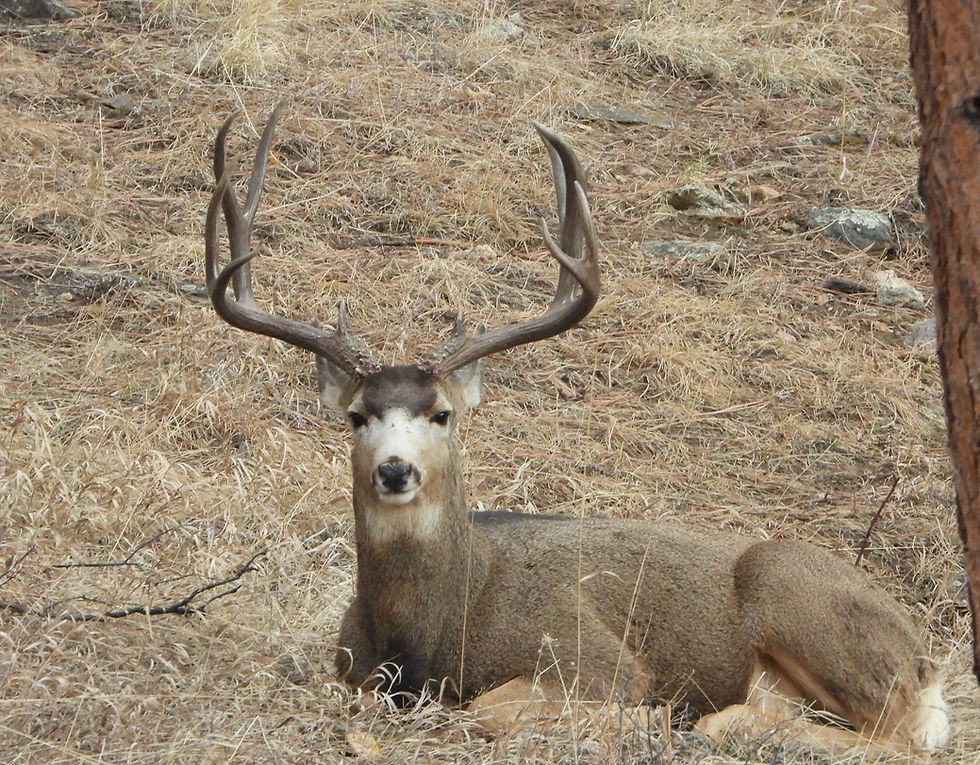
If you run deer ground in the Florida Panhandle, you are sitting on one of the most underserved markets in Southeastern hunting, and almost nobody is talking about it the way it deserves. Search for "Florida Panhandle deer hunting outfitter," and you will find thin operator pages, a scattering of lease listings, and directory entries that read like they were written to fill a database field. No single authoritative regional guide owns the topic. For an operator willing to publish real, honest content, that is not a problem. That is an opening, and the first step in writing the definitive resource on Panhandle deer hunting will be the one search engines and AI answer engines point hunters toward for years.
But there is a reason most Florida deer marketing rings false, and it is worth naming up front because it is the single thing that will make or break your credibility with a traveling hunter. Florida deer are not Midwest deer. A typical wild Panhandle whitetail is a smaller-bodied animal than an Iowa or Illinois buck, and that is simply biology, not a flaw in your hunting. When an outfitter's website implies otherwise, an experienced hunter smells it instantly, clicks away, and books somewhere else. The whole category has trained hunters to distrust the pitch. The way you win is to refuse to play that game.
Here is the honest thesis this post is built on, and the one your marketing should be built on too: you can hold two true things at once. First, the wild Panhandle deer is a smaller-framed animal than what hunters picture from the corn belt, and pretending otherwise is the original sin of Florida deer marketing. Second, the Panhandle is nonetheless Florida's deer factory. The Panhandle grows the biggest deer in the state — an edge widely credited to the peanut-belt nutrition of the Marianna-to-Tallahassee corridor — the harvest numbers are among the highest in Florida, there are real documented trophy exceptions, and there is a separate high-fence preserve tier for hunters who want managed-genetics trophies. You do not have to oversell. The truth, told confidently and concretely, is a better sales pitch than the hype.
This post lays out the real value proposition for Panhandle deer operators: the pine-plantation and Spanish-moss-bottom experience, the consistency of a hunted-hard but productive population, the late-season calendar advantage that makes Zone D a genuine season-extender for traveling hunters, the timber-land lease economy that structures access, and one cross-sell almost no operator is working — the affluent beach corridor sitting a short drive south of working deer country. Every season date below is anchored to its year, and you should always tell readers to confirm current Zone D dates at myfwc.com, because FWC publishes new dates annually.
Selling Florida Deer Honestly: What a Panhandle Buck Is and Isn't
Let's be honest up front, because this is the sentence that earns trust: Florida whitetails run small. A mature Panhandle buck commonly field-dresses well under what a Midwestern deer weighs, and that is not a knock on the hunting — it is latitude. Body size in whitetails increases the farther north you go, a pattern biologists call Bergmann's rule, so a Florida deer is built on a smaller frame than an Iowa or Illinois deer for the same reason northern deer are built bigger than Deep South deer. 'Bucks run small' is the honest baseline for any wild Florida hunt, and an operator who says so plainly has already separated himself from the pack that won't.
Now the other true thing, the one that gives you something real to sell: within Florida, the Panhandle is where the biggest deer live. The central Panhandle is where the state's largest bucks generally call home, and the counties that most consistently produce higher-scoring bucks are Jackson, Gadsden, Calhoun, and Alachua. This is also Florida's row-crop and peanut belt — Jackson County is the state's number-one peanut producer — and that agricultural nutrition is the explanation most often credited for why these deer carry better body and antler size than deer in the rest of Florida. Frame that mechanism honestly: the regional ranking is well established, but the peanut-and-soil nutrition story is the widely cited explanation, not a directly proven cause, so say credited to rather than asserting it as a measured fact. The right pitch is the best deer in Florida, never as big as the Midwest.
The harvest data backs up the population story in a way a traveling hunter can respect. FWC's 2023-24 deer harvest survey ranks the Panhandle unit, DMU-D1, among the top two harvest units in the entire state, with roughly 14,181 deer taken on private land and about 4,694 on public land, for an official published total of 18,958 deer (12,789 bucks and 6,169 does). Only DMU-D2 was slightly higher. Those public-and-private figures are approximate because they come from different survey tables that do not perfectly reconcile, so cite the official 18,958 total and treat the split as roughly so. The takeaway for marketing is simple and quantifiable: this is a healthy, productive, heavily hunted deer region, not a marginal one.
Then there is the genuine-giant exception, and you can use it honestly as long as you frame it as the outlier it is. On November 16, 2024, a crossbow hunter named Jacob Combs of Port St. Joe arrowed a 16-point buck on a 400-acre pine-plantation lease in Calhoun County that green-scored 187 2/8 gross and 180 5/8 net, missing the Calhoun County record by less than an inch (as reported by Outdoor Life and Realtree). That deer is real, well-documented, and the kind of animal the Panhandle is capable of producing. It is also exceptional — Florida has only ever recorded two Boone and Crockett entries in its history, and a buck like that often weighs roughly double a normal Florida deer. Use it as proof the ceiling exists, never as a promise of the typical result. The Florida Buck Registry is the state's deer-scoring registry, a credible operator can reference.
Finally, keep the high-fence preserve tier strictly separate, because conflating it with wild hunting is how operators lose trust. Florida high-fence preserves introduce northern and Midwestern bloodlines, run feed and mineral programs, and manage genetics to produce bucks advertised in the 150-to-250-inch-plus range behind eight-foot fences. That is a legitimate product, but it is a different product. Those animals are not representative of the wild, free-range deer a hunter will encounter on a lease or pine plantation, and a wild Panhandle hunt should never be sold on preserve-trophy numbers. Two tiers, two honest pitches, no blurring the line between them.
Zone D: The Season Map and Why the Calendar Is the Real Hook
The Florida Panhandle is deer Zone D, the state's northwest deer zone, running from the Alabama state line eastward and bounded on the south largely by Interstate 10 and the Gulf coast. It splits into two deer management units. DMU-D1 sits south of I-10 in the western coastal Panhandle (the Florida-Alabama line on the west, I-10 on the north, and S.R. 61 / U.S. 319 / U.S. 98 to the Wakulla River on the east). DMU-D2 covers the inland northwest above I-10 (Florida-Alabama line on the west and north, U.S. 27 on the east, I-10 on the south). The distinction matters for bag limits and antler rules, and any operator's content should send readers to myfwc.com to confirm current Zone D boundaries and DMU lines.
For the 2026-2027 season, FWC lists the Zone D calendar as follows: Archery runs October 24 to November 25; Crossbow runs October 24 to November 25 and again November 30 to December 4; Muzzleloading gun runs December 5 to 11 and a late week of February 22 to 28; General gun runs November 26 to 29 and then a long stretch of December 12 to February 21; and the Youth Deer Hunt Weekend falls December 5 to 6, coinciding with the muzzleloader season. Anchor those dates to the 2026-27 year every time you publish them, and always add: confirm current Zone D dates at myfwc.com/hunting/season-dates/, because FWC shifts the specific day numbers annually even when the overall shape holds.
Now the honesty correction that most Panhandle marketing gets backward, and that you can turn into a genuine edge: Zone D is not an early-opening zone. It is Florida's latest-running deer zone. Do not claim the Panhandle opens deer season earliest in Florida or the country — that distinction belongs to Florida's Zone A in the south, where archery opens around August 1 (August 1 to 30 for 2026-27), the earliest deer season in the United States. Zone D, by contrast, opens archery in late October and runs general gun deep into late February, with a late bow, crossbow, and muzzleloader season extending to February 28. So if you are positioning Florida as a season-extender for traveling hunters, the Panhandle specifically is a late-season extender — a December-through-February hunt for hunters whose home seasons have already closed — not an early one. That is the real hook, and it is true.
On bag limits, be precise because hunters check. Florida's statewide annual deer bag limit is 5 deer, of which no more than 2 may be antlerless, with a daily bag of 2 and a possession limit of 4. The exception worth knowing: in DMU-D2, the inland unit north of I-10, up to 3 of the 5 annual deer may be antlerless when taken on lands outside the WMA system. Antler-point rules also differ by unit — DMU-D1 requires at least one antler with two or more points, while DMU-D2 requires three or more points on a side or a main beam of ten or more inches. And separately, licensed high-fence game-farm and preserve operations run under FWC's preserve and game-farm licensing, not the wild-deer season dates or wild bag limits, so a preserve can legitimately offer hunts outside the Zone D wild season. Confirm all current bag limits, the DMU-D2 antlerless allowance, antler-point rules, and preserve rules at myfwc.com, because these change.
The Pine-Plantation Lease Economy: How Timber Land Structures Access
The Panhandle's deer ground is fundamentally timber country — rolling peanut and row-crop agricultural land stitched together with mixed pine plantation and hardwood bottoms, on better soil and richer nutrition than peninsular Florida offers. That land pattern shapes the entire access economy. A great deal of huntable acreage is held by timber companies and large private landowners, and the lease market is how hunters get on it. Understanding that structure is the foundation of any operator's content, because it is exactly what a traveling hunter searching "Florida Panhandle deer lease" is trying to figure out and rarely finds explained clearly anywhere.
Broadly, there are two access models that serve different buyers. The first is the private lease: a hunter or club pays for seasonal access to a tract, often timber-company or large-landowner ground, and runs their own hunt — their stands, their management, their effort. This is where most wild Florida deer are taken, and it is the honest free-range product. The second is the all-inclusive outfitted or preserve package, where the operator provides the land, guiding, lodging, and, in the preserve case, managed genetics, and prices accordingly. Preserves in particular advertise score-tiered trophy pricing, charging by the antler score of the buck a hunter takes. These are different experiences at very different price points, and your content should help a hunter self-select rather than blur the lines between them.
On the operator landscape, lead with market structure rather than a name-drop directory, because that is both more useful and more credible. The accurate picture is this: a small cluster of licensed high-fence trophy whitetail preserves operates in the western Panhandle, in Jackson and Walton counties, alongside wild and lease-based deer hunting across the broader region. Florida licenses roughly 180 hunting preserves statewide, a neutral market-structure data point that helps a reader understand the category. That framing tells a hunter what kinds of hunts exist near the beaches without overstating any single operator's claims.
When you do name operators, name only those verified as currently operating in the Panhandle, and attribute every buck-size and price figure as the operator's own advertised claim, never as verified or guaranteed fact. In Jackson County near Marianna, an all-inclusive high-fence preserve (Bontrager Whitetails) advertises trophy bucks in roughly the 150-to-250-inch range; third-party hunting directories report its pricing at about $4,000 to $15,000 per three-day hunt, while the operator's own site gives no fixed dollar figure and states that price varies by SCI score and the individual buck, so present that range as third-party-reported and approximate. In Walton County near DeFuniak Springs, a licensed trophy whitetail-and-exotics preserve (Magnolia Ranch Hunting Preserve) advertises whitetails bred from select 200-inch Boone and Crockett bloodlines, with some bucks it markets as over 200 inches, alongside axis deer and blackbuck.
Keep those figures attributed as the preserve's own marketing claims. And distinct from the preserve cluster, a managed archery-only plantation of roughly 4,000 acres about 35 miles west of Tallahassee (Southern Arrowhead Outfitters) runs multi-day wild and managed deer hunts at modest pricing in the neighborhood of $545 to $695, with a harvest minimum of three points on one side — present it as wild and managed hunting, not as a trophy-inch preserve, because it advertises no Boone and Crockett scores and belongs in a different tier entirely.
The Beach-Economy Adjacency: The Cross-Sell Between the Condo and the Box Stand
Here is the angle at which almost no Panhandle deer operation is working, and it is sitting in plain sight. The 30A and Destin corridor along the Gulf coast of the western Panhandle is one of Florida's most affluent vacation and second-home markets. Scenic Highway 30A runs about 26 miles through south Walton County between Destin and Panama City Beach, threading together a string of high-end resort communities. Median home values in Destin run in the high-$600,000s to high-$700,000s, and the 30A communities climb sharply from there — WaterSound near $1.9 million, Rosemary Beach near $2.7 million, and Alys Beach the most expensive of all, where homes commonly list between roughly $3 million and $15 million at price points exceeding $2,000 per square foot. By any reasonable measure, this is a genuine high-wealth, leisure-minded audience, concentrated in a small geographic footprint.
And working deer country is a short drive north. Walton County straddles both worlds: the 30A beaches sit on its southern Gulf edge, while rural deer country fills its northern half around the county seat of DeFuniak Springs, about 26 miles inland via U.S. 331 — roughly a 30-to-45-minute drive from Santa Rosa Beach and 30A. The broader Panhandle deer belt stretches farther: Marianna in Jackson County is about 70 miles and an hour and fifteen minutes from the coast, with leases in Calhoun and Holmes counties at comparable or greater distances. So the honest, defensible framing is a range, not a flat number: working deer country begins roughly 45 minutes north of the 30A and Destin beaches for the nearest north-Walton ground and stretches to about an hour and a half away for a Jackson or Calhoun county tract. Do not state a uniform "45 minutes," which is true only for the closest ground and understates the rest.
The marketing gap is real and worth stating carefully as an opportunity rather than a proven fact. Deer outfitters and leases demonstrably operate in these counties — North West Florida Whitetails in Holmes and Walton, listed leases across Jackson, Calhoun, and Holmes — but they surface almost entirely through hunting-specific channels: outfitter directories and lease platforms. That means their messaging reaches existing hunters who are already searching for a hunt, and essentially never reaches the second-home and vacation crowd a short drive south on 30A. Frame this as an apparent, untapped opportunity grounded in observed channel behavior — an affluent beach audience that no nearby deer operation appears to be actively courting — rather than as a verified census claiming zero operators have ever tried it.
How would an operator actually build the cross-sell? The mechanics are not complicated, and that is the point — the channel is empty because nobody has bothered, not because it is hard. Think about the father vacationing at a rented WaterSound house in late December who would happily spend a morning in a box stand 40 minutes inland while the family sleeps in, or the group of friends extending a beach trip into a guided plantation hunt their home state's closed season won't allow. The content that captures them does not live on a hunting directory; it lives where vacation planning happens — content positioned around "things to do near 30A," half-day and full-day hunt options sized to a vacation schedule, lodging-and-hunt packages, and messaging written in the language of a leisure traveler rather than a hardcore lease hunter. The Zone D late season, running December through February, lines up almost perfectly with the off-peak and holiday beach-rental calendar. No deer operation owns that intersection of search and audience yet, and the first one to build genuine content for it will have it largely to itself.
The Booking-Calendar Logic for Traveling Hunters
The late Zone D season is the planning advantage, so build your booking logic around it. For a hunter in a Midwestern or Northern state whose deer season closes in late fall or early winter, the Panhandle offers a place to keep hunting after the home woods go quiet. General gun runs December 12 to February 21 for 2026-27, and a late bow, crossbow, and muzzleloader window extends through February 28 — that is a deep-winter hunting opportunity that most of the country simply does not have. Market it as exactly that: a late-season extender for the hunter who isn't ready to hang it up, anchored to the 2026-27 dates and always with the instruction to confirm current dates at myfwc.com/hunting/season-dates/.
Because this is a July booking window for a season that opens in late October and runs into the following February, your content should make the planning sequence obvious. A traveling hunter needs to settle the where (lease versus outfitted versus preserve, and which county), the when (a November archery sit, a December general-gun opener, or a February late-season hunt), and the licensing well in advance. Lay that timeline out plainly, because a hunter who can see the steps is a hunter who books.
On licenses and non-resident notes, be helpful but route every specific to the authority. Non-resident hunters need the appropriate Florida hunting license, the deer-related permits and management-area permits that apply to where and how they hunt, and meet the requirements for private land, WMAs, and the various weapon seasons. Rather than quote any specific fee or permit name that may have changed, tell readers directly to confirm current non-resident license requirements, deer permits, and any management-area permits at myfwc.com. That is both the honest move and the one that keeps your content from going stale, and it signals to a hunter that you know the rules well enough to point them to the source of truth.
For the Operators: The First Real Content Wins the Region
The competitive situation is unusually favorable, and it is worth being blunt about why. No authoritative regional guide currently owns "Florida Panhandle deer hunting." The existing operator and directory pages are thin, generic, and largely interchangeable, and the topic has high dominance for the first operator willing to publish real, substantive content. In most hunting markets, you are fighting established regional authorities for scraps of attention. Here, the field is open. That is rare, and it does not stay open forever.
Owning the search means becoming the source that both hunters and AI answer engines reach for when someone asks about Panhandle deer hunting. That means publishing the honest, concrete, regulation-anchored content the category lacks: a clear explanation of Zone D and its DMUs, the real season calendar with the late-season framing, an honest treatment of what a Panhandle buck is and isn't, a plain-language walk through the lease economy, and genuinely useful planning content for the traveling and non-resident hunter. Factual, quotable sentences — the kind a person trusts and an answer engine can cite cleanly — beat hype every time, because hype is exactly what the category has trained hunters to distrust.
The strategic payoff compounds. Content that is accurate, year-anchored, and routed to FWC for the details ages well and earns citations. The operator who publishes it first becomes the default reference, captures the underserved beach-corridor cross-sell before anyone else thinks to do so, and builds the kind of organic and answer-engine visibility that is extremely hard for a latecomer to dislodge. In a region with this much open ground, the first real content doesn't just rank — it defines the category.
The Bottom Line
The Florida Panhandle is the best deer hunting in Florida and one of the most underserved markets in the Southeast, and the way to win it is to tell the truth confidently. Wild Panhandle deer are smaller-framed than Midwest deer — say so — and the Panhandle is still Florida's deer factory, with peanut-belt nutrition, top-tier harvest numbers, real documented standouts like the 2024 Calhoun County buck, and a separate high-fence preserve tier for managed trophies. Sell the pine-plantation and Spanish-moss-bottom experience, the late Zone D season that extends a traveling hunter's year into February, the timber-land lease economy, and the affluent beach corridor sitting a short drive south that no operator is courting. Anchor every date to its year and send readers to myfwc.com to confirm current Zone D dates and rules.
Pine & Marsh works with Southeastern outdoor-recreation operators to build exactly this kind of honest, citation-worthy content — the regional authority pages, lease and outfitter positioning, and cross-sell strategy that turn an open market into one you own. If you run deer ground in the Panhandle and want to be the first real answer when a hunter (or an AI) asks where to hunt, that is the work we do.
Frequently Asked Questions
When is deer season in the Florida Panhandle (Zone D)?
For the 2026-2027 season, FWC lists Zone D as: Archery October 24 to November 25; Crossbow October 24 to November 25 and November 30 to December 4; Muzzleloading gun December 5 to 11 and a late week of February 22 to 28; General gun November 26 to 29 and then December 12 to February 21; and the Youth Deer Hunt Weekend December 5 to 6, coinciding with the muzzleloader season. FWC changes the specific dates annually, so always confirm current Zone D dates at myfwc.com/hunting/season-dates/. Note that Zone D is Florida's latest-running deer zone, with general gun open into late February — it is a late-season hunt, not an early-season one.
Are Panhandle deer bigger than South Florida deer?
Within Florida, yes — the Panhandle is the state's best deer region. The central Panhandle is where Florida's largest bucks generally live, and counties such as Jackson, Gadsden, Calhoun, and Alachua most consistently produce the state's higher-scoring deer. The Panhandle is Florida's row-crop and peanut belt, and that agricultural nutrition is the explanation most often credited for why its deer carry better body and antler size than deer elsewhere in the state. The regional ranking is well established; the peanut-and-soil nutrition mechanism is the widely cited explanation rather than a directly proven cause.
Are Florida Panhandle deer as big as Midwest deer?
No. Florida whitetails are genuinely smaller-bodied than Iowa or Illinois deer, and a mature Panhandle buck commonly field-dresses well under what a Midwestern deer weighs. This follows Bergmann's rule — body size in whitetails increases with latitude, so a Florida deer is built on a smaller frame. The honest pitch is that the Panhandle offers the best deer in Florida, not deer that rival the Midwest. Any just-as-big-as-up-north framing is false, and experienced hunters see through it immediately.
What is the deer bag limit in Zone D?
Florida's statewide annual deer bag limit is 5 deer, of which no more than 2 may be antlerless, with a daily bag limit of 2 and a possession limit of 4. There is one Zone D exception: in DMU-D2, the inland unit north of I-10, up to 3 of the 5 annual deer may be antlerless when taken on lands outside the WMA system. Antler-point rules also differ by unit. Confirm current bag limits and antler rules at myfwc.com, since FWC updates them.
What's the difference between a lease hunt and a preserve hunt in the Panhandle?
A private lease gives a hunter or club seasonal access to a tract — often timber-company or large-landowner ground — to run their own free-range, wild hunt; this is how most wild Florida deer are taken, and it is the honest free-range product. A high-fence preserve hunt is a separate, managed-genetics product: the operator introduces northern and Midwestern bloodlines, runs feed and mineral programs, and offers trophy bucks behind eight-foot fences, often at score-tiered prices. Preserves also operate under separate FWC game-farm and preserve rules, allowing them to offer hunts outside the wild Zone D season. The two are different experiences at very different price points and should never be conflated.
What does a high-fence trophy hunt cost in the Panhandle?
These figures are operators' own advertised claims, not verified or guaranteed outcomes. A Jackson County high-fence preserve near Marianna (Bontrager Whitetails) advertises trophy bucks in roughly the 150-to-250-inch range; third-party hunting directories report pricing of about $4,000 to $15,000 per three-day hunt, while the operator's own site gives no fixed figure and says price varies by SCI score and the individual buck. A Walton County preserve near DeFuniak Springs (Magnolia Ranch) advertises whitetails from select 200-inch bloodlines and takes bookings with a deposit. Treat all buck-size and price figures as advertised claims and confirm current pricing directly with each operator.
When is the rut in the Florida Panhandle?
Rut timing varies by region within Florida, and the Panhandle's tends to fall later in the season than many out-of-state hunters expect, aligning with the zone's late calendar — generally across the winter months when general gun is open (Zone D general gun runs December 12 to February 21 for 2026-27). Because rut activity shifts year to year and by local area, plan your hunt around the documented Zone D season dates. Confirm current dates and any local guidance at myfwc.com, and ask your outfitter or lease manager about what they have observed on their specific ground.
What do non-residents need to hunt deer in the Panhandle?
Non-resident hunters need the appropriate Florida hunting license, plus the deer-related permits and any wildlife-management-area permits that apply to where and how they hunt. Requirements differ for private land, WMAs, and the various weapon seasons. Because fees and permit details change, confirm current non-resident license requirements, deer permits, and management-area permits directly at myfwc.com before you book. The Zone D late season — general gun into late February with a late muzzleloader week through February 28 for 2026-27 — makes the Panhandle a genuine season-extender for travelers whose home seasons have already closed.
Is there public land deer hunting in the Florida Panhandle?
Yes. The Panhandle has wildlife management areas open to public deer hunting, and FWC's 2023-24 survey shows roughly 4,694 deer taken on public land in DMU-D1 alone, alongside about 14,181 on private land, for an official total of 18,958 deer — among the highest harvest numbers in the state. Public-land hunting typically requires a management-area permit and may follow WMA-specific rules and dates that differ from the general Zone D season. Confirm which WMAs are open, their dates, and permit requirements at myfwc.com.
How does the beach corridor factor into Panhandle deer hunting?
The affluent 30A and Destin vacation corridor on the Gulf Coast sits a short drive south of working deer country, and that adjacency is a largely untapped cross-sell. Walton County contains both the 30A beaches in the south and rural deer country in the north around DeFuniak Springs, roughly a 30- to 45-minute drive inland; the broader deer belt in Jackson and Calhoun counties runs about an hour to an hour and a half from the coast. An affluent, vacation-relaxed beach audience sits within easy reach of working leases and outfitters, yet those operations market almost entirely through hunting directories and lease platforms rather than vacation or lifestyle channels — so the audience is essentially never reached. It is best understood as an apparent, untapped marketing opportunity rather than a proven fact that no operator has ever tried it.
Sources
Operator buck-size and pricing figures in this report (Bontrager Whitetails, Magnolia Ranch, Southern Arrowhead) are the operators' own advertised claims, not verified or guaranteed outcomes — confirm current details with each operator. All Zone D season dates, bag limits, antler-point rules, and license requirements change annually; confirm the current rules at myfwc.com before booking or publishing. The 30A/Destin home-value figures are approximate 2026 market estimates.


Comments