
The Hog That Doesn't Know It's the Off-Season in the South
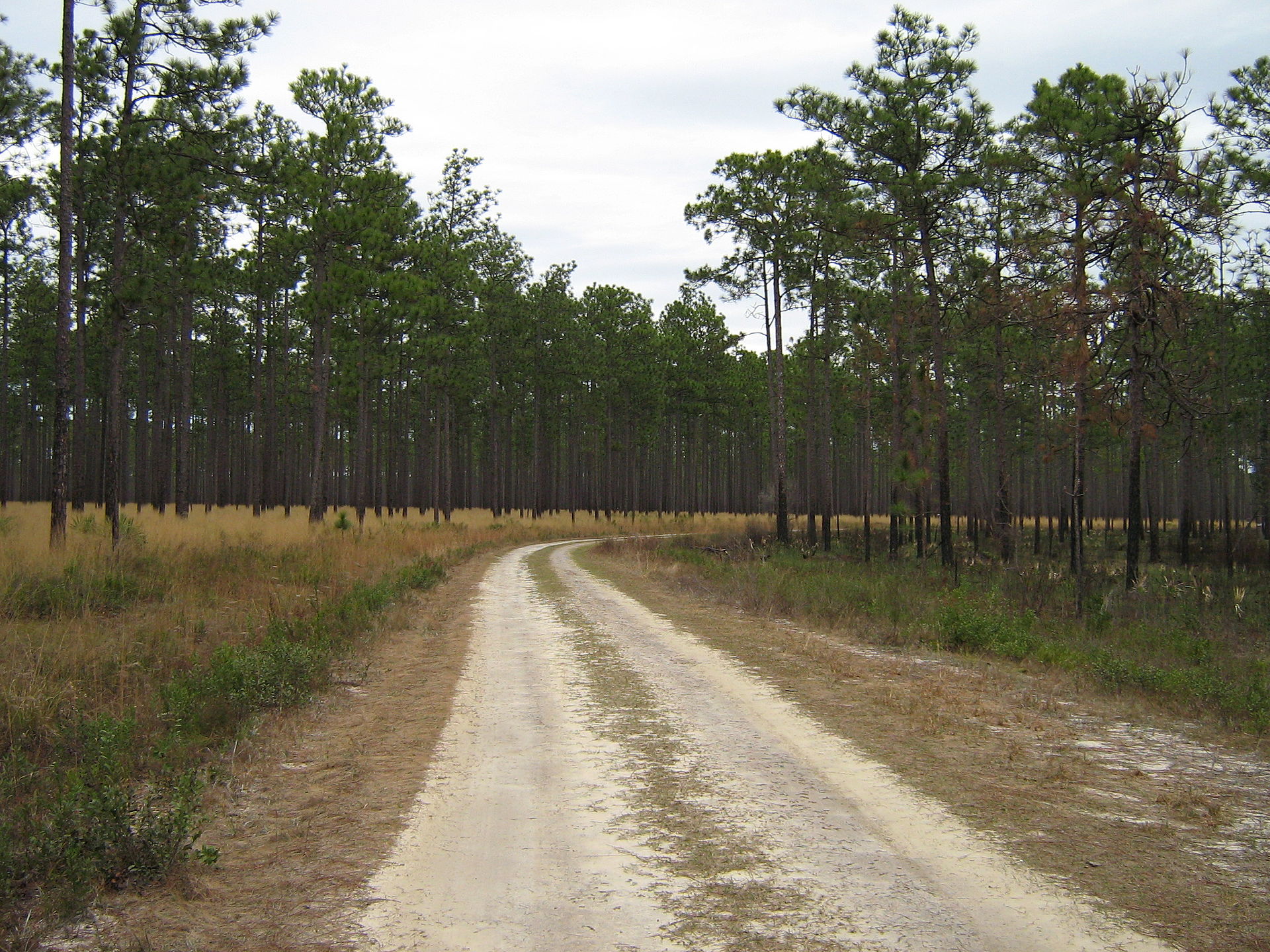
Every other vertical examined across this cluster is organized, in one form or another, around a calendar it can't control -- a legal opener, a migration, a behavioral peak, a hard closing date. Wild hog hunting, in the specific places and under the specific rules where it genuinely operates without a closed season, breaks that pattern entirely, and it's worth using it as the exception that proves the rule of everything else discussed here.
Georgia, Florida, and South Carolina print private-land hog hunting with no closed season (Florida and South Carolina also print no bag limit on that private-land track). That is not a Southeast-wide rule: Kentucky prohibits sport hunting of wild pigs, and Tennessee treats hogs as control work, not a sport season. Where those private-land year-round rules actually apply, a hog program has no opener countdown and no six-week scarcity story. It has to sell availability and control work instead of a date on the calendar.
This is genuinely different psychology to market, and it's worth taking seriously on its own terms rather than assuming the same content playbook built for a seasonal product simply translates.
What's Actually Printed, State by State -- Not a Southeast-Wide Rule
It matters enormously to get this right rather than reaching for a convenient, sweeping claim: there is no single 'Southeast hog season' rule, and it would be inaccurate to describe the region as uniformly open on hogs year-round. What's actually printed varies meaningfully by state. Georgia's wildlife agency prints feral hog hunting with no limit and no closed season, permitting night hunting with a light on private land, though a Wildlife Management Area runs under different, more restricted rules with its own separate short window for hog and coyote hunting. Florida's agency prints private land with landowner permission as genuinely year-round, day or night, with no license or bag/size limit required -- but explicitly notes that most of its Wildlife Management Areas are not open year-round, with only a couple of specific named exceptions. South Carolina prints no closed season or bag limit on private land during daylight hours, with night hunting permitted only on land that's been specifically registered with the state wildlife agency.
Several other states in this broader footprint simply aren't sourced here with the same specificity, and this piece doesn't extend the pattern to them without real, state-specific verification. The correct, defensible claim is narrower and more precise than 'no closed season in the Southeast' -- it's that several specific states print specific private-land rules allowing hog hunting with no closed season, and an operator marketing a hog program needs to know and state precisely which rule applies to their own state and land type, not borrow a neighboring state's language.
No Countdown, No Scarcity, No Familiar Marketing Hooks
Nearly every other product examined in this cluster benefits from at least one of two classic marketing hooks: a countdown to a fixed date, or a scarcity narrative built around a limited, narrow window. Dove has its Labor Day-adjacent opener. The fall season stack has its six-week compression. Even the winter dead zone has an implicit countdown to turkey season's return. Hog hunting, in the states and on the land types where it genuinely runs without a closed season, has neither. There's no single day to build anticipation around, no narrow window that makes booking now feel urgent the way an opener does.
That absence forces a genuinely different sales pitch. Rather than leaning on 'the season's about to start, don't miss it,' a hog program has to sell on things that don't depend on timing at all: control work that genuinely needs doing regardless of the calendar, guaranteed year-round availability for a client who can't commit to a specific season months in advance, and being the thing a client can book on short notice precisely because nothing else in the region's product line offers that same flexibility.
Selling Availability and Flexibility Instead of a Calendar
This reframing is worth stating plainly, because it changes what content and marketing for a hog program should actually emphasize. Where a dove or duck operation's marketing legitimately leans on time-sensitivity, a hog program's marketing should lean on the opposite: reliability, immediacy, and the absence of any need to plan around a season at all. A client who suddenly has a free weekend in February, or wants to bring a group out on short notice in the middle of an otherwise dead stretch of the calendar, is exactly the customer a hog program is uniquely positioned to serve -- and that positioning deserves to be stated directly rather than buried under generic hunting-trip language borrowed from a seasonal product.
This also means a hog program's content doesn't need the countdown posts, moon-phase debates, or opener-anticipation pieces that make sense for other verticals in this cluster. Its natural content territory is closer to 'here's why this works whenever you're ready' than 'here's why you need to book before the window closes.'
The Connective Tissue Role in a Multi-Program Lodge
One of the more interesting patterns worth naming is how a multi-program lodge often quietly uses its hog program as connective tissue across the rest of its calendar -- filling exactly the gaps that every other brief in this cluster identifies as genuinely dead. The January-through-March stretch between closed duck and rifle seasons and the first spring gobble; the deep summer heat between turkey closing and dove opening; even quieter individual weeks scattered throughout an otherwise busy fall -- a hog program can be offered in all of these windows precisely because it isn't tied to any of the closed seasons creating those gaps in the first place.
This isn't a claim that hog hunting alone can carry a lodge's entire off-season revenue -- that would overstate what a single program can realistically do. It's a more modest, accurate observation: a hog program is structurally well-suited to filling exactly the calendar gaps this cluster has spent so much time identifying, and a multi-program operation that recognizes this can use it deliberately rather than treating it as just one more product line indistinguishable from the seasonal ones around it.
What Not to Claim About Hogs Specifically
Content built around a hog program should stay carefully within what's actually sourced and avoid two common overreaches. First, avoid stating population or damage figures as though they translate cleanly into an occupancy or booking argument for a specific operation -- national damage-cost figures published by federal agencies describe agricultural and property damage broadly, not the local abundance or huntability of hogs on any particular property, and conflating the two overstates what those figures actually demonstrate. Second, avoid state-specific regulatory claims that haven't been verified against that state's own current wildlife agency page -- rules on night hunting, licensing, and land-type restrictions vary enough between states that a claim accurate in one state can be flatly wrong in a neighboring one.
Staying disciplined about both of these points is what keeps a hog program's marketing credible rather than overreaching into claims a careful reader, or a fact-checking AI system, could catch as either unsupported or simply incorrect for the operator's specific state.
Related Reading
More for operators building the same kind of page -- clays courses and dove outfits that need a specific answer, not another brochure paragraph.
Frequently Asked Questions
Is there a single 'hog season' across the whole Southeast?
No -- there is no uniform, region-wide hog season rule. Specific states print specific private-land rules, and several states allow hog hunting without a closed season on private land, but this varies by state and by land type, and it's inaccurate to describe the whole Southeast as uniformly open year-round.
Which states are confirmed to allow no-closed-season hog hunting on private land?
Georgia, Florida, and South Carolina each print rules allowing private-land hog hunting without a closed season, though with important caveats around Wildlife Management Areas, night-hunting registration, and licensing that vary by state -- always confirm the current, specific rule with that state's own wildlife agency.
Do Wildlife Management Areas follow the same year-round rule as private land?
No -- in both Florida and South Carolina specifically, WMAs are not treated the same as private land for hog hunting purposes, and typically run under separate, more restricted seasonal rules.
Why doesn't a hog program benefit from the same countdown or urgency marketing as a dove or duck operation?
Because it isn't tied to a fixed opener or a narrow seasonal window, a hog program lacks the natural scarcity and countdown hooks that make urgency-based marketing effective for genuinely seasonal products.
What should a hog program's marketing emphasize instead of urgency?
Reliability, flexibility, and year-round availability -- positioning the program as the option a client can book on short notice whenever they're ready, rather than trying to manufacture false urgency around a calendar that doesn't actually apply.
Can a hog program alone sustain a lodge through its off-season gaps?
Not entirely on its own -- it's more accurate to describe it as a genuinely useful piece of connective tissue that fills some of the gaps created by other seasons' closed windows, not a complete substitute for the rest of a lodge's calendar.
Can this content cite feral hog population or damage figures to support a booking pitch?
Only with real care -- national agricultural damage-cost figures published by federal agencies describe broad, national damage estimates, not the local abundance of hogs on any specific property, and shouldn't be presented as evidence of huntability on a given piece of land.
Is night hunting for hogs legal everywhere it's allowed during the day?
No -- several states that allow daytime hog hunting without restriction require separate registration, a specific license, or additional rules specifically for night hunting, so this should always be confirmed against that state's current regulations rather than assumed.
Work with Pine & Marsh
One vertical in this footprint has no opener, no migration, and no rut to build a campaign around -- and most hog programs still market themselves like they do.
Pine & Marsh's SEO & Topical Authority service builds the evergreen topical depth a year-round program like wild hog hunting needs, since it can't rely on a seasonal search spike to do the work for it. More at pineandmarsh.com/contact. What you've built deserves to be found.


Comments