
Marketing an Eastern North Carolina Impoundment-and-Sound Combo Operation
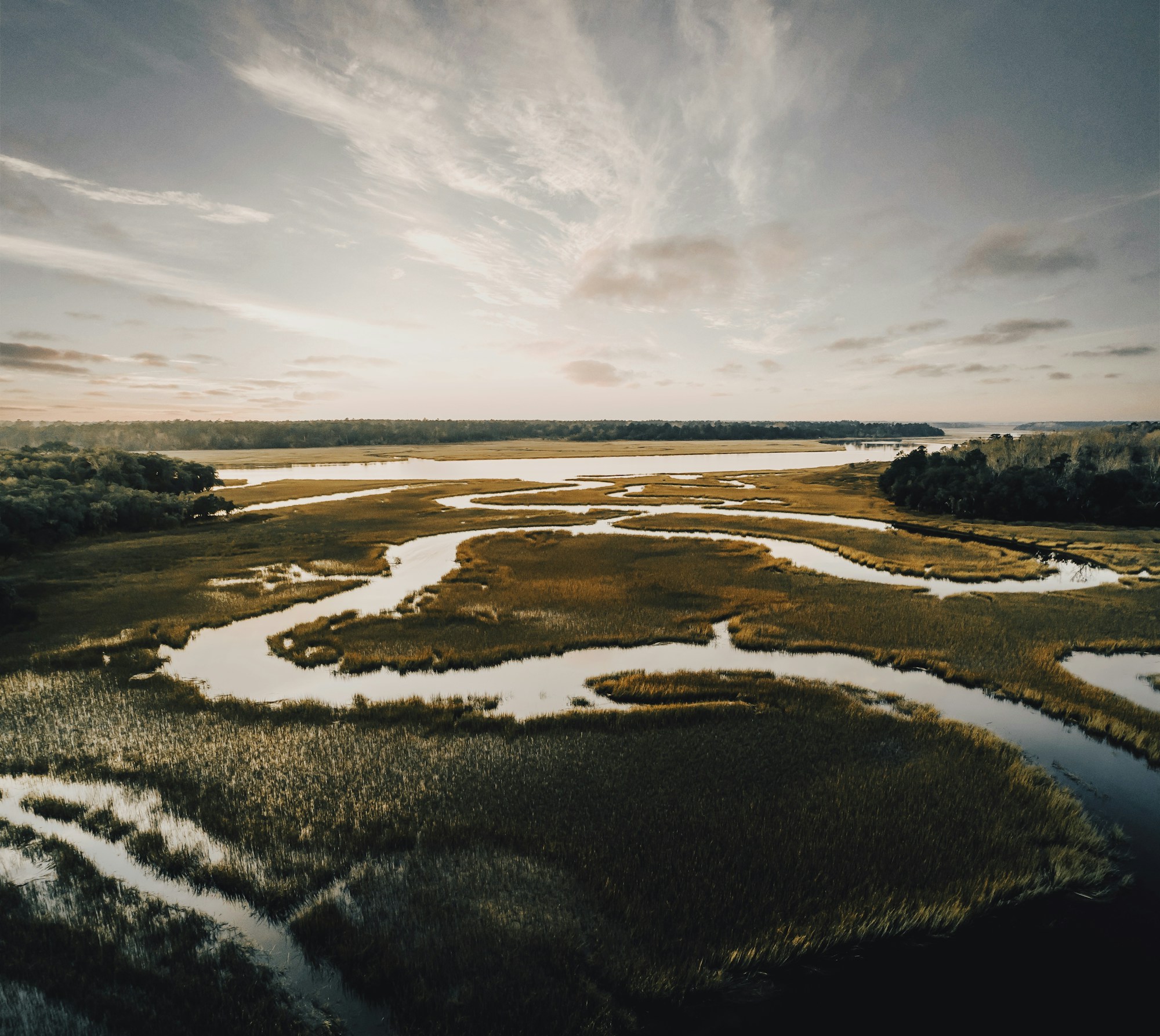
Impoundments sell consistency. Sounds sell spectacle. Eastern North Carolina is one of the few places in the East where an operator can put both in the same day, and almost nobody markets it that way. A managed impoundment in the morning gives a client controlled water, a predictable spread and birds that have a reason to be there. An open-sound afternoon gives the same client big water, long horizons and the kind of day that gets retold for years. Either one alone has a bad day built into it. The operator who offers both insures the client's experience against whichever format the weather and the birds decide to punish.
That is the product this post is about, and it is a product, not a coincidence of geography. Too many operators in the Albemarle-Pamlico country list "impoundment hunts" on one page and "sound hunts" on another and let the customer figure out that the two can be stitched together. A hunter driving in from Raleigh or Charlotte, or flying in from further, is not going to stitch anything. He wants to know what his day looks like, what it costs and what happens if the wind lays down or the lake freezes. If your site answers those questions as one named offer, you are the only result that does.
This is a narrow spoke. If you run an open-water diver and sea-duck program on the big sound, start with our Pamlico Sound guide, which covers layout boats, longlines and the sea-duck collector. If you want the refuge, tundra swan and pocosin story, read the Mattamuskeet and Pocosin Lakes field report. We will not repeat either. This post is about the pairing: how to define it, price it honestly, explain what an impoundment costs to run, solve the lodging problem and film it.
Name the Hedge Before You Sell the Day
Every duck hunt carries variance. Impoundment hunts carry one kind: the birds are usually there, but they can be educated, and a warm spell or a hard freeze changes the water you are managing. Open-sound hunts carry the opposite kind: when the weather lines up the day can be spectacular, and when it does not the birds sit on the far side of the sound or you cannot safely run a boat. The two variances rarely line up. In the experience of many coastal guides, a cold front that makes the sound dangerous can make the impoundments better, as birds look for sheltered feed, and a mild, still stretch that slows the marsh can put the sound in a mood you can work. That is field experience, not a guarantee. Pairing them is a hedge, and the word is worth using on your site.
Say it plainly in the first paragraph of your combo page. "We hunt managed impoundments in the morning, when ducks are feeding in sheltered, controlled water, and open sound in the afternoon, when the big water offers what a pond cannot. If conditions turn on one, we lean on the other." That is a promise about the structure of the day, not about the number of birds, and it is one you can keep. You never promise a limit. You promise a plan.
The hedge also gives you a way to talk about weather without sounding defensive. A single-format operator has to apologize when conditions go wrong. A combo operator gets to say that the format is the reason the client had a good day even when the forecast was bad. That reframes a cancellation conversation into a swap conversation, and a swap keeps the booking.
Build the page around a simple timeline a stranger can picture. Pre-dawn departure and the walk or boat run to the impoundment. Shooting hours in the morning on controlled water. A midday reset with coffee, a hot meal, dry layers and a boat ride. An afternoon set on open water. A debrief, cleaning and photographs. Keep it as prose with a short list of what is included. Do not promise exact clock times, because shooting hours are set by the state and the afternoon depends on tide, wind and the birds.
What Eastern North Carolina's 2026-27 Calendar Allows
A combo operator has to get the calendar right, because the two formats do not behave the same way across the season. According to the North Carolina Wildlife Resources Commission proclamation for 2026-27, the Coastal Duck Zone is open October 23 to 24, November 7 to 28, and December 17 to January 30. The Inland Duck Zone runs on different dates, so check which zone your hunt sits in. The daily bag is six ducks, including no more than four mallards with no more than two hens, three wood ducks, three pintails, two redheads, two canvasbacks, two black ducks and one mottled duck. The same proclamation lists the season on black ducks and mottled ducks as closed until November 21, and sets the scaup limit at one before January 8 and two on and after that date.
Sea ducks, the sound's special draw, share the Coastal Zone dates and count toward the six-duck bag. The proclamation sets a sub-limit of four sea ducks, with no more than three scoters, three eiders (no more than one hen eider) or three long-tailed ducks, and the season on harlequin ducks is closed. Shooting hours for all migratory game birds run from half an hour before sunrise until sunset, and there is no migratory bird hunting by any method on Sundays. That last rule matters for your calendar and your pricing. A trip built around "Saturday and Sunday" does not exist in North Carolina waterfowl; build weekend packages around Friday and Saturday, or Saturday and Monday.
Tundra swan is the zone's unusual add-on. The same document lists a swan season of November 7 to January 30, by permit only, one swan per season, with 4,853 permits to be issued. Permits are drawn in advance, so a client who wants the swan has to hold the permit before he arrives. We cover the swan story in the Mattamuskeet field report; here, the point is how to sell it as an add-on without overselling it. Never imply a client can buy a swan. Say that if he holds a permit, you will build a day around it, and confirm the rules with the NCWRC.
Treat every date in this section as dated to November 2026. Put a short line on your own site that tells readers the 2026-27 dates were taken from the NCWRC proclamation and that they should confirm with the NCWRC before booking. Also build a habit of checking the agency each spring, when the next season's dates are announced (the 2026-27 seasons were announced at the end of April), and again before any date-sensitive email goes out.
Why the Morning Belongs to the Impoundment
The case for the impoundment morning is shelter and control. A managed impoundment is a diked, water-controlled unit in which the operator manages depth and food. That is the reason a good one holds birds, and it is the reason the first hour of light is predictable in a way an open-water set rarely is. The NCWRC's own list of managed waterfowl locations describes the habitat types found on its game land impoundments as moist soil vegetation, flooded crops and submerged aquatic vegetation, with species such as green-winged teal, wood duck, gadwall, wigeon, ring-necked duck and pintail named among the predominant harvest on different units. That is the menu a private impoundment in the same country is built to compete with: moist-soil seed, standing grain, and underwater plants.
It matters that you describe your own water in those terms, because that is what an AI answer engine and a researching hunter both want. A page that says "flooded corn and moist-soil impoundments" tells a stranger a great deal more than a page that says "great duck hunting." Name the habitat. Name the species a client can expect to see in that habitat. Say what the water does when it freezes or floods, and what you do about it.
A note on public ground, because every operator in this country lives next to it. The state's managed impoundments on game lands such as J. Morgan Futch, Goose Creek and North River are run by the NCWRC as permit-based public hunts. Its public waterfowl list says the permit requirements and available hunt days vary by location, and that some posted impoundments are hunted only on certain days of the week. The Mattamuskeet refuge issues its late-season hunts by lottery and assigns blinds, and Pocosin Lakes requires a signed refuge permit and, for hunters 16 and older, a refuge activity pass. None of those pages describes guided hunting as a product, and the NCWRC's Commercial Activity Permit page says that businesses using Commission property, including game lands, for financial gain from unlicensed activities need a permit, with guided hiking or birding tours and rentals as its examples. That page does not address guided hunting at all. So we describe those places as habitat and as ground where hunters draw their own permits, not as something you sell. If you want to guide on any refuge or game land, call the NCWRC or the refuge office and get the answer in writing before you put a word on your site.
That leaves private water: the leased or owned impoundments, the grain fields and the creek-mouth blinds that guides actually sell. Your marketing should be built there. In fact, the existence of drawn public hunts next door is a selling point. A hunter who struck out in the lottery, or who does not want to wait for one, is a hunter looking for a private option, and our decision framework for WMA draws versus guided hunts lays out how that buyer thinks.
Why the Afternoon Belongs to the Sound
The sound is the reverse. It is big, open and unpredictable, and that is exactly what the client is paying for in the afternoon. Divers, redheads, scaup and sea ducks live on open water in a way the impoundment birds do not, and the format that works for them, large spreads and boat blinds on open water, is a different craft. If you run it, you already know how much seamanship it takes. Our Pamlico Sound guide describes that craft in detail, and our open-water diver hub shows how the same positioning works on big reservoirs.
For the combo, the sound's job is contrast. A client who spent the morning in sheltered water hears the afternoon before he sees it: the wind, the chop on the hull, the scale of the place. Sell it that way. Do not promise divers or sea ducks on any given day; say that the sound is where those species live in winter and that the season dates for sea ducks follow the Coastal Zone. Remind clients that sea ducks count inside the six-duck daily bag with the sub-limits above, so a client who has taken a full bag in the morning has nothing left to shoot in the afternoon. That is a conversation to have at the start, not at the boat ramp, and it changes how you structure the product. Many operators will offer a "morning shoot, afternoon observe-and-photograph" option for clients who fill a bag, or an afternoon-only sound hunt at a lower price.
Weather is the sound's liability, so write the weather policy first. State when you will not run the sound, who decides and what the client gets instead. The policy should say that the captain's call on safety is final, that the afternoon becomes a second impoundment set or a shortened day, and what the refund or credit rule is. If you carry paying clients by boat, look into the federal passenger-for-hire rules and your insurance before the season, and confirm with the Coast Guard and your insurer what you need.
Finally, keep the rules of the water straight. Parts of the sound sit inside or beside refuge boundaries, and each refuge sets its own rules. Know exactly where your sets are, and know who manages that bottom and shoreline. If you cannot say it on the phone without hesitating, you are not ready to publish a map of it.
Explain What an Impoundment Costs and the Premium Will Make Sense
Impoundment hunts are priced higher than a field hunt or a creek-mouth hunt, and a certain number of clients will flinch at the sticker. The best answer to sticker shock is transparency. Explain what the premium buys. Do it in plain terms on the page, not in a defensive footnote.
An impoundment is a piece of infrastructure. Somebody built dikes and water-control structures, and somebody maintains them. Somebody pumps or manages water, plants or manages food, and decides when to flood and when to rest the unit. Somebody keeps the blinds repairable and the access dry. All of that shows up in the cost of a morning on the water, and a client who understands that sees the price as the cost of a managed place rather than a markup on a boat ride.
Here is a simple illustration, with round numbers that are only an example and not a quote for any real operation. Say an operator spends a certain amount each year on water management, seed and crop, equipment and labor, then divides it by the number of guided mornings the unit can responsibly host. Hunting pressure has to be limited, because a unit hunted every day stops working. The per-morning share is a real number, and it is not small. Put your own number in front of yourself first, then decide how much of the story to show. Most operators do not need to publish their costs, but they do need to say that a limited number of hunts per unit is the reason availability is limited.
That is the second half of the pricing argument. Scarcity is honest here. Rest days, limited hunts per week and capped party sizes are not marketing tricks, they are how you keep the water productive. Say so. A hunter who has been to a crowded, over-hunted public spot understands exactly why a well-run private unit is worth more. For the broader pricing conversation, see our post on pricing pages that convert and how rising lease costs flow through to trip prices.
Two practical notes. First, publish a clear list of what is included and excluded. A combo day usually includes the guide, the blinds and boat, decoys, a meal and cleaning of the birds, and excludes licenses, the federal duck stamp, lodging and tips. Licensing is the client's job, and the swan permit especially, so tell clients which ones to buy and where. Second, keep deposits and cancellation terms short and readable. Weather cancellations are part of this business, and a clear rule beats a vague one.
Packages Are the Natural Product in a Thin Lodging Country
The Hyde and Dare end of the Albemarle-Pamlico country is a quiet, rural place. Our Hyde County bear post describes Engelhard as an agricultural and sporting community rather than a resort, and Swan Quarter as a staging point with basic lodging and services, and that is the context for everything about logistics. A client who has to find his own bed, his own meals and a ride at 4:30 in the morning is carrying a heavy planning load before he ever sees a duck. The operator who absorbs that load has a product no day-rate guide can match.
That is why packages make sense here. A package that includes two nights of lodging, a morning in the impoundment and an afternoon on the sound, with meals, is not a luxury upsell. It is the product that works in a place with few places to stay. Whether you own lodging, partner with a local inn or rental, or work out arrangements with a nearby property, the marketing question is the same: put the whole trip on one page, with lodging described by what it is. Do not name or promise a specific property unless you have a standing arrangement and permission to do so, and do not describe availability you do not control.
Think about how people actually plan. A group of four or six hunters from out of state is making one decision, not three. If your page lets them request one quote for the group, the lodging and the hunts, that is the page they will complete. If it makes them book hunts from you and lodging from somewhere else and hope the dates line up, some of them will give up and call a lodge with all of it in one place. Our post on bringing the whole family to the duck camp is a good companion read, because the non-hunting guest is often the reason a package works or does not.
Do build the logistics page that few operators bother with: how to get here, where the nearest groceries and fuel are, what to bring in the way of boots and layers, what happens if the weather turns, and where to eat after the hunt. Those pages rank for the long, practical questions that precede a booking, and they are the kind of content answer engines pull when someone asks what a duck hunting trip in eastern North Carolina involves.
The Swan Add-On and the Other Upsells
Swan permits are the signature upsell in this corner of the state, and the right way to sell one is as a service you perform around the permit, not as a product you hold. Say that clients who draw a tundra swan permit through the NCWRC can add a swan to a duck trip, that the permit is theirs and has to be in hand, and that the swan season runs inside the dates the Commission sets. Link to the NCWRC for the rules. A page that treats the permit like the regulated privilege it is will outrank and outconvert a page that waves it around as a perk.
Other add-ons are easier. A half-day of photography or wildlife viewing for non-hunting partners. A dog-and-retriever work option if you run one. Bird processing and shipping. A guided morning for a youth hunter on the state's youth waterfowl day, which the proclamation sets for December 5 and February 6, with the youth accompanied by an adult 18 or older. Veterans and active military have the same two days. Those dates give you a content reason to publish twice in the season, once before each day, and a story about taking a new hunter out is the kind of thing readers share.
Each add-on should have its own short page and a line on the main combo page. Resist the urge to turn the combo into a menu with a dozen checkboxes. The core product is two formats in one day. Everything else is a footnote to it.
Film the Day as Two Chapters
The combo is unusually good raw material for content because it has a natural two-part structure. The morning is intimate: pre-dawn darkness, a quiet impoundment, wings against a gray sky. The afternoon is cinematic: a wide sound, a long line of decoys, weather moving across open water. Shoot both, label them, and publish them as a pair.
On the page, use the chapters as headings: the impoundment morning, the sound afternoon, and the debrief. On social, run a short clip from each, then a final cut that lays them side by side. In email, send the story to your list as "a day in two places." Give each clip a plain caption that names the species a client can see in that setting and the month it applies to, without promising any outcome. Our duck opener countdown calendar shows how to build a content calendar that carries the whole season.
Close the loop with atmosphere that sells even when it is not part of the product. The tundra swans and snow geese that gather in the refuge country are some of the most striking sights in the Atlantic Flyway, and they are free marketing for the whole region. NCWRC's proclamation lists the light goose season as November 7 to March 10, which means the white clouds are present for much of the hunting season. You do not have to guide them to use them. A photograph of a sky full of swans, captioned with where it was taken and what month, tells a prospective client that the place is alive. Make sure the photographs are yours or properly licensed, and that you were legally allowed to be where you took them, especially on refuge land.
Build the Page, the Calendar and the Proof
A combo operation needs four assets. The first is the flagship page for the two-format day: the hedge, the timeline, the species by setting, the weather policy and the inclusions. The second is a calendar page that shows the season's windows and the regulations, with the date of verification and a link to the NCWRC. The third is a package page for lodging and group trips. The fourth is a proof page of reviews, photographs and short video. Reviews matter more than anything else on that list, and you earn them by asking every client within a day of the hunt, while the memory of the sound is fresh.
Add structured data to the flagship and the FAQ so that search and answer engines can read what you offer. Keep your Google Business Profile accurate, with a service area that matches where you actually operate, current hours and photographs from this season. Keep your name, phone number and address identical everywhere. None of this is glamorous, and every part of it is the reason a hunter who asks an AI assistant about duck hunting in eastern North Carolina hears your name.
Finally, keep the combo honest. If you do not run the sound, do not market the sound. If you lease only a single impoundment, say so. The strongest version of this product belongs to the operator who actually delivers both formats, and the quickest way to lose it is to promise the second one on a day you cannot run it.
Work with Pine & Marsh
If you run an impoundment-and-sound operation in the Albemarle-Pamlico country and the combo has never had a page of its own, we would like to talk. A discovery call is the place to start, and a free marketing check will show you how your site, your listings and your search presence look to a hunter and to an AI assistant today.
What you've built deserves to be found. Start the conversation at pineandmarsh.com/contact.
Frequently Asked Questions
When is duck season in coastal North Carolina in 2026-27?
According to the NCWRC proclamation, the Coastal Duck Zone is open October 23 to 24, November 7 to 28, and December 17 to January 30. The Inland Duck Zone has different dates. Black ducks and mottled ducks are closed until November 21. Confirm with the NCWRC before you book or travel.
What is the daily duck bag limit in North Carolina?
The 2026-27 proclamation sets a daily bag of six ducks, with no more than four mallards (no more than two hens), three wood ducks, three pintails, two redheads, two canvasbacks, two black ducks and one mottled duck. Scaup are limited to one before January 8 and two on and after that date. Check the current NCWRC digest, because limits can change.
What is an impoundment-and-sound combo hunt?
It is a two-format day: a morning in a managed impoundment, where water, food and shelter are controlled, and an afternoon on open sound water. The pairing hedges against the weaknesses of either format. Not every operator offers it, so ask whether the guide actually runs both.
Can I hunt sea ducks in the afternoon after a morning impoundment hunt?
Sea ducks are open on the Coastal Zone dates and count inside the six-duck daily bag, with a sub-limit of four sea ducks. If you take a full bag in the morning, you cannot take more in the afternoon. Talk through this with your guide before the trip.
Do I need a permit to hunt tundra swans in North Carolina?
Yes. The 2026-27 swan season runs November 7 to January 30 by permit only, one swan per season, and the NCWRC says 4,853 permits will be issued. Permits are drawn in advance, so you need to hold one before you arrive. Confirm the application process on the NCWRC website.
Can guides take clients onto the state game lands or national wildlife refuges?
Do not assume so. NCWRC game land impoundments and the local refuges run permit hunts for the public, and the NCWRC requires a Commercial Activity Permit for businesses that use its property for financial gain from unlicensed activities, a page that does not address guided hunting. We found no page that authorizes guided waterfowl hunting there. Confirm with the NCWRC or the refuge office before offering or booking anything on public land.
Can I hunt waterfowl on Sunday in North Carolina?
No. The proclamation states that there is no hunting of migratory game birds by any method on Sundays. Plan weekend trips around Friday, Saturday or Monday.
Why do impoundment hunts cost more than other duck hunts?
Impoundments are built and managed: dikes, water control, food plots or moist-soil management, blinds and limited hunting pressure. The price reflects the upkeep of a managed place and the fact that a good unit is hunted on a limited schedule. Ask what is included and how many hunts a unit hosts.
Is lodging easy to find near the Mattamuskeet and Pamlico Sound hunting areas?
This is a rural coast, and the towns are working communities rather than resort towns. Many operators package lodging and meals for that reason. Ask what is included before you book, and reserve early for the busy weeks.
When are the youth and veteran waterfowl days?
The 2026-27 proclamation lists December 5 and February 6, statewide, for both youth and veterans or military days. Youth must be 15 or younger and accompanied by an adult of 18 or older, and any swan harvest still requires a valid swan permit. Check the NCWRC for the full conditions.
Sources
North Carolina Wildlife Resources Commission, Proclamation: 2026-2027 Migratory Game Bird Hunting Seasons and Extended Falconry Hunting Seasons for Migratory Game Birds, https://www.ncwildlife.gov/media/5176/download (accessed November 2026)
North Carolina Wildlife Resources Commission, State wildlife agency announces 2026-2027 North Carolina migratory game bird seasons, https://www.ncwildlife.gov/news/press-releases/2026/04/30/state-wildlife-agency-announces-2026-2027-north-carolina-migratory-game-bird-seasons (accessed November 2026)
North Carolina Wildlife Resources Commission, Public Waterfowl Hunting Opportunities on Game Lands, https://www.ncwildlife.gov/wfgenhuntinfopubhuntinglocations/open (accessed November 2026)
North Carolina Wildlife Resources Commission, Annual Commercial Activity Permit, https://www.ncwildlife.gov/commercial-activity-permit (accessed November 2026)
U.S. Fish and Wildlife Service, Mattamuskeet National Wildlife Refuge, Hunting, https://www.fws.gov/refuge/mattamuskeet/visit-us/activities/hunting (accessed November 2026)
U.S. Fish and Wildlife Service, Pocosin Lakes National Wildlife Refuge, 2026 hunting regulations, https://www.fws.gov/sites/default/files/documents/2026-08/pocosin-lakes-virtual-hunting-regs-2026.pdf (accessed November 2026)
Related Reading
Marketing a Pamlico Sound Open-Water Diver and Sea-Duck Guide in North Carolina
Hyde County Black Bear Hunting and the Coastal North Carolina Sporting Tradition
Marketing Currituck Sound and the Northern Outer Banks: Waterfowl Heritage and Lodge Country
Marketing a Currituck Sound Duck Hunting Guide Service in the Outer Banks
Marketing a Currituck Sound Bush-Blind Duck Operation in North Carolina
The Big-Reservoir Diver Hunt: Marketing the Southeast's Open-Water Duck Specialty
Marketing an ACE Basin Managed-Impoundment Waterfowl Outfitter in South Carolina
The Duck Opener Countdown: Four Weeks of Content Before the Flagship Season
WMA Duck Draw vs Guided Hunt: The Decision Framework Every Southeastern Duck Hunter Runs
Marketing a Sporting Operation in North Carolina: The Full State Guide


Comments