
Marketing a Lake Marion Flooded-Timber Duck Operation: South Carolina's Greentree Answer to Arkansas
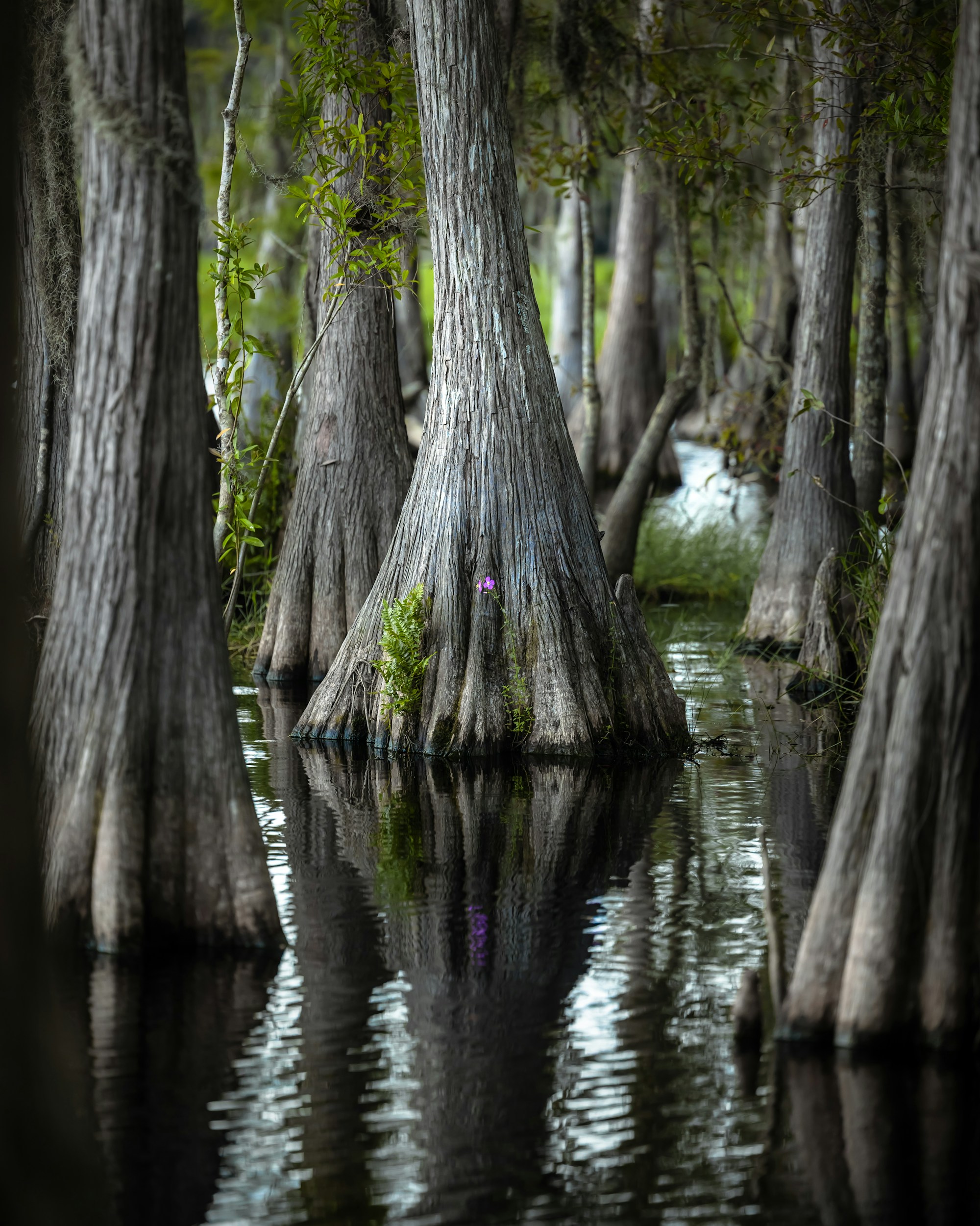
Every fall, duck hunters on the East Coast type some version of the same sentence into a search bar: flooded timber duck hunt, east of the Mississippi. Much of what comes back is Arkansas. The Natural State owns that picture in the hunting world, with its flooded oaks and its green-tree reservoirs. A hunter in Charlotte, Columbia or Raleigh who wants that look often assumes he has to burn a long drive and a long weekend to get it. South Carolina has an answer sitting in the middle of the state, and not every operator who could sell it says so plainly.
That answer is Lake Marion. When the Santee Cooper project flooded the valley in the early 1940s, a great deal of timber was left standing in the water, and eight decades later the drowned cypress still defines the upper lake. This post is a narrow spoke. It does not try to be the whole Santee Cooper duck playbook; that is already published in Marketing a Santee Cooper Duck Guide on Lakes Marion and Moultrie in South Carolina, and if you have not read it, start there for the two-lake picture, the diver side on Moultrie and the search-intent groundwork. What follows covers one product only: the flooded-timber hunt on Marion, and how to sell it honestly against the Arkansas version.
The word that matters in that sentence is honestly. Marion is not Arkansas, and the operator who pretends otherwise will collect a bad review from the first client who expects Stuttgart mallards. But the operator who says plainly what this water is, and then sells the parts that are genuinely rare, can win the hunter who is tired of driving. South Carolina's 2026-27 regular duck season opens November 21, about two weeks out, and the weeks before an opener are when a clear page earns its keep.
The Forest the Lake Kept
Start with the story, because it is your best brand material and it is true. The Santee Cooper Power and Navigation Project was constructed from 1939 to 1942, according to Santee Cooper's own project summary, and it created Lake Marion and Lake Moultrie. Santee Cooper describes Lake Marion as about 110,000 acres. The South Carolina Department of Natural Resources (SCDNR) tells the clearing story on its Lake Marion description page. Because of World War II, completion of the project was moved ahead, and the Lake Marion dam was closed before the clearing of the lake was completed, in November 1941. SCDNR then states the result in a sentence any marketer should keep: there are thousands upon thousands of stumps, dead tree trunks and live cypress trees.
That is not a stock-photo backdrop. It is the actual geography of the hunt, and it is the reason the lake looks the way it does in a first-light photograph. Dark water, gray trunks, flared cypress bases and a horizon that is broken up by standing wood instead of open reservoir: this is the visual that separates Marion from every other big impoundment in the Southeast. SCDNR also points to the upper end of the lake, where seasonally flooded, forested wetlands form what it calls the wildlife rich Sparkleberry Swamp. If your launch and your hunting water sit in that upper-lake country, say so by name on the page. A specific place name tells hunters and AI search tools far more than the phrase "Santee Cooper area."
Use the history as a short, plain paragraph on your product page: name the project dates, name the lake, say what SCDNR says is in the water, and move on to the hunt. Plenty of pages say "flooded timber" and stop there. Yours can say why the timber is there.
What Greentree Means in Arkansas, and What It Does Not Mean Here
Because the title of this post borrows Arkansas language, be careful with it. In Arkansas, "greentree reservoir" is a specific management tool. The Arkansas Game and Fish Commission (AGFC) says greentree reservoirs were developed in the 1950s to replace lost bottomland hardwood habitat and to provide habitat and duck hunting opportunity. They are forests that are managed so water can be held on them, and its greentree management page notes that not intentionally holding water in some of those areas lets young red oak trees survive and grow. In other words, the Arkansas picture is a managed forest where someone decides when the water goes on.
Lake Marion is a different animal. Nobody floods a Marion cypress flat for ducks. The water is a hydropower and navigation reservoir, and the timber is what was left in the basin when the gates closed. That difference is the whole honesty test for your marketing. You can truthfully borrow the Arkansas image, standing timber, still black water, ducks working through the trunks, because the photograph is a fair comparison. You should not borrow Arkansas promises: oak-flat mast, deep fields of mallards pitching into managed acorn ground, or the volume that a famous Arkansas hunting area can offer in a good week. Nothing in the public sources an operator can cite supports those promises on Marion, so do not make them.
The clean way to handle it is to name the comparison and then redraw it. Something like this works on a page: if you have wanted to hunt flooded timber without a long haul to Arkansas, Lake Marion's drowned cypress is about as close as the East Coast comes to that setting, and here is what to expect, which birds, and what we do when the water or the weather is wrong. That sentence invites the Arkansas search, concedes the difference and sells the experience. It also keeps you out of the review trap, where a client holds you to a standard you never actually promised him.
If you want to see how the Arkansas side markets its own two products, the live post Rice Field vs Flooded Timber: Marketing the Two Arkansas Delta Duck Hunts lays out that contrast, and it is useful to read before you write your comparison paragraph so you know exactly what a hunter has in his head when he types "flooded timber."
Sell the Birds You Can Actually Deliver
The most trustworthy line in a Marion timber page is a plain statement about which ducks the timber holds. The one species you can speak about with confidence is the wood duck. SCDNR says wood ducks are found throughout South Carolina all year long, describes them as birds of wooded streams and ponds that perch in trees, and notes that they nest in preformed tree cavities over or near water. That description fits a drowned cypress forest as well as anything in the state, so wood ducks are a natural backbone for a timber product. Because they live in the state year-round, they are part of the scenery even when a cold front has not moved anything south.
Mallards are another matter. Hunters associate them with Arkansas timber, and on Marion you should state plainly that mallard numbers vary with weather and migration rather than leave the impression that they are guaranteed. There is no published, current count of mallards on Lake Marion's flooded timber to quote, so your page should not invent one. What you can say with integrity is that a day in the timber is a mixed-bag hunt, that the mix changes through the season, and that you will tell clients what the birds have been doing in the days before they arrive. Dated, honest field reports do this better than any promise on a landing page.
Bag limits belong on the page too, with a source and a date. For the 2026-27 season, the South Carolina hunting regulations that SCDNR links from its migratory bird page list a daily bag of six ducks in total, with up to four mallards (no more than two hens), up to three wood ducks, up to three pintails, and up to two each of redheads, canvasbacks and scaup. The scaup limit changes late in the season: it is two a day on some dates and one a day from December 23 through January 31. Because limits change by species and by date, link your clients to SCDNR rather than retyping the whole table, and say "confirm with SCDNR" next to anything you do restate. According to the same regulations, waterfowl hunters 16 and older need a South Carolina hunting license, the Migratory Bird Permit and Migratory Waterfowl Permit endorsements, and a federal duck stamp (plus a WMA permit if they hunt a state management area), so a short "what you need before you come" checklist is one of the most useful pieces you can publish.
The 2026-27 Calendar to Put on Your Page
Dates are where a timber page either earns trust or loses it. For 2026-27, the South Carolina migratory bird regulations (the season page SCDNR links to, updated August 2026) list the duck season in two segments: November 21 through November 28, 2026, and December 12, 2026 through January 31, 2027. They list a state youth day on November 14, 2026, and federal youth and veteran or active-duty military days on February 6 and February 13, 2027. The early teal season ran September 19 through September 27, 2026, so it belongs in a "next September" teaser rather than in your current booking pitch. Write "confirm with SCDNR" beside any date you publish; if the agency adjusts anything, the agency's page wins.
The shape of that calendar is itself marketing material. The first segment is a single week that takes in Thanksgiving, then a break, then a long second segment through the end of January. A timber operator can sell the opening week as the first-look week, the December reopening as the real middle of the season and January as the quiet back end. Be careful not to make claims about when the best hunting is. Publish what the birds are actually doing each week and let the pattern speak.
The Water You Do Not Control
Here is the part of the product that operators tend to skip, and the part that protects them from refunds and bad reviews. Because Lake Marion is a managed reservoir, its water level is not set for ducks. Santee Cooper's lake data page says the normal range of the rule curve is just above 72.0 feet in winter to 75.5 feet in summer, and it explains that elevation targets are lowered during the winter in anticipation of increased spring inflows. The same page links the USGS gauges for Lake Marion at Pineville and Elloree.
The reservoir is managed to sit lower in winter than in summer, the opposite of what a hunter might assume when he pictures ducks swimming through flooded trees. Stumps, flats and channels that were comfortable in a warm-weather boat trip will behave differently when the pool is at its winter range, and rain and operations can move the lake further from one week to the next. SCDNR's own page tells fishermen to expect the stumps; a duck guide should treat them as a safety and logistics fact for the boat, not just as scenery.
Turn that into a feature instead of a liability. Say on the page that the hunt is boat-based, that the water level changes what you can reach, and that you check the gauges and adjust the setup before every trip. Publish a short policy for what happens if conditions or weather make a morning unsafe. Link to the Santee Cooper lake data page so a nervous client can look at the same numbers you do. That transparency sets the right expectations before anyone books.
Refuge Water Is a Different Conversation
Santee National Wildlife Refuge sits on Lake Marion, and any timber page that touches Marion's public water has to handle it carefully. On its refuge page, the U.S. Fish and Wildlife Service says Santee protects over 15,000 acres of public land in four units (Bluff, Dingle Pond, Pine Island and Cuddo), superimposed on the lands and waters of the 110,600-acre lake. It also says that from November 1 to March 1, parts of the refuge are closed to visitors to provide sanctuary for wintering waterbirds, including the waters of Cantey Bay, Savannah Branch and Black Bottom.
Now the part that matters for marketing. The refuge's 2026-2027 hunting regulations brochure on fws.gov covers deer, feral hog, and raccoon and opossum hunting. It does not describe a waterfowl hunt, and the refuge hunting page likewise lists only those species. On the commercial side, the Fish and Wildlife Service's special use permit page says commercial activities such as guiding hunters need a special use permit issued by the local refuge office, and nothing on the Santee refuge pages offers commercial waterfowl guiding. So the rule for your site is simple. Do not sell, imply or photograph a guided duck hunt on refuge water or inside its sanctuary closures. If you are not sure where the refuge boundary runs relative to your hunting water, do not guess: call the refuge office at 803-478-2217 and confirm in writing.
The Arkansas comparison matters here too. Arkansas makes it unlawful to guide waterfowl hunters on Commission-owned or controlled wildlife management areas and on national wildlife refuges in Arkansas (AGFC Code 24.08). South Carolina rules are not Arkansas rules, so confirm with SCDNR before any commercial hunting activity touches a state management area. The hunters who do their own research will ask. Give them an honest line on your page: our hunts take place on water we have confirmed is open to commercial guided hunting; public refuge and management area water is for self-guided hunters under the agencies' own rules. A guide who writes that sentence looks more credible, not less.
If you want the other side of that decision laid out for a hunter, WMA Duck Draw vs Guided Hunt: The Decision Framework Every Southeastern Duck Hunter Runs and South Carolina's WMA Draw vs. Private Lowcountry Water both cover how South Carolina's public draws and private water fit together, and they are worth linking from your own comparison section.
Building the Timber Page
With the facts straight, the page itself is mostly a matter of discipline. Lead with the place name and the product in one plain line: Lake Marion flooded timber duck hunts, boat-based, in the upper lake. Follow it with the cypress story in a short paragraph, then the species honesty paragraph, then the water and weather paragraph, then the logistics. Logistics are where timber hunts are won or lost in a client's mind. Say where you meet, what time, how long the boat ride is, what the client should wear and bring, what you provide, and what the day ends with. Do not guess at details you have not decided; vague logistics read as an operator who has not done this before.
The earlier Santee Cooper post covers photography in depth; the one rule to add for a timber page is to use your own, from your own water, and caption each image with what it is. A stock cypress swamp from somewhere else undercuts the honesty the whole page is built on.
Then make the page legible to machines. Put the hunt name, the water body, the season dates and the "confirm with SCDNR" line in text, not in an image. Add a frequently asked questions block that answers the exact questions a timber-curious hunter asks, such as whether the hunt is on public water, what birds to expect and what happens at low water. For the search-and-citation groundwork, see Santee-Cooper Marketing: A Content Playbook for Lake Marion and Lake Moultrie Operators.
Ducks in the Morning, Something Else in the Afternoon
One combination worth a sentence is the product that pairs a duck morning with a fishing afternoon on the same water. SCDNR's Lake Marion page lists catfish among the lake's species, and Marion is a big enough reservoir that an operator who runs both a waterfowl service and a fishing service can package them honestly as separate trips on the same lake. The caution is licensing and permitting: each trip has its own requirements, and a fishing guide on the lake needs to be sure the fishing side is properly licensed and permitted in the same way the hunting side must be. Keep the two products on separate pages with separate rules, and link them to each other. For the fishing half, the live post Marketing a Catfish Guide Service in the Southeast is the place to start. A hunter who comes for a timber morning is already on your site and already thinking about a second trip; give him a reason to make it with you.
Write the Season, Not Just the Page
A page is static; a season is not. The strongest thing a Marion timber operator can do is publish a short, dated field note every week or two of the season: where the birds were, what the water was doing, what the weather did, what the straps looked like. After a few weeks you will have a record that tells the next client what a December hunt really looks like.
Plan the arc now. Between now and November 21, publish the product page, the dates and logistics post and a "what to bring" checklist. During the first segment, post a recap. In the gap before December 12, publish a preview that explains what changes in the second segment. Through January, keep posting. If you want a cadence to borrow, the live post The Duck Opener Countdown: Four Weeks of Content Before the Flagship Season lays out a four-week structure, and The Big-Reservoir Diver Hunt: Marketing the Southeast's Open-Water Duck Specialty is the hub that ties the timber and open-water products together for reservoir operators.
Work with Pine & Marsh
If you run a duck operation on Lake Marion, or a lodge, marina or landing that serves the hunters who do, we would be glad to look at how your timber hunt is described online. A discovery call or a free marketing check covers where you show up in search, whether your product page says what you actually deliver, and whether your dates, rules and water-level language are accurate and easy to find.
We work with outdoor businesses across the Southeast, and the goal is always the same: tell the truth about the water and the birds clearly enough that the right hunter finds you. What you've built deserves to be found. Start the conversation at pineandmarsh.com/contact.
Frequently Asked Questions
Is Lake Marion really a flooded-timber duck hunt like Arkansas?
It looks similar, but it is a different product. SCDNR describes thousands upon thousands of stumps, dead tree trunks and live cypress in Lake Marion, so standing timber is real. Arkansas greentree reservoirs are managed forests, while Marion is a reservoir whose water level is set for power and navigation. Sell the setting, not Arkansas volume.
What ducks should a Lake Marion timber page promise?
Promise the setting and a mixed bag, and be honest about variance. SCDNR says wood ducks live in South Carolina all year and favor wooded water with tree cavities, so they are a safe anchor. Mallard numbers vary with weather and migration, and there is no published current count for Marion, so do not quote one.
When is the 2026-27 South Carolina duck season?
The South Carolina migratory bird regulations that SCDNR links to list November 21 through 28, 2026, and December 12, 2026 through January 31, 2027, with a state youth day on November 14, 2026. Always confirm with SCDNR before you print dates, because the agency's schedule controls.
What is the daily duck bag limit in South Carolina this season?
The same regulations list six ducks a day, including no more than four mallards (two hens), three wood ducks, three pintails, and two each of redheads, canvasbacks and scaup, with the scaup limit dropping to one from December 23 through January 31. Species limits can change, so link clients to SCDNR rather than relying on your copy.
How does water level affect a Lake Marion timber hunt?
Santee Cooper says the Lake Marion rule curve runs from just above 72.0 feet in winter to 75.5 feet in summer, and that targets are lowered in winter ahead of spring inflows. That means winter water can sit lower than summer, which changes access in the timber. Check the USGS gauges and explain your plan on the page.
Can I guide duck hunters on Santee National Wildlife Refuge?
Do not plan on it. The Fish and Wildlife Service says commercial guiding on refuges needs a special use permit from the local refuge office, and the 2026-27 Santee hunting brochure lists deer, hog and raccoon and opossum hunts, not waterfowl. Call the refuge at 803-478-2217 before marketing anything near refuge water.
What licenses do hunters need for a guided duck hunt?
South Carolina's 2026-27 regulations say waterfowl hunters 16 and older need a state hunting license, the Migratory Bird Permit and Migratory Waterfowl Permit endorsements and a federal duck stamp, plus a WMA permit on state management areas. Put a short checklist on your page and send clients to SCDNR to buy them, since requirements and fees change.
Should I mention Arkansas on my Marion page?
Yes, once, honestly. Hunters are already searching for Arkansas-style timber, so acknowledging the comparison catches that search. Then say what is different: the birds, the water and the logistics. Do not promise Arkansas outcomes, and do not name or criticize any other operator.
Can a duck outfitter also sell a fishing trip on the same lake?
It can be a good second product, since SCDNR lists catfish among Lake Marion's species. Keep the two trips on separate pages with their own rules, and make sure each activity is properly licensed and permitted. Do not describe one trip's rules as covering the other.
Sources
South Carolina Department of Natural Resources, Lake Marion description, https://www.dnr.sc.gov/lakes/marion/description.html (accessed November 2026)
U.S. Fish and Wildlife Service, Santee National Wildlife Refuge, https://www.fws.gov/refuge/santee (accessed November 2026)
U.S. Fish and Wildlife Service, Santee National Wildlife Refuge hunting, https://www.fws.gov/refuge/santee/visit-us/activities/hunting (accessed November 2026)
U.S. Fish and Wildlife Service, Santee National Wildlife Refuge 2026-2027 Hunting Regulations and Permit, https://www.fws.gov/sites/default/files/documents/2026-08/santee_hunt2026_web.pdf (accessed November 2026)
U.S. Fish and Wildlife Service, Special Use Permits on National Wildlife Refuges, https://www.fws.gov/service/special-use-permits-national-wildlife-refuges (accessed November 2026)
South Carolina Department of Natural Resources, Wood Duck species page, https://www.dnr.sc.gov/wildlife/species/waterfowl/puddleducks/woodduck.html (accessed November 2026)
South Carolina Department of Natural Resources, Migratory Birds, https://www.dnr.sc.gov/hunting/migratory.html (accessed November 2026)
eRegulations (South Carolina hunting regulations, linked from SCDNR), Migratory Bird Season Dates and Limits, https://www.eregulations.com/southcarolina/hunting/general-migratory-bird-seasons-shooting-hours-bag-limits (accessed November 2026)
Santee Cooper, Lake Data, https://www.santeecooper.com/community/lakes/lake-data/ (accessed November 2026)
Santee Cooper, Santee Cooper Project fact sheet, https://www.santeecooper.com/Community/Lakes/FERC-Relicensing/_pdfs/Santee-Cooper-Project.pdf (accessed November 2026)
Arkansas Game and Fish Commission, Wetland Management (greentree reservoirs), https://www.agfc.com/hunting/waterfowl/greentree-reservoir-management/ (accessed November 2026)
eRegulations (South Carolina hunting regulations), Migratory Bird Licensing and Permits, https://www.eregulations.com/southcarolina/hunting/migratory-bird-licensing-permits (accessed November 2026)
Arkansas Game and Fish Commission Code 24.08, Guiding Prohibited On All Commission-Owned Or Controlled WMAs and NWRs (via Cornell LII), https://www.law.cornell.edu/regulations/arkansas/002-01-24-Ark-Code-R-114 (accessed November 2026)
Related Reading
Marketing a Santee Cooper Duck Guide on Lakes Marion and Moultrie in South Carolina
Santee-Cooper Marketing: A Content Playbook for Lake Marion and Lake Moultrie Operators
Rice Field vs Flooded Timber: Marketing the Two Arkansas Delta Duck Hunts
The Big-Reservoir Diver Hunt: Marketing the Southeast's Open-Water Duck Specialty
WMA Duck Draw vs Guided Hunt: The Decision Framework Every Southeastern Duck Hunter Runs
The Duck Opener Countdown: Four Weeks of Content Before the Flagship Season
Marketing an ACE Basin Managed-Impoundment Waterfowl Outfitter in South Carolina


Comments