
Renting a Kayak Is an E-Commerce Problem Now
Updated: Sep 8
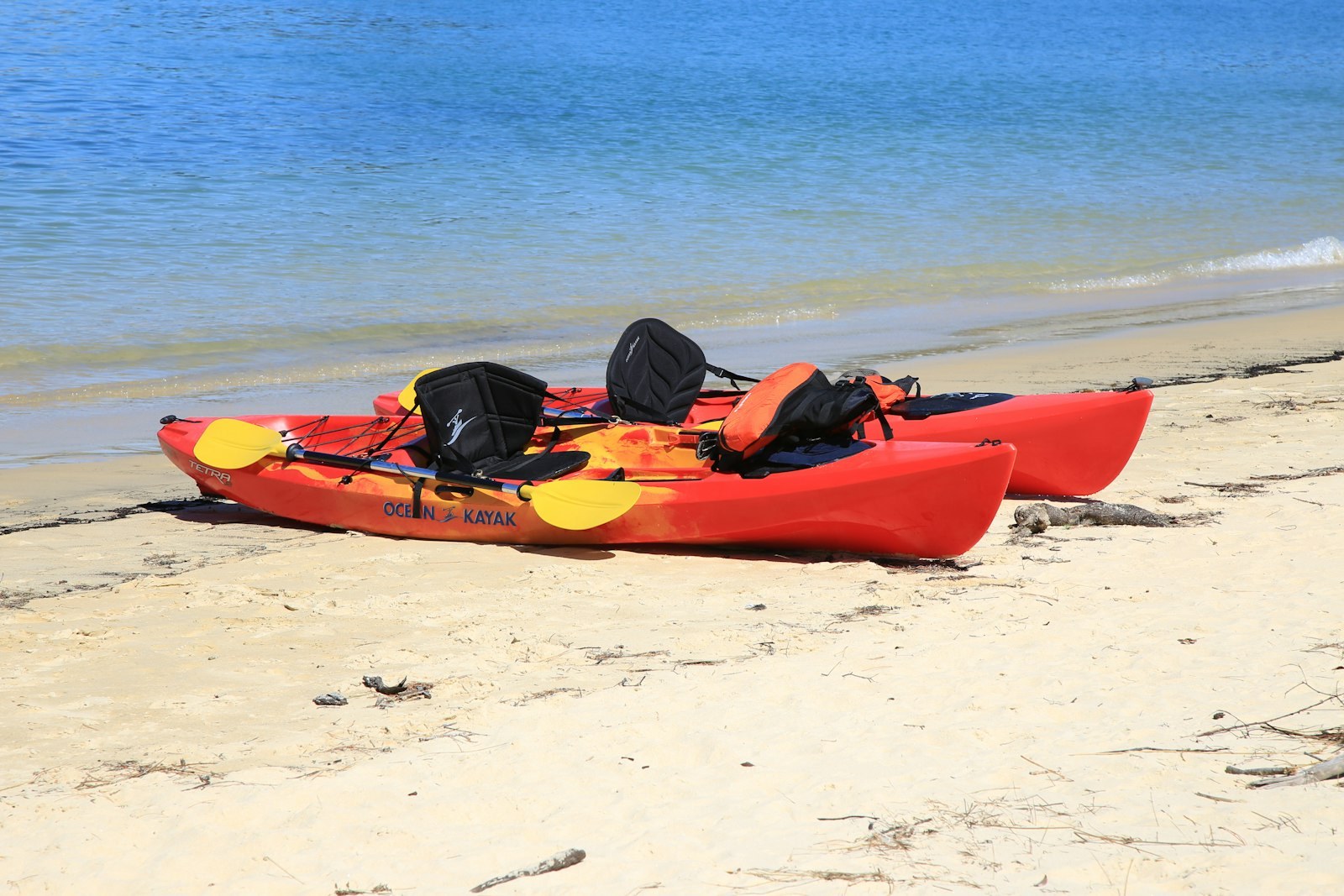
"Can I rent a kayak near [town]," "how much does it cost to rent a canoe for the day," "where can I rent tubes near this river" -- these questions have the shape of a shopping query, not an informational one. The person asking wants an item, a price, and a place to get it, in roughly that order. That's functionally the same query shape behind "where can I buy a tent near me" or "rent a car near the airport," and shopping-style queries increasingly get answered by shopping-style structured data -- product listings, prices, availability -- rather than by a paragraph of prose describing a business's offerings.
Most livery rental pages are still built in that prose format: a pricing table or a written paragraph listing "single kayaks $X, tandem kayaks $Y, tubes $Z," often mixed in on the same page as guided-trip pricing. That's readable to a human visitor, but it gives a resolving AI system or shopping-aware search feature far less to work with than an actual Product listing with structured price and availability data would -- which is exactly the format that lets a national retailer or a rental marketplace platform get surfaced in a shopping-style AI answer instead of the local livery that's actually the closer, cheaper, more relevant option.
This post covers marking up individual rental items with Product and Offer structured data -- distinct from the Service-type schema that applies to a guided trip -- and building toward an actual booking or availability-aware flow rather than a static price list, so a livery's rental inventory becomes visible to the same product-resolution logic that currently favors bigger, more structured competitors by default.
Why Rental Gear Is a Different Schema Problem Than a Guided Trip
A guided float trip is fundamentally a service: a person is paying for an experience delivered by the business, typically involving staff time, a defined itinerary, and often a per-person rate. Schema.org's Service type, or a more specific subtype where one fits, is built to describe exactly that kind of offering.
Renting a kayak, by contrast, is fundamentally a transaction for the temporary use of a physical item -- much closer in structure to renting a car or a piece of equipment than to booking a guided experience, even though the same customer might be doing both on the same trip. Schema.org's Product type, paired with an Offer describing price and availability, is the structure built for exactly this kind of listing, and it's the same underlying structure that lets shopping-aware search features and AI answers surface specific, priced items from retailers and marketplaces.
Keeping these two schema types cleanly separated on the same site -- rather than blending guided-trip and rental-item information into one undifferentiated "trips and rentals" page -- is what lets each be resolved correctly for its own query type, rather than confusing a system trying to determine whether it's looking at a service listing or a product listing.
What Product-Level Structure Actually Looks Like
Rather than one page describing rental pricing in a table or paragraph, each distinct rental item -- a single kayak, a tandem kayak, a canoe, a tube, whatever the actual inventory categories are -- benefits from its own clearly defined listing: item name, a real description, and an Offer specifying the actual current price and the unit it applies to (per hour, per day, per trip), structured so a system parsing the page can extract exactly that information rather than inferring it from surrounding prose.
This doesn't necessarily mean every rental item needs its own separate page the way a retailer might list separate product pages -- a single rentals page with each item clearly, individually structured within it can work well, provided the structured data behind each item is genuinely distinct rather than one blended description covering all items at once. The visible page design and the underlying structured data don't have to match one-to-one; what matters is that the data itself distinguishes each rentable item clearly.
Availability is the harder, more valuable piece to get right, and also the one that requires real infrastructure rather than just markup: a static page saying "kayaks available" is far less useful, and far less trustworthy to a resolving system over time, than a booking flow that reflects actual current availability. Building toward that -- even incrementally, starting with accurate seasonal availability windows before attempting real-time inventory -- is worth treating as a genuine project rather than a one-time markup task.
The Discipline Around Prices, Terms, and Real-Time Accuracy
Every price published in structured rental data has to be genuinely current -- a stale price sitting in Offer markup isn't just an SEO problem, it's a customer-facing accuracy problem the moment someone shows up expecting last season's rate. Whatever process keeps a livery's printed or posted rate sheet accurate should be the same process that updates the structured data on the site; these shouldn't be two separately-maintained sources of truth that can drift apart.
Deposit requirements, damage-waiver terms, age or ID requirements for rentals, and any other real conditions attached to a rental transaction belong in the visible page content near the structured pricing, both because a customer deserves to know these terms before committing and because a page that states its actual terms clearly reads as more complete and trustworthy than one that only states a bare price.
It's worth being explicit, both internally and to any provider building this out, about the difference between marking up accurate current pricing and implying a real-time inventory accuracy the site doesn't actually have built. A page that structurally implies "book this exact kayak right now" without a real booking system behind it risks a customer showing up to find the equipment isn't actually available -- a worse outcome than simply stating pricing and asking the customer to call or book ahead to confirm availability.
Why This Matters More for a Livery Than It Might Seem
National rental marketplace platforms and big-box outdoor retailers already publish exactly this kind of structured product data at scale, which is a meaningful part of why they show up readily in shopping-style AI answers and search features for queries like "rent a kayak near me." A local livery that's genuinely closer, genuinely cheaper, and genuinely more relevant to the specific river a searcher cares about loses that comparison by default if its own rental inventory has no comparable structure behind it -- not because the local option is actually worse, but because the resolving system has less to work with.
This is a case where the underlying business reality actually favors the local operator -- proximity to the actual water, often lower prices, direct access to the exact stretch of river someone wants to float -- and the only thing standing between that real advantage and an AI system recognizing it is whether the operator's rental data is structured in a format the system can parse and compare.
Getting Started Without Overbuilding
A reasonable first step for an operator without an existing booking platform: accurately, completely mark up current rental items and prices as structured Product and Offer data on the existing rentals page, verified against actual current rates, without attempting real-time inventory tracking yet. That alone closes a meaningful part of the structural gap against directory and marketplace competitors.
The next step, as resources allow, is moving toward an actual availability-aware booking flow -- even a simple calendar showing which dates or time slots are open for rental, rather than full item-by-item real-time inventory -- which closes the gap further and gives customers a genuinely better, more confidence-inspiring experience than a static price list ever could.
Related Reading
More for operators building the same kind of page -- clays courses and dove outfits that need a specific answer, not another brochure paragraph.
One Livery, Five Landings: The Entity Google Can't Quite Place
What Answer Engines See in the Off-Season: The Shoulder-Month Gap
Scout Troops Aren't a Booking Problem -- They're a Citation Problem
The Shuttle Fleet Is Marketing Infrastructure, Not Just Logistics
Insurance Talk Without the Legal Risk: A Trust Page That Holds Up
What the Airboat Is Actually For: Marsh Access, Not Nature Tourism
Rental Livery or Guided Outfitter? Why AI Keeps Confusing the Two
One Business, Five Landings: Making Google Business Profile Tell the Truth
Frequently Asked Questions
What's the difference between Service schema and Product schema for a livery?
Service schema fits a guided trip, where a customer is paying for a staffed, guided experience. Product schema, paired with an Offer, fits a rental item like a kayak or canoe, where the customer is paying for temporary use of a physical item -- structurally closer to renting equipment than booking a guided service.
Do we need a separate webpage for every rental item?
Not necessarily -- a single rentals page can work well as long as each distinct item is structured individually within the underlying data, rather than blended into one general description covering everything at once.
Can you give us the exact rental prices to publish?
No -- your current rates, deposit terms, and damage-waiver policies are specific to your business and change over time; whatever process you already use to keep your printed rate sheet accurate should be the same process that keeps your structured data current, so the two never drift apart.
Does adding this schema guarantee we'll show up in shopping-style AI answers?
No -- structured data gives a resolving system accurate, parseable information to work with, which is a precondition for being considered, not a guarantee of a specific placement or citation outcome.
Should we build real-time inventory tracking right away?
Not necessarily as a first step -- accurately marking up current items and prices is worth doing first, since it's achievable without new infrastructure. Moving toward an availability-aware booking flow, even a simple calendar rather than full real-time inventory, is a reasonable next step as resources allow.
What happens if we imply real-time availability we don't actually have built?
That risks a customer showing up expecting a specific item to be available and finding it isn't -- worse for trust than simply stating accurate pricing and asking customers to call or book ahead to confirm availability.
Why would a big national rental marketplace outrank our local kayak rental listing?
Often simply because that platform's rental data is already structured at scale in a format shopping-aware systems can parse easily, while a local livery's pricing is still sitting in a paragraph or table with no comparable structure behind it -- not because the local option is actually a worse fit.
Do deposit and damage-waiver terms need to be in the structured data itself?
The core structured data should cover item, description, and price/offer; deposit and waiver terms are best placed as clear, visible page content near that pricing, so a customer sees the full terms even if the structured snippet itself focuses on the core transactional facts.
Should guided-trip and rental pricing stay on separate pages?
It's worth keeping them structurally distinct in the underlying schema even if they appear on related pages, so a resolving system can tell clearly which parts of the site describe a guided service and which describe a rental product, rather than treating the whole page as one undifferentiated offering.
Work with Pine & Marsh
A national rental marketplace didn't earn its place in shopping-style AI answers by being closer to the river -- it earned it by structuring its data. That's a fixable gap.
Structuring rental inventory correctly and building the booking flow behind it is squarely a Website Design for Outfitters project with 44 Recreation Agency. Book a discovery call at pineandmarsh.com/contact. What you've built deserves to be found.


Comments