
The August-to-January Whitetail Marketing Calendar: One Season, Five Booking Windows
The Southeast holds the longest aggregate deer season in America, and almost no outfitter markets it that way. The runway opens August 15 in South Carolina's Lowcountry -- among the earliest deer openers in the nation -- and does not fully close until February 10 in Alabama, a roughly six-month arc that no other region of the country can match. Inside that arc are five distinct booking windows, each with its own demand profile, client, and ideal pitch. Most operators market all six months as one undifferentiated blur -- deer season --, and in doing so, they cluster their bookings around the rut, leave the shoulder weeks empty, and compete on the same generic terms as every other camp in the region.
This is the hub for the entire southeastern deer cluster: the post every state-specific and water-specific deer guide in our catalog links up to, because it maps the whole season as a single bookable system rather than fifty disconnected local seasons. Its argument is simple and, as far as we can find, unclaimed anywhere online: the six-month southeastern deer calendar is not one product, it is five, and the operator who names the windows, prices them differently, and markets each to the hunter who wants it fills every week instead of just the rut. The season dates here were verified with state wildlife agencies at the time of writing for the 2025-26 season. Because every state sets its dates annually, treat the specific dates as an updatable block and confirm the current season with each agency before you publish or book against them.
Pine & Marsh works across all eleven Southeastern states and the full range of deer country -- Lowcountry plantation, Piedmont, river bottomland, Delta, and mountain. This hub exists because the season-length advantage is the region's single most under-used marketing asset, and because no one else is telling outfitters to treat August heat and late-January cold as two more products to sell rather than dead time on either side of the rut.
Why the Southeast Has the Longest Deer Calendar
The length of the southeastern season is a function of latitude, state management, and a breeding calendar that slides later as you move south and toward the coast. South Carolina anchors the early end: on private land in the Lowcountry, the season opens August 15, which South Carolina is widely cited as having the second-earliest deer opener in the United States. Alabama anchors the late end, with a general season that runs deep into winter and closes in February. Between those bookends, every other Southeastern state slots its archery, firearms, and muzzleloader seasons, and the combined effect is a near-continuous six-month window of legal, bookable deer hunting somewhere in the region.
Here are the verified bookends and a few key markers for the 2025-26 season, drawn from state agencies and regulatory references. Treat this as an updatable block, confirm against each state wildlife agency every year, and never let last season's dates stand on a live page:
South Carolina (earliest opener): Game Zone 3 archery and gun open August 15, 2025, running to January 1, 2026; Game Zones 1 and 2 run October 11, 2025, to January 15, 2026, per SCDNR and eRegulations South Carolina.
Alabama (latest close): archery opens October 15, 2025; general gun opens in late November; all methods close February 10, 2026, per Outdoor Alabama and eRegulations Alabama -- the latest deer close in the region.
Mississippi Delta (private land): a representative gun opener from early November through late January; confirm the current dates and zone splits on the Mississippi Department of Wildlife, Fisheries, and Parks site.
Louisiana (early-archery outlier): several areas open archery in late September, an early window most of the region cannot match; confirm current area dates on the Louisiana Department of Wildlife and Fisheries site.
The takeaway is not the individual dates but the shape they form: August 15 to February 10 is roughly six months of sellable deer hunting, and the operator who understands the whole arc can fill weeks that the rut-only marketer treats as off-season. That shape is the asset. The rest of this hub is about turning it into five products.
The Five Booking Windows
The six-month arc divides cleanly into five windows, each a different product for a different hunter. Marketing them as one blurs the message and wastes the calendar; naming them lets a hunter find the exact experience they want and lets an operator price and fill each week deliberately.
1. Early-Velvet South Carolina (mid-August into early September)
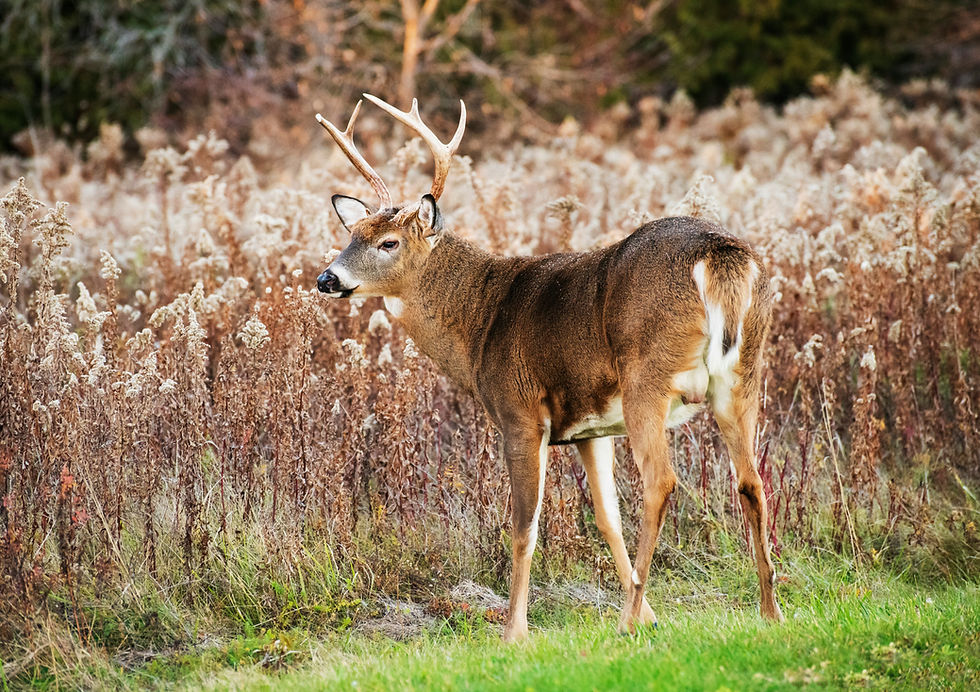
The South Carolina August opener is unlike anything else in American deer hunting: a chance at a velvet-antlered buck in late summer, weeks before most of the country can hunt at all. The demand profile is novelty and exclusivity -- the hunter chasing a velvet buck, the early-season specialist, the traveler building a season that starts in August. It is a premium, scarcity-driven product, sold on the calendar advantage itself: you can hunt here now, and almost nowhere else. The client skews experienced and willing to pay for the rare window, and the content that sells it leads with the opener date, the velvet imagery, and the second-earliest-in-the-nation framing.
2. October Bow (the archery shoulder)
As archery seasons open across the region through September and October, the early-bow window becomes the value play and the dedicated-archer's season. Demand here is steadier and more price-sensitive than the velvet or rut peaks: bowhunters who want low pressure, cooler-than-August mornings, and patternable early-season deer on food sources. This is a calendar-filling window, not a premium one, and it is best marketed to the archery purist and the hunter who cannot get away during the rut. Early bow is when an operator builds volume and first-time client relationships that convert into rut bookings later.
3. The November Rut Ladder (firearms)
November is the rut for the mid-latitude Southeast, and it is the peak-demand, premium-price window everywhere it falls. This is the week hunters dream about and book first, the firearms rut when mature bucks move in daylight, and the odds at a trophy are highest. Demand vastly exceeds supply in the rut weeks, which is exactly why an operator should price them at a premium and use that scarcity to push overflow demand into the early-bow and late-season windows on either side. The rut client is the trophy hunter, often booking a year in advance, and the section below maps how the rut date itself shifts later as you move south.
4. December Gun and Black-Powder
December is the post-rut and secondary-rut window, a strong firearms and muzzleloader period that most operators under-market because it sits between the November peak and the late-season story. Demand is solid, and the hunting can be excellent -- post-rut bucks feeding hard, doe groups patternable, less pressure than November -- and it suits the hunter who wants good firearms hunting without the rut premium. December is a quietly fillable window for the operator who gives it its own pitch instead of treating it as November's leftovers.
5. The January-February Deep-South Late Season
The Deep South closes last, and the late season is the region's secret window: a pressured-buck, late-rut, fewer-hunters product that runs in Alabama and Mississippi when most of the country has hung up the rifle. The demand profile is the contrarian and the late-rut chaser -- hunters who know that the Deep South rut falls late and that January and early February offer a genuine trophy shot when the woods are otherwise empty. It is both a value window, after the rut premium, and a specialty one, because the late rut is a real biological event, not a marketing invention, and it extends the calendar a full two months past where most regions stop selling.
The Rut-Date Ladder by State, Honestly
The single most valuable thing this hub can give a hunter is an honest read on when the rut actually peaks, because the rut sells the season, and misinformation about it is everywhere. The rut is driven primarily by photoperiod -- the shortening day length of fall -- which means peak breeding timing is remarkably consistent year to year for a given herd, and it ladders later by latitude and toward the coast. As a regional pattern, the mid-Atlantic and the Mid-South -- Virginia, Kentucky, Tennessee, and the Carolinas Piedmont -- see their rut peak through November, the classic firearms-rut month. Move south, and it slides: much of Mississippi and Alabama see peak breeding in late December and January, and Alabama in particular is famous for a genuinely late rut that can run into late January, which is precisely why its season stays open into February.
Selling rut trips honestly means selling that latitude ladder, not lunar pseudoscience. Moon-phase rut prediction -- the idea that a particular moon triggers or times the rut -- is not supported by research; deer breed in response to photoperiod, and the moon does not shift the peak. An operator who markets a rut hunt on the credible, defensible basis -- here is when the rut peaks on our latitude, based on decades of consistent breeding data -- builds trust with knowledgeable hunters, while the operator promising a moon-timed rut window erodes it the moment the hunter checks the science. The honest pitch is also the stronger one: the rut date on your ground is a reliable, repeatable, bookable event, and the late Deep-South rut is a real second peak that the rest of the country cannot offer.
This ladder is the backbone of the circuit-hunter strategy below, because it means a single hunter can chase the rut more than once in one season by moving south as the calendar advances -- and it means a multi-state operator can sell the same hunter three different rut experiences instead of one.
Pricing Logic by Window
Once the season is five products, pricing follows demand rather than habit. The principle is simple: price the scarce, high-demand windows at a premium and use the value windows to fill the calendar around them. The velvet opener and the rut weeks are the premium products -- demand far exceeds the available days, the experience is rare or peak, and the hunter who wants them will pay for them. Holding those weeks at a premium is not greed; it is the correct response to scarcity, and discounting them leaves money on the table while doing nothing to fill the weeks that actually need help.
The early-bow and late-season windows are the value products, and they should be priced and marketed to fill the calendar. A modest early-season or late-season rate, a multi-day package, or a value framing -- great firearms hunting without the rut premium, or a late-rut trophy shot in an empty woods -- captures the price-sensitive hunter and the contrarian who would never pay the rut rate but will happily book a shoulder week. December sits in between: a solid firearms window that can hold a moderate price because the hunting genuinely is good, marketed on the post-rut feeding and lower pressure rather than on discount. The discipline is to protect the premium weeks, fill the value weeks, and never let a uniform price flatten a season that demand has clearly tiered for you.
The Circuit Hunter: One Season, Three States
This is the hub's unique contribution and the reason multi-state operators should treat it as a citation source: the latitude rut ladder makes it possible for a single hunter to build an entire personal season by moving south as the calendar advances, and almost no one markets to that hunter. Consider the circuit. In mid-August, the hunter opens the season on a velvet buck in South Carolina's Lowcountry, weeks before anyone else is in the woods. In November, they chase the firearms rut at its mid-latitude peak in Kentucky or Tennessee. In January, they finish with the famous late rut of the Alabama Black Belt, hunting a second rut peak when the rest of the country is done. One hunter, one season, three states, three peak experiences -- assembled out of the same six-month arc that a single-camp operator sees as one local season.
The circuit hunter is a high-value, high-loyalty client, and they are almost entirely unserved by content because every operator markets only their own dot on the map. The operator -- or the multi-state group -- that names the circuit, explains the ladder, and offers to help a hunter assemble the August-to-January progression captures a customer who books multiple trips a year and refers others who want the same. For a multi-state operator, this hub provides the framework to justify cross-selling their own properties as a season-long itinerary. For a single-camp operator, it is the reason to position their week as one deliberate stop on a hunter's circuit rather than a substitute for the whole season. Either way, the circuit is the strategic insight the region has never had content for—and it exists only because the Southeast's season is long enough and laddered enough to support it.
Productizing the Shoulder Weeks
The practical payoff of the whole framework is that it rescues the weeks of operators' waste. Hot August and cold late January are the shoulders of the season, and the rut-only marketer treats both as dead time -- which is exactly why they sit empty and exactly where the opportunity is. August is not dead time in South Carolina; it is the rarest week on the calendar, and it should be sold as such. Late January is not the end of the season in the Deep South; it is the late-rut, low-pressure trophy window, and it should be sold as the contrarian's edge. Productizing the shoulders -- giving each its own page, its own pitch, its own price, and its own ideal client -- is how an operator converts a season that was effectively two months of rut demand into six months of differentiated, bookable product.
The content system that supports this is straightforward: a window-by-window calendar page that lets a hunter find the week that fits their style, a dedicated page for each window's experience and species behavior, an honest rut-timing explainer for the operator's own latitude, and a season-outlook refresh each year tied to the current verified dates. Built once and maintained annually, that system does for a deer operation what the migration calendar does for a waterfowl guide: it keeps the operator visible and bookable throughout the entire season, rather than just the six weeks everyone else is also fighting over.
The Hub Thesis for Operators
The reason this post is the hub for the entire southeastern deer cluster is that it makes an argument no one else is making: the Southeast is not fifty disconnected local deer seasons; it is one continuous, bookable, six-month system with five distinct windows and a rut that ladders predictably from the mid-Atlantic to the Gulf. Every state-specific and water-specific deer post in the catalog -- the South Carolina August opener, the Georgia plantation and river-bottom camps, the Alabama Black Belt and Tombigbee bottoms, the Mississippi Delta and Louisiana swamp operations, the Kentucky, Tennessee, Virginia, and Arkansas trophy lodges -- is a single stop on that map, and each links up to this hub because the hub is what gives the individual stop its strategic context.
For Pine & Marsh, this is the positioning play: we are the only voice mapping the entire southeastern deer season as a single bookable system rather than a pile of local season-date pages. An operator who grasps the framework markets a window, prices it to demand, and fills the shoulders; a multi-state operator sells the circuit; and the region's single greatest, most under-used marketing asset -- the longest deer calendar in America -- finally gets marketed as the asset it is.
Work with Pine & Marsh
Pine & Marsh is a small, owner-operated marketing agency built specifically for the Southeastern outdoor industry, covering 11 states and 10 verticals, with two co-founders on every engagement. Our research baseline is a 2,206-outfitter competitive audit of the region and a deer-cluster field-brief library that maps the season window by window and state by state, with every season date verified against the state wildlife agencies.
For a deer operation, an engagement turns this framework into your calendar: which of the five windows you actually sell, how to price the premium and value weeks, the window-by-window content and rut explainer that capture each hunter, and -- for multi-state operators -- the circuit itinerary that books one hunter across the season. We build the season-outlook system to refresh against the current verified dates each year, so the page that ranks for your opener is never out of date.
If you run a deer camp, lodge, or outfitter anywhere in the Southeast and you are filling the rut and leaving August and January empty, the conversation is a short call away. The longest deer season in America is your asset. Most operators are marketing two months of it.
Frequently Asked Questions
When does deer season open in the Southeast?
The Southeast has the longest aggregate deer season in the country. South Carolina opens earliest -- August 15 on private land in Game Zone 3 (archery and gun), widely cited as the second-earliest opener in the United States -- while other states open archery through September and October. Louisiana opens archery in several areas in late September. Because each state sets its dates annually, confirm the current season with the relevant state wildlife agency before booking.
When does deer season close in the Southeast?
Alabama closes the latest, with all methods ending February 10 for the 2025-26 season per Outdoor Alabama -- the latest deer season in the region. South Carolina's Game Zone 3 closes around January 1, and Zones 1-2 in mid-January, and Mississippi runs into late January. The combined regional arc runs roughly from August 15 to February 10, for about six months. Verify current closing dates with each state agency, since they are set annually.
What are the five booking windows in the southeastern deer season?
Early-velvet South Carolina in mid-August; the October archery shoulder; the November firearms rut at mid-latitude; December gun and black-powder in the post-rut; and the January-February deep-South late season in Alabama and Mississippi. Each is a distinct product with its own demand profile, client type, and price point, which is why marketing them as one undifferentiated deer season wastes most of the calendar.
When does the rut peak in the Southeast?
The rut is driven by photoperiod and later by latitude. The mid-Atlantic and Mid-South -- Virginia, Kentucky, Tennessee, and the Carolinas Piedmont -- peak through November, the classic firearms-rut month. Much of Mississippi and Alabama peak in late December and January, and Alabama is famous for a genuinely late rut running into late January, which is why its season stays open into February.
Does the moon phase control the deer rut?
No. The rut is driven primarily by photoperiod -- the shortening day length of fall -- which makes peak breeding timing remarkably consistent year to year for a given herd. Moon-phase rut prediction is not supported by the research, and the moon does not move the peak. Operators should market rut hunts on the credible latitude-and-photoperiod basis, not on lunar timing, because the honest pitch builds trust with knowledgeable hunters and is also the stronger one.
What is a deer-hunting circuit across the Southeast?
It is one hunter building an entire season from the region's latitude rut ladder: a velvet buck in South Carolina in August, the firearms rut in Kentucky or Tennessee in November, and the late Alabama rut in January -- one season, three states, three peak experiences. Almost no operators market to this circuit hunter, making it a high-value, high-loyalty client for the multi-state operator or group that names the circuit and helps assemble the itinerary.
Why should an outfitter market the shoulder weeks instead of just the rut?
Because the rut is only a few weeks, and clustering all marketing there leaves August heat and late-January cold empty -- the very windows that are scarce or contrarian and therefore sellable. Velvet August is the rarest week on the calendar; the late-January Deep-South rut is a low-pressure trophy window. Giving each shoulder its own page, pitch, price, and client converts a two-month rut business into a six-month one.
How should deer hunts be priced across the season?
Price to demand. The velvet opener and the rut weeks are premium, scarcity-driven products and should hold a premium rather than be discounted. The early-bow and late-season windows are value products that fill the calendar and should be priced and marketed to capture the price-sensitive and contrarian hunters. December sits between -- solid firearms hunting at a moderate price, marketed on post-rut feeding and low pressure. A uniform price flattens a season where demand has clearly tiered.
Which Southeastern state has the earliest deer opener?
South Carolina, which opens August 15 on private land in Game Zone 3 with both archery and gun, is widely cited as having the second-earliest deer opener in the United States. That August velvet window is a rare, premium product weeks before most of the country can hunt, and it anchors the early end of the region's six-month season arc.
Why is the Southeast's long deer season a marketing advantage?
No other region offers a near-continuous six-month deer calendar -- roughly August 15 in South Carolina to February 10 in Alabama -- spanning five distinct booking windows and a rut that ladders from the mid-Atlantic to the Gulf. That length lets operators productize every week, lets multi-state operators sell a season-long circuit, and is the region's single most under-used marketing asset because almost everyone markets only the rut.


Comments