
Florida Panhandle Turkey: Blackwater River State Forest and Apalachicola NF Ecology
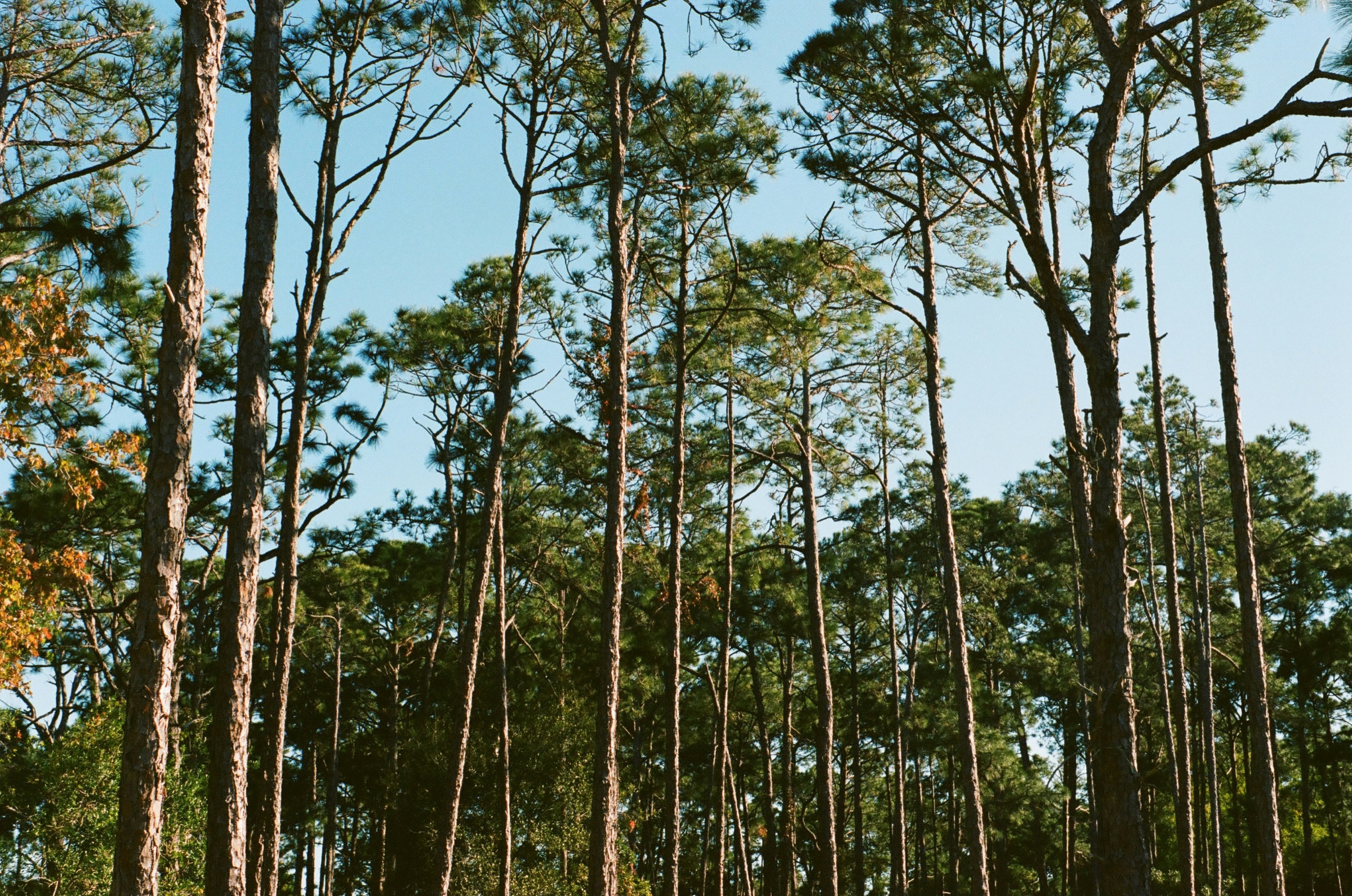
Walk into a longleaf pine stand in the Florida Panhandle in late winter and the first thing you notice is how much you can see. The trunks stand well apart, the crowns are high and sparse, and the ground is a carpet of wiregrass, bluestem and low shrubs rather than a wall of hardwood. Sandy soil, a high sun and a recent burn leave the place feeling more like a savanna than a forest. A gobbler working across that open ground in March is visible from a long way off, and so is the hen he is trying to impress.
That openness is not an accident, and it is not wilderness in the usual sense. It is the product of fire, set on purpose by foresters on a schedule, in a landscape that evolved with lightning and flame. Two public forests anchor the Panhandle's version of this system. Blackwater River State Forest, in Santa Rosa and Okaloosa counties, lies close to the Alabama line. Apalachicola National Forest, the state's largest national forest, covers more than half a million acres of the Panhandle. Both are managed with fire at the center of the plan, and both hold wild turkeys that sit inside one of the more interesting biogeographic puzzles in the state.
This is an ecology piece, not a trip planner. It covers the two forests, the Panhandle turkey's place in Florida's two-subspecies picture, why fire matters for nesting and brood cover, what the Florida Fish and Wildlife Conservation Commission (FWC) surveys and harvest reports say, and the red-cockaded woodpecker. It ends with the 2027 spring framework as FWC has published it so far. For the business side of Blackwater, see our earlier piece on marketing a Blackwater State Forest operation. This one stays with the birds and the woods.
The Landscape: Two Forests, One Fire-Dependent System
Blackwater River State Forest
The Florida Forest Service lists Blackwater River State Forest at 219,077 acres in Santa Rosa and Okaloosa counties, and describes it as the largest state forest in Florida. The Blackwater River runs about 30 miles through it before reaching Blackwater Bay. The forest sits between Conecuh National Forest to the north, across the Alabama line, and Eglin Air Force Base to the south, and the Forest Service says that combination forms the largest contiguous community of its type in the world. That is the longleaf pine and wiregrass ecosystem, which the agency says once covered more than 60 million acres of the Southeastern Coastal Plain and now survives on less than 5 percent of that original area.
Acreage figures for public land drift over time, and Blackwater is a good example. The forest's current ten-year land management plan, approved on April 13, 2026, puts the total at 226,659.52 acres, made up of an original transfer of roughly 183,184 acres plus 43,325 acres added since. The same plan quotes different longleaf figures, more than 90 million acres originally and about 5.2 million acres remaining intact. The agency's web page uses other numbers, 219,077 acres for the forest, more than 60 million acres of original longleaf and less than 5 percent remaining. Both are official, and they should not be blended into one claim.
The forest page also says thousands of acres of slash pine plantation are being converted back to longleaf, which tells you something about how the landscape got here. Restoring the original species and its fire-adapted understory is an ongoing project rather than a finished one.
Apalachicola National Forest
The U.S. Forest Service's National Forests in Florida page lists Apalachicola National Forest at 567,742 acres and calls it the largest of Florida's national forests. The same page says it was established in 1932 and describes it as the state's youngest national forest. You may see other numbers in older material, often because they count gross acreage inside the boundary rather than federal land, so the current agency page is the right source for a figure.
The Forest Service's own description says the forest protects what it calls one of the most unique ecosystems in the world.
Why fire is the common thread
On both forests, the management story is the same. The Florida Forest Service says longleaf and wiregrass management depends on an active prescribed fire program. Burning during the growing season helps control hardwoods and promotes wiregrass flowering. The agency adds that fire helps control brown spot needle blight in young longleaf, improves wildlife habitat, reduces the risk of wildfire, and keeps hardwoods out of sensitive places such as pitcher plant bogs and red-cockaded woodpecker clusters. A turkey is not mentioned by name, but a turkey lives in every one of those sentences, because the vegetation structure that fire maintains is the vegetation structure turkeys use.
Turkeys in the Panhandle: Two Subspecies, One Gradual Boundary
What FWC says about the subspecies
Florida has two wild turkey subspecies. FWC's species profile lists the eastern wild turkey, Meleagris gallopavo silvestris, and the Osceola or Florida wild turkey, M. g. osceola. The Osceola is found only in peninsular Florida. North of the peninsula and across the Panhandle, the profile says, it interbreeds with the eastern subspecies. FWC separates the Florida bird by its wing feathers, where the white bars on the primaries are narrower than the black bars and look irregular or broken.
Two things follow from that wording. First, the Panhandle is a blending zone, not a clean line on the map, and FWC does not name a county, river or road as the boundary. Second, the practical identification question gets harder the farther you go from the core range of either bird. A hunter in Blackwater or Apalachicola should not expect to tick off a clean subspecies from feather patterns alone.
The 2025 spring harvest report gives a rough sense of how the two birds split in the harvest. Of 12,066 reported birds, 25.0 percent were classed as eastern and 75.0 percent as Osceola, based on the county where each bird was taken. That is a statewide split by county, and the report text does not print the county list, so it should not be read as a statement about the Panhandle forests. For a broader look at how the two subspecies sit across the Southeast, our wild turkey field synthesis covers the range as a whole.
The nesting and brood calendar
FWC's profile gives the Florida calendar in plain terms. Hens typically begin nesting in late March or early April, lay an average of 9 to 12 eggs over roughly 12 to 13 days, and incubate for 26 to 28 days. That puts hatching mostly in May, after much of the spring hunting season has passed. Poults feed themselves soon after hatching, cannot fly until about two weeks old, and reach low branches or small trees at about four weeks. Until then they roost on the ground under the hen.
That last detail matters for habitat. For the first month of life a poult is a ground animal, and its survival depends on what that ground looks like. Cover that is too thick to move through will slow a brood down and hold dew and cold. Cover that is too sparse offers no protection. FWC lists acorns, seeds, fruits, insects, leaves and small vertebrates in the turkey's diet, and the open pine understory, with its grasses, forbs and the insects living in them, supplies several of those at once.
What Fire Does for Nesting Cover and Brood Habitat
Nest sites: cover at the nest, not the stand label
The most useful peer-reviewed work on fire and turkeys in this kind of country comes from outside the Panhandle, and it is worth being clear about that limit up front. Researchers led by Andrew Little studied nest site selection on two frequently burned pine savannas in southwestern Georgia from 2011 to 2013, in a paper published in Ecological Processes in 2016. They found that visual obstruction and canopy closure measured at the nest itself, within about 15 meters, mattered most for where hens chose to nest, while land cover type and other measures at larger scales had minimal influence. Nests were more likely where low vegetation was taller and less likely where the tree canopy overhead was more closed. In plain terms, a hen picks a spot hidden at ground level by dense low growth, under an open canopy, and she can find that spot in different stand types if the vegetation is right.
The management implication the authors drew is that pine savannas managed for turkey nesting should focus on creating early successional vegetation that conceals nests from predators. Other species on the same ground, such as the red-cockaded woodpecker and the gopher tortoise, also depend on frequently burned pine, so the goals overlap more than they conflict, but the details of timing and unit size are worth working out locally.
Broods: different years since fire for roosting and for feeding
A companion line of research, led by Wood and colleagues and published in the Journal of Wildlife Management in 2019, followed 63 female turkeys in a longleaf pine ecosystem managed with frequent prescribed fire. The finding that stands out for managers is that time since fire did not help predict where hens nested, but it did help predict where they took broods. Hens selected roost sites for their broods in stands that had burned three to six years earlier, and they used stands burned in the current year or two years earlier for daytime feeding. The authors concluded that very short fire return intervals of one to two years did not produce the vegetation hens chose for roosting broods. The study did not link those selection patterns to nest or brood survival, so it describes where turkeys went, not what made more poults live.
Neither is a Blackwater or Apalachicola measurement. They are close studies of the same bird in the same kind of fire-managed longleaf country, and they point the same way: a mosaic of burn ages gives turkeys the different structures they use at different stages. Those findings come from other forests, so they show the general pattern rather than how either of these forests is managed.
For the quail side of the same fire logic, see our essay on bobwhite ecology and the longleaf connection, which covers the shared ground cover.
Red-Cockaded Woodpeckers and the Fire Dividend
The red-cockaded woodpecker is the reason much of the Southeast's longleaf is managed the way it is, and its legal status has recently changed. The U.S. Fish and Wildlife Service published a final rule on October 25, 2024, effective November 25, 2024, reclassifying the species from endangered to threatened and correcting its scientific name on the federal list from Picoides borealis to Dryobates borealis. The rule is a downlisting, not a delisting, and it keeps protections in place through a species-specific rule. Older web pages and some research papers still use the earlier status and name.
The Florida Forest Service ties fire to woodpecker clusters directly. Its Blackwater page says fire controls hardwood encroachment in red-cockaded woodpecker clusters, which are the groups of cavity trees the birds depend on. Keeping those stands open protects the birds. It also, as a side effect, keeps the surrounding ground in the condition turkeys use. That is a plausible and widely discussed management co-benefit, but it is a logical connection rather than a measurement. The Forest Service page says what fire does for the woodpecker clusters and for wildlife habitat in general. It does not report a turkey response. The right way to put it is that the same management that holds the woodpecker's habitat together tends to maintain structure turkeys use, and that the studies above support the structure side of the claim.
What FWC Surveys and Harvest Reports Show
Summer brood survey
FWC's Wild Turkey Summer Survey, which collects turkey sightings reported from June 1 through August 31, gives the best statewide window on production. The 2024 report logged 6,898 observations totaling 34,356 wild turkeys, with sightings in 66 of Florida's 67 counties. Statewide it recorded 2.03 poults per hen, 3.47 poults per brood and 65.0 percent of hens with a brood. For the Northwest region, the numbers were lower, 1.64 poults per hen, 3.44 poults per brood and 54.6 percent of hens with a brood. FWC explains that poults per hen indicates overall productivity and poults per brood indicates poult survival.
Several cautions apply. The report divides the state into regions but the PDF does not define the Northwest by county in the pages used here, and it does not name Blackwater or Apalachicola. It is a one-year snapshot, and it does not use the word replacement or say whether the ratio is enough to keep a population level. Treat it as a regional figure, not a forest-level one. For the wider southeastern picture of weak hatches, our piece on the turkey recruitment decline across the Southeast covers the biology and causes.
Spring harvest report
FWC's 2025 Spring Wild Turkey Hunting Season Status Report estimates that 28,162 hunters took part and that an estimated 11,254 turkeys were harvested, a 23 percent decrease from an estimated 14,513 in 2024. Reported harvest was 12,066, with 81 percent on private land and 19 percent on public land. Turkeys were reported in 66 of 67 counties. FWC's newer Wild Turkey Permit annual report gives an early look at the following spring: its telephone survey estimated a 2026 spring harvest of 14,484 turkeys.
The report's Table 1 lists the ten wildlife management areas with the most reported birds. Eglin Air Force Base led with 114 and Avon Park Air Force Range was second with 111, both with a note that an additional hunting permit is required there. Apalachicola ranked third at 101, and Blackwater appears seventh at 62. Those are counts of reported birds on a ranked list. They are not population estimates, not harvest rates and not poult counts, and they are partly a function of how many hunters had access and how many reported. They do show that both forests rank among the top ten wildlife management areas in the state by reported harvest, which fits the habitat story.
What the agency is not saying
FWC does not publish a Panhandle-specific nest success rate, home range estimate or annual burn acreage for these forests, so treat any such figure you see elsewhere with caution and ask the agency.
Management: What the Agencies Are Actually Doing
Fire and conversion on the ground
On Blackwater, the Florida Forest Service describes a continuing prescribed burn program, growing-season fire as a hardwood-control tool, and slash pine conversion back to longleaf. FWC's Wild Turkey Permit annual report for fiscal year 2025 to 2026 lists 26 management projects on 20 conservation areas, and its exhibit names three projects on Blackwater River State Forest, two herbicide projects at Bone Creek and Blue Barnes and one on prescribed fire equipment at the Field Trial Area. The program is cost-shared with the Florida Chapter of the National Wild Turkey Federation and the Florida Forest Service, and FWC's share comes from the wild turkey permit fee hunters pay, so that report is a direct line from hunters' purchases to habitat work on this forest.
Season framework as a conservation tool
FWC sets the spring framework with the same population in mind. Statewide, the daily bag and the season limit are both set to two in the framework, with only gobblers and bearded turkeys legal. On wildlife management areas, where most public-forest hunting happens, the hunter may take one bird per day with a season limit of two, and the general season dates and bag limits do not apply. Instead, each area's regulations brochure governs, and many areas require a quota permit. Shooting hours on most areas run from one half hour before sunrise to sunset, and a few end at 1 p.m. This is the part of the framework that varies most from place to place, and it is the part that changes from year to year, so it is the part to confirm with FWC before you go.
Hunting and Seasons on Public Ground
The 2027 spring framework, as published
FWC's 2026 to 2027 season-dates page lists the 2027 spring turkey season north of State Road 70 as March 20 through April 25, with a youth hunt on March 12 through 15. South of State Road 70, the season is March 6 through April 11 and the youth hunt is February 26 through March 1. The page says these seasons, dates and bag limits do not apply to wildlife management areas. Blackwater and Apalachicola both sit north of that road. State Road 70 divides the state for season dates only. It is not the subspecies boundary, and it should not be read as one.
Quota hunts on the two forests
The 2026 to 2027 quota spring turkey worksheet lists named units, not whole forests. For the Apalachicola Bradwell Unit, hunt 3007 runs March 20 to 21, 2027 and hunt 3008 runs April 2 to 4, 2027, each with a quota of 5 permits. For the Blackwater Hutton Unit, hunt 3009 runs March 20 to 22, hunt 3010 runs April 2 to 4 and hunt 3011 runs April 16 to 18, 2027, each with a quota of 15. FWC's published application dates are Phase I from November 1 through 30, 2026, Phase II from December 4 through 14, 2026, and Phase III leftovers beginning December 17, 2026 until filled. Periods open at 10:00 a.m. Eastern. The worksheet does not list forest-wide hunts under those names, and Tate's Hell is a separate row. Check the current WMA brochure for the area you plan to hunt, because those brochures set the dates and rules for everything outside the quota units.
Licenses and permits
On WMAs you need a hunting license, a turkey permit and a management area permit unless you are exempt, according to FWC's 2026 spring turkey hunt guide. Nonresidents need an annual nonresident hunting license, and a 10-day nonresident license is not valid during spring turkey season. The nine-day zonal restriction the guide lists for nonresidents names Big Cypress, Herky Huffman and Bull Creek, Jumper Creek, Three Lakes and J.W. Corbett. It does not name Blackwater or Apalachicola. Fall turkey seasons exist by zone in the 2026 to 2027 listing, with a bag of two combined, but they also do not apply on wildlife management areas. Confirm everything with FWC before you hunt.
Public land is a do-it-yourself setting
Hunting on Blackwater River State Forest, on Apalachicola National Forest and on the wildlife management areas that sit on them is hunting on public land, by yourself or with friends, under FWC's rules. Commercial guiding on a national forest requires a Forest Service special use permit, so do not assume a guided hunt is available on these forests. Paid and guided turkey hunts in Florida take place on private land, where the landowner sets the terms.
What It Means on the Ground
Reading a stand the way a hen does
A birder, hunter or photographer can use the ecology above with no special equipment. Look at the ground, not the trees. A stand burned within the last couple of years shows fresh green growth and bare soil, good for feeding and strutting but thin for hiding a nest. A stand that has gone three to six years without fire, as in the Wood study, has more cover and the kind of ground a hen may pick for roosting a brood. The most interesting ground is usually the edge between burn ages.
Fire, smoke and private ground
The Florida Forest Service describes growing-season fire as an effective tool, and the growing season overlaps with nesting. Visitors should expect smoke and burn crews from time to time, and should follow posted signs and closures. Much of the Panhandle outside the forests is private pine plantation and farmland, and turkeys use it too. Landowners who burn, thin and keep openings can hold birds on far less acreage, and that is where licensed guided hunts take place.
Responsible practices
Respect burn closures and fire crews, and never drive across a freshly burned or smoldering stand.
Leave hens alone. Only gobblers and bearded turkeys are legal, and mistaken identity in thick spring cover is a real hazard. Positively identify your target.
Report your harvest as FWC requires, and report your turkey sightings to FWC's summer survey if you spend time in the woods from June through August. It is the data source behind the numbers above.
Do not feed or handle wildlife, and keep dogs under control during nesting season.
Buy the wild turkey permit. It funds habitat projects on public forests like Blackwater.
Key Takeaways
Blackwater River State Forest is 219,077 acres on the Florida Forest Service's web page (its April 2026 management plan gives 226,659.52), and Apalachicola National Forest is 567,742 acres on the Forest Service's page.
FWC says the Osceola turkey is found only in peninsular Florida and interbreeds with the eastern subspecies north of the peninsula and across the Panhandle. It names no county as the boundary.
Research in frequently burned pine savanna found that hens nest where low cover at the nest is dense, and that they roost broods in stands three to six years post-fire while feeding broods in stands burned that year or two years earlier. Those results come from other study sites, not measurements on these forests.
FWC's 2024 summer survey recorded 1.64 poults per hen in the Northwest region against 2.03 statewide, a one-year, volunteer-based snapshot.
The 2025 spring harvest report lists Apalachicola at 101 reported birds and Blackwater at 62 among the top ten wildlife management areas. Statewide estimated harvest fell 23 percent from 2024.
The red-cockaded woodpecker was reclassified from endangered to threatened effective November 25, 2024. Fire that protects its clusters also maintains open pine structure that turkeys use.
FWC lists the 2027 spring season north of State Road 70 as March 20 to April 25, but it does not apply on wildlife management areas. Quota hunts for the Bradwell and Hutton units are in the 2026 to 2027 worksheet, with applications through November 30 for Phase I. Confirm with FWC.
For the Operators
If you run a turkey, deer or outdoor operation on private land in the Panhandle, the public forests next door are your neighbors and your reference point. A hunter or visitor deciding where to go will compare what they find on a state forest or a national forest with what you can offer, and most of what they find there is free and unguided. That is not a competition so much as a clear division of roles. The public land is the do-it-yourself option. Your land, your habitat work and your knowledge of the birds are the reason someone books a guided or hosted experience.
The ecology above is the kind of explanation people look for and rarely find in one place. How fire shapes nesting cover, why burn age matters for broods, and what the FWC survey says and does not say are subjects an operator can speak to credibly, on your own site, using agency sources and your own seasons of observation. Citing FWC and the research directly, and being honest about what is not known, builds more trust than a claim that cannot be traced. The first step is simply writing down what you already see on your ground.
Frequently Asked Questions
How many acres is Blackwater River State Forest?
The Florida Forest Service's current page lists 219,077 acres in Santa Rosa and Okaloosa counties and calls it the largest state forest in Florida. The forest's land management plan, approved in April 2026, gives a total of 226,659.52 acres, so you may see that figure too. Confirm current size with the Florida Forest Service.
How many acres is Apalachicola National Forest?
The Forest Service's National Forests in Florida page lists 567,742 acres, and says the forest was established in 1932. Older material may show other figures, so confirm with the Forest Service.
Where does the Osceola turkey meet the eastern turkey in Florida?
FWC says the Osceola turkey is found only in peninsular Florida and interbreeds with the eastern subspecies north of the peninsula and across the Panhandle. The agency does not name a county, river or road as a boundary. State Road 70 is used for spring season dates, not to divide the subspecies.
What was the Northwest poults-per-hen ratio in FWC's 2024 summer survey?
It was 1.64 poults per hen, compared with 2.03 statewide, with 54.6 percent of Northwest hens seen with a brood. The survey is based on sightings reported from June 1 through August 31, and the report does not define the Northwest by county or name Blackwater or Apalachicola, so it is a regional figure rather than a forest figure.
Does prescribed fire help turkeys on these forests?
Fire maintains the open, grassy pine understory that FWC describes as turkey habitat, and studies on similar fire-managed pine savannas found hens used different years since fire for nesting, roosting broods and daytime feeding. No peer-reviewed turkey study on Blackwater or Apalachicola was found, so the benefit here is inferred from similar ground rather than measured on it.
What are the 2027 spring turkey dates in the Panhandle?
FWC lists March 20 through April 25, 2027, north of State Road 70, with a youth hunt March 12 through 15, but states that these dates and bag limits do not apply to wildlife management areas. WMAs have their own brochures, and many use quota permits. Confirm with FWC before planning a hunt.
How do I apply for a quota turkey hunt on Blackwater or Apalachicola?
FWC's 2026 to 2027 worksheet lists Phase I applications from November 1 through 30, 2026, Phase II from December 4 through 14, 2026, and Phase III leftovers beginning December 17, 2026. It lists the Apalachicola Bradwell Unit and the Blackwater Hutton Unit by hunt number. Confirm current rules and dates with FWC.
Can I hire a guide to hunt turkeys on Blackwater or Apalachicola?
Paid guiding on national forest ground requires a Forest Service special use permit, and state forest rules come from the Florida Forest Service and FWC. Guided turkey hunts in Florida are offered on private land. Confirm with the managing agency.
Citations and Sources
Florida Forest Service, Blackwater River State Forest, https://www.fdacs.gov/Forest-Wildfire/Our-Forests/State-Forests/Blackwater-River-State-Forest (accessed November 2026)
Florida Forest Service, Blackwater River State Forest Ten-Year Land Management Plan, approved April 13, 2026, https://ccmedia.fdacs.gov/content/download/107927/file/blackwater-river-state-forest-land-management-plan.pdf (accessed November 2026)
U.S. Forest Service, National Forests in Florida, About the Area, https://www.fs.usda.gov/r08/florida/about-area (accessed November 2026)
Florida Fish and Wildlife Conservation Commission, Wild Turkey species profile, https://myfwc.com/wildlifehabitats/profiles/birds/game-birds/wild-turkeys/ (accessed November 2026)
Florida Fish and Wildlife Conservation Commission, 2024 Wild Turkey Summer Survey, https://myfwc.com/media/vyfbqj11/summer-turkey-survey-2024.pdf (accessed November 2026)
Florida Fish and Wildlife Conservation Commission, 2025 Spring Wild Turkey Hunting Season Status Report, https://myfwc.com/media/on2nrdyp/turkey-harvest-survey-2025.pdf (accessed November 2026)
Florida Fish and Wildlife Conservation Commission, 2026 to 2027 Season Dates, https://myfwc.com/hunting/season-dates/ (accessed November 2026)
Florida Fish and Wildlife Conservation Commission, Spring Turkey Hunting without a Quota Permit, https://myfwc.com/hunting/turkey/hunt-without-quota-permit/ (accessed November 2026)
Florida Fish and Wildlife Conservation Commission, 2026 to 2027 Quota Spring Turkey Application Worksheet, https://myfwc.com/media/layn0r3k/spring-turkey-quota.pdf (accessed November 2026)
Florida Fish and Wildlife Conservation Commission, Wild Turkey Permit Revenues Report, fiscal year 2025 to 2026, https://myfwc.com/media/wsffjvol/wildturkeypermitrevenuesreport.pdf (accessed November 2026)
U.S. Fish and Wildlife Service, Reclassification of the Red-Cockaded Woodpecker From Endangered to Threatened With a Section 4(d) Rule, 89 Federal Register 85294, October 25, 2024, https://www.federalregister.gov/documents/2024/10/25/2024-23786/endangered-and-threatened-wildlife-and-plants-reclassification-of-the-red-cockaded-woodpecker-from (accessed November 2026)
Wood, Cohen, Conner, Collier and Chamberlain, Nest and brood site selection of eastern wild turkeys, Journal of Wildlife Management 83(1):192-204, 2019, https://doi.org/10.1002/jwmg.21562 (accessed November 2026)
Little, Nibbelink, Chamberlain, Conner and Warren, Eastern wild turkey nest site selection in two frequently burned pine savannas, Ecological Processes 5:4, 2016, https://doi.org/10.1186/s13717-016-0051-7 (accessed November 2026)
Explore More
Alabama Turkey Ecology: Conecuh National Forest and the Gulf Coast
Wild Turkey Biology and Population Ecology: A Southeast Field Synthesis
Turkey Recruitment Decline Across the Southeast: Biology, Causes, and Conservation Responses
Bobwhite Quail: Ecology, Habitat Decline, and the Longleaf Pine Connection
Marketing a Blackwater State Forest Operation: Longleaf, Paddle, and Public Hunt
Marketing the Apalachicola-Liberty Forgotten Coast: An Outfitter's Playbook


Comments