
Georgia's Red Hills Turkey: Plantation Landscape Ecology and Breeding Biology
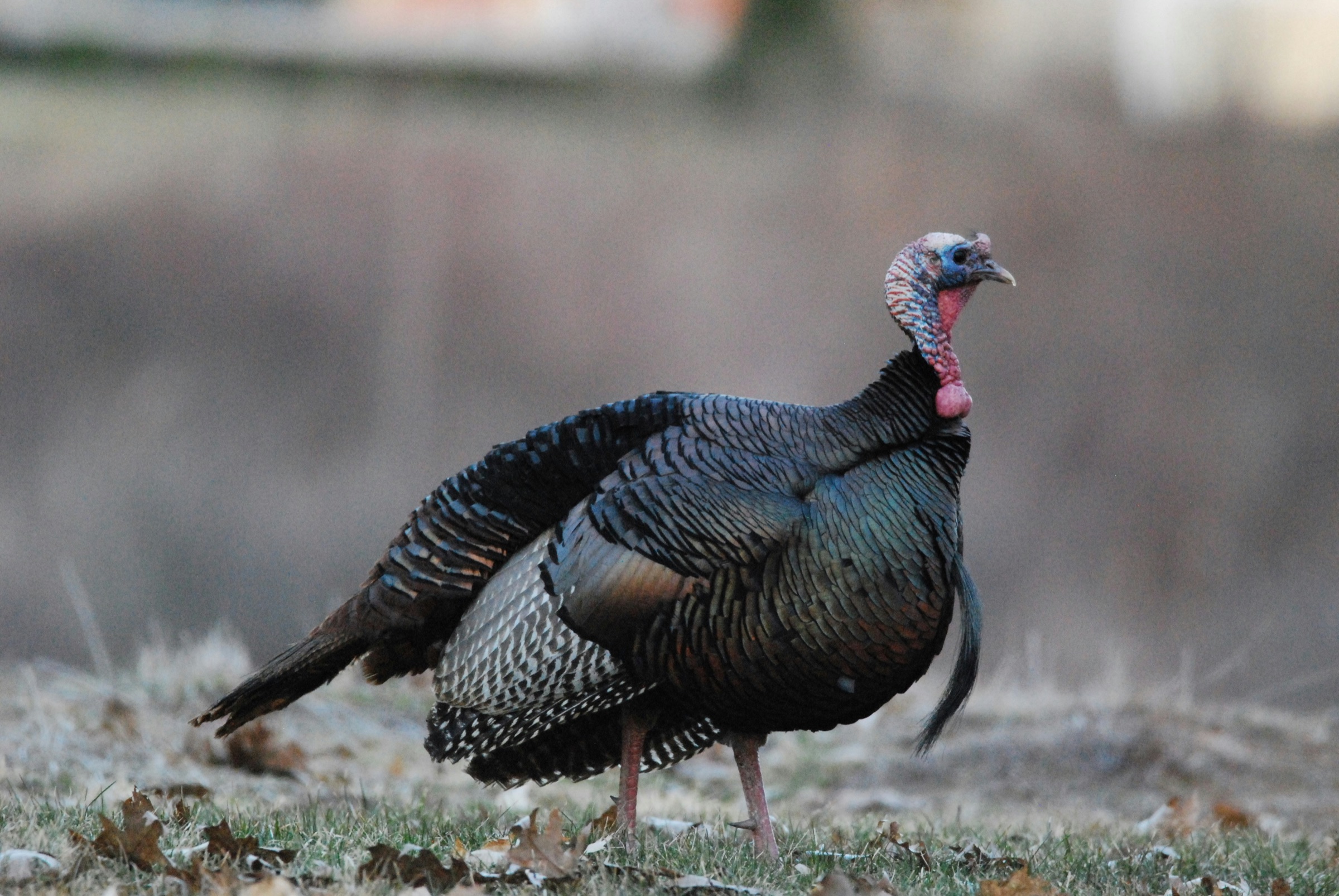
Drive south out of Thomasville on a cold morning in November and the country opens in a way that is hard to mistake. Tall, widely spaced pines stand over ground that is grassy rather than brushy, the trunks scorched dark to a man's height, the understory so open that you can see a hundred yards between the trees. Dirt lanes run straight and clean through it. There are no gates you are invited to pass, because nearly all of this land is private, and it has been managed with fire for longer than most of the people who work it have been alive.
This is the Red Hills, a region of South Georgia and North Florida that the conservation world knows for bobwhite quail. Hunters who know it by reputation think of pointing dogs and coveys rising from wiregrass. A wild turkey hen sees something different. She sees a place where grass grows tall enough in spring to hide a nest, where the canopy is open enough for that grass to grow at all, and where insects are thick at ground level in the weeks when her poults will need them most.
The tale of turkeys in this landscape is partly one of overlap and partly one of conflict. The same prescribed fire that keeps longleaf country open for quail also builds turkey nesting and brood habitat, yet quail and turkeys do not nest on the same calendar, and the timing of a burn can help one bird while costing the other. It is also a story with real gaps. The Red Hills are private, and the public data do not break out turkey numbers for the plantation belt, so some claims you will read about this region have never been measured. This report follows the bird through its year on fire-managed ground, leans on the studies from two comparable southwest Georgia pine savannas where nests were actually counted, and says plainly where the evidence stops.
A Fire-Made Landscape: Longleaf, Wiregrass and the Red Hills
What Tall Timbers says the region is
Tall Timbers, the research station and land trust based near Tallahassee, describes the core of the Red Hills as 436,000 acres, with nearly 40 percent of that core permanently protected. It says the Greater Red Hills holds the largest concentration of gamebird preserves in the United States and the largest community of red-cockaded woodpeckers on private lands. Its Land Conservancy was created in 1990. On the same page, Tall Timbers places the Red Hills in South Georgia and North Florida and describes conservation work linking the core area from Albany, Georgia, to the Gulf Coast. It names Herbert L. Stoddard and his associates Ed and Roy Komarek as pioneers of fire science, and it calls private landowners the largest source of prescribed fire in the country.
Those are the numbers an ecologist can stand behind. Tall Timbers does not print an acreage of the Red Hills that is under coordinated burning,. You will see claims of 100,000 acres or more under a shared fire program. Treat those with caution. What the record supports is a large, privately held, fire-dependent region in which burning is an ordinary part of land management, not a specific burned-acre total.
Why longleaf and fire go together
Longleaf pine savanna is an ecosystem that depends on frequent, low-intensity fire. Without it, hardwoods and dense shrubs move in, the grass layer thins, and the open, sunlit character that defines the community disappears. Wiregrass and other bunchgrasses carry the flames, which in turn keep the understory open and the soil exposed to light. A Tall Timbers statement on its conservation page puts the idea simply: these forests need prescribed fire to stay healthy.
That structure, open pine overstory with a grassy ground layer, is the habitat quail managers work to maintain, and it is the habitat in which the best-studied turkey nesting data from this part of Georgia were collected. It is worth being precise here. The nest studies discussed below were done at the Joseph W. Jones Ecological Research Center in Baker County and on Silver Lake Wildlife Management Area in Decatur County, both in southwest Georgia and both managed with frequent fire. They are close cousins of the Red Hills plantations, not the plantations themselves, and no equivalent peer-reviewed nest census from inside a Red Hills preserve was found. The sensible reading is that the plantation belt shares the vegetation structure those studies measured, not that it has been proven to produce the same results.
Tall Timbers and the quail connection
Anyone who wants the full story of fire and bobwhite in this region should read the live essays on the topic, including the one on bobwhite ecology and the longleaf connection and the history of Tall Timbers and the Red Hills shoot tradition. This report stays with the turkey, and adds only the places where the two birds' needs diverge.
The Nesting Season on Burned Ground
Timing: when hens start laying
Turkey hens in the Southeast are fairly synchronous. A February 19, 2026 Tall Timbers article, which draws heavily on Game Bird Director Dwayne Elmore, says that in the Southeast many hens are laying by the end of March and mid-April. The Georgia Wildlife Resources Division's turkey question-and-answer document, which carries no publication date, says the median onset of incubation in University of Georgia GPS work is about April 10, with little difference between north and south Georgia. That work was done at Cedar Creek and B. F. Grant wildlife management areas, not in the Red Hills, so it is a statewide marker rather than a plantation figure.
The practical meaning is that by the time most quail managers finish their burning, in many places the turkeys are already sitting. The same article places bobwhite laying at the end of April and early May, the point at which quail-focused managers usually try to stop burning, while turkey laying starts a month or so earlier.
What a nest site looks like
The best nest-site data from this landscape come from a study by Little, Nibbelink, Chamberlain, Conner and Warren, published in 2016 in the journal Ecological Processes. The researchers monitored eastern wild turkey nests from 2011 to 2013 in two southwest Georgia pine savannas, both managed with frequent prescribed fire at a return interval of three years or less. They modeled habitat at six spatial scales, from the nest itself out to a 200-meter radius, and found that conditions right at the nest, within about 15 meters, mattered most.
Two measures carried the signal. For every 10 centimeter increase in mean vegetation height, a spot was about 26.8 percent more likely to hold a nest. For every 10 percent increase in canopy closure, it was about 18.5 percent less likely. In plain terms, hens chose taller ground cover under a more open canopy. The authors concluded that managers should create early successional vegetation that conceals nests from predators.
The paper also reports what did not matter much. Total ground cover, edge density and broad land-cover classes such as mature pine, mixed pine and hardwood, and shrub or scrub had little effect. That finding matters for one common belief in turkey management, covered below, that denser shrub patches are what hens want.
Incubation, clutch and the hazards of a ground nest
A turkey nest is a shallow bowl on the ground, and the hen sits on it for about a month. The Forest Service's Fire Effects Information System review of the species, written in April 1992 and last updated in 2025, gives incubation as 28 days and clutch size as 10 to 13 eggs, with precocial young. A 2012 study from the same southwest Georgia sites used a 29-day incubation period in its calculations. Those day counts differ by a day because they come from different sources and methods, and neither is a Red Hills measurement. The 28 days is a species-level figure from a review that predates the Georgia work by two decades.
For a ground-nesting bird, fire is one of several risks, and not the largest. Williams and colleagues, writing in the 2012 Proceedings of the Southeastern Association of Fish and Wildlife Agencies, followed nests at the Jones Center and Silver Lake in 2011 and 2012. The abstract reports 51 nests and a daily nest survival of 98 percent, which over a 29-day incubation period works out to about 56 percent nest success when growing-season fire is absent. Depredation accounted for 32.7 percent of the impact on nest success, and growing-season fire for 11.5 percent. Six of seven nests that were exposed to fire failed after the burn. The Tall Timbers article, which draws on a University of Georgia thesis from the same work, counts 52 nests, with six destroyed by growing-season fire and four of those hens re-nesting. The two sources count 51 and 52, and this report prints both rather than reconciling them. The Tall Timbers article adds that the average burn in that work was 58 acres at the Jones Center and 28 acres at Silver Lake, small enough that a hen flushed from one unit has unburned ground nearby.
The first two weeks
Turkey young are precocial, meaning they are mobile soon after hatching, and the first weeks are the dangerous ones. The same 2012 paper reports that poult survival over the first two weeks was 35 percent among 23 broods monitored, with one brood lost to a growing-season fire. That is two-week survival of broods, not a measure of poults produced per hen, and it comes from a small sample on two properties.
Poults, Insects and Open Ground
Why the ground layer matters
Young turkeys are not seed eaters. The Forest Service species review says poults rely on insects for protein, and it lists snails, spiders and grasshoppers among the small animals turkeys eat. A good brood habitat therefore has to produce insects at ground level and let a small bird move through it. The same review describes the best poult cover in the Southeast as a grass and forb mix roughly 16 to 28 inches tall, scattered with trees, and says openings should make up a modest share of the range so that hens with broods do not have to travel far between feeding areas.
An open-canopied longleaf savanna with a thick native grass and forb layer fits that description well. The review is general and decades old, and no Red Hills insect count was found, so the point is about structure, not a measured abundance. What can be said is that the vegetation that predicts nest sites in the Georgia studies, tall ground cover under an open canopy, looks very much like the vegetation the species review recommends for broods.
What Georgia's brood survey does and does not tell us
Georgia's Wildlife Resources Division has run a brood survey in June, July and August since 1978, with results compiled statewide and by physiographic region. In its March 19, 2026 season release, the division's wild turkey project coordinator, Emily Rushton, said that the statewide reproduction rate averaged 1.8 poults per hen in 2024, tying 2021 for the highest production year of the past decade. The Piedmont region had the strongest estimate at 1.9. She added that season-date and bag-limit adjustments were made in 2022, and that it is too soon to say how they have affected the population.
Nothing in that release gives a figure for southwest Georgia or the Red Hills. This is important because it is often said that plantation turkeys reproduce better than the state average. That may be true, and the habitat logic points in that direction, but no agency page states a Red Hills density or a poults-per-hen ratio for the plantation belt, so treat the claim as unproven. The 1.9 is a Piedmont figure, and the 1.8 is a statewide one.
Quail Plans and Turkey Plans: Where They Diverge
Same fire, different calendar
Quail managers and turkey managers want the same kind of ground, but the details of timing are not identical. The February 2026 Tall Timbers article is direct about this. It recommends burning on a two or three year cycle and concludes that the need for fire to build turkey habitat far outweighs the potential impact on nests. Elmore calls fire frequency the trump card. For the Coastal Plain the article gives the general recommendation of burning 30 to 50 percent of a property in a checkerboard, and Elmore suggests units of about 40 to 50 acres, so that unburned cover sits next to freshly burned ground. That checkerboard figure is a management recommendation, not a measured Red Hills total.
Where the plans diverge is the season. The article says burning in late winter or early spring, from December through mid-March, can still benefit turkeys, especially in places such as hardwood edges and wetlands where turkeys are more likely than bobwhite to be found. Quail nest later than turkeys, so a burn that comes after most turkey hens are already sitting can still be early for bobwhite. Elmore's summary is that a plan built to maximize turkeys will not be perfect for quail, and the reverse is also true.
How much does growing-season fire cost a turkey hen?
The data suggest the cost is real but bounded. The Georgia studies above found that depredation, not fire, was the larger drain on nest success, and that fire hurt the nests it actually touched. A retired Tall Timbers ornithologist, Jim Cox, is cited in the same article for the finding that hens avoided nesting in areas that had not been burned in the previous two years, and that growing-season fire in native groundcover left unburned for two or more years is unlikely to threaten many nests. Turkeys, he noted, will nest in old-field habitat that is two to three years rough.
The upshot is that a landowner who burns on a two to three year rotation, in modest units, leaves hens plenty of tall cover to choose from in any given spring. Elmore's advice to spread burns out and keep units small guards against the opposite case, a large block burned all at once while hens are sitting.
The shrub question
A popular rule of thumb says that turkey-focused management benefits from somewhat denser shrub cover to conceal nests. It is a reasonable idea, and the Georgia nest study tested it. Shrub and scrub land cover had little influence on nest placement, while vegetation height and canopy openness did. Hens in those pine savannas were selecting grass-height cover under an open canopy. Managers who want to help turkeys in longleaf country may be better served by protecting rough, tall bunchgrass from the scorched earth of a late burn than by planting shrubs. That is an inference from two properties and one paper, not a regional rule, but it is the finding the evidence supports.
Seasons, Harvest and the Georgia 2027 Card
The 2027 spring season
The Georgia spring turkey season for 2027 appears on the state's eRegulations big-game table, last updated August 27, 2026. A special opportunity for youth under 16 and mobility-impaired hunters runs March 20-21, 2027, and does not apply to public land unless an area listing says so. The general season on private land runs March 27 through May 15, 2027. On wildlife management areas, voluntary public access areas and national forest, it runs April 3 through May 15, 2027. The limit is one gobbler a day and two a season, and on those public lands it is one gobbler per area per person. The table lists no fall turkey season. Confirm all dates with the Georgia Department of Natural Resources before you hunt, since the table can change before the season.
For reference, the 2026 season, now closed, opened on private land on March 28 and on public land on April 4, and closed on May 15. Georgia's March 19, 2026 release says every turkey hunter must carry a free harvest record, write the date and county on it before moving the bird, and report through Game Check within 24 hours. Confirm that those requirements carry into 2027.
What the harvest numbers show
Georgia's fiscal year 2024 turkey harvest report estimates that about 38,810 hunters took part and harvested an estimated 11,924 gobblers, up 9 percent from 2022, with no post-season survey in 2023. The harvest rate was 0.31 turkeys per hunter. Jakes, the juvenile males, made up 793 birds or 7 percent of the estimated harvest. The Upper Coastal Plain accounted for 32 percent of the harvest and the Piedmont for 37 percent, with the Lower Coastal Plain at 14 percent, the Ridge and Valley at 13 percent and the Blue Ridge at 4 percent. The report notes that 2022 was the first season under the new statewide turkey regulations and that total reported harvest declined on public and private land in the years after the change. It also records hunter satisfaction of 63 percent.
On wildlife management areas in 2024, 12,032 hunters harvested 706 gobblers, with jakes making up 13 percent of the area harvest and an overall success rate of 5.9 percent, up from a low of 4.9 percent in 2022. The report says Game Check data are reported by county, but the text does not print totals for the counties around the Red Hills, and which of the regional shares applies to them is not stated.
Private ground and public ground
The Red Hills plantations are private. Access is by invitation or by arrangement with the landowner, and there is no public hunting on them. Hunters who want to experience a fire-managed southwest Georgia pine landscape on their own have a public option in Silver Lake Wildlife Management Area, which Georgia lists at 9,200 acres in southern Decatur County with deer, turkey, small game, quail and waterfowl. The Georgia page does not print turkey dates for the area, so check the area's own listing and the state card. Public land is where people hunt on their own. Do not assume that guiding or any paid activity is allowed on a wildlife management area, and confirm the rules with the Georgia Department of Natural Resources before planning any trip.
Across the line in Florida, the Fish and Wildlife Conservation Commission's 2026-2027 season page splits its spring dates at State Road 70, which crosses the southern half of the peninsula, so the Florida Red Hills around Tallahassee fall in the northern zone, listed at March 20 to April 25. The page also says its dates do not apply to wildlife management areas, so check with FWC before planning a hunt on the Florida side.
What It Means on the Ground
A year on a fire-managed tract
The calendar of a Red Hills tract shows how fire and turkeys fit together. November comes just before the December to mid-March window that the Tall Timbers article says can still benefit turkeys. Hens begin laying by late March and into April, and incubation in Georgia peaks around April 10 on the university's GPS data. The spring season closes on May 15, hatching follows, and the poult-rearing weeks of May and June are when ground-level insects matter most. Georgia's brood survey counts hens and poults in June, July and August.
What a landowner can reasonably do
For landowners, the evidence supports a modest list. Keep a regular rotation at the two to three year frequency Tall Timbers recommends, since hens in the Jones Center and Silver Lake studies chose tall ground cover under an open canopy. Burn in modest units, since a 40 to 50 acre checkerboard leaves unburned cover next to fresh ground. Where turkeys are a goal, consider shifting some burning into the December to mid-March window. Protect rough, tall bunchgrass on part of the property each spring. And keep records, because the greatest gap in this region's turkey story is data, not habitat.
What to watch for
Several things are worth monitoring. Georgia's brood survey dashboard holds several years of poults-per-hen estimates by region, and it is the right place to look for a regional trend. The state's Game Check data are reported by county. Tall Timbers' research and articles are the best source for the fire side of the question. And the wider recruitment story, with Southeast turkey populations under pressure in many states, is told in the live post on the recruitment decline across the Southeast.
Key Takeaways
Tall Timbers describes the Red Hills core as 436,000 acres, with nearly 40 percent permanently protected, and calls private landowners the largest source of prescribed fire in the country.
The best nest-site data come from two frequently burned southwest Georgia pine savannas: nests were more likely with taller vegetation (about 26.8 percent per 10 centimeters) and less likely with closed canopy (about 18.5 percent per 10 percent), while shrub cover had little influence.
In the 2011 and 2012 nesting seasons at those sites, about 56 percent nest success was estimated without growing-season fire, depredation mattered more than fire, and two-week survival of 23 broods was 35 percent.
Quail and turkey plans differ mainly in timing: a Tall Timbers article says December through mid-March burning can still benefit turkeys, and gives a 30 to 50 percent checkerboard of units of about 40 to 50 acres as a Coastal Plain guideline.
Georgia's statewide production was 1.8 poults per hen in 2024; no Red Hills or southwest Georgia ratio has been published, so claims that plantation turkeys beat the state average are unproven.
The 2027 Georgia season is March 20-21 for youth and mobility-impaired hunters, March 27 through May 15 on private land and April 3 through May 15 on wildlife management areas, one gobbler a day and two a season. Confirm with Georgia DNR.
Red Hills plantations are private; public hunters have places like Silver Lake WMA, and should confirm area rules, including that paid guiding is not assumed on public land.
For the Operators
If you run a plantation, a lodge or a land-management business in the Red Hills or the wider South Georgia pine belt, you work in one of the most studied fire landscapes in the country, and most of your clients know it by reputation and almost nothing else. The story they search for is rarely the quail count. It is how a place like yours works: why the pines are scorched, why the grass is tall, why a burn takes place in March and not June.
The gap between what is known and what is said is where an honest operator can stand out. The public record shows what burning does for nesting cover, what it costs the occasional nest and why timing matters, and it also shows plainly that nobody has published a Red Hills turkey density. A landowner who writes down their own rotation, their own burn calendar and their own observations of hens and broods, with clear dates and without claiming numbers nobody has measured, becomes a source that other writers and search tools can cite. Ecology written that way builds trust before a first call. Pine & Marsh helps outdoor operators put that kind of knowledge on their own sites.
Frequently Asked Questions
What fire return interval did the southwest Georgia turkey nest study use?
Little and colleagues (2016) studied two pine savannas in southwest Georgia, the Jones Center in Baker County and Silver Lake Wildlife Management Area in Decatur County, both managed with frequent prescribed fire at a return interval of three years or less. Tall Timbers' February 2026 article recommends a two or three year frequency. Those are study and recommendation figures, not a measured Red Hills standard.
Does Georgia publish a poults-per-hen number for the Red Hills?
No. The division's March 19, 2026 release says statewide reproduction averaged 1.8 poults per hen in 2024, tying 2021 for the highest in a decade, with the Piedmont at 1.9. The release gives no ratio for southwest Georgia or the Red Hills. Check the state's brood survey dashboard for regional estimates.
When does Georgia's 2027 spring turkey season open?
The state's eRegulations table, last updated August 27, 2026, lists a youth and mobility-impaired special opportunity on March 20-21, 2027, private land from March 27 to May 15, and wildlife management areas, voluntary public access areas and national forest from April 3 to May 15. The limit is one gobbler a day and two a season. Confirm dates with Georgia DNR before you hunt.
Does growing-season fire destroy most turkey nests?
Not in the Georgia studies. Williams and colleagues (2012) found depredation accounted for 32.7 percent of the impact on nest success and growing-season fire for 11.5 percent. Six of seven nests exposed to fire failed after the burn, and the Tall Timbers article says four of six hens that lost nests to fire re-nested. Tall Timbers reports that burns in that work averaged 58 acres at the Jones Center and 28 acres at Silver Lake.
Is the 28-day incubation figure a Red Hills measurement?
No. The 28 days and a clutch of 10 to 13 eggs come from a Forest Service species review written in 1992. The 2012 southwest Georgia study used 29 days in its calculations. Neither was measured on Red Hills plantations.
Do denser shrubs help turkey nesting in longleaf savanna?
The Georgia nest study did not find that. Shrub and scrub cover had little influence, while taller vegetation under an open canopy made nests more likely. That result is from two properties, so treat it as a strong local signal, not a rule for every plantation.
Can the public hunt turkeys in the Red Hills?
The Red Hills plantations are private, so access is by arrangement with a landowner. Public hunters in southwest Georgia can look at areas such as Silver Lake WMA, which Georgia lists at 9,200 acres in Decatur County with turkey among its species. Confirm the area's dates and rules with Georgia DNR first.
Citations and Sources
Tall Timbers, Land Conservation of Tall Timbers (436,000-acre core, protected share, preserves, red-cockaded woodpeckers), https://talltimbers.org/land-conservation/land-conservation-of-tall-timbers/ (accessed November 2026)
Tall Timbers, Does Growing-Season Prescribed Fire Affect Turkey Nesting? February 19, 2026, https://talltimbers.org/articles/does-growing-season-prescribed-fire-affect-turkey-nesting/ (accessed November 2026)
Georgia Department of Natural Resources, Talk Turkey, Georgia Turkey Hunting Season (March 19, 2026), https://georgiawildlife.com/index.php/talk-turkey-me-georgia-turkey-hunting-season (accessed November 2026)
eRegulations, Georgia Big Game Seasons, Dates and Limits (last updated August 27, 2026), https://www.eregulations.com/georgia/hunting/big-game-seasons-dates-limits (accessed November 2026)
Georgia Department of Natural Resources, Statewide Turkey Harvest Annual Report 2024, https://georgiawildlife.com/sites/default/files/wrd/pdf/harvest-summaries/turkey/Statewide%20Turkey%20Harvest%20Annual%20Report%202024.pdf (accessed November 2026)
Georgia Department of Natural Resources, Harvest Summaries (brood survey description), https://georgiawildlife.com/harvest-summaries/ (accessed November 2026)
Georgia Department of Natural Resources, Turkey Decline Q&A (undated), https://georgiawildlife.com/sites/default/files/wrd/pdf/research/Turkey%20Decline%20Q%26A.pdf (accessed November 2026)
Georgia Department of Natural Resources, Silver Lake Wildlife Management Area, https://georgiawildlife.com/silver-lake-wma (accessed November 2026)
U.S. Forest Service, Fire Effects Information System, Meleagris gallopavo species review (written April 1992), https://research.fs.usda.gov/feis/species-reviews/mega (accessed November 2026)
Florida Fish and Wildlife Conservation Commission, 2026-2027 Season Dates, https://myfwc.com/hunting/season-dates/ (accessed November 2026)
Little, A. R., N. P. Nibbelink, M. J. Chamberlain, L. M. Conner, and R. J. Warren, Eastern wild turkey nest site selection in two frequently burned pine savannas, Ecological Processes 5:4 (2016), https://doi.org/10.1186/s13717-016-0051-7 (accessed November 2026)
Williams, M. M., and others, Effects of growing-season prescribed fire on eastern wild turkey nest survival, nest success, and poult survival in southwestern Georgia, Proceedings of the Southeastern Association of Fish and Wildlife Agencies (2012), https://seafwa.org/journal/2012/effects-growing-season-prescribed-fire-eastern-wild-turkey-nest-survival-nest-success (accessed November 2026)
Explore More
Wild Turkey Biology and Population Ecology: A Southeast Field Synthesis
Turkey Recruitment Decline Across the Southeast: Biology, Causes, and Conservation Responses
Bobwhite Quail: Ecology, Habitat Decline, and the Longleaf Pine Connection
The Red Hills Heritage: Tall Timbers, Shoot Dogs, and the Science Behind a Covey Rise
Marketing a Red Hills Quail Plantation: A Marketing Playbook


Comments