
Wild Turkey of Louisiana's Kisatchie National Forest: The Winn District and the Longleaf Uplands
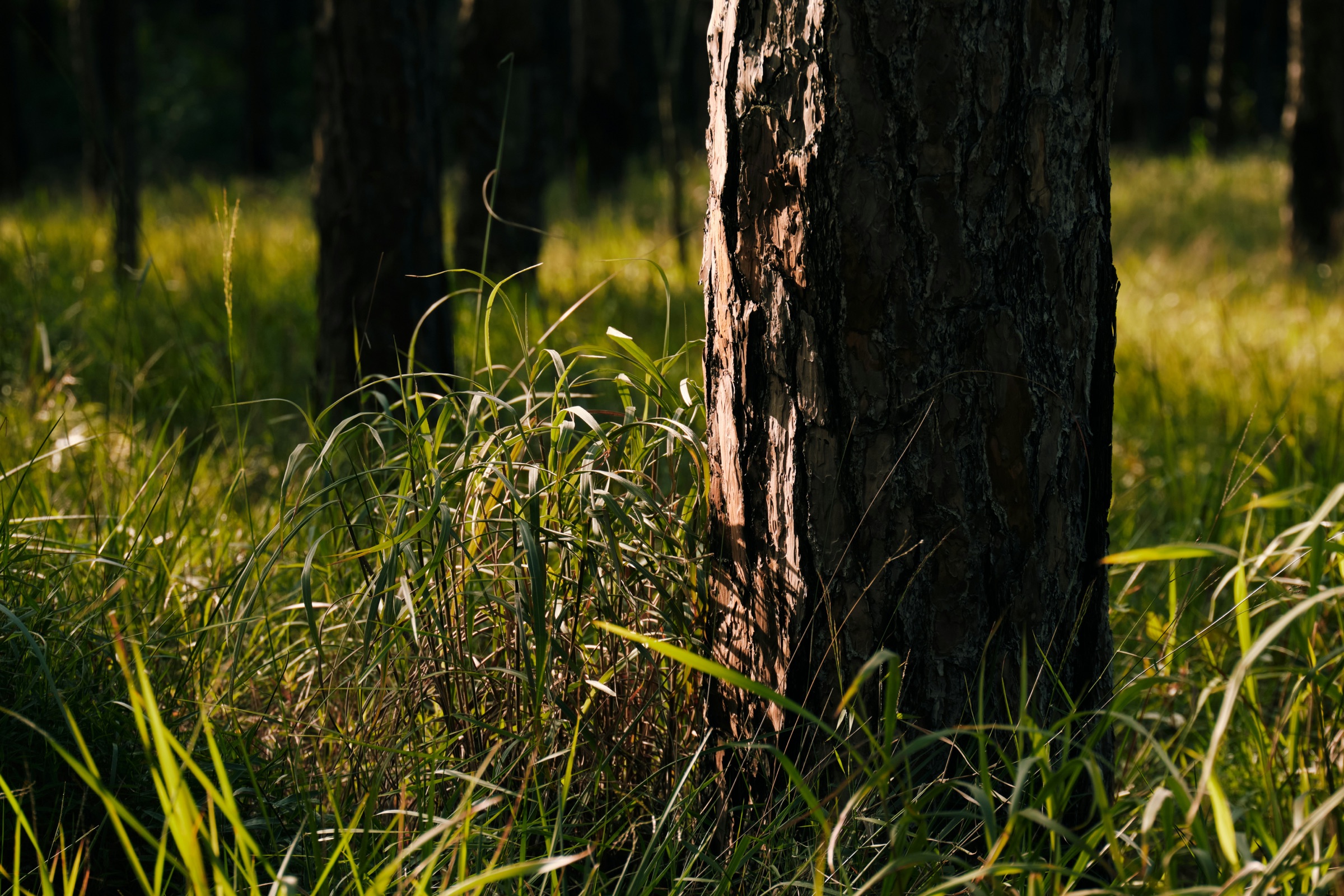
Drive north out of Winnfield on a clear morning in early November and the land begins to roll. The hardwood bottoms along the creeks thin out, and the ridges above them carry pine, tall and widely spaced, with a ground layer of grass that has gone to rust and gold after the first cool nights. Where the Forest Service has put fire through in the last year or two, the trunks are blackened to head height and the ground beneath is already greening. Where it has not, the understory is thicker, a tangle of young hardwoods and shrubs that closes the view at fifty feet. You can read the burn history of the forest from the driver's seat.
That patchwork is the whole story of turkeys on Kisatchie National Forest. The Eastern wild turkey (Meleagris gallopavo silvestris) needs open ground to feed, thick enough cover to hide a nest, and a safe roost nearby, and in a pine forest on Louisiana's Coastal Plain all three depend on how recently, and how often, the ground has burned. Fire is not a side issue here. It is the operating system.
This post is the ecology companion to our marketing coverage of Kisatchie, and it stays on the biology. It follows the forest's own numbers on longleaf pine and prescribed fire, the research that actually tracked turkeys on this forest, the production data the Louisiana Department of Wildlife and Fisheries (LDWF) publishes, and the 2027 spring rules for the Winn Ranger District, with every figure dated.
The Forest and Where the Winn District Sits
What Kisatchie is, in the Forest Service's numbers
The Forest Service describes Kisatchie as Louisiana's only national forest, with over 604,000 acres spread across seven parishes: Vernon, Rapides, Grant, Natchitoches, Webster, Claiborne and Winn. The agency's FAQ page, last updated March 10, 2026, says the forest was designated a national forest in 1930. It is managed through five ranger districts: Calcasieu (over 183,000 acres, in two units), Caney (32,000 acres), Catahoula (121,500 acres), Kisatchie (a little over 102,000 acres, with the 8,700-acre Kisatchie Hills Wilderness) and Winn (over 164,000 acres in Winn, Natchitoches and Grant parishes).
A note on names, because this one trips people up. Kisatchie has no Bienville Ranger District, and Bienville Parish is not on the Forest Service's list of the forest's parishes. Bienville sits in Louisiana's private piney-woods country, and in LDWF's turkey survey it belongs to a different habitat region than Winn does. This report is about the Winn District and the forest's longleaf uplands. For the private working-timber country of Winn and Bienville parishes, see our companion marketing piece linked at the end.
A forest in two habitat regions
The Forest Service's FY 2020 and 2021 monitoring report places four of the five districts, Calcasieu, Catahoula, Kisatchie and Winn, in what LDWF calls the western longleaf pine habitat area, and Caney in the northwest loblolly, shortleaf and hardwood area. The report describes the western region's soils as Coastal Plain, Mississippi Terrace and Loessial Hills, Flatwoods, Coastal Prairie and recent alluvium, and notes that the region's historic major timber type was longleaf pine, which more recent timber practices have largely converted to loblolly plantations. That distinction between the Winn side and the Caney side matters for turkeys, because the two regions are tracked separately in the state's production survey.
Longleaf, Bluestem and Fire: The Habitat the Forest Is Trying to Rebuild
The restoration numbers and their age
The most recent plant-community inventory in the Forest Service's published monitoring reports is in the FY 2020 and 2021 biennial report. It says the forest has approximately 128,088 acres in the longleaf pine plant community, compared with a forest plan goal of 263,000 acres. The same report puts shortleaf pine and oak-hickory at approximately 16,611 acres against a plan goal of 62,000 acres. The plan goals come from the forest's 1999 revised land and resource management plan. These are figures from the 2020 and 2021 fiscal years, and the report says there is no indication that the plan's projected annual final harvest for longleaf restoration, 1,456 acres, will be met. Planting continues to add small acreages: 253 acres of longleaf seedlings in FY 2020 and 705 acres in FY 2021, plus about 71 and 173 acres of shortleaf. One FY 2021 entry covers 90 acres replanted on the Winn Ranger District after a May 2019 tornado. Check the Forest Service's Kisatchie pages for any newer biennial report.
Bluestem, and why the understory matters to a turkey
The 1999 plan describes native bluestem grasses as the forest's dominant forage species. Bluestem is a bunchgrass that grows in clumps with open ground between them, and a stand of it burned on a regular schedule is close to ideal turkey ground: there is cover above the soil where a hen can hide a nest, and bare patches between the clumps where a poult can walk and where insects live. The plan names bluestem in general terms rather than as a mapped acreage, and its extent on the ground depends on how much of the pine is kept open by fire.
How often the forest is supposed to burn, and how often it did
The forest plan sets the prescribed fire objective at 80,000 to 160,000 acres a year, a figure the FY 2020 and 2021 report cites as amended in 2021. The same report records what was done: approximately 69,935 acres in FY 2020 and 44,466 acres in FY 2021, both below the objective's low end. In FY 2020 almost all of that, about 69,440 acres, was dormant-season burning and 495 acres were growing-season burns. In FY 2021 the split was approximately 25,594 acres dormant and 18,872 acres growing season. The report adds that two tornadoes, two hurricanes and hard freezes in those years caused what it calls historic damage to the forest and wildlife habitat.
The 1999 plan also gives a return interval for upland stands. Its guideline FW-258 says to burn upland stands once every 2 to 5 years, and to vary the timing, duration and intensity of burning to maximize the diversity of ecological conditions and to mimic natural fire. Several of its longleaf management areas repeat a landscape-scale interval of 2 to 5 years with increased emphasis on growing-season burns. The plan's interval is 2 to 5 years, not a fixed 2 to 3 year rotation, and the burn totals above are for FY 2020 and FY 2021. Check with the Forest Service for more recent annual totals.
Storms as habitat
The monitoring report also reports weather as a habitat force. It says the recent tornadoes and hurricanes significantly thinned upland forest overstories in many areas of the western longleaf part of the forest, which may improve upland turkey habitat over time, and that the same wind events felled many hard mast-producing trees in the uplands and, more significantly, the bottomlands, decreasing an important food resource. Elsewhere it notes the storm damage was heaviest on the Calcasieu District. It is a rare example of an agency document stating both sides of a disturbance for turkeys in the same paragraph.
What the Turkeys Actually Do: Research on the Kisatchie Landscape
The Kisatchie fire studies
The best evidence about turkeys and fire on this forest comes from researchers at the University of Georgia and the LSU AgCenter who followed radio-marked hens on Kisatchie National Forest in west-central Louisiana in 2014 and 2015. Yeldell and colleagues published three papers from that work in 2017.
In the Journal of Wildlife Management paper on habitat selection, the authors followed 46 hens fitted with GPS transmitters from February through August, on a landscape where pine stands managed with prescribed fire made up more than 60 percent of the area and fire returned every one to three years. Hens selected mature pine stands burned zero to five months earlier while laying their first clutch. They avoided stands two growing seasons past fire before nesting and three growing seasons past fire while brooding, and they did not select pine stands at or beyond three growing seasons post-fire during any reproductive period. The authors concluded that frequent burning maintains vegetation that hens use at some point in the breeding season.
A companion paper in the same journal looked at nesting. Radio-marked hens, 55 of them and 69 nests across the two years, chose stands burned two years earlier for nesting, and nests in stands burned three or more years earlier had lower survival than nests in stands burned the current year. The authors suggested that burning on a three-year return is compatible with turkey management in southeastern pine forests. A third paper in Forest Ecology and Management covers hen use of pine stands immediately after prescribed fire.
Taken together these three papers support a plain reading. On this landscape, hens used recently burned pine at the front end of the breeding season, nested in stands burned about two years earlier, and did better in stands that had not gone three years without fire. Two cautions apply. These are 2014 and 2015 results from part of the forest, so none of the numbers should be assigned to the Winn District alone. And the research measured turkey behavior and nest survival, not population change on the forest.
Fire in other longleaf systems
Our Conecuh post covers turkey and fire research from other longleaf forests. Those are different landscapes, and their results are best read as supporting the general picture, not as Kisatchie measurements.
What holds production back
The monitoring report is direct about low production in this region. It says the region's lack of suitable habitat is believed to be the main reason for low populations, which points back to the fire-and-structure story and not to chemistry.
Population Signals: What Louisiana Publishes
The poult survey
LDWF runs a summer observation survey each year, July and August, and reports poults per hen as an index of production by habitat region. It is an index, not a population estimate. The monitoring report quotes the series for the western longleaf region: a mean of 1.25 poults per hen for 2018 and 2019 against 0.85 for 2020 and 2021, with an exceptionally low 0.5 in 2021. LDWF's 2025 survey report, which covered observations from July 1 through August 31, 2025, lists 1.16 poults per hen for the western longleaf region, with Winn, Grant, Natchitoches, Rapides and Vernon parishes among the region's parishes, and describes the region's production as stable compared with the prior year but, by the agency's own ranking, poor. The same survey lists 1.05 for the northwest region that includes Caney's side of the forest and Bienville Parish. LDWF defines poor production as below 2.0 poults per hen, and the survey notes long-term declines in four of five regions.
None of those values is a Winn District number. The survey reports regions, not parishes or the national forest, and LDWF notes that some areas within a region produce more or less than the regional average. The agency's own reading for the western longleaf region in 2025 is stable and poor.
Harvest
The LDWF turkey tagging program validates harvest statewide, and its 2024 program overview and annual report lists 3,695 validated tags for 2024. The report says adult gobblers typically make up more than 80 percent of the reported annual harvest, and it lists an LDWF and LSU research project on male harvest rates on Kisatchie National Forest. A state-level number is not a forest number, so ask LDWF for any Kisatchie-specific results.
Red-cockaded woodpeckers and fire
The red-cockaded woodpecker is the species most often cited when Kisatchie's burning is defended, and the two programs overlap in the pine uplands: the monitoring report says burning focuses on an open understory and groundcover diversity and that reforestation aims in part at future woodpecker habitat. The U.S. Fish and Wildlife Service downlisted the woodpecker from endangered to threatened in a final rule scheduled for publication on October 25, 2024, and said the species numbers about 7,800 clusters range-wide. The monitoring report's older wording that the woodpecker is endangered predates that rule. Neither document measures a turkey benefit from woodpecker-driven fire, so any co-benefit for turkeys is a reasoned expectation from the habitat mechanics and not a published result.
Hunting the Winn District: The 2027 Rules and the Public-Land Line
Dates, limits and licenses
LDWF's 2026-2027 Louisiana Hunting Regulations pamphlet states that all seasons for Kisatchie National Forest in that document are for 2026-2027 only, and it prints the spring 2027 turkey schedule. On Kisatchie, the Caney Ranger District is open April 3 to 18, 2027, and all remaining Kisatchie lands, which include the Winn Ranger District, are open April 3 to 25, 2027. A youth hunt runs March 26 to 28, 2027 on all ranger districts except the Vernon Unit lands inside Fort Polk-Vernon Wildlife Management Area. Those dates apply to the national forest. The private-land schedule in the same pamphlet is different: Area A, which includes Winn, Grant, Natchitoches, Vernon, Claiborne, Webster and Bienville parishes, runs April 3 to May 2, 2027 on private land only, so a hunter on a Winn Parish farm and a hunter on the national forest do not follow the same calendar. Confirm current dates with LDWF and the Forest Service before you go.
The limit is one adult gobbler a day and two gobblers for the season. The pamphlet defines an adult gobbler by at least one of white barring on the wing feathers to the tip, tail feathers of equal length, a beard longer than 6 inches, or a spur at least a half inch long, and it allows a properly licensed youth under 18 one jake with a beard under 6 inches per season. Hunters 18 and older need a basic hunting license and a wild turkey license, or an equivalent combination, plus turkey tags, and hunters 17 or younger need a youth hunting license and tags. A bird must be tagged before it is moved from the kill site and validated within 72 hours. Shooting hours are one half hour before sunrise to one half hour after sunset.
Forest-specific rules
The pamphlet states that dogs, baiting, electronic calling devices and live decoys are prohibited for turkey. It also notes that all dogs are prohibited during turkey season for hunting dog training on the forest. It adds that hunting within 50 feet of the centerline of any forest road is prohibited, that centerfire rifles may not be carried while hunting on the forest except during deer seasons, and that a proposed rule prohibiting the hunting methods known as fanning or reaping on WMAs and other public lands is under consideration and may be in effect for the 2027 season. That proposal is not yet a rule as printed, so check the LDWF regulations page before the season.
The Forest Service's FAQ says hunting on the forest requires a state hunting license and a free permit for the national wildlife management preserves. The pamphlet identifies those preserves as Catahoula, 36,000 acres in Grant and Winn parishes, and Red Dirt, 38,000 acres in Natchitoches Parish, and says a season permit is required for them, with a free self-clearing daily permit for turkey hunts. Those preserves have their own schedules.
Public land, guided hunts and responsible practice
Kisatchie is national forest land, and hunting on it is do-it-yourself public hunting. The Kisatchie FAQ lists no guided hunting. A Forest Service Region 8 page states that a special use permit is required in advance of operating on national forest system lands, and commercial guiding on a national forest generally needs that permit. A hunter should not assume a paid guide may lead a turkey hunt on the forest. A person who wants to ask about commercial use can call the Forest Supervisor's Office in Pineville at 318-473-7160, or the Winn Ranger District office in Winnfield at 318-628-4664. A guided hunt in this part of Louisiana is a private-land product, arranged with a landowner or licensed operator on their own ground.
The responsible practices are plain. Check burn notices and forest road conditions before you go, since fire and storm damage change access, give any burn unit a wide berth, tag before you move the bird, and report your harvest on time, because LDWF's turkey data depend on it.
What It Means on the Ground
The Winn District is turkey country by structure and not by reputation. Where fire has been put on the ground every few years, the pine is open, the bluestem grows in clumps, and a hen has what she needs within a short walk. Where fire slipped for a few seasons, the understory has closed and the same stand does less. The Forest Service's own numbers show the program running under its objective in the two fiscal years it has reported, the plan's longleaf goal still more than half unmet, and the region's poult production sitting in the agency's poor category.
For a hunter, the practical lesson is to scout by burn age. Look for stands burned within the last one to three years, where ground cover has regrown but the ground is still open, and for the edges where burned pine meets thicker hardwood along a creek. For a landowner in the surrounding parishes, the Kisatchie research is the best local guide to what a pine property can do for nesting: a varied burn schedule, patches kept in the one-to-two-year range, and nearby older cover for roosts. For anyone reading the forest's stewardship story, the habitat work is real, a forest-level turkey response has not been published, and the regional poult index does not yet show a rebound.
Key Takeaways
Kisatchie is Louisiana's only national forest, with over 604,000 acres across seven parishes. It has no Bienville Ranger District, and Bienville Parish is not on the Forest Service's parish list. The Winn Ranger District is over 164,000 acres.
The Forest Service's FY 2020 and 2021 monitoring report counts approximately 128,088 acres of longleaf plant community against a plan goal of 263,000 acres.
Prescribed fire reached about 69,935 acres in FY 2020 and 44,466 acres in FY 2021, below the plan objective of 80,000 to 160,000 acres a year. The 1999 plan's upland burn guideline is every 2 to 5 years.
Yeldell and colleagues tracked hens on Kisatchie in 2014 and 2015. Hens used recently burned pine early in laying, nested in stands burned about two years earlier, and nests in stands three or more years past fire survived less well.
LDWF reports poults per hen by habitat region. The 2025 survey lists 1.16 for western longleaf and 1.05 for the northwest region, both in the poor category. The survey does not report a district or forest figure.
The Winn Ranger District spring 2027 season is April 3 to 25, with a youth hunt March 26 to 28, on the 2026-2027 LDWF pamphlet. Private-land Area A runs longer, to May 2. Limits are one adult gobbler a day and two a season.
Commercial guiding on national forest land generally requires a Forest Service special use permit. Do not assume a guide may operate on the forest.
For the Operators
For lodges, landowners and guides in north and central Louisiana, Kisatchie is a large public neighbor that shapes the turkey conversation without being something you can sell. Its rules, its burn calendar and its permits belong to the Forest Service and LDWF, and the most credible way to write about it is to point readers to those agencies and to be exact about where your own service operates, which is private land.
The research gives you a defensible content angle. Fire timing, burn age and nesting cover are the measurable levers on a pine property, and the Kisatchie studies are local, peer-reviewed and public. A landowner who can explain a varied burn schedule with dated sources is saying more than one who promises birds. If you want help presenting that kind of work, Pine & Marsh builds source-backed content for outdoor businesses.
Frequently Asked Questions
How many acres is Kisatchie National Forest, and which parishes does it cover?
The Forest Service says over 604,000 acres across seven parishes: Vernon, Rapides, Grant, Natchitoches, Webster, Claiborne and Winn. The agency's FAQ, last updated March 10, 2026, says it was designated a national forest in 1930. Bienville Parish is not on that list.
Is there a Bienville Ranger District?
No. The forest's five districts are Calcasieu, Caney, Catahoula, Kisatchie and Winn. Bienville Parish is private piney-woods country, and LDWF's survey places it in the northwest loblolly, shortleaf and hardwood habitat region, not in the western longleaf region where Winn Parish sits.
How much longleaf pine does Kisatchie have?
The FY 2020 and 2021 monitoring report counts approximately 128,088 acres in the longleaf pine plant community, compared with a forest plan goal of 263,000 acres. Those are fiscal year 2020 and 2021 figures, so check the Forest Service for a newer report.
How many acres does Kisatchie burn each year?
The plan objective is 80,000 to 160,000 acres a year. The Forest Service reported about 69,935 acres in FY 2020 and 44,466 acres in FY 2021. Ask the Forest Service for more recent totals, and do not treat a round figure such as 100,000 acres a year as an accomplished total.
What is the poult-per-hen ratio on Kisatchie?
LDWF reports the index by region, not for the forest or the Winn District. LDWF's 2025 survey lists 1.16 for the western longleaf region and 1.05 for the northwest region, and ranks both as poor, below 2.0. Those are regional indexes of production, not population counts.
When is turkey season on the Winn Ranger District in 2027?
The 2026-2027 LDWF pamphlet lists April 3 to 25, 2027 for Kisatchie lands outside the Caney District, with a youth hunt March 26 to 28, 2027. Caney runs April 3 to 18. The private-land Area A season, which covers Winn Parish, is April 3 to May 2. Confirm with LDWF and the Forest Service.
What is the turkey limit in Louisiana?
One adult gobbler per day and two gobblers per season, plus one jake for a licensed youth under 18. The bird must be tagged before it is moved and validated within 72 hours. Dogs, baiting, electronic calls and live decoys are prohibited.
Can I hire a guide to hunt turkeys on Kisatchie?
Do not assume so. The Kisatchie FAQ lists no guided hunting, and commercial guiding on national forest land generally requires a Forest Service special use permit. Call the Forest Supervisor's Office at 318-473-7160 to ask. Guided turkey hunts in the region are generally on private land.
Citations and Sources
U.S. Forest Service, Kisatchie National Forest, home page, https://www.fs.usda.gov/r08/kisatchie (accessed November 2026)
U.S. Forest Service, Kisatchie National Forest, FAQs (last updated March 10, 2026), https://www.fs.usda.gov/r08/kisatchie/about-area/faqs (accessed November 2026)
U.S. Forest Service, Kisatchie National Forest, FY 2020 and FY 2021 Monitoring and Evaluation Report, https://www.fs.usda.gov/sites/nfs/files/r08/kisatchie/publication/2020-2021%20Biennial%20M%26E%20Report.pdf (accessed November 2026)
U.S. Forest Service, Kisatchie National Forest, Revised Land and Resource Management Plan, 1999, https://www.fs.usda.gov/sites/nfs/files/r08/kisatchie/publication/Revised%20Land%20and%20Resource%20Management%20Plan%201999.pdf (accessed November 2026)
U.S. Forest Service, National Forests in North Carolina (Region 8), outfitting and guiding permits, https://www.fs.usda.gov/r08/northcarolina/permits/opportunities-new-outfitting-and-guiding-services (accessed November 2026)
Louisiana Department of Wildlife and Fisheries, 2026-2027 Louisiana Hunting Regulations, turkey schedules and federal lands schedules, https://www.wlf.louisiana.gov/assets/Resources/Publications/Regulations/26LAHD.pdf (accessed November 2026)
Louisiana Department of Wildlife and Fisheries, Wild Turkey Poult Production Survey 2025, https://www.wlf.louisiana.gov/assets/Resources/Publications/Turkey/Wild-Turkey-Poult-Production-Survey-2025.pdf (accessed November 2026)
Louisiana Department of Wildlife and Fisheries, Wild Turkey Program Overview and Annual Report 2024, https://wlf.louisiana.gov/assets/Resources/Publications/Turkey/LDWF-Wild-Turkey-Program-Overview-and-Annual-Report-2024.pdf (accessed November 2026)
U.S. Fish and Wildlife Service, Downlisting of the red-cockaded woodpecker (October 24, 2024), https://www.fws.gov/press-release/2024-10/downlisting-red-cockaded-woodpecker-endangered-threatened (accessed November 2026)
Yeldell, N. A., B. S. Cohen, T. J. Prebyl, B. A. Collier and M. J. Chamberlain, 2017, Prescribed fire influences habitat selection of female eastern wild turkeys, Journal of Wildlife Management 81(7):1287-1297, https://repository.lsu.edu/agrnr_pubs/186/ (accessed November 2026)
Yeldell, N. A., B. S. Cohen, A. R. Little, B. A. Collier and M. J. Chamberlain, 2017, Nest site selection and nest survival of eastern wild turkeys in a pyric landscape, Journal of Wildlife Management 81(6):1073-1083, https://repository.lsu.edu/agrnr_pubs/188 (accessed November 2026)
Yeldell, N. A., B. S. Cohen, T. J. Prebyl, B. A. Collier and M. J. Chamberlain, 2017, Use of pine-dominated forests by female eastern wild turkeys immediately after prescribed fire, Forest Ecology and Management 398:226-234, https://doi.org/10.1016/j.foreco.2017.05.003 (accessed November 2026)
Explore More
Alabama Turkey Ecology: Conecuh National Forest and the Gulf Coast
Wild Turkey Biology and Population Ecology: A Southeast Field Synthesis
Turkey Recruitment Decline Across the Southeast: Biology, Causes, and Conservation Responses
Bobwhite Quail: Ecology, Habitat Decline, and the Longleaf Pine Connection
Winn and Bienville Parishes: Marketing Louisiana's Piney-Woods Working-Timber Country
Inside the 2026-27 Wild Turkey Report: Record Harvests, Weak Hatches and Who Sells the Hunt


Comments