
The Southeast Whitetail Field Report: Soil Belts, Herd Health, and Trophy Bucks Across the 11 States
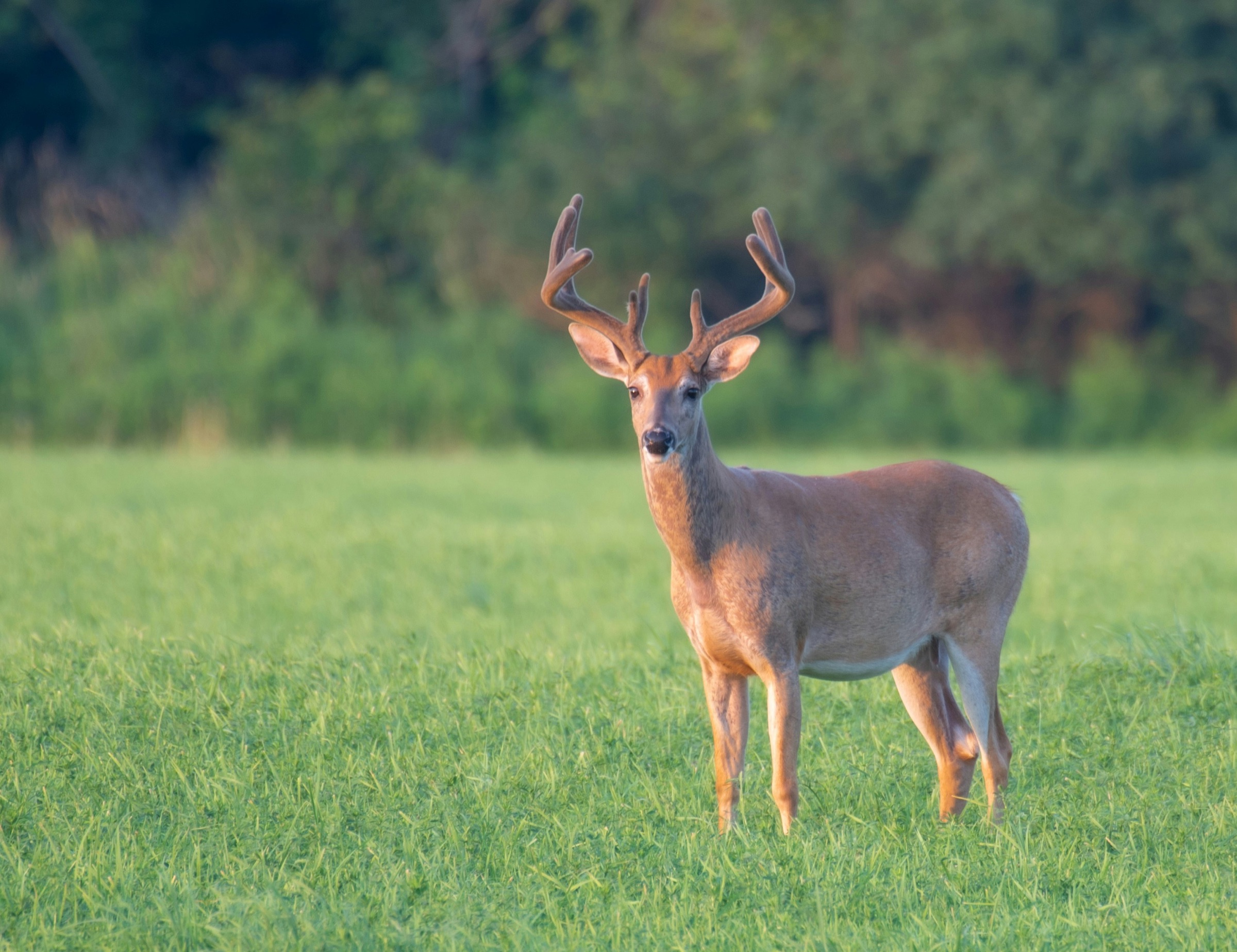
By the third week of November the Southeast is a country of rifle seasons and cold fronts. In Kentucky the modern gun season opened on November 14 and runs through the 29th. In Arkansas the youth hunters had their weekend on November 7 and 8, and archery has been open since late September. In Alabama the private-land gun season opens on the 21st, and in Mississippi the dog-hunting gun segment starts the same day. From the Ohio River to the Gulf, millions of acres of pine, hardwood and farm edge are carrying hunters at the same moment, and every one of them is hunting the same animal on very different ground.
That ground is the point of this report. A whitetail in the Mississippi Delta lives on alluvial soil that the river laid down and farmers have worked for generations. A whitetail on the Lower Coastal Plain lives on sandy, pine-covered ground that grows less of everything. A whitetail in the Alabama Black Belt lives above a bed of limestone that gave the region its dark, productive prairie soil. Biologists have spent decades asking what those differences do to bodies and antlers, and the honest answer is more specific, and more interesting, than the usual line that good soil makes big bucks.
This is a field report, not a ranking. The Southeast's wildlife agencies measure deer harvest in different ways, on different calendars, and report it at different times, so a table that lines them up by state would mislead. What follows is the soil research that has actually been published, the dated harvest and herd numbers that state agencies have put in print, the chronic wasting disease (CWD) map as the agencies draw it, and the 2026-27 season rules that matter to anyone planning a trip.
The Soil-Belt Idea: What the Research Actually Shows
Mississippi's three soil regions and a rare controlled test
The best evidence for a soil effect on deer comes from Mississippi State University's Deer Lab. Mississippi has three broad regions that the lab has compared: the Delta, the Thin Loess and the Lower Coastal Plain. In an Extension publication titled The Role of Genetics and Nutrition in Deer Management, the university reports that harvested Delta bucks at three years of age were 41 pounds heavier than Lower Coastal Plain bucks and had antlers 25 inches larger in Boone and Crockett score. It describes Thin Loess deer as in between.
The publication then did something unusual. It raised second-generation bucks from each region on a high-quality diet and compared them with wild bucks from the same region. Delta bucks gained 32 pounds and 5 inches of antler score, Thin Loess bucks gained 21 pounds and 11 inches, and Lower Coastal Plain bucks gained 36 pounds and 28 inches, a 32 percent improvement. The publication notes that second-generation Lower Coastal Plain bucks grew body weights equivalent to wild Delta bucks. In plain terms, much of the gap between the regions was nutrition, not blood. A deer from poor ground, fed well, grew like a deer from rich ground.
Two cautions keep this honest. The results come from Mississippi, and the numbers should not be carried to Alabama chalk, the Georgia Red Hills or any other belt. And they describe one age class under study conditions, so they say what soil and nutrition can do, not what any particular property will produce.
What a buck needs from the ground
The Deer Lab's nutrition page puts specifics on the mechanism. It says a buck should average about 16 percent protein in his diet from spring through summer for good antler growth, that weaned fawns need up to 20 percent, and that it takes about six years for a buck to reach maximum antler size. Yearling antlers, the page says, are 10 to 25 percent of eventual maximum, and a three-year-old is at about three-quarters. It adds that the sandy soils of the southeastern coast may not contain enough minerals for bucks to easily replenish the calcium and phosphorus they mobilize for antler growth. The practical reading is that antler size is mostly a story of age, protein and minerals, and that the soil belts matter because they decide how much protein and mineral the plant community can supply.
The Alabama Black Belt in one paragraph
The Encyclopedia of Alabama, in an article last updated October 20, 2025, explains that the Selma Chalk, a limestone bed formed in shallow Gulf waters roughly 66 to 38 million years ago, underlies the Blackland Prairie, and that a layer of dark soil above it is excellent for cotton, wheat and rice, with the region's name thought to come from those dark soils. The article lists 17 traditional Black Belt counties and notes that the number ranges from about 12 to 21 depending on the criteria. The article is about geology, soils and history, not deer. The idea that chalk soil grows bigger bucks is best treated as a reasonable hypothesis that fits the Mississippi research, not as a measured Alabama result. Our Black Belt field report walks that landscape in detail.
How the rules already encode the soil belts
States do not set one antler rule across their territory, and some of the differences track soil. Mississippi's 2026-27 seasons page sets a legal buck in the Delta at a 12-inch inside spread or a 15-inch main beam, and in the Hills and Southeast at a 10-inch spread or 13-inch beam. Alabama requires one of a hunter's three seasonal bucks to have at least four antler points of an inch or longer on one antler, with an exception in Barbour County that uses three points on one side. Arkansas prints different antler rules on different zone blocks, including 15-inch spread, 18-inch beam and point-based rules. None of this proves a soil effect. It does show that the agencies themselves treat their own ground as unequal.
Herd and Harvest: The Dated Numbers, and Why They Cannot Be Ranked
What each agency has printed
South Carolina publishes the most complete recent report of the group. SCDNR's 2024 Deer Harvest Report puts the noncompliance-corrected statewide harvest at 190,707 deer, including 90,670 antlered bucks, 80,598 does, 8,230 button bucks and 11,209 deer of unknown sex. That was down 4 percent from 198,171 in 2023 and 40 percent below the record of 319,902 set in 2002. The report estimates about 190,330 deer hunters and puts the statewide population at about 700,000 deer, and it says the last few years of rising harvest are indicative of an increasing population.
Virginia's Department of Wildlife Resources reports a preliminary 2025-26 deer kill of 227,302 deer, including the early September antlerless seasons, up from 205,759 the year before and about 14 percent above the ten-year average of 198,666. The breakdown is 108,163 antlered bucks, 14,631 button bucks, 973 shed bucks and 103,535 does, and by weapon 143,100 firearms, 51,472 muzzleloader and 32,730 archery. The agency calls the figures preliminary and says they exclude late urban archery, antlerless-only firearms seasons, kill permits and vehicle collisions.
Kentucky's deer page says the herd is substantial enough to support the harvest of more than 130,000 deer annually. Alabama's deer hunting page says hunters typically harvest in excess of 300,000 deer annually and that approximately 180,000 deer hunters account for more than 4 million man-days of hunting annually. Mississippi's deer program page says the population is estimated to be 1.75 million and that hunters take approximately 280,000 deer annually. Those three figures are undated statements on the agencies' pages as of November 2026, and the most recent annual deer report linked from the Mississippi page is from 2019, so they are best read as the agencies' standing descriptions and not as a 2025 result.
Georgia's Wildlife Resources Division publishes annual harvest summaries by season, and its harvest summaries page, which lists reports from 2000-2001 through 2023-2024, does not print a statewide total in its text. The page explains that harvest estimates come from an annual survey of a sample of 2,500 hunters. Arkansas, Tennessee, Louisiana, Florida and North Carolina each publish their own deer harvest data; check each agency's deer pages for its latest report and how it was counted.
Why a ranking would mislead
Read those paragraphs side by side and the problem is visible. South Carolina corrects for noncompliance with a hunter survey. Virginia counts reported kills and calls them preliminary. Georgia surveys a sample of hunters. Alabama, Kentucky and Mississippi give approximate annual statements with no year. A state that reports a bigger number may simply count in a way that finds more deer. Land area, hunter numbers, season length, bag limits and weather all differ as well. Our Inside the 2026-27 Whitetail Report makes the same point at length. The useful habit is to note what each agency says and when it said it, and not to turn those numbers into a league table.
Seasons and Rules for 2026-27: A State-by-State Planning Card
Kentucky
KDFWR lists the 2026 archery season as September 5, 2026 through January 18, 2027, crossbow from September 19, 2026 through January 18, 2027, youth-only gun October 10 to 18, muzzleloader October 17 to 18 and December 12 to 20, modern gun November 14 to 29, and a free youth weekend December 26 to 27. A CWD antlerless season runs September 25 to 28 in surveillance-zone counties only. Statewide, a hunter may take only one antlered deer, and the statewide deer permit covers up to four deer. Entire carcasses and intact heads of deer, elk, moose and caribou from other states may not be transported into or through Kentucky. Recreational feeding of wildlife is prohibited statewide from March 1 through July 31 with listed exceptions. Confirm with KDFWR.
Alabama
Outdoor Alabama's 2026-2027 page sets a limit of three bucks per hunter across all combined seasons, one a day, and one of the three must meet the four-point rule except in Barbour County. Archery opens October 15 in most zones, with Zone B limited to antlered bucks through October 24, and gun deer on private land opens November 21 and runs through February 10 in most zones, while Zones D and E have their own calendars. The special youth gun hunt is November 13 to 16 in Zones A, B, C and the CWD management zone and October 30 through November 2 in Zones D and E. Segments differ on public land and by zone, so read the zone tables.
Mississippi
MDWFP's 2026-27 page lists archery from October 1 to November 20 in the Delta, North Central and Hills units and from October 15 to November 20 in the Southeast unit, with the gun segments beginning November 21. The combined statewide antlered buck bag is one a day and three per annual season, with higher limits in the North Central unit. Under Mississippi's basic rules for state wildlife management areas (40 Miss. Code R. 2-1.1, paragraph W, effective June 30, 2025), no one may act as a guide, outfitter or in any other paid capacity on a WMA, so a guided hunt is on private land. Confirm with MDWFP.
Arkansas
AGFC prints early buck-only archery on August 29 to 31, 2026, archery from September 26, 2026 through February 28, 2027, and a youth modern gun hunt on November 7 to 8, 2026 and January 2 to 3, 2027, identical in every zone. Modern gun windows and antler rules differ by zone, and every zone frames the bag as four deer with no more than two antlered bucks, with antlerless sublimits that vary. Pick the zone before you pick a date.
North Carolina
NCWRC's June 26, 2026 announcement for 2026-27 allows antlered deer to be hunted with any lawful weapon on August 22 to 23, 2026 in the CWD management areas, moves the blackpowder season in the northwestern management area to October 31 and the gun season to November 14, removes transport restrictions on deer from CWD areas in favor of statewide carcass disposal rules, and offers additional tags to enrolled landowners.
Georgia, Tennessee, Virginia, Florida and Louisiana
Each of these states publishes its own 2026-27 deer calendar, with zone and unit differences. Hunters should read the current regulations digest from each agency before planning, and should not rely on any season table copied from last year's guide.
Chronic Wasting Disease: The Map as the Agencies Draw It
Arkansas
AGFC's CWD page says the disease was first documented in Arkansas in February 2016, from an elk harvested in fall 2015 near Pruitt in Newton County and a sick white-tailed deer found near Ponca in the same county. Beyond Newton County, it lists 25 more counties with CWD positives, 26 in all, and says Grant and Sevier counties join the CWD Management Zone as of July 1, 2026. Zone notes on the deer-season page apply CWD regulations to named counties zone by zone.
Mississippi
MDWFP's news release of October 14, 2025 reported a first detection in Prentiss County from a buck taken in the 2025 velvet season and said that 447 white-tailed deer had tested positive since February 2018 across 18 counties. Prentiss was already inside the North Mississippi CWD Management Zone, so the detection did not change zones or rules.
Kentucky
KDFWR's 2026-27 deer page lists a CWD surveillance zone of 23 counties: Ballard, Breckinridge, Calloway, Carlisle, Casey, Fulton, Graves, Hardin, Henderson, Hickman, Laurel, Lincoln, Marshall, McCreary, McCracken, Meade, Pulaski, Rockcastle, Russell, Union, Wayne, Webster and Whitley. The page does not give a case count in its text.
North Carolina and Alabama
NCWRC's June 26, 2026 release says seven counties in three areas of the state have confirmed CWD-positive deer, with Cumberland, Forsyth, Sampson, Stokes, Surry, Wilkes and Yadkin named as CWD management areas, and that the agency has tested nearly 100,000 deer since early 2022. Alabama's 2026-2027 page defines a CWD Management Zone of all of Lauderdale and Colbert counties and a portion of Franklin County, with sampling, carcass transport, disposal and baiting rules under Alabama Rule 220-2-.167.
What to do about it
The disease map moves every year, so the single most useful habit is to read the current agency page before a trip. If you hunt in a CWD zone, expect sampling requests and carcass rules. If you hunt out of state, know that Kentucky bans the import of whole cervid carcasses and intact heads from other states and that North Carolina keeps out-of-state carcass import restrictions. The Southeast's wildlife agencies are all asking for the same things: test the deer when asked, do not move high-risk parts, and do not feed or bait where it is banned. Our CWD ecology post covers transmission and why whitetails are vulnerable.
Rut Timing: Use the Agency Maps
A common feature of whitetail content is a one-line rut calendar by state. Breeding dates vary within states, so the better source is the agency map. Outdoor Alabama's deer page says its peak rut dates were determined with spatial analysis of reproduction data collected during herd health checks from 1995 to 2019, and it points hunters to a map. MDWFP's deer program page lists a Deer Breeding Date Map for Mississippi as well. If you are building a trip around the rut, use those agency maps for the state you are visiting, and do not treat a November firearms season as a rut date, because the two are set for different reasons.
On the Ground: Planning a Multi-State Whitetail Season
Public land and private ground
Public whitetail hunting across the Southeast runs through state wildlife management areas, national forests, national wildlife refuges and Corps and TVA lands, and each has its own permit, quota and check-in rules. On public land you hunt on your own. Paid guiding on public land is restricted: Mississippi's rules for state wildlife management areas bar any guide or paid activity, Louisiana bars payment for hunting on its WMAs, and on national forests a Forest Service special use permit is required for guiding. For Kentucky WMAs, confirm with KDFWR. A guided or leased hunt in this region is a private-land product, and the landowner or licensed operator sets the terms.
A practical sequence
Choose the soil belt first, because it decides the kind of hunting and the kind of deer. Choose the state second, and read its current season page. Then decide between public and private land, check the CWD map for your county and your travel route, and confirm the dates with the agency. If you are planning for the 2027-28 season, remember that most agencies publish their dates in the spring and summer and that every date in this post is for 2026-27.
Key Takeaways
Mississippi State's research found that Delta bucks at age three were 41 pounds heavier and 25 inches larger in Boone and Crockett score than Lower Coastal Plain bucks, and that second-generation Lower Coastal Plain bucks raised on a high-quality diet gained 28 inches. Those results are Mississippi's and should not be moved to other belts.
Antler size is mostly age, protein and minerals. The Deer Lab puts maximum antler size at about six years and the protein target for growing antlers at about 16 percent.
Agency harvest numbers are not comparable. South Carolina reported 190,707 deer for 2024, and Virginia reported a preliminary 227,302 for 2025-26, but the methods differ, so states should not be ranked on them.
Kentucky, Alabama and Mississippi describe their annual harvests as more than 130,000, more than 300,000 and about 280,000 on undated pages, and Georgia's harvest page lists summaries only through 2023-2024.
CWD status varies: Arkansas lists positives in 26 counties and adds two to its management zone on July 1, 2026, Mississippi reported 447 positives in 18 counties as of October 14, 2025, Kentucky lists 23 surveillance counties, and North Carolina names seven management-area counties.
Antler rules and season windows differ by zone inside states, so read the zone table, not the state summary.
Guided hunts are a private-land product. Mississippi and Louisiana bar paid activity on their WMAs, and national forests require a special use permit for guiding.
For the Operators
Whitetail operators across the Southeast compete for the same destination hunter, and the landscapes they sell are genuinely different: chalk prairie, river bottom, mountain hardwood and coastal pine. The soil-belt research gives them a vocabulary that is both true and specific, but only if they use it carefully. A page that cites the Mississippi State findings with the right geography is more trustworthy than one that borrows a number and moves it to another state.
The same discipline applies to herd claims and disease. Cite an agency report with its year, say what it measured, and link the agency's current CWD page. Readers who are planning a trip are already checking those pages, and a site that gets there first with accurate, dated information earns the booking conversation. Pine & Marsh helps outdoor businesses build that kind of source-backed content.
Frequently Asked Questions
Do richer soils really grow bigger bucks?
In Mississippi State research, harvested Delta bucks at age three were 41 pounds heavier and had antlers 25 inches larger in Boone and Crockett score than Lower Coastal Plain bucks, and Lower Coastal Plain bucks raised on a high-quality diet closed much of the gap. The study points to nutrition as a large part of the difference. Those numbers are Mississippi's and are not an Alabama or Georgia result.
How long does it take a buck to reach maximum antler size?
About six years, according to the Mississippi State Deer Lab. Yearling antlers are 10 to 25 percent of eventual maximum size and a three-year-old buck is at roughly three-quarters. Age, protein and mineral supply together drive antler size, which is why age structure matters on any property.
Which Southeast state has the most deer or the biggest harvest?
No agency publishes a comparable answer. South Carolina reported 190,707 deer for 2024 and Virginia a preliminary 227,302 for 2025-26, but those are counted by different methods, and Alabama, Kentucky and Mississippi give undated approximate figures. Treat any ranking of states by harvest as unsupported.
Which counties are in Kentucky's CWD surveillance zone?
KDFWR's 2026-27 deer page lists 23 counties: Ballard, Breckinridge, Calloway, Carlisle, Casey, Fulton, Graves, Hardin, Henderson, Hickman, Laurel, Lincoln, Marshall, McCreary, McCracken, Meade, Pulaski, Rockcastle, Russell, Union, Wayne, Webster and Whitley. Confirm with KDFWR, because the list is revised.
What deer dates are the same in every Arkansas zone for 2026-27?
AGFC prints early buck-only archery August 29 to 31, 2026, archery September 26, 2026 through February 28, 2027, and youth modern gun November 7 to 8, 2026 and January 2 to 3, 2027 in every zone. Modern gun windows and antler rules differ by zone. Confirm with AGFC.
What is Alabama's buck limit for 2026-27?
Three antlered bucks per hunter across all combined seasons, one per day. One of the three must have at least four antler points of an inch or longer on one antler, except in Barbour County, which uses three points on one side. Daily mixes of antlered and unantlered deer differ by zone, so read the Outdoor Alabama zone tables.
Can I hire a guide to hunt deer on a Mississippi or Louisiana WMA?
No. Mississippi's WMA rules (40 Miss. Code R. 2-1.1, paragraph W) bar any guide, outfitter or paid activity, and Louisiana bars payment for hunting on its WMAs. A guided deer hunt in either state is on private land. On national forests, guiding requires a Forest Service special use permit. For Kentucky WMAs, confirm with KDFWR.
When is the rut in the Southeast?
It varies within each state, so use the agency maps rather than a single state date. Outdoor Alabama points hunters to a regional rut timing map built from herd health check data collected from 1995 to 2019, and Mississippi publishes a breeding date map. Use the agency map for the state you are hunting.
Citations and Sources
Mississippi State University Extension, The Role of Genetics and Nutrition in Deer Management (Publication 3013), https://extension.msstate.edu/publications/the-role-genetics-and-nutrition-deer-management (accessed November 2026)
Mississippi State University Deer Lab, Nutrition and Genetics, https://www.msudeer.msstate.edu/nutrition-and-genetics.php (accessed November 2026)
Mississippi Department of Wildlife, Fisheries, and Parks, White-Tailed Deer Program, https://www.mdwfp.com/wildlife-hunting/wildlife-species-program/white-tailed-deer-program (accessed November 2026)
Mississippi Department of Wildlife, Fisheries, and Parks, Hunting Seasons and Bag Limits (2026-27), https://www.mdwfp.com/wildlife-hunting/hunting-seasons-and-bag-limits (accessed November 2026)
Mississippi Department of Wildlife, Fisheries, and Parks, Chronic Wasting Disease Detected in Prentiss County (October 14, 2025), https://www.mdwfp.com/news/chronic-wasting-disease-detected-prentiss-county (accessed November 2026)
South Carolina Department of Natural Resources, 2024 Deer Harvest Report, https://www.dnr.sc.gov/wildlife/deer/2024DeerHarvestReport.html (accessed November 2026)
Virginia Department of Wildlife Resources, 2025-2026 Deer Kill Summary (preliminary), https://dwr.virginia.gov/wildlife/deer/harvestsummary/ (accessed November 2026)
Kentucky Department of Fish and Wildlife Resources, Deer Hunting, https://fw.ky.gov/Hunt/Pages/Deer.aspx (accessed November 2026)
Outdoor Alabama, Deer Season 2026-2027, https://www.outdooralabama.com/seasons-and-bag-limits/deer-season (accessed November 2026)
Outdoor Alabama, Deer Hunting in Alabama, https://www.outdooralabama.com/what-hunt/deer-hunting-alabama (accessed November 2026)
Arkansas Game and Fish Commission, Deer Seasons and Limits by Zone (2026-27), https://www.agfc.com/hunting/deer/deer-seasons-and-limits-by-zone/ (accessed November 2026)
Arkansas Game and Fish Commission, CWD in Arkansas, https://www.agfc.com/hunting/deer/chronic-wasting-disease/cwd-in-arkansas/ (accessed November 2026)
North Carolina Wildlife Resources Commission, Wildlife agency enacts new deer hunting opportunities to help manage deadly deer disease (June 26, 2026), https://www.ncwildlife.gov/news/press-releases/2026/06/26/wildlife-agency-enacts-new-deer-hunting-opportunities-help-manage-deadly-deer-disease (accessed November 2026)
Mississippi Administrative Code, 40 Miss. Code R. 2-1.1, Basic Regulations for All Wildlife Management Areas (effective June 30, 2025), paragraph W, https://www.law.cornell.edu/regulations/mississippi/40-Miss-Code-R-2-1.1 (accessed November 2026)
Louisiana Department of Wildlife and Fisheries, 2026-2027 Louisiana Hunting Regulations (WMA rules on hunting guides and payment), https://www.wlf.louisiana.gov/assets/Resources/Publications/Regulations/26LAHD.pdf (accessed November 2026)
Georgia Department of Natural Resources Wildlife Resources Division, Harvest Summaries and Population Surveys, https://georgiawildlife.com/harvest-summaries (accessed November 2026)
Winemiller, T. L., Black Belt Region in Alabama, Encyclopedia of Alabama (last updated October 20, 2025), https://encyclopediaofalabama.org/article/black-belt-region-in-alabama/ (accessed November 2026)
U.S. Forest Service, National Forests in North Carolina (Region 8), outfitting and guiding permits, https://www.fs.usda.gov/r08/northcarolina/permits/opportunities-new-outfitting-and-guiding-services (accessed November 2026)
Explore More
Whitetail Deer of the Southeast: Life History, Habitat, and Population Ecology Across 13 States
Alabama Black Belt Field Report: The Chalk Prairie Soils That Grow Trophy Whitetail and Wild Quail
The Mississippi Outdoor Field Report: The Delta, the Gulf Coast Marsh, and the Soil Belts In Between
Inside the 2026-27 Whitetail Report: Why You Cannot Rank Deer Harvest by State
The August-to-January Whitetail Marketing Calendar: One Season, Five Booking Windows


Comments