
Wild Turkey of Georgia's National Forests: Chattahoochee Blue Ridge and Oconee Piedmont Ecology
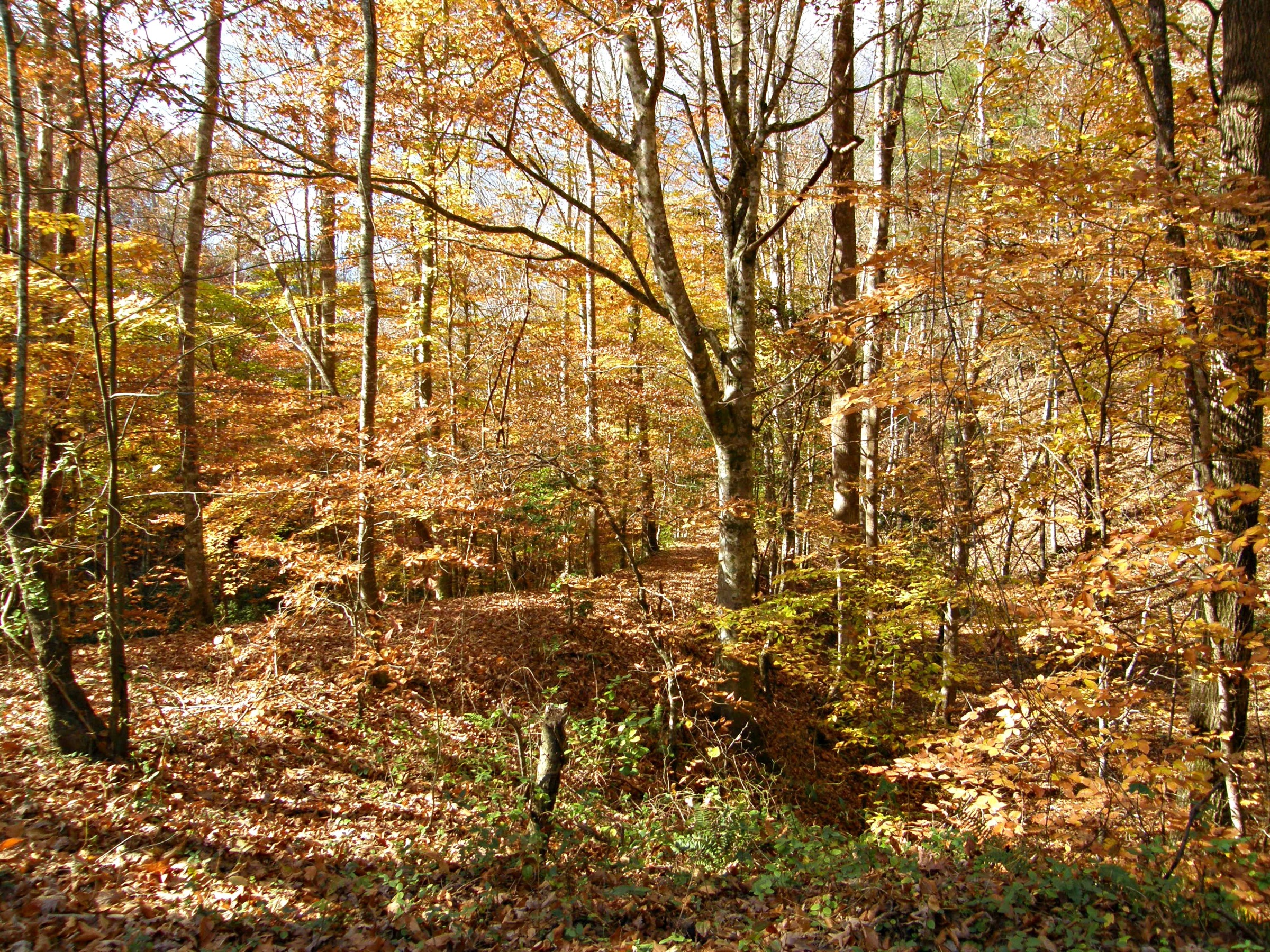
In the first week of November the woods of north Georgia are mostly bare. The oaks have dropped their acorns, the hickories have shed their nuts, and the ridges that were green in April are now gray and brown, with the evergreen rhododendron and white pine standing out against them. A flock of turkeys working through that leaf litter makes a sound like someone shuffling a deck of cards on a tin roof, scratching and turning leaves, hunting for the mast the autumn has laid down. The sound carries a long way on a still morning.
Farther south and east, in the rolling red clay country of the Georgia Piedmont, the picture is different. Here the Oconee National Forest is a patchwork of loblolly and shortleaf pine, mixed hardwoods, creek bottoms and old farm fields that have gone back to forest. Fire is a management tool, the land is lower, and the turkeys feed in a landscape of pine stands, openings and hardwood draws instead of steep mountain coves. It is the same species, the eastern wild turkey, living on two very different kinds of ground.
A note on geography before we go further. The Oconee is a Piedmont forest, not a Blue Ridge one. The Blue Ridge turkey country of Georgia lies in the Chattahoochee National Forest, with places such as Cohutta Wildlife Management Area and Rich Mountain Wildlife Management Area. The two forests are managed together as the Chattahoochee-Oconee National Forests, which is why we treat them in one ecology report, as contrasting landscapes under a single management umbrella. For the business and hospitality side of the Oconee, see our piece on marketing the Oconee National Forest and the central Piedmont. This report sticks to the birds.
The Landscape: Mountains, Piedmont and One Forest Name
What the Forest Service says
The U.S. Forest Service's Chattahoochee-Oconee page says the two forests together contain nearly 867,000 acres across 26 counties, with the Chattahoochee in north Georgia and the Oconee in central Georgia. It lists four ranger districts: Blue Ridge, based in Blairsville; Chattooga River, in Lakemont; Conasauga, in Chatsworth; and Oconee, in Eatonton. The supervisor's office is in Gainesville. The page does not split the acreage between the two forests, so check a current Oconee figure with the Forest Service.
Blue Ridge: hardwood slopes and public mountain ground
In the mountains, the Georgia Department of Natural Resources (DNR) Wildlife Resources Division lists several wildlife management areas that sit mostly on Forest Service land. Cohutta Wildlife Management Area covers 96,583 acres in Murray, Fannin and Gilmer counties and is owned primarily by the Forest Service, with additional tracts leased each year for hunting. Rich Mountain Wildlife Management Area covers 19,955 acres in Gilmer and Fannin counties, with the vast majority owned by the Forest Service, and DNR lists deer, bear, turkey and small game among the species hunted. The Cohutta page carries a notice, posted July 23, 2025, that the Hickory Ridge and Rough Ridge trails are closed because of unsafe conditions after wildfire and storm damage.
A wildfire operation plan for the Cohutta Wilderness posted on Wilderness.net covers 35,233 acres of the Chattahoochee portion plus 363 acres of adjacent wilderness study area, and names southern yellow pine and pine-oak, white pine and hemlock, and upland hardwood as the vegetation types.
Piedmont: pine, hardwood and managed fire
The Oconee sits in the Piedmont. The best-documented nearby comparison on agency land is Piedmont National Wildlife Refuge, a 35,000-acre refuge established in 1939 that the U.S. Fish and Wildlife Service describes as loblolly pine on the ridges and hardwoods along creek bottoms and in scattered upland coves. The refuge is a separate federal unit with its own rules and is not part of the national forest, but it gives a sense of the vegetation. Fire research in this part of the Piedmont describes mixed pine and hardwood forests that respond only slowly to repeated burning, as the next section explains.
Fire across both forests
The Forest Service's fire management page says specialists apply prescribed fire to more than 35,000 acres across the forests, with burning typically between February and May and additional operations possible in late autumn. A later sentence says fire managers treat around 35,000 acres on the Chattahoochee-Oconee National Forests every year. Neither figure is an Oconee-only number. The same page says researchers studying fire-scarred trees found fires often every 3 to 9 years in the forest's oak and pine stands going back to the mid-1600s, and that soil charcoal shows fire has been part of these mountains for at least 10,000 years. That history is about the mountains, not about the Piedmont, and it should not be transferred to the Oconee.
Turkey Biology: How These Birds Use the Two Landscapes
Mast and the mountain winter
Georgia's wild turkey management plan treats mast as part of the winter food picture. It notes that mast failure, drought and flooding can influence annual mortality rates and lists protecting mast-producing hardwoods among the habitat practices it promotes. It also notes that hunters who see large flocks move from uplands into bottomland hardwoods to feed on mast in winter often ask for a fall season. Species lists for acorns, nut crops and cove insects that appear in some older material could not be tied to a Georgia study.
Brood habitat in a closing canopy
The Piedmont's challenge is of a different kind. As pine plantations and old fields age, the canopy closes, shading out the grasses and forbs that feed a brood. DNR's management plan lists thinning dense pine stands to let sunlight reach the ground and stimulate groundcover plants, applying prescribed fire at suitable spatial scales and time intervals, managing openings for brood-rearing habitat and minimizing mowing during nesting and brooding among its practices. Fire is one tool among several, and the Piedmont research found that fire is not a quick fix for everything. Reilly and colleagues, in a paper in the journal Forests published at the end of 2016, studied mixed pine and hardwood plots in Georgia's southeastern Piedmont that were burned two to four times over eight years with low-intensity growing-season fires. Sapling density dropped, but mesic hardwoods such as sweetgum and red maple stayed relatively dense, and the burns had little effect on larger trees. The authors concluded that repeated growing-season burning alters midstory structure and composition, but that burning alone is unlikely to produce immediate shifts in overstory composition or structure. That is a research study, not an Oconee burn inventory, and it is about a decade old.
What the research says about fire and nesting
DNR's plan says a University of Georgia and DNR study in southwest Georgia confirmed that prescribed fire had minimal direct impact on nest and poult survival, but that using fire to create a mosaic of vegetation communities improves overall nesting and brood-rearing cover. The plan also says DNR and the university began a similar project in the Piedmont in 2017. For a look at the same fire logic in Gulf Coast longleaf, see our Conecuh National Forest turkey ecology report. The point for Georgia is that a mosaic of burn ages, not a single uniform treatment, is the pattern the state's own plan endorses.
Timing: Does Elevation Change the Gobbling Calendar?
The common claim
A common belief among hunters is that higher elevation means later gobbling, because spring comes later to the mountains. It is intuitive, and it is widely repeated. It is worth checking, because it affects when mountain hunters think the birds will be active.
What the North Carolina study found
A 2025 paper in Wildlife Society Bulletin by Moscicki and colleagues studied male gobbling activity relative to female nesting across the mountains, Piedmont and Coastal Plain of North Carolina from 2020 to 2022. Using autonomous recorders and marked hens, they found that gobbling chronology did not vary regionally, though it varied from day to day and year to year within each region. Nest incubation dates were also similar across years and regions, which the authors read as support for day length, rather than local conditions, as the main driver of nesting timing. In other words, a later spring in the mountains is not the same thing as later gobbling or later nesting.
Two cautions apply. The study was in North Carolina, not Georgia, and the Georgia plan says the state still needs reproductive ecology data from the Blue Ridge, so there is no Georgia mountain gobbling calendar to cite. And the finding is a statement about what was measured in one state over three seasons. The most defensible reading is that an elevation lag should not be assumed, and that local scouting beats a rule of thumb.
Season timing as DNR describes it
DNR's plan says hunting seasons should be timed to begin at the peak of hen incubation, not at the peak of displaying and courtship. Georgia's 2027 framework, discussed below, opens private land a week before public land.
Population and Harvest: What the Agency Reports Show
Brood production
DNR's turkey production survey records observations made by agency staff and members of the public during June, July and August. Poults per hen is the measure of how successful the reproductive season was. In its FY2023 report, DNR said poults per hen had fluctuated around 1.5 since 2003, after a steep decline over the preceding two decades. The 2023 figure was 1.5, slightly below the four-year average of 1.6, and hens per observer rose to 4.6, bringing the four-year average to 4.2. A March 19, 2026 DNR release said 2024 production averaged 1.8 poults per hen statewide, tying 2021 for the highest in the past decade, with the Piedmont leading all regions at an estimated 1.9. The 2024 figure is a later year, not a revision of the 2023 one. The plan's long-term objective is a running four-year average of 1.5 poults per hen.
Emily Rushton, DNR's wild turkey project coordinator, said in that release, ahead of the 2026 season, that hunters should expect more two-year-old birds that spring, and that since the season-date and bag-limit adjustments of 2022 harvest rates had edged up, but that it is still too soon to say how those changes have affected the population. Weather, mast crops and insects also influence production, she noted.
Harvest and hunter satisfaction
The FY2024 statewide harvest report estimates that 38,810 hunters hunted turkeys in 2024, up 3 percent from 2022, and harvested an estimated 11,924 gobblers, up 9 percent from 2022. There was no post-season survey in 2023. The harvest rate was 0.31 turkeys per hunter, and jakes made up 793 birds, or 7 percent of the harvest. By region, the Piedmont accounted for 37 percent of the estimated harvest and the Upper Coastal Plain for 32 percent, followed by the Lower Coastal Plain at 14 percent, the Ridge and Valley at 13 percent and the Blue Ridge at 4 percent. That is a harvest share, not a population measure. The report says 2022 was the first season under the new statewide regulations and that reported harvest decreased on both public and private land in the years that followed. Game Check records show 9,809 reported birds in 2022 and 11,570 in 2024. The estimated and reported figures measure different things and should not be merged. Hunter satisfaction was 63 percent, which the report describes as a precipitous drop from previous years.
On wildlife management areas in 2024, 12,032 hunters harvested 706 gobblers, with jakes making up 13 percent, a success rate of 5.9 percent, up from a low of 4.9 percent in 2022, and public-land hunter satisfaction of 52 percent. Cohutta ranked fifth by total harvest at 23 birds, behind Paulding Forest at 47, Dawson Forest at 32, Allatoona at 29 and Berry College at 27. Those are small counts of reported birds by area, not measures of bird density.
Fall season
Georgia has no fall turkey season. DNR's plan says some hunters have asked for one and recommends not implementing one, citing undesirable biological impacts and potential harm to the spring season. The August 27, 2026 season table lists spring rows only. Older write-ups that say the state eliminated a fall season are not supported by those sources.
Hunting and Seasons: The 2027 Framework
What eRegulations lists
The eRegulations table for Georgia big game, last updated August 27, 2026, lists the 2027 spring turkey season as follows. A special opportunity season runs March 20 to 21, 2027, only for youth under 16 and mobility-impaired hunters, and it does not apply to public lands unless specified. Private land is open March 27 through May 15. Wildlife management areas, voluntary public access areas and national forest land open April 3 and run through May 15. The limit is two gobblers per season and one per day, including the special opportunity days, and on wildlife management areas, voluntary public access areas and national forest land the limit is one gobbler per area per person. DNR's 2026 release uses the same one-per-day, two-per-season bag, with one gobbler per area on WMAs and on national forest land outside them.
The Piedmont National Wildlife Refuge is a separate U.S. Fish and Wildlife Service property with its own hunt program, and its rules and permit process were not reviewed here. Do not apply national forest dates to the refuge.
Reporting
Every turkey hunter, regardless of age, must carry a free harvest record for the current season. The harvest must be recorded before the bird is moved from the site of the kill and reported through Georgia Game Check within 24 hours. A big game license is required in addition to a hunting license for turkey, with exemptions that include hunters under 16 and residents hunting their own land. Check DNR's license page for the full list.
Public ground is do-it-yourself
Hunting on the Chattahoochee-Oconee National Forests and on the wildlife management areas on them is public-land hunting, done on your own under DNR and Forest Service rules. Commercial guiding on a national forest requires a Forest Service special use permit, so do not assume a guided turkey hunt is available on these forests. Guided turkey hunts in Georgia are offered on private land, where the landowner sets the terms. Confirm all season dates, area rules and closures with DNR and the Forest Service before you go.
What It Means on the Ground
Reading mountain country
For a hunter, hiker or birder in the Blue Ridge, the practical lessons are about terrain and weather more than about a calendar. Mountain coves hold mast in good years and not in bad ones, birds move to follow food, and access depends on the condition of Forest Service roads and trails, which can be closed after storms. Do not assume the birds will gobble later because you are higher. Scout in the days before the opener and let the birds tell you.
Reading Piedmont country
On the Oconee side, look for the structure the plan describes. Stands where the canopy is open and sunlight reaches the ground, with grasses and forbs, give a brood what it needs. Dense, shaded stands do not. Burned units in the first couple of years offer fresh growth, while older burns develop cover. Openings, creek bottoms and the edges between pine and hardwood are places where those structures come together.
Private ground nearby
Much of the Piedmont is private timberland, pasture and small farms, and turkeys use it. Landowners who thin pine stands, burn on a sensible schedule, maintain openings and protect mast-producing hardwoods can hold birds on far less acreage than a national forest. That is where guided and hosted hunts take place, and anyone considering one should ask how the property is managed.
Responsible practices
Record and report every harvest. Game Check within 24 hours is the data stream behind the figures above.
Respect closures. Check the Forest Service and DNR pages for trail and road notices, such as those on Cohutta.
Know your area limit. On WMAs and national forest land it is one gobbler per area per person.
Be sure of your target. Only gobblers are legal, and spring cover and leaf-out make identification harder.
Do not rely on one rule of thumb. Local scouting beats assumptions about elevation.
Key Takeaways
The Chattahoochee-Oconee National Forests total nearly 867,000 acres across 26 counties, with four ranger districts. The Oconee is a Piedmont forest. The Blue Ridge turkey country is in the Chattahoochee.
Georgia DNR's 2024 production index was 1.8 poults per hen statewide and about 1.9 in the Piedmont, after 1.5 in 2023, and the state's long-term objective is a running four-year average of 1.5.
The FY2024 estimate was 11,924 gobblers harvested by 38,810 hunters, and the Blue Ridge accounted for only 4 percent of the estimated harvest. Hunter satisfaction fell to 63 percent.
A 2025 North Carolina study found gobbling chronology did not vary regionally between the mountains, Piedmont and Coastal Plain. The assumption that higher birds gobble later was not supported there, and Georgia has no mountain-specific calendar.
Fire is part of the management on both forests, with more than 35,000 acres treated across the forests each year, but the figure is not an Oconee-only number, and DNR's plan stresses a mosaic of burn ages.
The 2027 season opens March 27 on private land and April 3 on WMAs and national forest land, closing May 15, with a limit of one gobbler per day, two per season and one per area on public land. Georgia has no fall turkey season.
Public-land turkey hunting is do-it-yourself, and guided hunts take place on private land. Confirm dates and rules with DNR.
For the Operators
If you run a turkey, deer or hospitality operation near the Chattahoochee or Oconee, the public forest is your neighbor and your benchmark. Visitors will compare what they find on public ground, which is free and unguided, with what you can offer. That is not a competition so much as a division of roles. The public land is the do-it-yourself option. Your land, your habitat work, your local knowledge and your hosting are the reason someone books with you.
The data above tells an honest story that operators can tell better than anyone: harvest numbers that are modest, public-land success rates around 6 percent, brood production that improved in 2024 and a spring season that opens a week earlier on private land. A guide who explains what that means, in plain language and with sources, is answering the questions serious turkey hunters actually ask, and is likely to be cited by the search tools and editors who look for a clear answer. The same goes for being honest about what is not known, such as how the Blue Ridge population behaves. Writing down what you see on your ground each spring, in your own voice, is a body of local knowledge that no agency report can match.
Frequently Asked Questions
How many acres are the Oconee and Chattahoochee National Forests?
The Forest Service says the Chattahoochee-Oconee National Forests have nearly 867,000 acres across 26 counties. The agency page does not split the total between the two forests, and older figures for the Oconee alone should not be treated as current. Confirm with the Forest Service.
When does turkey season open on Georgia national forest land in 2027?
eRegulations, updated August 27, 2026, lists April 3 through May 15, 2027, for wildlife management areas, voluntary public access areas and national forest land. The limit is one gobbler per area per person and two gobblers per season. Confirm with Georgia DNR.
Is the private-land opener the same week as the public-land opener?
No. Private land opens March 27, 2027, and public land opens April 3, a week later, with both closing May 15. A special opportunity season for youth under 16 and mobility-impaired hunters runs March 20 to 21 and does not apply to public lands unless specified.
What was Georgia's poults-per-hen index in 2023 and 2024?
DNR reported 1.5 poults per hen in 2023, slightly below a four-year average of 1.6, and 1.8 in 2024, tying 2021 for the highest in the past decade. The Piedmont was estimated at 1.9 in 2024. The long-term objective is a four-year average of 1.5.
How many gobblers were harvested in 2024?
DNR's FY2024 report estimates 11,924 gobblers harvested by 38,810 hunters, up 9 percent from 2022. Georgia Game Check recorded 11,570 reported birds in 2024. The two numbers measure different things, one a survey estimate and one a reporting count.
Do turkeys gobble later in the Georgia mountains?
There is no Georgia mountain gobbling calendar to cite. A 2025 North Carolina study found gobbling chronology did not vary regionally across the mountains, Piedmont and Coastal Plain, and found nesting dates similar across regions. Scout locally rather than assuming a lag.
Does Georgia have a fall turkey season?
No. DNR's management plan recommends against a fall season because of undesirable biological impacts, and the 2027 season table lists spring rows only. Confirm current regulations with DNR.
Can I hire a guide to hunt turkeys on the national forest?
Commercial guiding on a national forest requires a Forest Service special use permit. Guided hunts in Georgia are offered on private land. Confirm with the managing agency.
Citations and Sources
U.S. Forest Service, Chattahoochee-Oconee National Forests, https://www.fs.usda.gov/r08/chattahoochee-oconee (accessed November 2026)
U.S. Forest Service, Chattahoochee-Oconee National Forests, Fire Management, https://www.fs.usda.gov/r08/chattahoochee-oconee/fire/management (accessed November 2026)
Georgia Department of Natural Resources Wildlife Resources Division, Talk Turkey With Me: Georgia Turkey Hunting Season, March 19, 2026, https://georgiawildlife.com/index.php/talk-turkey-me-georgia-turkey-hunting-season (accessed November 2026)
eRegulations, Georgia Hunting, Big Game Seasons, Dates and Limits (last updated August 27, 2026), https://www.eregulations.com/georgia/hunting/big-game-seasons-dates-limits (accessed November 2026)
Georgia Department of Natural Resources, Statewide Turkey Harvest Annual Report 2024, https://georgiawildlife.com/sites/default/files/wrd/pdf/harvest-summaries/turkey/Statewide%20Turkey%20Harvest%20Annual%20Report%202024.pdf (accessed November 2026)
Georgia Department of Natural Resources, Turkey Annual Population Report FY2023, https://georgiawildlife.com/sites/default/files/wrd/pdf/harvest-summaries/turkey/Turkey%20Annual%20Population%20Report%20-FY2023.pdf (accessed November 2026)
Georgia Department of Natural Resources, Strategic Management Plan for Wild Turkeys in Georgia 2017 to 2026, https://georgiawildlife.com/sites/default/files/wrd/pdf/management/Georgia%27s%20Wild%20Turkey%20Management%20Plan%20final.pdf (accessed November 2026)
Georgia Department of Natural Resources, Cohutta Wildlife Management Area, https://georgiawildlife.com/cohutta-wma (accessed November 2026)
Georgia Department of Natural Resources, Rich Mountain Wildlife Management Area, https://georgiawildlife.com/rich-mountain-wma (accessed November 2026)
Georgia Department of Natural Resources, Harvest Record and Georgia Game Check, https://georgiawildlife.com/HarvestRecordGeorgiaGameCheck (accessed November 2026)
eRegulations, Georgia Hunting, Hunting Licenses, https://www.eregulations.com/georgia/hunting/hunting-licenses (accessed November 2026)
U.S. Fish and Wildlife Service, Piedmont National Wildlife Refuge, About Us, https://www.fws.gov/refuge/piedmont/about-us (accessed November 2026)
Wilderness.net, Cohutta Wilderness Wildfire Operation Plan, https://wilderness.net/toolboxes/documents/fire/cohutta%20wilderness%20fire%20op%20plan%2011.pdf (accessed November 2026)
Moscicki, Pacifici, Kreh, Plumpton, Collier and Moorman, Geographical variation in male eastern wild turkey gobbling activity relative to female nesting chronology, Wildlife Society Bulletin 49, 2025, https://doi.org/10.1002/wsb.1627 (accessed November 2026)
Reilly, Outcalt, O'Brien and Wade, Effects of repeated growing season prescribed fire on the structure and composition of pine-hardwood forests in the southeastern Piedmont, USA, Forests 8(1):8, 2016, https://www.mdpi.com/1999-4907/8/1/8 (accessed November 2026)
Explore More
Wild Turkey of Alabama's Talladega and Bankhead National Forests
Alabama Turkey Ecology: Conecuh National Forest and the Gulf Coast
Wild Turkey Biology and Population Ecology: A Southeast Field Synthesis
Turkey Recruitment Decline Across the Southeast: Biology, Causes, and Conservation Responses
Black Bear Natural History and Habitat Ecology Across the Southeast
Marketing the Oconee NF and Central Piedmont: Atlanta's Exurban Deer-and-Bass Country


Comments